Twenty years ago, writing a food guide to Provo would have been a short assignment. The dining landscape was dominated by chain restaurants along University Avenue, a handful of campus-adjacent pizza and burger joints, and the kind of generic American restaurants that exist in every college town. If you wanted a good meal, you drove to Salt Lake City.
That's no longer true. Provo's food scene has undergone a quiet transformation that most outsiders haven't noticed — from a culinary afterthought to a legitimate dining destination with restaurants that would be notable in cities ten times its size. Here's how it happened.
The Old Provo (Pre-2010)
For decades, Provo's food identity was defined by three things: chains, convenience, and conformity. University Avenue was a strip of Applebee's, Chili's, and fast-food franchises serving a transient student population that wasn't demanding culinary ambition. The few locally owned restaurants played it safe with familiar American menus — burgers, steaks, pasta — calibrated for a conservative palate.
The LDS cultural context played a significant role. Without a bar and nightlife scene to anchor evening dining, restaurants didn't have the late-night revenue stream that supports risk-taking in other college towns. The predominantly LDS customer base wasn't consuming alcohol, which meant restaurants couldn't rely on drink margins to subsidize creative food programs. The economic model favored safe, high-volume, family-friendly concepts.
There were bright spots. Brick Oven had been serving pizza since 1956. The BYU Creamery had been making ice cream since 1949. A few independent restaurants on Center Street hinted at what the street could become. But the overall scene was provincial.
The Catalysts (2010-2018)
Several forces converged to change Provo's food culture:
The Missionary Effect
This is the factor unique to Provo. Every year, thousands of BYU students return from 18-month to two-year missions in countries across the world. They come back with firsthand experience eating authentic Thai, Korean, Peruvian, Filipino, Japanese, and dozens of other cuisines. They come back wanting those foods. And they come back willing to seek out restaurants that serve them authentically.
This created a customer base that most small cities don't have — young people with adventurous palates, informed by lived experience rather than Food Network exposure. Restaurants that served authentic international food found an audience that understood what they were doing.
The Tech Money
Silicon Slopes brought wealth to Utah Valley. Tech workers earning Bay Area-adjacent salaries but paying Provo-level rents had disposable income for dining out — and expectations calibrated by time spent in San Francisco, Seattle, and Austin. They wanted better restaurants and were willing to pay for them.
The Downtown Core Revives
Downtown Provo's revitalization turned the blocks around Center Street from a quiet strip of aging storefronts into a walkable restaurant corridor. A critical mass of independent kitchens created a destination that generated its own gravity, and each new opening made the next one more viable.
Two of the arrivals that mattered most are not, strictly, Center Street restaurants — and the confusion is worth understanding, because it is baked into the city's geometry. Communal (farm-to-table) sits at 102 N University Avenue, and Black Sheep Café (Southwestern built on Native American traditions) at 19 N University Avenue. Provo's address grid originates at Center and University, so a business one block up one of them gets filed under the other by almost every guide, this one included until recently. The walk is thirty seconds. The point is that downtown's revival happened around a corner rather than along a single street, which is also why the walkable radius is larger than the roundups suggest.
The Dirty Soda Export
One category deserves separating out, because it is the only part of Provo's food culture that the rest of the country adopted rather than the other way round.
Dirty soda — fountain soda built into a mixed drink with syrups, cream and fruit — is a Utah format that emerged from exactly the constraint this page keeps returning to. A young adult population that does not drink alcohol or coffee still wants a social order to hold, an evening ritual, something to buy on a date. The dirty soda shop supplies all three, and it works at a price point students can repeat several times a week. Utah Valley did not invent the customer; it invented the counter.
The same logic produced the cookie-delivery category. Warm-cookie delivery is a late-evening social purchase in a city with almost no late-evening social purchases available, and two of the concepts built on it scaled nationally. Our soda shop guide covers where the format stands now.
The Instagram Generation
BYU's massive social media-savvy student population created organic marketing for restaurants that delivered photogenic food and interesting spaces. Restaurants that looked good on Instagram attracted foot traffic without traditional advertising budgets. This rewarded creativity and presentation — the exact qualities that chain restaurants couldn't replicate.
The Current Scene (2020-Present)
Today's Provo food landscape would be unrecognizable to someone who left in 2005:
Communal operates at a level that would earn recognition in any American city — seasonal, locally sourced, farm-to-table dining with genuine culinary craft.
Black Sheep Café serves a cuisine — Southwestern food built on Native American culinary traditions — that doesn't exist anywhere else in the state. Fry bread, Navajo tacos, and bison prepared with modern technique and local ingredients.
The international roster includes authentic Indian (Bombay House, Haveli), Thai (Thai Simple Dish), Korean BBQ (Yummy's, Ombu Grill), Chinese hand-pulled noodles (Tai Lai Shun), Haitian (Golden Bees), Filipino (MMK's), and Salvadoran-Mexican (El Mexsal) — a diversity that would have been unthinkable a generation ago.
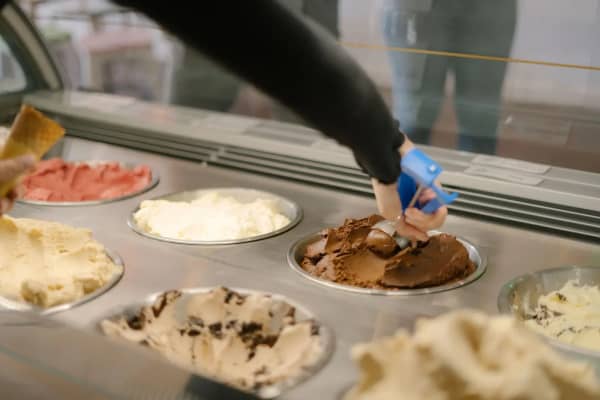
The dessert and drink culture has produced nationally recognized concepts. Dirty soda shops (Swig, started in the St. George area but Utah-born) have become a cultural export. Crumbl Cookies launched in Utah and went national. Chip Cookies invented warm-cookie delivery. BYU Creamery remains an institution.
The Kolache Place is the kind of restaurant that defines a city — a Czech pastry shop that exists nowhere else in Utah, serving food with genuine cultural heritage in a city where you wouldn't expect to find it. It traded under the founding family's name, Hruska's Kolaches, from 2014 until a 2026 rebrand; the recipes and the family behind them did not change.
The Economics Nobody Writes About
Every article about Provo's food scene reaches for culture as the explanation. Culture is real, but three structural facts do more of the work, and none of them appears in the standard account.
Rent runs seven days; revenue runs six
Sunday closure is usually described as a preference. Treat it as a cost line instead. A restaurant here pays rent, insurance, equipment leases and a share of its labor across a seven-day week while earning on six, and that single ratio propagates into everything else: how thin a margin can be, how much inventory risk a menu can carry, how many covers a Friday has to do. It rewards tight, high-turnover concepts and punishes sprawling ones, which is a large part of why Provo's independent scene looks the way it does. It is also why the places that do open on Sunday tend to be chains and hotel restaurants with different math behind them.
The customer base is rebuilt annually
A third of this city turns over in April and again in August. For most restaurants in most towns, a loyal regular is an asset that compounds for years. In Provo, a substantial share of the customer base graduates. Word of mouth has roughly a one-year half-life, and the restaurants that survive are the ones that become a handoff — the place an older student takes a freshman, the tradition a returning missionary re-enters, the dinner a family repeats every time they visit. That is a different competitive game than being merely good, and it explains why several beloved Provo institutions are unremarkable on paper.
There is almost no drink margin to hide behind
The cliché is that Provo restaurants compete on food because the culture does not drink. The mechanism is sharper than that. Utah's licensing structure separates venue types by what may be served and who may be inside, and the beer-only tavern format — no food requirement, and nobody under 21 permitted on the premises — is close to unviable in a city where a large share of adults are students under 21. So the format barely exists, and the restaurants that hold a full license are restaurants first.
Strip out the drink margin and a kitchen has to be paid for by the plate. In most markets, alcohol quietly subsidizes ambitious cooking. Here it cannot, which cuts both ways: it is why Provo has fewer places doing expensive, low-yield food, and why the ones that survive are unusually disciplined about what they put on it.
What's Still Missing
Honesty requires acknowledging the gaps:
No dedicated ramen shop inside Provo. This one needs stating precisely, because it is smaller than it used to be and this page previously overstated it. There is still no ramen-ya within Provo city limits — but the valley now has several specialists, two of them in Orem within about ten minutes of campus, plus others in American Fork, Lehi and Springville. The gap is a city-limits gap, not a valley gap, and it closed while the older version of this sentence was still on the page.
Limited late-night options. The city still essentially closes by 10 PM. Late-night dining is an unsolved problem.
Sunday closures. The cultural pattern of Sunday closures creates a genuine gap for non-LDS residents and visitors.
The Salt Lake City shadow. For truly adventurous dining — Ethiopian, high-end sushi, craft cocktail bars, James Beard-recognized chefs — SLC is 45 minutes north and objectively deeper.
What Closed, and Why That Matters
A food-scene history that lists only arrivals is a brochure. The closures are where the constraints show.
The Continental, Chef Bleu Adams's acclaimed Native Americana fine-dining room in downtown Provo, announced its permanent closure in early 2026; the chef and her team have said a project with a similar culinary focus is coming. It is the sharpest illustration on this page of Provo's ceiling — a restaurant working at a level the city could be proud of, in the most ambitious format available, in a market where the top end is small enough that regional demand fills it and little else does.
Hruska's Kolaches became The Kolache Place in 2026. This one belongs in the closures section only to be removed from it: same family, same recipes, same locations, new name. It is listed here because a name change reads as a closure to search engines and to anyone half-remembering, and the Czech pastry shop that exists nowhere else in Utah is still open.
Muse Music Café ran for more than a decade as a downtown fixture combining a café with one of the city's significant live rooms. Its story is more tangled than most accounts allow — it closed on University Avenue in December 2014, reopened on Center Street in September 2015 without the cafe, and closed for good a few years later. It is covered in full in our live music guide.
The pattern across all three: Provo's food economy is generous to concepts that can be repeated cheaply and unforgiving to ones that need a large, stable, high-spending audience every night. That is the constraint the next decade has to solve, and it is a harder problem than adding another cuisine.
Where It's Going
The trajectory is clear: Provo's food scene will continue to diversify and improve. The forces that drove the transformation — returning missionaries, tech money, a young adventurous population, Center Street's momentum — show no signs of slowing.
The next wave likely includes more dedicated ethnic restaurants, a South Indian kitchen turning out dosa to order, expanded late-night options, and continued growth of the food truck ecosystem — the ramen specialist this page once predicted having already arrived, just over the Orem line. The national chains keep arriving on their own track alongside all of it — The Cheesecake Factory's first Utah County location is due at University Place in Orem in fall 2026. The city's challenge is retaining culinary talent that might otherwise drift to Salt Lake City's larger stage.
For a city of 115,000, Provo punches well above its weight. It's not a food capital — but it's no longer an afterthought.
How Provo Compares
Two comparisons come up constantly, and both are usually made badly.
Against Salt Lake City. SLC is 45 minutes north and objectively deeper — more restaurants, more formats, a real bar and cocktail culture, and a top end Provo cannot match. That is the correct conclusion and the wrong framing for a resident, because the relevant question is not which city is better but what each one is for. Provo covers weeknight dinners, family meals, group tables and a strong casual middle. Salt Lake covers the special occasion and the cuisine Provo does not have. Treating the drive as a supplement rather than an indictment is how locals eat.
Against Orem. The city line matters less than almost any guide implies, and it is the most common navigational error visitors make. Several of the valley's best kitchens sit a few minutes over the boundary — the ramen specialists, the Korean barbecue at Midtown 360, a chunk of the international roster — and "in Provo" is the filter most likely to hide the restaurant you want. Our guides to Orem and Provo are best read as one field.
The useful summary for anyone deciding whether to eat here: Provo is a city where the median meal is good and the ceiling is limited. That is an unusual profile. Most cities this size have neither, and most cities with a high ceiling have a much worse median.
The buildings the scene grew inside, and the rules that govern them
One thread runs quietly through everything above: a large share of downtown Provo's restaurant growth happened inside buildings that already existed. That is not incidental. Older commercial buildings gave the scene its character and its cost structure, and they come attached to a regulatory layer that shapes which concepts are viable in which storefront.
Three separate systems can apply to an older building here, and they do very different things. Owners and prospective tenants confuse them constantly.
The National Register restricts an owner almost not at all
Start with the one people most often get backwards. 36 C.F.R. § 60.2 states that listing of private property on the National Register does not prohibit, under federal law or regulation, any actions that may otherwise be taken by the property owner, and describes the Register as designed to be and administered as a planning tool (§ 60.2(a)).
What listing does: it requires a federal agency whose project affects a listed or eligible property to give the Advisory Council on Historic Preservation a reasonable opportunity to comment under Section 106, per 36 C.F.R. Part 800, after which the agency may adopt any course of action it believes is appropriate; it opens eligibility for federal preservation grants-in-aid (§ 60.2(b)); and it opens federal rehabilitation tax treatment for qualifying work on depreciable historic structures (§ 60.2(c)).
That third one is the item a restaurant operator should care about. Historic rehabilitation tax treatment can change the arithmetic on a build-out substantially, and it is tied to doing the work to a defined standard rather than to doing it cheaply.
For districts, § 60.6 gives owners a say: an objection must be a notarized statement to the State Historic Preservation Officer (§ 60.6(g)), and where a majority of owners object, the nomination goes to the Keeper only for a determination of eligibility (§ 60.6(n)).
The state layer can be triggered by a permit
Utah's machinery is Utah Code Title 9, Chapter 8a, which houses the State Historic Preservation Office (Section 9-8a-201).
Section 9-8a-402(1)(b) defines a historic property as a district, site, building, structure or object at least 50 years old that is listed in or eligible for the National Register — eligibility counts, not just listing. Section 9-8a-402(1)(d) defines an undertaking to include a project funded in whole or in part under the direct or indirect jurisdiction of a state agency, carried out with financial assistance from the state, or that requires a state permit, license or approval.
Where a state agency is approving such an undertaking, Section 9-8a-404(1) requires it to take the effect on historic property into account, give the state historic preservation officer a written evaluation, and receive a comment within 30 days; and where there is an adverse effect, to enter a formal written agreement on mitigation before spending state funds or providing financial assistance.
The city layer is the one that governs a facade
Local designation is where day-to-day restrictions on private work live. In Provo that means a Certificate of Appropriateness from the Landmarks Commission before the building permit issues for designated landmarks and properties in historic districts. Our building permits guide covers the sequencing, which trips up more build-outs than any other single item.
What counts as harm, and why "we're restoring it" is not a defense
36 C.F.R. § 800.5(a)(1) defines an adverse effect as an alteration — direct or indirect — of any characteristic qualifying a property for the Register in a manner diminishing the integrity of its location, design, setting, materials, workmanship, feeling or association, including foreseeable effects that are later in time, farther in distance, or cumulative.
The examples at § 800.5(a)(2) are the useful part for anyone planning a storefront: physical destruction or damage; alteration — including restoration, rehabilitation, repair, maintenance, stabilization, hazardous material remediation and provision of accessible access — not consistent with the Secretary's standards (36 C.F.R. Part 68); removal from the historic location; change in the character of the use or of physical features in the setting; introduction of visual, atmospheric or audible elements diminishing integrity; and neglect causing deterioration.
Two of those matter enormously to restaurants. Adding accessible access is listed explicitly, which is not a reason to skip it — it is a reason to design it to the standard rather than improvising. And new audible and visual elements — a patio sound system, extract fans, illuminated signage — are named, which is why the sign package is so often the item that stalls a downtown opening.
The tool an owner can use on purpose
Section 9-8a-503 provides for a preservation easement, protected from the Rule Against Perpetuities and the rule against unreasonable restraints on alienation by Section 9-8a-505, and treated as a charitable contribution for tax purposes under Section 9-8a-506. It is how an owner makes a building's character survive their own ownership.
None of this decides whether a particular Provo building is designated. Check a specific address with Provo City and the Utah State Historic Preservation Office before signing a lease that assumes a build-out is straightforward.
Related Guides
- 30 Best Restaurants in Provo
- Center Street Dining Guide
- Hidden Gem Restaurants
- Best Restaurants in Orem
- Soda Shops & Dirty Soda Guide
- Hogi Yogi: The Provo Chain That Went National, Sold, and Came Back to Four Stores
- Orem Farmers Market: Everything You Need to Know (2026)
- Food Trucks in Provo & Orem: Where They Park, Why They Move, and Which Ones Are Left
- The Provo & Orem restaurant directory — every place we cover, with its address, filterable by cuisine and city
Last updated: August 2026.
Frequently Asked Questions
Is Provo a good food city?
Why does Provo have good restaurants?
Is Center Street where all the good restaurants are?
Why do so many Provo restaurants close on Sunday?
Does Provo have a bar scene?
What has closed in Provo recently?
How did returned missionaries change Provo's food scene?
What is Provo known for food-wise?
Sources
The facts in this guide were checked against these sources. Hours, fees and rules change, so confirm anything time-sensitive with the source before you go. How we make Provo.com.
- Utah Code 9-8a-402 Definitions, Utah State Legislature. Checked October 12, 2026.
- Utah Code 9-8a-404, Utah State Legislature. Checked October 12, 2026.
- Utah Code 9-8a-506 Charitable contribution for tax purposes, Utah State Legislature. Checked October 12, 2026.
- 36 CFR 60.6 Nominations by the State Historic Preservation Officer, eCFR / National Park Service. Checked October 12, 2026.
- City and Town Population Totals 2020-2025 (sub-est2025_49), U.S. Census Bureau. Checked October 12, 2026.