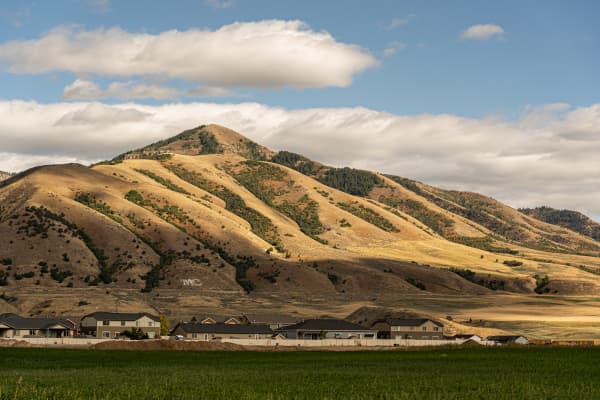
Downtown Provo is the most walkable, the most energetic, and arguably the most exciting neighborhood in the city. Anchored by Center Street — a stretch of locally owned restaurants, boutiques, galleries, and gathering spots — it's the cultural and social heart of Provo. If you want to walk to dinner, stumble upon a Friday night art walk, and feel the pulse of a growing city, this is where you want to be.
The Quick Facts
| Detail | Info |
|---|---|
| Median 1-BR Rent (Provo, citywide) | $998/mo (2024 ACS; newer downtown buildings ask more) |
| Walk Score | Highest in Provo |
| Best For | Young professionals, couples, grad students |
| Vibe | Urban, lively, walkable |
| Commute to BYU | 10–15 min walk / 5 min drive |
| Commute to UVU | 10 min drive |
| Grocery Access | Within walking distance |
What It's Like to Live Here
Downtown Provo has changed more in the past decade than any other part of the city. What was once a quiet, somewhat sleepy downtown has transformed into a legitimate dining and entertainment corridor. The core now holds everything from farm-to-table fine dining (Communal, a block up University Avenue) and a hotel dining room with a full bar (Slate, inside the Provo Marriott at 101 W 100 N) to casual neighborhood spots on Center Street itself (Guru's, Station 22), along with boutique shops, art galleries, and the Covey Center for the Arts.
The population is younger than most Provo neighborhoods, with a mix of young professionals working in tech or at the universities, graduate students, and some undergraduate students who prefer urban living over traditional student housing. Married couples without kids are particularly well-represented — the walkability and dining access are a major draw for this demographic.
The energy shifts with the seasons and the day of the week. Friday and Saturday evenings see the most foot traffic, especially during warmer months when restaurant patios fill up and the art walk draws crowds. Weekday mornings have a quieter, neighborhood feel — regulars getting coffee, people walking to work, students heading to the library.
Housing
The housing stock downtown is a mix of renovated older apartments, newer mid-rise developments, and a handful of townhomes and condos. Most rental inventory is studio and one-bedroom units — this isn't a neighborhood designed for large families.
Price context: the 2024 American Community Survey put Provo's citywide median gross rent at $998 for a one-bedroom and $1,233 for a two-bedroom. Downtown spans both ends of that: older walk-ups at or below the medians, newer mid-rise units above them.
Newer complexes like 400 Element and 200 City View offer modern finishes, fitness centers, and community amenities at the higher end of the price spectrum. Older buildings in the area can offer significantly lower rents for those willing to accept less updated kitchens and bathrooms.
Age is the real price lever. The spread between an older walk-up and a newer mid-rise downtown is wider than the spread between downtown and the neighborhoods around it — which means the useful question is not "can I afford downtown" but "which downtown building." A renovated older unit a block off Center Street frequently costs less than a newer build further out, and buys a better walk. Parking, the second-car problem and the permit zones are covered in their own section below.
The Lease Calendar Governs Everything Here
This is the fact that decides whether your search goes well, and almost no neighborhood guide states it.
Provo's rental market does not turn over continuously. It turns over in a burst. A large share of the city's contracts run on an academic calendar — commonly August to August, or August to April for the fall-and-winter pair — which means the supply of available units is not a steady trickle but a wave that crests and then empties. Downtown is less student-dominated than the blocks around campus, but it sits inside the same market and inherits the same rhythm.
The practical consequences run in one direction:
March through May is when the selection exists. This is when next year's contracts go on the market and when you can compare units against each other rather than taking what is left.
June and July are the thin months. Inventory is picked over, and the units still listed in late July are disproportionately the ones nobody wanted in April.
August is the crush. Move-in traffic, full trucks on narrow downtown streets, and no negotiating leverage whatsoever.
And a landlord's urgency is sometimes real. In most cities "this will be gone tomorrow" is a pressure tactic. In Provo in June it is frequently a true statement, which makes it much harder to tell the two apart. The defense is to have looked in April, not to get better at reading the landlord.
The inverse is the opportunity. If your circumstances let you sign a lease that starts in a month nobody else is moving — January, say, or mid-spring — you are shopping in a market with almost no competition. Very few people can arrange that. The ones who can get noticeably better units for the money.
The Sunday Problem, Priced Honestly
Downtown's whole proposition is that you can walk to things. It is worth being precise about which things, and when.
Almost everything within walking distance is closed on Sunday. The restaurants, most of the Center Street retail, the campus amenities up the hill — the pattern is close to universal here and it is not a quirk of one or two businesses. So one day in seven, the walkability premium you are paying buys you a walk past locked doors.
And the closing hour is earlier than an urban renter expects. Provo's independent restaurants largely wind down in the evening rather than running late, which means a nine o'clock dinner is a much harder thing to arrange downtown than the density of restaurants suggests.
None of that makes downtown a bad choice. It makes it a specific one. If what you want is a short walk to good food on a Tuesday night, downtown Provo delivers that better than anywhere else in the county. If what you want is a city that is awake at eleven and open on Sunday, no amount of walk score will produce it, and you should know that before signing rather than three weeks after.
The corollary is the car question. Downtown is the one Provo neighborhood where car-free daily life works — and it is still the neighborhood where you will most want access to a car on a Sunday.
Parking Is a Second-Car Problem, Not a First-Car Problem
Most downtown complexes include one stall. That is enough for most households here and it is why the parking complaints you read are usually not about the primary vehicle.
The friction is the second car. A couple with two vehicles is looking at street parking for one of them, and downtown street parking is fine on a Tuesday morning and tight on a Friday evening when the restaurants are full. If you are a two-car household, ask about a second stall before you like the apartment rather than after.
And check the permit zones before you assume. The residential blocks immediately around the downtown core include permit-restricted parking, which exists precisely because the commercial core generates overflow. Parking there without a permit is prohibited, and the Provo Farmers Market explicitly asks its own visitors to stay out of those streets — a useful signal about how seriously the restriction is treated.
Walkability & Transportation
Downtown earns the highest walkability score in Provo, and it's not close. Within a 10-minute walk of most downtown apartments, you'll find grocery stores, multiple restaurant options, the Provo City Library, Pioneer Park, coffee shops, banks, and the Covey Center for the Arts.
UTA bus routes serve downtown well, and the FrontRunner commuter rail station is accessible for commutes north to Salt Lake County. BYU's campus is a 10–15 minute walk from the center of downtown — close enough to be convenient, far enough to feel separate from the student bubble.
Biking is practical downtown and along the Provo River Parkway. The city has been adding bike infrastructure, and the flat terrain makes cycling a viable transportation option for most of the year.
Dining & Nightlife
This is downtown's strongest selling point. Within a few blocks of Center Street:
Fine dining: Communal, Slate Restaurant, Sportelli's Artisan Pasta Casual favorites: Guru's Café, Station 22, Black Sheep Café, Backdoor BRGR International: Bombay House (nearby on University Ave), Thai Simple Dish Sweet treats: Rockwell Ice Cream, The Kolache Place, Bianca's French Bakery Drinks: ABG's Libation Emporium, the bar at Slate inside the downtown Marriott, Station 22's craft drinks
For the full rundown, see our 30 Best Restaurants in Provo and Center Street Dining Guide.
Nightlife in Provo is more subdued than in most cities this size (the LDS cultural influence plays a role), but downtown has the most options. Restaurant bars, live music at the Covey Center, and the general energy of Center Street on a Friday evening provide a social scene that's lively without being rowdy. Our guide to Provo nightlife covers the venues within walking distance of here.
What's Nearby
- Provo City Center Temple — A stunning architectural landmark in the heart of downtown
- Pioneer Park — Home to the Saturday Farmers Market (June–October) and community events
- Provo City Library — Events, workshops, rooftop garden, and one of the best public libraries in Utah
- Covey Center for the Arts — Theater, concerts, and performing arts
- Center Street shops — Boutiques, galleries, and local businesses
- Provo River Parkway — Trail access within a short walk
Who Downtown Is Actually Wrong For
Every neighborhood guide lists pros and cons. Fewer will say plainly who should not move here, so:
Families with more than one child. The inventory is studios and one-bedrooms. The two- and three-bedroom units that exist are a small share of the market and are priced accordingly, and the yard problem does not have a downtown solution. This is not a temporary supply gap — it is what the housing stock is.
Anyone whose social life runs late. Covered above, and it is the most common source of disappointment among people who move here from a larger city expecting an urban core to behave like one.
Two-car households on a tight budget. The second stall is either an extra monthly cost or a nightly street-parking search. Neither is a disaster; both are the kind of thing that grinds after six months.
People who need a big weekly grocery run. Downtown grocery access is walkable, but walkable groceries and a full cart are different problems. Most downtown residents end up driving to a larger store periodically regardless.
And, honestly, anyone moving here purely on walk score. The number is real and it is the highest in the city. It measures distance to amenities, not whether those amenities are open when you want them — which in Provo is the variable that determines whether a walkable neighborhood feels walkable.
What Downtown Gets Right That Nowhere Else in the County Does
Set against all that, the case for downtown is strong and it is specific.
It is the only part of Utah Valley with a genuine street life. Center Street on a warm Friday evening — patios full, people walking between places rather than driving between them — is not replicated in Orem, Lehi, or anywhere on the bench. If that texture is what you are missing, this is the only address in the county that supplies it.
Culture is walkable rather than a drive. The Covey Center, the library's programming, the galleries and the art walk are all within the same few blocks, which changes how often you go. A ten-minute walk to a performance gets used. A twenty-minute drive and a parking search does not.
A Saturday market at the end of the street. Pioneer Park's market from June through October is an amenity most cities of this size do not have and most residents of this one drive to. Living within walking distance of it is a different relationship with the season.
And the commute math is unusually good in both directions. BYU is a walk, UVU is a short drive, and the FrontRunner station puts Salt Lake County within a reasonable rail commute — which is rare for a neighborhood that also has the highest walk score in the city. Most places make you pick.
The Honest Pros & Cons
Pros:
- Best walkability in Provo — you can live without driving daily
- The restaurant and dining scene is excellent and growing
- Younger, more diverse demographic than most Provo neighborhoods
- Cultural amenities (library, arts center, galleries) at your doorstep
- Strong sense of urban energy without big-city downsides
Cons:
- Apartments tend to be smaller than suburban options
- Parking can be challenging on weekend evenings
- Street noise is noticeable, especially on Center Street
- Not ideal for families with children — limited yards and green space
- Rent is higher per square foot than outlying neighborhoods
Who Should Live Here
Downtown Provo is the right fit if you're a young professional, a couple without kids, or a grad student who values walkability, dining access, and social energy over space and quiet. If your ideal evening involves walking to a restaurant, catching a show, and strolling home — this is your neighborhood.
It's probably not the right fit if you have kids needing a yard, you're on a tight student budget, or you prioritize space and quiet over convenience and atmosphere.
Living in a historic district: what it restricts, and what it does not
Downtown Provo's appeal is largely architectural — the older street wall along Center Street is the reason the neighborhood reads differently from anywhere else in the county. If you are renting here it changes nothing. If you are buying, or running a business behind one of those facades, it is worth understanding which layer of designation applies to a given building, because the three layers do very different things and only one of them restricts an owner.
Layer one: the National Register, which restricts almost nothing
36 C.F.R. § 60.2 is unambiguous: listing of private property on the National Register does not prohibit, under federal law or regulation, any actions that may otherwise be taken by the property owner. The regulation describes the Register as designed to be and administered as a planning tool (§ 60.2(a)).
What it does instead: it obliges a federal agency whose project affects a listed or eligible property to give the Advisory Council on Historic Preservation a reasonable opportunity to comment under Section 106, per 36 C.F.R. Part 800 — after which the agency may adopt any course of action it believes is appropriate. It also opens eligibility for federal preservation grants-in-aid (§ 60.2(b)) and federal rehabilitation tax treatment (§ 60.2(c)).
For a district, listing is decided with owner input. Under § 60.6, notice gives owners of private property the opportunity to concur or object; an objection must be a notarized statement (§ 60.6(g)); and if a majority of owners in the district object before submission, the nomination goes to the Keeper only for a determination of eligibility (§ 60.6(n)).
Layer two: the state, which reaches state-funded and state-permitted work
Utah's own machinery sits in Utah Code Title 9, Chapter 8a, which created the State Historic Preservation Office (Section 9-8a-201), the state historic preservation officer (Section 9-8a-202) and a National Register Review Committee (Section 9-8a-204).
Two definitions in Section 9-8a-402(1) do most of the work. A historic property is a district, site, building, structure or object that is at least 50 years old and is listed in, or eligible for, the National Register. An undertaking is a project, activity or program funded in whole or in part under the direct or indirect jurisdiction of a state agency — including one carried out by or on behalf of a state agency, one carried out with financial assistance from the state, or one that requires a state permit, license or approval.
That last clause is broader than people expect. A private project can become an undertaking because it needs a state permit.
Where it applies, Section 9-8a-404(1) requires the agency, before approving any undertaking, to take the effect on historic property into account and give the state historic preservation officer a written evaluation. The officer has 30 days to return a written comment. If the evaluation shows an adverse effect, the agency must enter a formal written agreement with the officer describing how each adverse effect will be mitigated before it may spend state funds or provide financial assistance for the undertaking.
Section 9-8a-403 requires the board to notify owners before placing property on the State Register or nominating it to the National Register.
Layer three: the city, which is the one that governs your facade
Local designation is where restrictions on private work live. In Provo, work on a designated landmark or a property in a historic district requires a Certificate of Appropriateness from the Landmarks Commission before the building permit issues — the sequencing matters, and our building permits guide explains it.
What counts as harming a historic property
Useful even outside a formal review, because it is the working definition preservation staff use. 36 C.F.R. § 800.5(a)(1) finds an adverse effect where an undertaking may alter, directly or indirectly, any characteristic qualifying a property for the Register in a manner that diminishes the integrity of its location, design, setting, materials, workmanship, feeling or association — including reasonably foreseeable effects that occur later, farther away, or cumulatively.
§ 800.5(a)(2) lists examples: physical destruction or damage; alteration — including restoration, rehabilitation, repair, maintenance, stabilization, hazardous material remediation and provision of accessible access — that is not consistent with the Secretary's standards (36 C.F.R. Part 68); removal from the historic location; change in the character of the use or of physical features in the setting; introduction of visual, atmospheric or audible elements that diminish integrity; and neglect causing deterioration.
Two of those surprise people every time. Sympathetic-sounding work — restoration, repair, routine maintenance — can be an adverse effect if it is done to the wrong standard. And doing nothing can be one too.
A tool owners can use voluntarily
Part 5 of Chapter 8a provides for a preservation easement (Section 9-8a-503), expressly protected from the Rule Against Perpetuities and the rule restricting unreasonable restraints on alienation (Section 9-8a-505), and addressed as a charitable contribution for tax purposes (Section 9-8a-506). An owner who wants a building's character to survive a future sale can bind the property rather than trusting the next buyer.
Designations, ordinances and review processes change. Confirm the status of a specific downtown address with Provo City before buying or planning work.
Related Guides
- The Complete Guide to Provo Neighborhoods
- 30 Best Restaurants in Provo
- Best Date Night Restaurants
- Cost of Living in Provo, Utah
- Moving to Provo Guide
- Provo's Live Music Scene
- The Tree Streets: The One Corner of Provo That Has Names Instead of Numbers
- BYU Area Neighborhood Guide (2026)
- Orem Neighborhoods Guide: Where to Live (2026)
- Freedom Boulevard: The Street Where Provo Keeps the Things It Actually Needs
- University Avenue, Provo: The Street Every Address in the City Is Measured From
- Public Art in Provo: Who Owns the Walls, and Which Pieces Will Still Be There
- Provo Development Tracker — approved, denied and pending projects downtown, with decision dates
- Provo's Historic Districts — the buildings, and where they are
Last updated: April 2026.
Frequently Asked Questions
Is downtown Provo walkable?
What is the rent in downtown Provo?
When should I look for an apartment in downtown Provo?
Is downtown Provo good for families?
Do I still need a car if I live downtown?
Is downtown Provo student housing?
What is the catch with downtown Provo?
Is the Provo Farmers Market downtown?
Sources
The facts in this guide were checked against these sources. Hours, fees and rules change, so confirm anything time-sensitive with the source before you go. How we make Provo.com.
- American Community Survey 1-Year 2024, B25031 Median Gross Rent by Bedrooms, U.S. Census Bureau. Checked October 12, 2026.
- Utah Transit Authority: FrontRunner, Utah Transit Authority. Checked October 12, 2026.
- Slate Restaurant: Slate, Slate Restaurant. Checked October 12, 2026.
- Utah County farmers markets near close, The Daily Universe (BYU). Checked October 12, 2026.