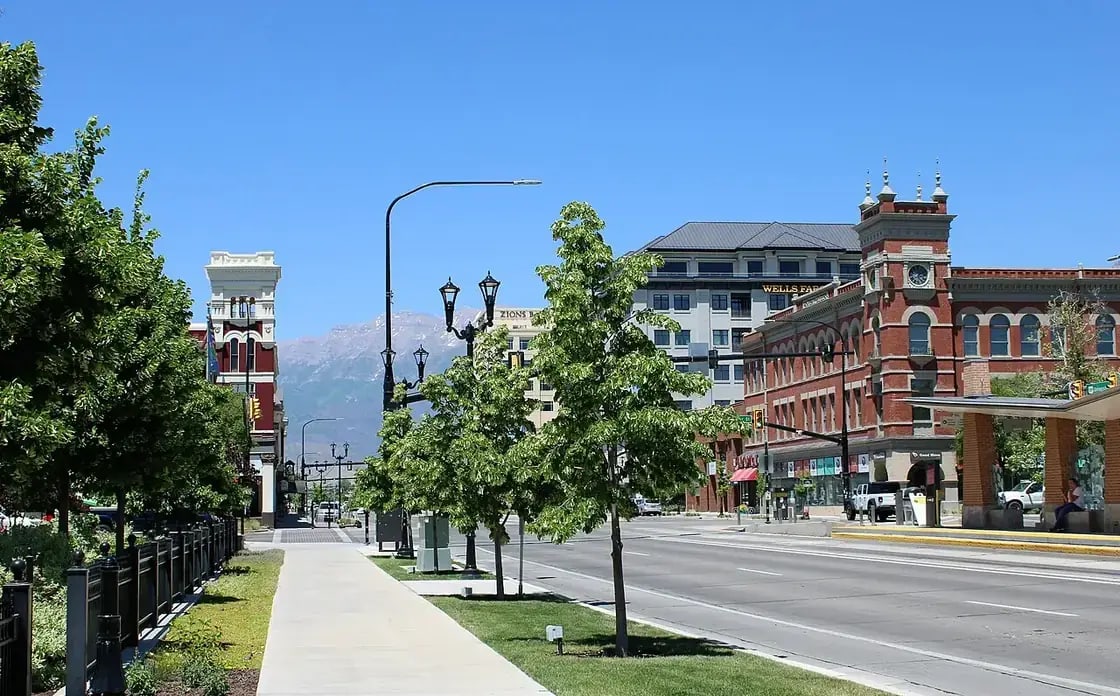
If it feels like Provo lands on a "best of" list every few months, you're not imagining it. But the latest one is worth pausing on: for the second year in a row, personal-finance company WalletHub has ranked Provo the best-run city in America — first out of the 148 largest cities in the country.
It's a big deal, and it's also widely misunderstood. So here's what the ranking is, why Provo keeps winning it, and — just as importantly — what it does and doesn't tell you about living here.
What "Best-Run" Actually Measures
The instinct is to read "best-run city" as "best city," a general endorsement of Provo as a place to live. That's not what WalletHub is measuring.
The ranking is about operating efficiency — essentially, how much quality a city gets out of every dollar it spends. WalletHub scored all 148 cities on 36 metrics across six categories: financial stability, education, health, safety, economy, and infrastructure and pollution. Those scores were combined into a "quality of services" number, which was then measured against each city's per-capita budget.
That last step is the key. A city isn't rewarded just for having good schools or low crime — it's rewarded for delivering those outcomes without overspending to get them. It's a ranking of results per dollar, which is why mid-sized cities like Provo tend to beat giant metros that generate more total output but carry far more cost and complexity per resident.
So this isn't a livability score, an affordability score, or a "where you'd most want to move" score. It's closer to a report card on how well City Hall is being run. Which, when you think about it, is the kind of thing that's easy to take for granted until it's done poorly.
Why Provo Keeps Winning
The short version: Provo doesn't win by being spectacular in one area. It wins by being consistently good across all of them.
WalletHub credited a familiar mix of factors — business growth of about 3.1%, a high school graduation rate approaching 91%, low crime, well-kept infrastructure, and short commute times. Broken down by category, Provo ranked especially well in safety, landed in the twenties for infrastructure and health, and posted solid marks for financial stability. No single number carried it; the balance did.
A few pieces of that are distinctly Provo. The city is home to BYU, whose highly regarded business school helps feed an unusually entrepreneurial local economy — Provo is the birthplace of companies like Qualtrics, Nu Skin, and Angel Studios, and city leaders have been open about wanting startups to grow up and stay here rather than decamp for bigger markets. And on safety, Provo continues to post some of the lowest violent- and property-crime rates in the entire country, a stat that shows up year after year on these lists.
City officials, understandably, took a victory lap. Provo's leadership framed the honor the way you'd hope — as a reflection of employees, community partners, and residents rather than any single program, and as a reason to keep raising the bar rather than coast. The recognition also isn't happening in a vacuum: Provo ranked first in 2025 as well, and seventh in 2024, so this is a trend, not a fluke.
What It Means for the Rest of Us
For residents, the ranking is a nice piece of civic validation, but it also points at something real. Efficient government tends to show up in the small, daily ways that are easy to miss — services that work, roads that get maintained, a commute that doesn't eat your evening, a police presence that keeps crime low without feeling heavy-handed. Parks are the most visible of those day-to-day services — our guide to the best parks in Provo and Orem covers the ones worth building a Saturday around. Those things are a big part of why Provo consistently scores well on the "quality of life" measures that do get folded into rankings like this.
There's a flip side worth naming honestly, too. A ranking like this is often read as a green light by people considering a move to Utah County, and that demand is real — Census data has repeatedly flagged this region as one of the fastest-growing in the country. Combined with the valley's geographic limits, that growth tends to compress into existing housing rather than sprawl outward, which is part of why Provo and its neighbors stay competitive and pricey. On the student side of that squeeze, BYU is rebuilding the south half of Wymount Terrace — 11 new buildings holding 240 apartments for married students and student families. In other words: a well-run city is an attractive city, and an attractive city in a hemmed-in valley doesn't get cheaper. If you're weighing a move here, the efficiency ranking is a point in Provo's favor, not a promise that it'll be easy to buy in.
For context on where Provo landed relative to everyone else: it was the only Utah city near the top of the list. Salt Lake City, the only other Utah city ranked, came in around the middle of the pack, reportedly held back by relatively high long-term debt per capita. Idaho, interestingly, placed two cities in the top five, with Nampa at No. 2 and Boise at No. 4.
The Bigger Picture
It's easy to be a little cynical about city rankings — there are a lot of them, and most cities can find some list they top. What makes this one stick is the repetition. Being named the best-run large city in the country once could be noise. Doing it two years running, while also ranking seventh the year before that, suggests something more durable about how Provo operates.
None of which means the city is finished, or that everyone here feels the benefits equally — rankings measure averages and systems, not individual experiences, and growth brings real pressures on housing and traffic that residents feel every day. But as far as bragging rights go, "best-run city in America, two years in a row" is a good one to have. For a place that has spent the last few years quietly becoming one of the more talked-about small cities in the West, it fits.
If you're thinking about making Provo home, our complete guide to moving to Provo and our cost of living breakdown are good next stops. And for more on what makes the city tick, browse the rest of our living in Provo guides.
Related Guides
- Domo Is Selling Itself to Progress Software for $400 Million. Here's What That Actually Means.
- Food Help in Utah County: Where to Go, What to Bring & What Nobody Asks You
- Provo's Noise Ordinance: What 55 Decibels Actually Sounds Like
- Finding a Plumber in Provo: Who Owns Which Pipe, and What Actually Breaks Here
Frequently Asked Questions
Is Provo really the best-run city in America?
What does the 'best-run city' ranking measure?
Why did Provo rank first?
Has Provo won this before?
How did other Utah cities do?
Sources
The facts in this guide were checked against these sources. Hours, fees and rules change, so confirm anything time-sensitive with the source before you go. How we make Provo.com.
- Provo Named Best-Run City in America for 2026, Provo City. Checked October 12, 2026.
- Provo Named 'Best Run City in America' (2025), Provo City. Checked October 12, 2026.