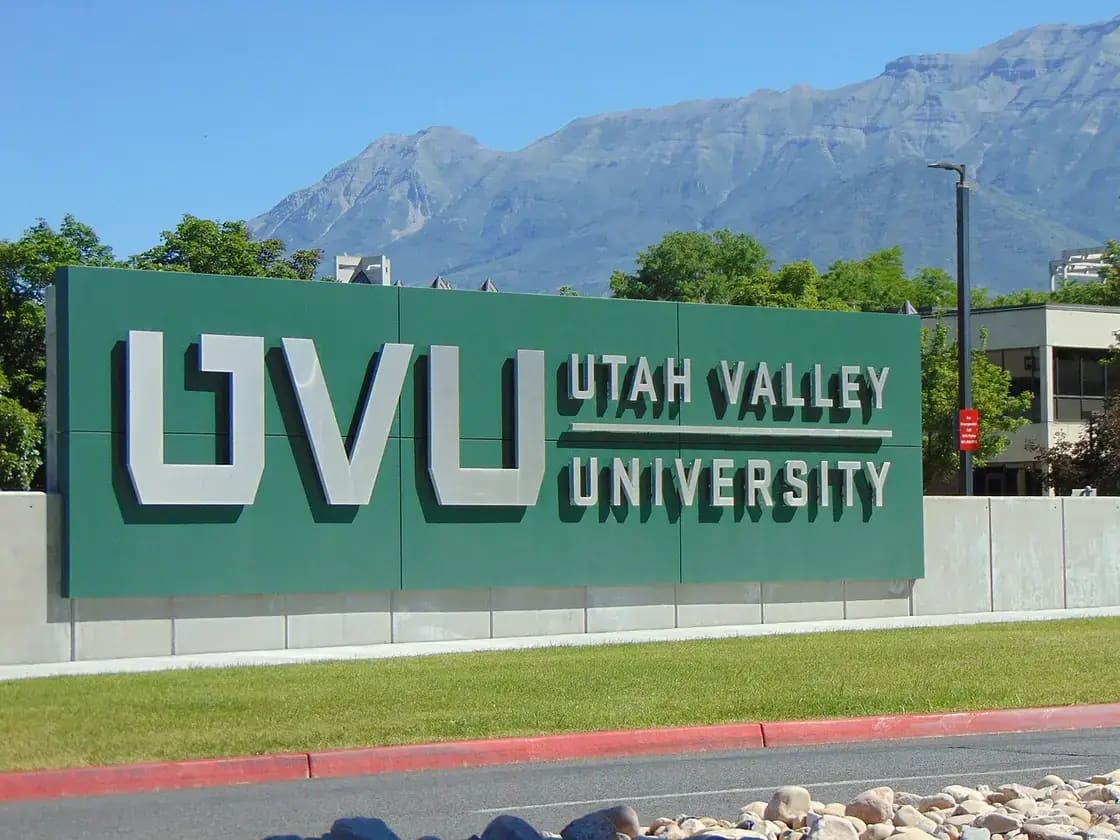

Utah Valley University is the largest university in Utah, and somehow still the valley's most underestimated institution. While BYU gets the headlines, UVU quietly enrolls more students than any school in the state — a record 48,670 in fall 2025 — and serves an audience nobody else does: commuters, working adults, first-generation students, and the fast-growing north end of the valley.
Provo.com covers UVU life the same way we cover everything else in Utah Valley — with verified facts, local knowledge and no fluff. This page collects all of it: the student guides, the housing picture in Orem, the food worth leaving campus for, and the practical stuff like commuting that defines the UVU experience more than anything else.
If you're new to UVU, start with the student guide. If you're a commuter, jump straight to getting around — it's where UVU life is won or lost.
Everything we have written for UVU students
This is the complete index, filterable by what you need. It is generated from the articles themselves rather than typed by hand, so it cannot fall behind the way a manual list does — the sections below it are the edited path through the same material, where the arguing happens.
41 of the 72 pages this site has written for Utah Valley students are tagged UVU. The list is generated from the articles themselves, not typed by hand, so anything published after this page was written appears here automatically.
Start here: the student guides
- The UVU Student Guide — the flagship: how UVU works, what campus culture is like, and how to make a big commuter school feel small.
- Your First Semester Survival Guide — the first-four-months playbook, written for both UVU and BYU students.
- Moving to Provo for College — move-in logistics and your first week in Utah Valley, whichever school you're headed to.
- The Transfer Student's Guide — UVU welcomes more transfer students than anywhere in the valley; this guide is for them.
- BYU vs UVU: Which School Is Right for You? — the honest side-by-side.
- Textbooks without overpaying — strategy, ISBN discipline, and UVU's fall 2026 deadlines.
- Do you need a car? — the honest decision guide, with UVU's commuter reality front and center.
- Intramurals & club sports — UVU's program is unusually open, and officiating is a paid campus job.
UVU's student body skews older and more work-experienced than most: 18% of students — nearly one in five — are 25 or older, 41% are first-generation, and graduate enrollment now tops 1,000. Those two defining audiences now have their own dedicated guides:
- UVU for Students 25 and Older — the working adult's guide to going (back) to school at the university built for exactly that.
- The First-Generation Student's Guide to UVU — the hidden curriculum decoded, from FAFSA to the First Gen Center, for the 41% navigating without a family map.
For the next layer up, our grad students & young professionals guide and internships & career resources guide were built with the same audience in mind.
Housing near UVU
UVU is a commuter campus, but a real student-housing cluster has grown up around it in west Orem:
- UVU Student Housing: Best Apartments Near Campus — the near-campus options in Orem, by budget and distance.
- How to Find Student Housing in Provo & Orem — the process guide: contracts, timing, and what to watch for.
- First-Time Renter's Checklist — for the many UVU students signing their first lease.
Run your numbers through the apartment finder and the cost of living calculator, or browse student-friendly listings. For the bigger picture on the city itself, our Living in Orem guide covers the neighborhoods, schools, and what Orem is like beyond the Parkway.
Getting to campus (the real UVU skill)
More than anything else, UVU life runs on the commute — and the transit picture changed recently, so it's worth getting current:
- UVX is no longer free for the general public (a regular fare has applied since August 2024) — but every UVU student rides free: your student ID doubles as a full UTA pass covering UVX, buses, TRAX, and FrontRunner, and it extends to spouses and dependents. Tap your ID at the platform and you're on.
- The UVX bus rapid transit line stops right at campus and runs every few minutes at peak, connecting UVU to University Place, downtown Provo, BYU, and both FrontRunner stations.
- Coming from Lehi, American Fork, or Salt Lake? FrontRunner to Orem Central, then UVX one stop to campus, beats fighting I-15 at 8:50 a.m.
The full playbook is the UVU Commuter Survival Guide — permit strategy, which lots fill first (and which to use instead), the after-5 free-parking rule, and the FrontRunner-plus-bridge route from the north valley. For the valley-wide system — park-and-rides, schedules, how commuters everywhere use it — see the FrontRunner, UTA & commuting guide.
Food near UVU
The dining scene around campus is better than its strip-mall reputation suggests — and some of the best of it is on campus:
- Best Food Near UVU — our full guide: the on-campus spots worth knowing, the University Parkway corridor, and the international kitchens a few minutes away.
- 15 Best Restaurants in Orem — the city-wide list, for when it's a real dinner and not a between-class scramble.
- Cheap Eats: Best Meals Under $10 — the budget list every student should bookmark.
- Student Meal Prep Guide — eating well on $200 a month, commuter-friendly.
Wolverine life
UVU is a Division I school — and as of July 1, 2026, a member of the Big West Conference, a major step for the program. Basketball plays at the UCCU Center right on campus, students can get free tickets, and the annual crosstown meetings with BYU are the highlight of the winter calendar. Our UVU Wolverines game-day guide covers all of it: The Den, the free-ticket mechanics, the venues, the parking hack, and what the Big West era means. For every team, coach and season, see UVU athletics, sport by sport. For the basketball schedule, see UVU men's basketball 2026-27. For one program's first year in the new league, see UVU volleyball's 2026 Big West season.
There's a broader point in that, and it applies to everything on this page: UVU's size means the resources exist — the arena, the rec facilities, the career services, the clubs — but the commuter rhythm means nobody hands them to you. The students who get the most out of UVU are the ones who treat campus like a destination a couple of days a week instead of a drive-through, and the guides collected here are largely about making that easy.
Off the court, UVU students get real perks around the valley: the Provo Rec Center's $25/month student membership applies to UVU students too, and our student discounts guide rounds up the rest. For downtime, start with the best study spots in Provo & Orem and free things to do in Provo.
The program nobody can name
The small aircraft circling over Provo's west side most days belong to UVU. The School of Aviation Sciences operates from its own campus at Provo Municipal Airport with a fleet of 25 aircraft. It is a large collegiate aviation program and one of the most distinctive things UVU does. Our explainer covers the degrees, what it takes to get accepted into flight training (harder than getting into UVU), the money, and why the valley hears it.
What UVU is, for people who only know BYU
UVU is the largest university in Utah by enrollment, and almost every assumption a visitor brings from the other side of University Parkway is wrong about it.
It is open enrollment. That is the defining structural fact. Meet the basic requirements and you are admitted — no rejection letter, no March decision to build a plan around. Nearly everything distinctive about the student body follows from this rather than from anything about the institution's character.
It is a dual-mission institution, which is unusual and worth understanding. UVU runs university-level bachelor's and master's programs alongside a full community-college function — certificates, associate degrees, developmental coursework, trades. Most states separate those into different schools. Utah Valley does both under one roof, which is why the campus contains a first-year student taking a remedial math course and a graduate student in the same building.
Its students are older, work more, and commute. The median UVU student is meaningfully more likely to be employed substantial hours, supporting a family, returning to education after a gap, or first in their family to attend than a student at a typical four-year school. Part-time enrollment is normal here, not a deviation, and the degree timeline stretches accordingly.
The credentials stack. An associate degree at UVU is a genuine exit point you can work with and return from, not a consolation prize. For anyone whose circumstances might change midway through, that structure carries considerably less risk than a traditional four-year path.
The commuter reality, in practical terms
UVU is a commuter campus and that shapes the student experience more than any program choice does.
Parking is the daily constraint. It is the thing UVU students complain about, plan around, and give newcomers advice on. The general shape of that advice is consistent: the lots nearest the buildings fill early, the peripheral lots stay available considerably longer, and the difference between arriving fifteen minutes earlier and arriving fifteen minutes later is much larger than fifteen minutes of walking.
Transit is a live option here in a way it is not at BYU. UVX runs the corridor between the campuses and down into Provo, and FrontRunner connects the valley to Salt Lake. Two cautions worth stating plainly: UVX is only free with a qualifying student ID rather than for the general public, and FrontRunner does not run on Sundays — which catches out students planning weekend travel every single semester. Our FrontRunner commuting guide covers the schedule realities.
Where students live is scattered across the whole valley. Orem, Provo, Vineyard, Lehi, Spanish Fork, and at home with family. There is no single student neighborhood the way there is around BYU. Our UVU housing guide covers the options for students who do want to be near campus, and the apartment directory filters the wider valley.
Winter changes the calculation. A commuter campus in a valley that gets inversion and snow means some mornings the drive is the hardest part of the day. Students who commute from the south end of the county build in more time from December through February as a matter of routine.
If you are deciding between UVU and somewhere else
The honest framing is not that UVU is a lesser version of a selective school. It is a different instrument, built for a different life, and it does that job better than most institutions of its kind.
It fits well if you are working meaningful hours, if you need to start now rather than next fall, if you want a credential you can use before the full degree is finished, or if you are staying in the valley afterward — where the degree is well understood and the local employer network is strong.
It fits less well if you want a residential campus experience with a dense on-campus social life, or if you intend to work outside the Mountain West, where name recognition is thinner. Our BYU versus UVU comparison works through that decision properly rather than treating it as a ranking question.
The semester rhythm, and when the valley notices
UVU's calendar moves the valley in ways that surprise people who only track BYU's.
Late August is the heaviest week. Both campuses start within days of each other, and the combined arrival of roughly eighty thousand students across two institutions lands on the same roads, the same rental market and the same grocery stores at once. If you are moving in, moving early is worth real money in reduced stress.
Midterm and finals weeks fill the study spaces across both cities, not just on campus. The libraries, the cafés with power outlets, and the study spots that work the rest of the year become contested. UVU's larger part-time population also means its finals traffic spreads across evenings rather than concentrating in daytime.
Spring and summer terms are the quiet advantage. UVU runs substantial spring and summer offerings and they are meaningfully easier — smaller sections, available parking, and a campus that feels like a different place. Students who are working through the degree part-time frequently do their heaviest lifting here rather than in the crowded fall.
Commencement lands in the spring and is one of the larger single events in the valley by attendance, which matters for anyone trying to book a restaurant or a hotel room that weekend without knowing why nothing is available.
Getting oriented on a campus built in phases
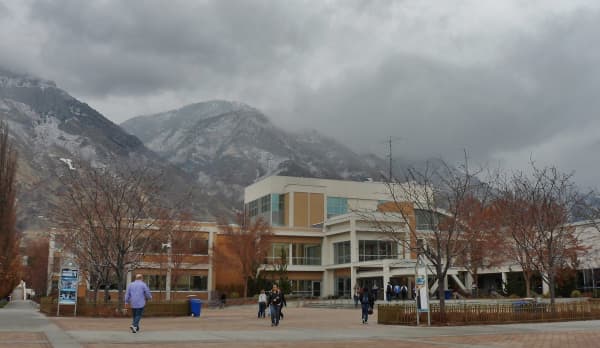
UVU's campus grew fast and in stages, and the layout reflects that rather than any single plan. Newcomers consistently lose time to the same two things.
The building names and the building numbers do not help each other. Signage uses both, course schedules favor the abbreviations, and the abbreviations are not always intuitive from the full name. Looking up where a class meets before the first day is worth the five minutes, particularly for a schedule with back-to-back sections in different buildings.
The campus is more connected internally than it looks from a parking lot. Several buildings link at multiple levels, and the interior routes matter a great deal on a January morning. Students who have been here a semester move through the buildings; students in their first weeks walk around the outside of them in the snow.
Beyond that, the practical orientation advice for a commuter campus is the same everywhere: find the study space that works for you early, learn which food options are quick between classes, and work out one reliable parking fallback for the mornings when your usual lot is full. Our food near UVU coverage handles the first of those and the study spots guide the second.
The bottom line
UVU is the valley's biggest school, its most local one, and — for the tens of thousands of students who work, commute, and are first in their families to do any of this — its most important. This hub will keep growing as we add UVU-specific guides through the year. Cougars looking for the other side of the Parkway: the BYU Guide is over here.
Trying to get out of a lease near campus? UVU runs no approved-housing program, so this is ordinary Utah landlord-tenant territory and the answer turns on whether your lease permits an assignment or only a sublet. Read how to sell your UVU-area housing contract, then list it free on the contract exchange.
Accreditation and classification, and what each one certifies
Two labels get attached to UVU constantly, usually by people who assume they mean the same kind of thing. They do not, and the difference is worth ten minutes of anyone's time before they enroll anywhere.
The first is accreditation. UVU is accredited by the Northwest Commission on Colleges and Universities, an institutional accrediting body recognized by the U.S. Secretary of Education and the Council for Higher Education Accreditation. The relationship goes back to 1969, through every name the school has carried, and its current status is accredited. Its most recent evaluation was the Fall 2024 Evaluation of Institutional Effectiveness, which found it substantially compliant with the commission's standards, and the next scheduled evaluation is a Fall 2026 ad hoc report with a visit.
The part that matters most is the limitation UVU states about itself: NWCCU accreditation applies to the institution as a whole and does not extend to individual programs or locations, because NWCCU is not a programmatic accreditor. A university being accredited tells you the institution as a system meets the standards. It is not a warranty on any particular degree, and it says nothing about whether a specific professional program carries the separate, program-level accreditation that some careers require. If a field you are entering has its own accrediting body — nursing, engineering, education, counseling — that is a second question you have to ask separately, and the answer is not on the university's front page.
The second label is the Carnegie Classification, and in 2025 UVU was named an Opportunity College and University under the newly introduced Student Access and Earnings Classification, a designation given to 478 institutions. Carnegie is descriptive rather than evaluative. It is a framework for grouping institutions that resemble each other so they can be compared honestly, not a ranking and not a quality seal. Reading an Opportunity College designation as "better" or "worse" than a research classification is a category error — it describes a different mission being carried out, measured on access and post-graduation earnings rather than on doctorates produced.
Put together, the two labels answer two different questions. Accreditation answers whether the credits and the degree will be recognized elsewhere and whether federal financial aid can flow. Classification answers what kind of institution this is and which schools it is fair to compare it against. Neither one tells you whether a particular program is any good, which remains a question you have to research department by department.
On September 10, 2025, Turning Point USA co-founder Charlie Kirk was shot and killed while speaking in a courtyard on this campus. For what happened, where the criminal case stands and how the university has handled the year since, see one year after Charlie Kirk was killed at UVU.
Frequently Asked Questions
How big is UVU?
Where is UVU located?
Is UVU a commuter school?
Do UVU students get free public transit?
Does UVU have sports?
Is UVU or BYU bigger?
What is Utah Valley University known for?
Is UVU a commuter school?
Sources
The facts in this guide were checked against these sources. Hours, fees and rules change, so confirm anything time-sensitive with the source before you go. How we make Provo.com.
- Utah Transit Authority: UVX, Utah Transit Authority. Checked October 12, 2026.
- Utah Valley University Continues Educating the Most Utahns With New Record Enrollment, Utah Valley University. Checked October 12, 2026.
- Utah Valley University: About UVU, Utah Valley University. Checked October 12, 2026.
- UVU-UTA Transit Pass FAQs, Utah Valley University. Checked October 12, 2026.
- School of Aviation Sciences, Utah Valley University. Checked October 12, 2026.
- Opportunity Colleges and Universities, Carnegie Classifications (ACE). Checked October 12, 2026.
- 2025 Opportunity Colleges and Universities By State, Carnegie Classifications (ACE). Checked October 12, 2026.
- Utah Valley University institutional directory entry, NWCCU. Checked October 12, 2026.