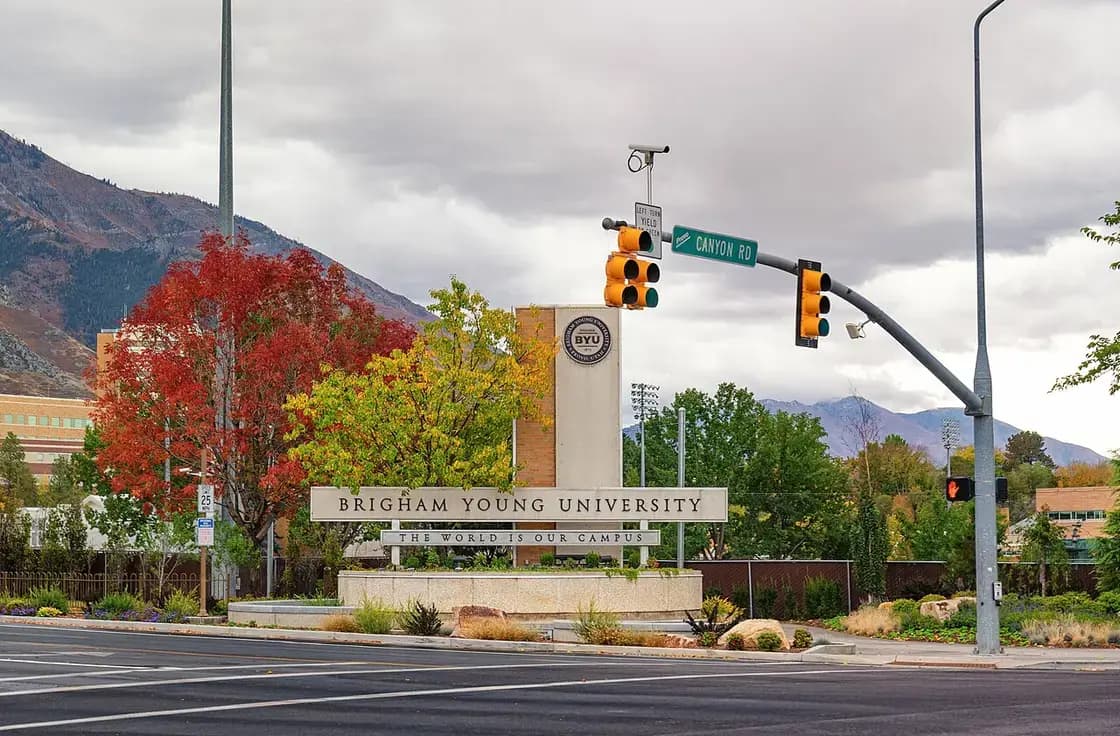
Brigham Young University shapes Provo the way few universities shape any city. It's the largest employer in town, the reason a third of the population turns over every April and August, the engine behind the restaurant scene near campus, and — since the move to the Big 12 — the source of some of the loudest Saturday nights in the Mountain West.
Provo.com has been writing about life around BYU since we started: where students live, what's worth eating within walking distance of campus, how to survive a football Saturday, and what it's like to land here as a freshman, a newlywed, or a returned missionary. This page pulls all of it together in one place — a front door to Cougar country.
If you're a student (or about to be one), start with the student guides. If you're visiting for a game, an MTC drop-off, or Education Week, jump to the sections on game days and events — and if it's a drop-off, our Provo MTC guide for families walks through the whole day.
Everything we have written for BYU students
This is the complete index, filterable by what you need right now. It is generated from the articles themselves rather than typed by hand, so it cannot fall behind the way a manual list does — the sections further down are the edited path through the same material, where the arguing happens.
Nothing matches that combination. Widen a filter — there are 60 pages here.
60 of the 72 pages this site has written for Utah Valley students are tagged BYU. The list is generated from the articles themselves, not typed by hand, so anything published after this page was written appears here automatically.
What makes BYU different
Plenty of universities have a religious affiliation. Very few are structured around one the way BYU is, and the structure is the thing that explains most of what visitors and new students find surprising. For how it got this way, read BYU: a history for non-alumni.
It is a subsidized private university. BYU is sponsored by The Church of Jesus Christ of Latter-day Saints, and tithing funds carry a large share of the cost of educating each student. The practical result is a private research university priced closer to a public one, with a published rate for Latter-day Saint students roughly half the rate charged to everyone else. Our BYU vs UVU comparison sets the current figures side by side with UVU's.
Admission is open to anyone; the commitments are not optional. The student body is overwhelmingly Latter-day Saint, but you do not have to be one to enroll. What every student signs up to is the same: the Church Education System Honor Code, the dress and grooming standards, and an annual ecclesiastical endorsement — a renewal, from a religious leader, confirming that a student is living those commitments. It is the requirement most often misunderstood from outside, because it is not a one-time admissions hurdle. It recurs every year, and losing it is a bigger problem than a bad semester.
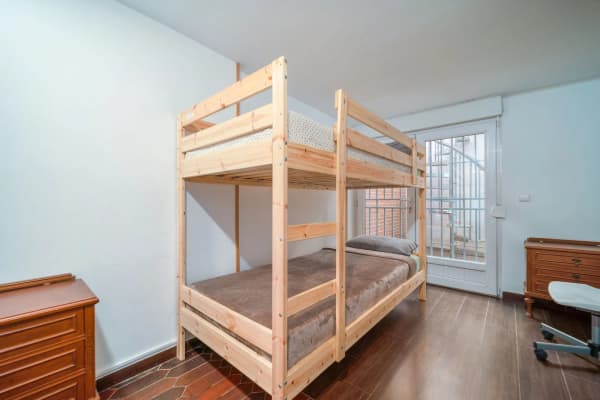
Housing is part of the deal for new students. Single undergraduates are required to live in BYU-contracted housing for their first two semesters, which is why the blocks around campus hold one of the densest concentrations of student housing anywhere in the country and why "contracted" is a word you will see on every listing.
The scale is bigger than the campus footprint suggests. BYU enrolled 35,873 students in 2024–25 — 32,952 undergraduate and 2,921 graduate — and roughly 82% of them live off campus. That single ratio explains the traffic, the apartment market, the restaurant density, and why the city's population statistics behave so strangely. Our Provo population guide works through the arithmetic.
Athletics stop on Sunday. BYU does not play on Sunday, at any level, in any sport. It is not a scheduling preference; it shapes conference logistics and postseason brackets, and it is the most visible edge of a rule the whole city runs on.
Start here: the student guides
New to BYU, or helping someone who is? These are the foundational reads:
The Complete BYU Student Guide — the flagship: academics, campus culture, the Honor Code, wards, and how Provo works for students.
The BYU Honor Code, explained — what the code says now, who administers it since the 2023 rewrite, and which famous rules are no longer in it.
BYU is a residential campus in a way UVU is not — most students live within a couple miles of it, and the housing market around campus is its own ecosystem:
Best Apartments Near BYU — the definitive rundown of BYU-contracted housing, by area and budget.
Two blocks of Provo do more to shape the city's visitor economy than the football stadium does, and only one of them is part of the university.
The Missionary Training Center sits just north of BYU's campus, and it is where missionaries of The Church of Jesus Christ of Latter-day Saints from around the world prepare before their assignments. It is not part of BYU — different institution, different employer, different front door — but it is close enough that the two are constantly confused, including by people booking hotels.
Its effect on the city is structural. Thousands of families travel to Provo every year for drop-offs, and those trips do not cluster around a football schedule or an academic calendar. They arrive steadily, all year, which is a large part of why Provo's hotels, restaurants and airport see consistent visitor traffic in months when a college town of this size would normally be empty. If you have ever wondered why a city of Provo's population supports the hotel inventory it does, this is most of the answer.
It also explains something about the labor market and the classroom. A university where a large share of students have spent eighteen months to two years living and working in another language ends up teaching an unusually wide range of languages for its size, and supports employers — the MTC among them — for whom that fluency is a paid qualification rather than a line on a resume. Our student jobs guide covers the working side of that.
If you're coming for a drop-off rather than a campus tour, our Provo MTC guide for families walks through the whole day — timing, what happens at the curb, and what to do with the rest of the afternoon.
BYU's calendar is Provo's calendar
Football is the loudest version of this. Home Saturdays reorganize traffic across two cities, and the reason the sport occupies the civic position it does here traces back to one season — BYU's 1984 national championship, still the last title voted to a team from outside the sport's biggest conferences.
Most cities have a rhythm. Provo has a timetable, and it belongs to the university.
Two turnover dates run the year. A large share of the city's population changes over in April and again in August, as one cohort graduates or leaves for the summer and another arrives. Leases, hiring, restaurant staffing, ward boundaries and traffic all move on those hinges. If something in Provo seems inexplicably busy or inexplicably empty, check the academic calendar first.
Fall and winter are the full semesters; spring and summer are shorter terms. The city is at its quietest between them, which is when locals do the things that are impossible in October — get a table without booking, park downtown, hike a popular trail on a Saturday morning.
August stacks three events on top of each other. New Student Orientation, Education Week, and the start of football season land within a few weeks, and together they produce the hardest stretch of the year for hotel rooms and restaurant reservations. Anyone visiting Provo in late August should book earlier than feels necessary.
Saturdays in autumn belong to the stadium. Home football weekends move tens of thousands of people through a city built for far fewer, and they change parking, restaurant waits and cross-town driving times for the whole day, not just around kickoff.
Sunday is the reset. Campus closes, most independent restaurants close, and FrontRunner and UVX do not run. It is the single most common thing visitors get wrong, and the failure mode is specific: a drive across town to a locked door.
Beyond the classroom
The biggest BYU story of the decade is happening off the main campus entirely: the university's School of Medicine on its West Campus, the old Provo High site, won preliminary accreditation in October 2026, and its first class of 60 students starts in July 2027. Our explainer covers the full timeline, when applications open and what it means for the city.
Campus is also open to people who don't attend, and more of it than most locals realize: four free museums, the Creamery, public devotionals and arts programming, and a bookstore you can walk into any day but Sunday. Our BYU campus visitor guide covers what's worth seeing, where visitors can park, and the standards guests are asked to observe.
Campus life bleeds into the mountains here. The Y Mountain Trail — the hike to the giant white Y above campus — is the single most iconic thing a BYU student can do in their first week, and our guide covers the trailhead, the switchbacks, and when to go. For everything else within reach of campus, start with free things to do in Provo and our best study spots in Provo & Orem. Hosting visitors for a game, graduation, or the MTC? Point them at where to stay in Provo — the zone they pick shapes the whole weekend.
Sponsored: the BYU Personality Lab is looking for groups of four friends, 18 and older, for an online study on personality perceptions in friendships. See the study notice.
If you're visiting rather than enrolling
Campus is open to the public, and a surprising amount of it is free.
Getting there. BYU sits at the foot of Y Mountain, bounded roughly by University Parkway to the south and the foothills to the east, about 45 miles south of Salt Lake City. The UVX bus rapid transit line stops at campus and links it to downtown Provo, the Provo FrontRunner station, University Place and UVU in Orem — which makes a car optional for a day trip and a liability on a game Saturday.
What to see. Four museums, none of which charge admission: the Museum of Art, the Bean Life Science Museum, the Museum of Paleontology and the Museum of Peoples and Cultures. Add the Creamery for ice cream and the bookstore, and there is a comfortable half-day here without a single ticket. Our campus visitor guide covers where visitors can park, which is the part that trips people up.
What is expected of guests. Visitors are asked to observe the same dress standards as students while on campus. Nobody is going to stop you at the gate, but knowing it in advance is the difference between a comfortable visit and an awkward one.
When not to come. Sunday, unless your plan is a devotional or a walk. Also worth avoiding if you want a quiet campus: Education Week in August, graduation week in April, and any home football Saturday — all three are wonderful and none of them is relaxing.
The bottom line
BYU is why Provo looks, sounds, and schedules itself the way it does. Whether you're enrolling, visiting, moving a student in, or just trying to get across town on a football Saturday, the guides above are the deepest local coverage of Cougar country you'll find anywhere. And if you're on the other side of University Parkway — literally or figuratively — we built the UVU Guide too.
Holding a contract you need out of? BYU-contracted housing can usually be transferred, but only the complex office can complete it — a deal between two students is not a transfer. Read how to sell your BYU housing contract, then list it free on the contract exchange.
What accreditation covers, and what it deliberately does not
BYU is a member institution of the Northwest Commission on Colleges and
Universities, with a status of accreditation reaffirmed; the commission's most
recent action on that status came in 2022, following the regular comprehensive
evaluation cycle. NWCCU is recognized by both the U.S. Secretary of Education
and the Council for Higher Education Accreditation.
BYU is unusually direct about the limits of that, and the university's own
catalog is worth reading closely: accreditation by NWCCU applies to the
institution as a whole, and is not a guarantee of every course or program
offered, nor of the competence of individual graduates. What it provides is
reasonable assurance about the quality of opportunities available to students
who attend. That is a narrower claim than most people hear when they hear
"accredited," and the narrowness is deliberate.
This is precisely why the medical school discussed above sits on a separate
track. Institutional accreditation does not reach down into individual
professional programs; medical education is reviewed by its own programmatic
body on its own timetable, which is why a new program can exist inside a
long-accredited university and still be working toward its own approval. The two
processes run in parallel and neither substitutes for the other. We are not
going to speculate here about how that separate review resolves or when — that
is a live matter with its own timeline, and an article that guesses at it would
be worth less than one that waits.
The general lesson transfers to any applicant anywhere. Institutional
accreditation is what makes credits portable and federal financial aid possible.
Programmatic accreditation is what professional licensing boards frequently
require, and it has to be checked field by field, not assumed from the
university's name.
Separately, and often confused with accreditation, is the Carnegie
Classification, which places BYU among R1 doctoral universities — the grouping
defined by very high research spending and doctorate production. Carnegie is
descriptive rather than evaluative: it sorts institutions by what they actually
do so that comparisons are made between similar schools. It is not a
ranking, it is not awarded for merit, and a school moving between categories has
changed its activity profile rather than its quality.
Advertisement
Frequently Asked Questions
How many students attend BYU?
Brigham Young University enrolls more than 35,000 students from over 100 countries, making it one of the largest private universities in the United States. Unlike its neighbor UVU, BYU is a heavily residential campus — most students live in Provo, within a mile or two of campus, which is why the neighborhoods surrounding BYU have one of the densest concentrations of student housing in the country.
Where is BYU located?
BYU sits in Provo, Utah, about 45 miles south of Salt Lake City, at the base of Y Mountain — the peak with the giant whitewashed 'Y' on its face. Campus sits on the bench in north Provo, against the foothills on the east. The UVX bus rapid transit line stops at campus and connects it to downtown Provo, the Provo FrontRunner station, University Place mall, and UVU in Orem.
What conference does BYU play in?
BYU joined the Big 12 Conference in July 2023 after more than a decade of football independence and West Coast Conference play in other sports. The move transformed game weekends in Provo: LaVell Edwards Stadium now hosts power-conference football Saturdays, and the Marriott Center — the largest basketball arena in the Big 12 — draws sellout crowds through the winter.
Can visitors tour BYU's campus?
Yes. BYU's campus is open to the public, and several stops are worth a visit even if you have no connection to the school: the BYU Creamery for ice cream, the Museum of Art, the Bean Life Science Museum, and the trailhead for the Y Mountain hike just east of campus. Fall football Saturdays and April graduation are the busiest visitor weekends of the year.
What is the MTC in Provo?
The Missionary Training Center (MTC), just north of BYU's campus, is where missionaries of The Church of Jesus Christ of Latter-day Saints from around the world prepare before their assignments. Thousands of families travel to Provo each year for drop-offs, which is part of why the city's hotels, restaurants, and airport see steady visitor traffic well beyond football season.
Do you have to be a member of the Church to attend BYU?
No, but everyone agrees to the same terms. BYU is sponsored by The Church of Jesus Christ of Latter-day Saints and its student body is overwhelmingly Latter-day Saint, yet admission is open to students of any faith. What is not optional is the Church Education System Honor Code, the dress and grooming standards, and an annual ecclesiastical endorsement — a renewed confirmation from a religious leader that a student is living those commitments. Tuition is subsidized by Church tithing, which is why the published rate for Latter-day Saint students is roughly half the rate charged to everyone else.
Why does Provo feel closed on Sunday?
Because its largest institution is. BYU does not hold classes or play athletic events on Sunday, campus effectively shuts, and a large share of Provo's independent restaurants follow the same pattern. FrontRunner and UVX do not run that day either. For a visitor this is the single most useful thing to know about timing a trip: a Saturday in Provo and a Sunday in Provo are two different cities, and plans that assume otherwise fail at the door rather than at the table.
Is BYU or UVU bigger?
UVU is bigger by headcount — it reported a record 48,670 students in fall 2025, the largest enrollment in Utah — while BYU enrolls more than 35,000. The two schools feel very different, though: BYU is private, selective, and residential; UVU is public, open-admission, and largely commuter. Our BYU vs UVU comparison breaks down how to choose between them.
Sources
The facts in this guide were checked against these sources. Hours, fees and rules change, so confirm anything time-sensitive with the source before you go. How we make Provo.com.
JoAnn Giordano is the editor-in-chief of Provo.com. Having lived in and around Utah Valley for years, she leads the site's editorial direction with a focus on the comprehensive, honest local coverage that helps residents, students, and newcomers feel at home. When she's not shaping Provo.com's restaurant and neighborhood coverage, she's exploring the valley's trails and tracking down the best new spots on Center Street.
New restaurants, upcoming events, housing and the best of Provo. The Weekly has not sent its first issue yet — add your email and you will be on the list when it does.
✓ You're on the list. We'll email you when the first issue goes out.