
One of the most underappreciated things about living in Provo is that you can get by without a car (UVU commuters: your campus-specific playbook — permits, lots, the pedestrian bridge — is the UVU commuter survival guide) — especially if you're a student. Free public transit (FrontRunner and UTA buses for BYU and UVU students), a growing bike infrastructure, and a compact city layout mean that driving is a choice, not a requirement, for many residents.
This guide covers every transportation option in and around Provo, from FrontRunner commuter rail — free with a current BYU or UVU student ID, and a paid fare for everyone else — to biking, driving, and ride-sharing.
FrontRunner Commuter Rail
What It Is
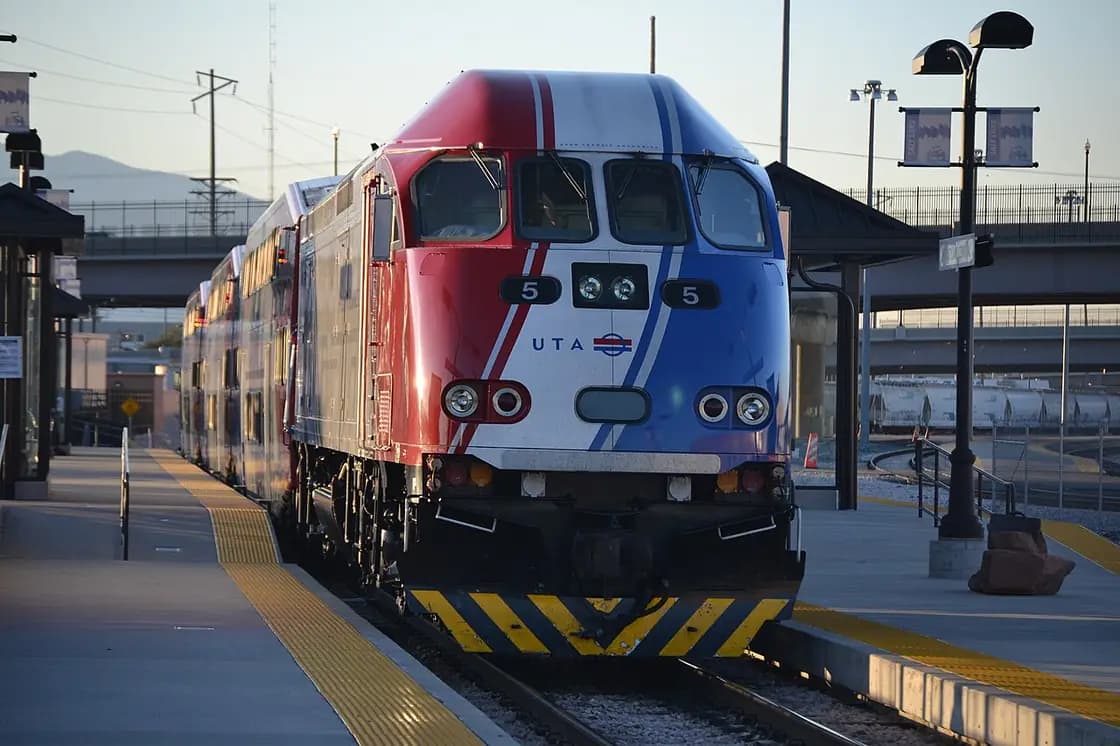
FrontRunner is UTA's commuter rail line running from Provo to Ogden, with major stops in Salt Lake City, Lehi, Orem, and points north. It's the spine of the Wasatch Front transit system and, for Provo residents, it's the fastest way to get to Salt Lake City without driving.
Key Details
| Detail | Info |
|---|---|
| Provo station | Provo Central Station, south of downtown |
| Orem station | Orem Central Station, west Orem |
| Travel time to SLC | ~65–75 minutes |
| Days | Monday-Saturday only - no Sunday service at all |
| Frequency | Every 30 min (peak), every 60 min (off-peak and Saturdays) |
| Hours | Early morning to evening; last trains are earlier than people expect |
| Cost | Free for BYU & UVU students; others pay by distance ($2.50 plus $0.60 per extra station) |
| Bikes | Allowed on board (bike racks on lower level) |
| Wifi | Available on trains |
The Sunday gap
FrontRunner does not run on Sundays. Neither does UVX, nor route 833 to Provo Airport. That is UTA's standing schedule rather than an occasional reduction, and it is the single most consequential thing to know about transit here.
The reason is mechanical rather than cultural: most of the corridor is single-tracked, so UTA concentrates track maintenance into one day a week, and the agency has publicly tied regular Sunday service to getting more of the line double-tracked.
What it means in practice: any plan that depends on the train has to survive Sunday without it. A car-free week in Provo works fine; a car-free Sunday trip to Salt Lake City does not. TRAX still runs in Salt Lake County, so the gap is specifically the commuter-rail spine between the valleys.
Why It Matters
For students: FrontRunner is completely free with a valid BYU or UVU student ID. This gives you free access to Salt Lake City — Jazz games, concerts, restaurants, the airport, and everything else the capital offers. This alone saves $100+/month compared to driving and parking.
For commuters: Many Provo residents work in the Lehi/Draper/Sandy tech corridor or downtown Salt Lake City and commute via FrontRunner. The 65-minute ride is productive time — read, work on a laptop, or sleep — rather than stressful driving time on I-15. Monthly passes for non-students are available through UTA.
For visitors: FrontRunner connects directly to Salt Lake City International Airport via the TRAX light rail transfer at North Temple station. Provo to airport takes about 90 minutes total.
UTA Bus System
UTA operates a network of bus routes throughout Provo, Orem, and the surrounding area. Key routes connect BYU and UVU campuses, downtown Provo, residential neighborhoods, and major shopping areas.
For students: All UTA buses are free with a valid BYU or UVU student ID. This includes routes throughout Utah County and connections to Salt Lake County.
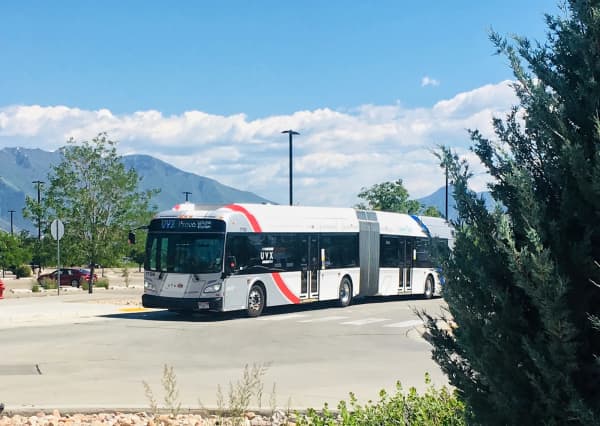
The UVX: A bus rapid transit (BRT) line connecting UVU in Orem to BYU in Provo along University Avenue. The UVX runs frequently (at frequent intervals during peak hours), has dedicated bus lanes in some sections, and is the fastest bus connection between the two campuses. Free for students.
Trip planning: Download the UTA app for real-time schedules, route planning, and arrival predictions. Google Maps also integrates UTA schedules for transit directions.
Biking
Provo is increasingly bikeable, though it's not yet a cycling utopia. The key infrastructure:
Provo River Parkway: a paved trail from Utah Lake through the city and into Provo Canyon. The best cycling route in the valley — flat, scenic, and separated from car traffic.
Bike lanes: Several major roads have bike lanes, including University Avenue and portions of Center Street. The network is growing but still has gaps.
Bike share: Provo's shared program is Bird's dockless scooters and e-bikes, with a student discount. They are useful for short trips between campus and downtown.
Mountain biking: The Bonneville Shoreline Trail and Sundance offer mountain biking terrain accessible from the city. The foothills trails range from beginner to advanced.
Reality check: Biking works well for campus-to-downtown trips, Provo River Parkway recreation, and neighborhood errands. For longer commutes or trips to Orem's spread-out commercial areas, a bike is limiting. Winter biking is possible but requires cold-weather gear and caution on icy roads.
Driving
If you do have a car, Provo is easy to drive — short distances, manageable traffic (by any metro standard), and good highway access.
I-15: The major north-south freeway connecting Provo to Orem, Lehi, and Salt Lake City. Commute times to SLC are 45–75 minutes depending on time of day. Rush hour (7–9 AM, 4–6 PM) adds 15–20 minutes.
Parking near BYU: Limited and expensive. Campus parking permits cost $100–$200/semester. Street parking in surrounding neighborhoods has time limits. If you live within biking or walking distance of campus, leaving the car at home saves money and stress.
Parking downtown: A free public parking structure behind Center Street handles most downtown parking needs. Street parking has 2-hour limits during business hours.
Gas prices: Typically $0.10–$0.20 cheaper per gallon than Salt Lake City. Utah gas prices overall are near the national average.
Ride-Sharing & Other Options
Uber/Lyft: Available in Provo but with more limited availability than Salt Lake City. Wait times can be longer, especially late at night and during peak events (football games, graduation). Prices are generally reasonable for in-town trips.
E-scooters: Electric scooter rentals are available in some parts of the city. Useful for short trips, though availability varies.
Car-sharing (Zipcar): Available near BYU campus for students who need occasional car access without owning one. Hourly and daily rates include gas and insurance.
Commuting from Provo: Common Routes
Provo → Salt Lake City (Tech/Finance Jobs)
Best option: FrontRunner (free for students, distance-based fare for others). Productive time, no parking costs, no traffic stress. Transfer to TRAX light rail for final-mile connections in SLC.
Provo → Lehi/Draper (Tech Corridor)
Best option: Drive via I-15 (25–40 minutes) or FrontRunner to Lehi station (30 minutes by train). The tech corridor between Lehi and Draper is car-dependent — most office parks aren't walkable from transit stops — but FrontRunner gets you close.
Provo → Orem (UVU, Shopping)
Best option: UVX bus rapid transit (free for students, runs frequently). Fast, frequent, and direct along University Avenue.
Within Provo
Best option: Bike or bus for students. Car for everyone else, though many in-city trips are short enough to walk or bike.
The Sunday Problem, Stated Plainly
Every guide to getting around Provo without a car eventually arrives at the same wall, and it is worth confronting rather than footnoting: on Sunday, the network largely stops.
What that means concretely. FrontRunner does not run at all. Neither does UVX, the bus rapid transit line that is otherwise the single most useful piece of transit in the valley. Coverage on the remaining local routes is thin where it exists. A car-free week in Provo is comfortable for six days and then presents you with a seventh that has to be planned around rather than lived through.
Who this affects, and how much. For a student whose life is bounded by campus, housing and a grocery store within walking distance, Sunday is a non-event. For anyone who works a Sunday shift — hospitality, healthcare, retail, the airport — it is the deciding factor in whether car-free is possible at all, and no amount of good weekday service compensates. That distinction matters more than any comparison of headways, and it is the question to ask yourself first.
The workarounds, ranked. Rideshare runs and is the reliable answer, but two Sunday trips a week at Utah Valley distances add up to a real monthly figure that belongs in the comparison against car ownership rather than being waved away. Cycling covers most in-city trips well; Provo is flat where most people live, and the Provo River Parkway does more work than its length suggests. Borrowing a ride is common here and worth saying out loud, because the local culture around it is unusually generous — but a commuting plan that depends on other people's goodwill is a plan with someone else's schedule inside it.
Plan the week backwards from Sunday. Groceries, laundry, anything requiring a car-sized load: do it Saturday. Almost everyone who lives here car-free arrives at that rhythm eventually. Arriving at it deliberately in your first month is better than discovering it in your third.
Who Actually Runs This, and Why It Changed
Almost nobody riding FrontRunner knows that the agency operating it was restructured from the top down less than a decade ago, or that the restructuring is the reason certain things about the service work the way they do.
S.B. 136, the 2018 Transportation Governance Amendments. Sponsored by Sen. Wayne Harper and Rep. Mike Schultz and drawn from the recommendations of a legislatively created Transportation Governance and Funding Task Force, the bill rebuilt UTA's leadership. It replaced a sixteen-member part-time board of trustees with three full-time trustees — nominated by the counties, appointed by the Governor and confirmed by the Senate — and created a separate nine-member local advisory board appointed through the region's councils of governments. The new structure took effect in November 2018. The agency's president and CEO was terminated that April after trustees concluded the role would not exist under the new law.
It also ordered a name change that never happened. The same bill required UTA to become the Transit District of Utah. UTA warned lawmakers that complying would mean cutting service, canceling contracts or selling assets, and separately that a provision handing UDOT oversight of state-funded transit projects risked as much as $60.8 million in federal formula funding if the Federal Transit Administration decided the agency was no longer sufficiently independent. The rename was slow-walked, publicly and with some acrimony. Every sign, vehicle, timetable and public notice today still says Utah Transit Authority.
The funding half is the part that reaches Provo. S.B. 136 created a statewide Transit Transportation Investment Fund for transit capital projects, subject to legislative appropriation and a 40% local match, and authorized a new 0.20% county option sales tax in the counties fully inside the UTA district — Weber, Davis, Salt Lake and Utah. That is the machinery behind most of the capital work described below. When you hear that a transit project needs a local match before the state money moves, this is the rule being referred to.
Why this matters to a rider rather than a policy reader. A three-person full-time board is a much smaller surface to petition than sixteen part-time trustees, and its meetings and agendas are public and posted in advance. If you want a route changed, a stop added, or an explanation for a schedule decision, that is where the decision is made — not at a station and not through a customer service line.
What Is Actually Being Built
FrontRunner's central limitation is not the trains. It is that long stretches of the line are single track, which means a delay anywhere propagates, and frequency cannot improve much without somewhere for trains to pass each other. Fixing that is the point of the program UTA calls FrontRunner Forward.
Strategic double-tracking, in named segments. Rather than double-tracking the whole line at once, the program targets specific stretches. UTA's own board records show advanced conceptual design commissioned for strategic double track projects at American Fork, Lehi, Woods Cross and Clearfield — two of those four in Utah County, on the stretch Provo commuters ride every morning. In a 2023 report to the Legislature, UTA said six of nine double-tracking sections had been environmentally cleared, that a cooperative agreement with UDOT was complete, that a joint phasing plan had gone to the Legislature, and that agreements with Union Pacific, which owns much of the corridor, were still being worked through.
A southern extension is in study, not under construction. The same report lists a South Valley FrontRunner extension from Provo to Payson, with a traffic study for Springville completed. If it is ever built it changes the commuting math for the whole south end of the county. It is not funded to construction, and nothing about it should factor into a housing decision today.
Bus service keeps changing too, and more than people expect. UTA has added an On Demand zone covering parts of west Provo and Orem — a curb-to-curb service booked through an app rather than a fixed route — reaching destinations including the Provo airport, Provo High School, City Hall, the FrontRunner stations and Centro Hispano, plus a route linking Provo Central Station to Spanish Fork through Springville. Coverage areas and hours for on-demand zones change more often than rail schedules do, so check the current map before planning around it.
How to read any of this. Timelines on rail projects slip, and the difference between "environmentally cleared," "designed," "funded" and "under construction" is several years each. Treat published completion dates as intentions. The reliable version is the board agenda, which is public, posted before each meeting, and specific in a way that a press release is not.
The Car-Free Calculation
For students, going car-free in Provo is not just possible — it's financially smart. The savings are significant: no car payment ($200–$400/month), no insurance ($80–$150/month), no gas ($80–$150/month), no parking ($50–$100/month). Total potential savings: $410–$800/month.
With free FrontRunner, free buses, bike-share access, and a walkable campus area, most students can handle 90%+ of their transportation needs without a car. The remaining 10% (grocery runs, occasional trips to Orem) can be handled with ride-sharing, Zipcar, or borrowing a friend's car.
Related Guides
- Cost of Living in Provo
- Moving to Provo: The Ultimate Guide
- Student Discounts & Deals
- Day Trips from Provo
- Provo vs Salt Lake City
- PVU or SLC: Which Airport Should You Fly From?
- FrontRunner from Provo: What to Know Before You Ride
- Car Ownership in Utah Valley 101: Registration, Emissions & Winter Reality
- Canyon & commute conditions — the driving side of the same problem, corridor by corridor
- The Provo Newcomer's Guide — the commuting choices as a first-fortnight checklist
- UTA On Demand in Utah County: The Van You Hail Like an Uber for $2.50
- I-15 Through Utah County: Exits and Express Lanes
- Bike Commuting in Provo
- Where to Live in Utah County If You Work in Salt Lake: The Commute Math, City by City
- UTA Fares and Passes Explained for Utah County
- Commute Cost Calculator — drive, carpool or FrontRunner, priced by the month from published figures
- UTA Vanpool and Carpooling From Utah County
Last updated: April 2026. Transit schedules, pricing, and routes change — check the UTA website or app for current information.
Frequently Asked Questions
Is public transit free for students in Provo?
How do I get from Provo to Salt Lake City?
Can I live in Provo without a car?
Why is FrontRunner so slow between Provo and Salt Lake City?
Who runs UTA and how do I get a route changed?
Will FrontRunner ever extend south of Provo to Springville or Payson?
Is there a UTA on-demand service in Provo?
Was UTA renamed the Transit District of Utah?
Sources
The facts in this guide were checked against these sources. Hours, fees and rules change, so confirm anything time-sensitive with the source before you go. How we make Provo.com.
- Utah Transit Authority: FrontRunner, Utah Transit Authority. Checked October 12, 2026.
- Utah Transit Authority: Current Fares, Utah Transit Authority. Checked October 12, 2026.
- UTA School Pass Programs: Brigham Young University, Utah Transit Authority. Checked October 12, 2026.
- UTA School Pass Programs: Utah Valley University, Utah Transit Authority. Checked October 12, 2026.
- Utah Transit Authority: UVX, Utah Transit Authority. Checked October 12, 2026.
- SB 136 summary (2018), Wasatch Front Regional Council. Checked October 12, 2026.
- Provo now offers Bird motorized scooters and bikes to get around town, Daily Herald. Checked October 12, 2026.