
If you're considering living in Provo — or you've already arrived and want to understand the safety landscape — the short answer is yes, Provo is a safe city. But "safe" doesn't mean "no crime," and understanding the specifics will help you make informed decisions about where to live and how to protect your property.
This guide looks at the actual data, breaks down safety by neighborhood, and gives you the practical advice that matters day-to-day.
The Data: How Provo Compares
The state's 2024 Crime in Utah report, compiled by the Bureau of Criminal Identification from police NIBRS data, is the most useful local yardstick. Provo Police reported 4,748 offenses in 2024, or 42.1 per 1,000 residents, against 30.8 per 1,000 for Utah County as a whole. Provo runs above the county average, and the reason is mostly property crime. Here's how the numbers break down:
Crimes against persons — 846 offenses in 2024, including 119 aggravated assaults and 2 homicide offenses. Serious violence is rare for a city of this size.
Property crime — 2,521 offenses, the largest category by far. This is where Provo sees the most activity: theft, bicycle theft, car break-ins, and package theft.
Crimes against society — 1,381 offenses, a category that includes drug and similar violations.
Campus safety — BYU consistently ranks among the safest large university campuses in the country, and UVU's campus also reports low crime rates. If you're a student, the campus environments are safe.
Neighborhood Safety: Where Matters
Crime in Provo isn't evenly distributed. Like any city, some areas are quieter than others.
Safest Areas
North Provo / Edgemont — Consistently the lowest crime rates in the city. Residential, suburban, and family-oriented. If safety is your top priority and you have the budget, this is the safest bet.
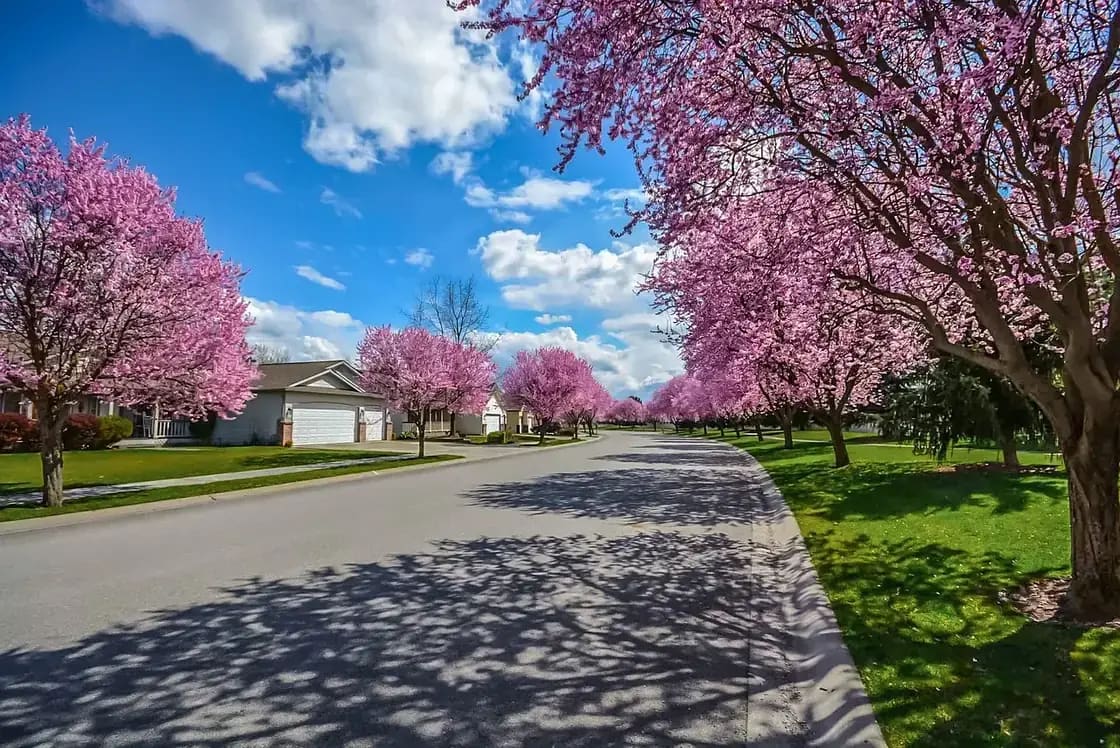
Tree Streets / Rock Canyon — Low crime, established neighborhood with an engaged community. The proximity to the foothills means fewer pass-through traffic patterns, which correlates with lower property crime.
BYU Campus Area — Campus police presence, high foot traffic, and the university's security infrastructure make this area safe, particularly for students. The main risk is bicycle theft — lock your bike properly every time.
Orem — Provo's neighbor to the north offers suburban neighborhoods and a quieter feel; compare its numbers with Provo's on the state's Crime in Utah dashboards.
Areas With More Activity
Downtown Provo — The most active area for property crime, which makes sense — it has the highest foot traffic, the most commercial activity, and the most nighttime activity. Violent crime downtown is still rare, but car break-ins, petty theft, and the occasional aggressive panhandling do occur. Standard urban awareness applies.
South Provo — Reports slightly higher crime rates than northern neighborhoods, driven primarily by property crime. The area includes more rental housing, more transient population, and more commercial corridors — all of which correlate with higher property crime rates nationally. It's not unsafe, but it benefits from more vigilance about locking doors and securing belongings.
University Avenue corridor — The busiest commercial strip in the city. More activity means more opportunity for theft. Secure your car and don't leave valuables visible.
For a detailed breakdown of every Provo neighborhood's character and livability, see our Complete Neighborhood Guide.
The Most Common Crimes (And How to Avoid Them)
The vast majority of crime in Provo is opportunistic property crime — things that happen because someone left a door unlocked, a bike unsecured, or a package on the porch. Here's what to watch for:
Bicycle Theft
This is the single most common crime complaint in Provo, particularly near campus. Students are the primary targets. Always use a U-lock (cable locks are easily cut), register your bike with BYU or local police, and bring your bike inside at night if possible. Don't leave expensive bikes on porch railings overnight — it's the easiest theft in the world.
Package Theft
Package theft rises during the holiday season but occurs year-round. Use delivery lockers where available, request signature-required delivery for expensive items, and consider a package lockbox if you live in an area with porch access.
Car Break-Ins
The rule is simple: don't leave anything visible in your car. No backpacks, no laptops, no bags. Even empty bags can attract a break-in from someone hoping there's something inside. Lock your car every time, even if you're "just running in for a minute."
Apartment Break-Ins
Less common than the above, but they happen — usually when doors or windows are left unlocked. Ground-floor apartments are more vulnerable. Lock your doors, even when you're home. If your apartment complex has a buzzer or gate system, use it.
Safety for Specific Groups
Students
Provo is one of the safer college environments in the country. BYU's Honor Code and campus security create a uniquely low-crime campus culture, and UVU's campus is similarly safe. The main student-specific risks are bike theft and apartment break-ins. Walk with awareness at night, use well-lit routes, and lock everything.
Women
Standard precautions apply: trust your instincts, let someone know where you're going on dates with new people, and use the buddy system late at night. BYU's campus escort service is available for students who need a safe walk home after dark.
Families
Provo is an exceptionally family-friendly city from a safety perspective. The neighborhoods where families tend to live — Edgemont, Tree Streets, north Provo — have very low crime rates. The schools are safe, the parks are well-maintained and monitored, and the community is actively engaged in neighborhood watch programs.
Outdoor Safety
This isn't crime-related, but it's worth mentioning: the most dangerous thing in Provo isn't another person — it's the mountains. Trail accidents, flash floods in canyons, and winter avalanche danger are the actual safety risks that claim lives in this area. If you're hiking, skiing, or spending time in Provo Canyon, take the terrain seriously. See our Complete Hiking Guide for trail-specific safety advice.
Emergency Resources
Provo Police Department — Non-emergency: (801) 852-6210. For emergencies, call 911.
BYU Police — (801) 422-2222. Available 24/7 for campus-related concerns.
UVU Campus Safety — (801) 863-5555.
Provo City Community Action Services — Resources for domestic violence, housing assistance, and crisis support.
The Bottom Line
Provo is safe by almost any meaningful metric. Violent crime is rare. The community is engaged and watchful. The police department is responsive. If you're moving from a larger city, you'll likely feel a noticeable improvement in your day-to-day sense of safety.
The main thing to be smart about is property crime — locking your bike, locking your car, locking your apartment, and not leaving packages unattended. These are crimes of opportunity, and eliminating the opportunity eliminates the risk.
The Risk That Actually Shows Up: Wildlife on the Road
The section above makes the point that the mountains, not other people, are what hurt residents here. There is a second version of that same point, and it is the one almost nobody thinks of when they ask whether Provo is safe: the most statistically ordinary serious hazard in Utah is hitting an animal with your car.
The scale is larger than most residents assume. The Division of Wildlife Resources estimates that on the order of 10,000 deer are killed by vehicles in Utah each year, a figure that is itself an estimate because roughly half of collisions are never reported to authorities. Researchers at Utah State University have put the number of collisions involving deer higher still, at around 20,000 annually — the two figures measure different things and are not in conflict, but together they describe a hazard operating at a scale nothing in the local crime statistics matches.
The cost figures give the same picture from the other direction, and here the sources disagree in a way worth flagging rather than smoothing over. A 2019 report commissioned by UDOT, Identification of Wildlife-Vehicle Conflict Hotspots in Utah, is the origin of the widely quoted figure that these collisions cost Utahns roughly $165 million a year. Other summaries citing UDOT put the annual cost nearer $138 million. Both numbers circulate; they rest on different assumptions about what to count, and this guide is not going to pretend one of them is the answer. The order of magnitude is the point.
When and where it happens
Two patterns run through the Utah data and both are actionable.
It is a darkness problem. A UDOT study of one Utah state highway corridor found that of 469 reported animal-related crashes, only about 20 percent occurred in daylight. The large majority happened in darkness or in the low light either side of it. Dawn and dusk are when animals move and when drivers see worst.
It is a seasonal problem. Collisions concentrate in autumn and winter, because that is when deer and elk migrate between high summer range and lower winter range, crossing highways twice a year to do it. A road that is quiet in July can be a hazard in November for reasons that have nothing to do with the road.
For Utah Valley specifically, the exposure is on the routes out rather than in town. The canyon roads, the drive north over the Wellsvilles toward Cache Valley, and the two-lane highways heading south all cross migration ground. The Sardine Canyon corridor on US-89/91 has been identified in state project documentation as the eleventh-highest wildlife-vehicle collision hotspot in Utah, and it is fenced — which tells you something about the unfenced stretches.
What the state is doing about it
This is one of the areas where Utah has a strong record, and it is worth knowing because it changes how you read a stretch of highway.
Utah built the first wildlife overpass in the United States, near Beaver on I-15. Sources differ on the year — 1970 and 1975 both appear in published accounts — which is a small thing but the kind of small thing this guide would rather flag than guess at. Since then the state has built a substantial network of crossing structures, most of them underpasses; published counts range from around 50 to more than 60 depending on the source and the date, and the number is still rising, so treat any specific figure as a snapshot.
The evidence that they work is unusually clean. Crossing structures paired with exclusion fencing and jump-outs — the ramps that let an animal that has got onto the wrong side of a fence get back off the road — have been found to reduce collisions by around 90 percent. The narrow overpass UDOT installed across I-80 in Parleys Canyon in 2018 has been studied by USU researchers, who documented both mule deer and moose using it, with estimated savings in avoided collision costs running into the tens of millions over the structure's lifetime.
The 2019 hotspot study identified roughly 50 locations statewide where this infrastructure is still needed. That backlog is why the topic keeps appearing in the legislature and why federal grants under the Wildlife Crossings Pilot Program have gone to Utah projects, including underpasses and additional fencing on US-89 near Kanab.
What to do
The practical advice is short and does not change much by season.
- Slow down at dawn and dusk on any road with high ground beside it. Reaction distance is the whole game, and it is the only variable you control.
- Use high beams whenever there is no oncoming traffic, and scan the verges rather than the center line. Eyeshine at the shoulder is the warning you get.
- Brake hard and stay in your lane. The advice from transport agencies is consistent on this: swerving is what turns an animal strike into a rollover or a head-on. This is counter-intuitive and worth deciding in advance, because there is no time to decide it in the moment.
- Remember that moose are the exception. They are dark, they do not reflect headlights the way deer do, and they are often standing still rather than crossing. Canyon roads in the northern part of the state are where you meet them.
- Report what you see. Utah's Roadkill Reporter app, run by the Division of Wildlife Resources with UDOT, exists so carcasses are cleared before they cause a second crash and so the collision data that drives fencing decisions keeps improving.
None of this makes the drive dangerous in a way that should change your plans. It makes it a known risk with known mitigations, which is more than can be said for most of the things people worry about when they ask whether this is a safe place to live.
What gets hit
The Roadkill Reporter app's first year gives an unusually concrete picture of what is on Utah's roads, because for once the reporting is species-level. Of 3,843 animals logged in that first year, about 98 percent were mule deer — 3,611 of them. Elk accounted for 157 and pronghorn 22. The remainder is a long tail that tells you something about the state: eight cougars, five coyotes, seventeen raccoons, three red foxes, three wild turkeys, two black bears, two bighorn sheep, a porcupine, a snowshoe hare, an American badger, and a single canyon treefrog. The badger and the treefrog are the reason biologists were pleased with the app — small-species data had essentially not existed before.
It is also worth knowing why the fencing debate is more technical than it sounds. Fences do not fail in the middle; they fail at the ends and at the access roads that cross them, which is where animals walk around into the right of way. UDOT research along US-191 and US-89 tested electrified pavement treatments at those gaps and found them roughly 46 to 50 percent effective at deterring mule deer — about the same as a single cattle guard, at 53 percent — with cameras documenting far more deer entering the right of way near the fence ends than crossing the electric mats. The recommendation was to stay with double cattle guards and purpose-built wildlife guards at fence ends. That is the unglamorous engineering behind a number like "90 percent fewer collisions": the crossing structure gets the credit, but the fence ends decide whether it works.
Related Guides
- The Utah County Courts, Explained
- Finding Someone in the Utah County Jail
- Moving to Provo: The Ultimate Guide
- The Complete Guide to Provo Neighborhoods
- Cost of Living in Provo
- Provo vs Salt Lake City
- Best Apartments Near BYU
- Best Schools in Provo & Orem
- Best Grocery Stores in Provo & Orem (2026)
- Provo for Retirees: The Other Demographic in America's Youngest College Town
- Utah's Concealed Firearm Permit
Last updated: April 2026. Crime statistics are based on the most recently available FBI UCR data and local reporting.
Frequently Asked Questions
Is Provo Utah a safe city?
Is Provo safe for college students?
What are the safest neighborhoods in Provo?
Is it safe to hike alone in Provo?
Are wildlife-vehicle collisions really a significant safety risk in Utah?
What time of year and day are animal collisions most likely?
If an animal steps into the road, should I swerve?
Which roads around Utah Valley are the highest risk?
Is Utah doing anything about wildlife on the highways?
Sources
The facts in this guide were checked against these sources. Hours, fees and rules change, so confirm anything time-sensitive with the source before you go. How we make Provo.com.
- 2024 Crime in Utah Report, Utah Department of Public Safety, Bureau of Criminal Identification. Checked October 12, 2026.
- Crime in Utah Dashboards, Utah Department of Public Safety, Bureau of Criminal Identification. Checked October 12, 2026.