Quietly, on the west side of town, Provo is getting something only a handful of American cities ever get: a brand-new medical school. It will reshape the old Provo High School site, deepen the city's ties to Utah Valley Hospital, and — if the timeline holds — put the first class of future doctors in seats in the fall of 2027.
Because most of the process happens behind the closed doors of accreditation, it's been easy to lose the plot since the 2024 announcement. So here it is, start to finish: what's been decided, what's pending, and why this is one of the biggest long-term stories in the valley.
The announcement, and the why
In July 2024, the First Presidency of The Church of Jesus Christ of Latter-day Saints — which owns and operates BYU — announced the university would create a School of Medicine. The stated focus set it apart from a typical new medical school from day one: a major emphasis on international health issues affecting church members and on the church's worldwide humanitarian efforts, alongside teaching and research in areas of strategic importance to the church.
Two structural decisions were made at the outset. First, the school will grant MD degrees, making it Utah's second MD program alongside the University of Utah (the state's other two medical schools — Noorda College of Osteopathic Medicine, also in Provo, and a Rocky Vista University campus in southern Utah — grant DO degrees). Second, BYU will not build its own hospital. Students will train through clinical affiliations instead — more on that below.
The dean and the team
In October 2024, BYU named Dr. Mark J. Ott the school's inaugural dean; he started that November. Ott is an accomplished surgeon who spent most of his career with Intermountain Health, with academic and affiliate appointments across Johns Hopkins, Harvard Medical School, Stanford, and the University of Utah — a résumé that conveniently spans both of the school's likely clinical worlds.
Faculty hiring is well underway, and it has produced at least one hire that med-school hopefuls will recognize: Dr. David Morton, the anatomist behind the popular "Noted Anatomist" YouTube channel, has announced he's joining BYU's new school as a department head.
Where accreditation stands (the part that decides everything)
Every MD program in the United States is accredited by the Liaison Committee on Medical Education (LCME), and a new school can't recruit a single student until the LCME says so. Here's BYU's path so far:
- July 31, 2025 — BYU submitted its application: its data collection instrument, assembled in under seven months to hit the deadline that kept a 2027 opening possible.
- Fall 2025 — The LCME reviewed the application and granted BYU candidate status, the formal step toward preliminary accreditation.
- June 2026 — The LCME conducted its survey visit to Provo. The visit was closed to the public and press — though Governor Spencer Cox visited campus the same week and posted about meeting with the school's leaders.
- Next: the decision. The LCME publishes its meeting calendar, and the fall meeting of the 2026–27 academic year is listed as September 25 and October 12–15, 2026. BYU's preliminary-accreditation decision is expected to come out of that fall meeting. As of the LCME's own directory of applicant and candidate programs, last updated August 20, 2026, BYU School of Medicine is still listed at candidate status — which is what you would expect, because preliminary accreditation is granted at a meeting, not on a rolling basis.
Two more accreditation facts frame the whole timeline. For a new school, full accreditation can't be granted until that first class graduates, which at the earliest means 2031. In other words: even in the best case, this is a story Provo will be living with, milestone by milestone, into the 2030s.
What happens at the October meeting
This is the part almost no coverage explains, so here is the mechanism, drawn from the LCME's own published rules.
The LCME meets three times a year — usually October, February and June — and decisions on new schools are made at those meetings by a committee of 21 voting members: 17 medical educators and practicing physicians, two public members, and two medical students. Between meetings, nothing is decided. That is why the calendar matters so much to a school whose opening date depends on the answer.
For a candidate school seeking preliminary accreditation, the LCME reviews the survey team's final report along with the school's data collection instrument, its self-study, and one document that rarely gets mentioned in news coverage: a teach-out plan. A teach-out plan is the school's answer to an uncomfortable question — if this school admits students and then fails, what happens to those students? A new medical school has to have that answer in writing before it is allowed to enroll anyone.
The four things the LCME can do
Reading the rules, the decision is not a simple yes or no. There are four outcomes:
- Grant preliminary accreditation. The school moves to "Preliminary, Accredited" and may immediately begin reviewing and accepting applications. A provisional survey visit is then scheduled. The status takes effect on the date the LCME acts and is never applied retroactively.
- Grant it, with strings. If the LCME notes minor issues in how the school performs against specific accreditation elements, it can grant preliminary accreditation but require written status reports addressing them.
- Send back the teach-out plan. If the LCME finds gaps in the teach-out process, it can ask for a revised plan — to be reviewed at its next regularly scheduled meeting. For a fall decision, that next meeting is February 16–18, 2027. This is the outcome most likely to be misread publicly as a rejection. It is not one.
- Deny preliminary accreditation. This is appealable. A program finally denied may not reapply for one year.
So a school can clear the survey visit and still not have a clean "yes" in October. Any of the middle two outcomes would push the practical timeline without ending anything.
Why BYU has been so quiet
There is a concrete reason the school has said almost nothing, and it is not media strategy. Under LCME rules, a program that has not yet received preliminary accreditation must not recruit or advertise for students, solicit or collect application fees, collect applicant information, begin reviewing applications, schedule applicant interviews, or issue letters of admission.
The penalty for doing any of it is not a warning. A program that breaks this rule forfeits its eligibility entirely — it cannot apply for preliminary accreditation until its medical education program is complete and at least one class has graduated. For a school that does not yet have a single student, that is effectively fatal. It explains the careful phrasing in everything BYU has published, and it is why no one can apply yet no matter how much they want to.
One clock that starts if the answer is yes
If preliminary accreditation is granted, a five-year timer starts. Under rules applying to any program granted preliminary accreditation in or after 2021, the school must reach provisional accreditation within five years of the preliminary grant. Miss it and the LCME withdraws the status, and the program waits a year before it can submit a new application. A yes in October 2026 would therefore set a provisional deadline in late 2031.
For scale on how rare this is: the LCME's directory lists seven programs nationally in the applicant-or-candidate pipeline, and only three of them — BYU, Texas A&M's School of Engineering Medicine, and Xavier Ochsner College of Medicine in New Orleans — have reached candidate status.
The building: West Campus and the old Provo High
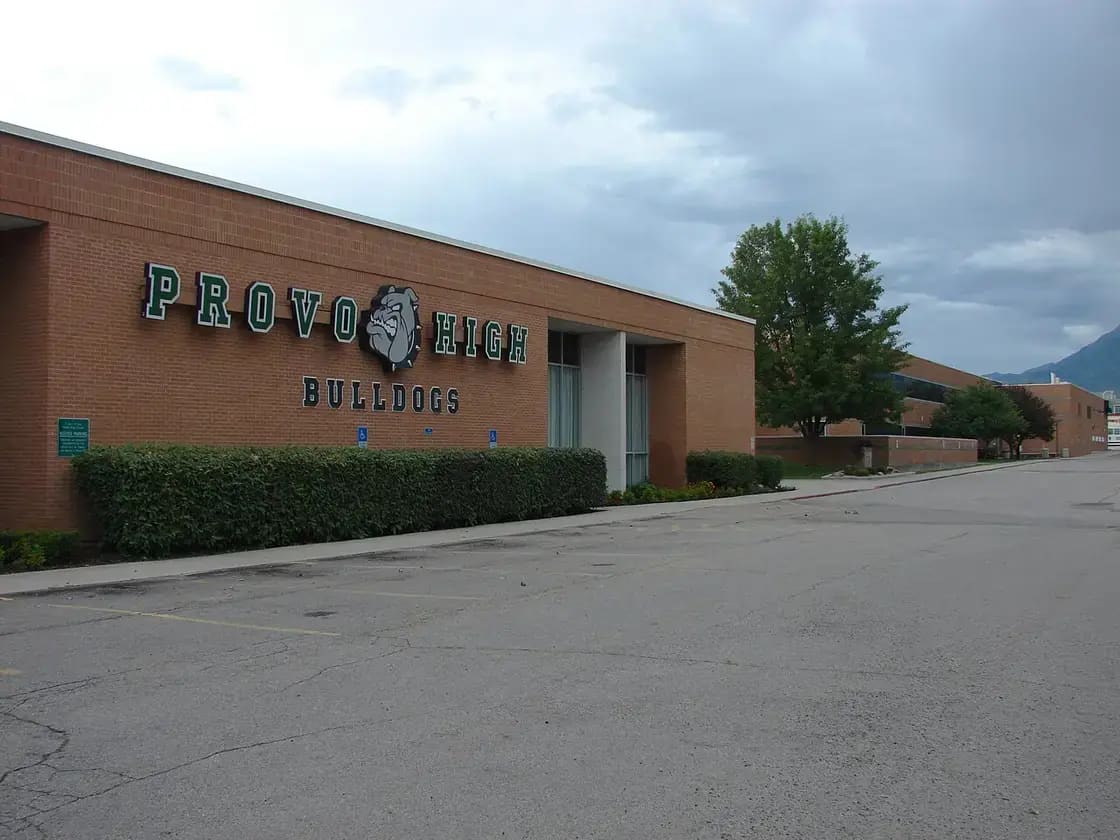
The school's physical home answers a question Provo has been asking for a decade: what becomes of the old Provo High School site? BYU acquired the property and renamed it West Campus, and in May 2025 announced the medical school would be built there in a new facility.
The location is the strategy. West Campus sits near Intermountain Health's Utah Valley Hospital, the largest hospital in the county — which is precisely the point for a school that won't own a hospital of its own. Intermountain and BYU have discussed a clinical relationship since the announcement, and the University of Utah — home of the state's flagship medical school — publicly welcomed the new program, saying it plans to "actively pursue collaboration opportunities" in medical education and clinical care and framing BYU's internationally focused plans as complementary to the U.'s state-focused mission.
What it means for Provo
A medical school is a slow-motion economic event, and the effects will show up in layers:
The west side changes first. The Provo High site has sat in transition for years; a medical school building, plus the daily gravity of faculty, staff, and eventually students, gives the Freedom Boulevard–Utah Valley Hospital corridor a new anchor. It lands, notably, in the same few square miles as the Provo Towne Centre redevelopment — the city's western and southern edges are being redrawn at the same time.
Housing demand gets another floor under it. Sixty students a year is small at first, but medical students, residents-to-be, faculty, and staff all need places to live in a market that's already tight — the same pressure behind BYU's Wymount Terrace rebuild and the broader trends in our Provo real estate market analysis.
Healthcare gravity grows. A teaching program clustered around Utah Valley Hospital tends to pull specialists, research activity, and clinical capacity with it over time. For how the valley's healthcare system works today, see our guide to healthcare in Provo.
And BYU's profile shifts. A university known for undergraduate teaching, business, and law adds a professional school that takes decades to mature — the kind of institutional bet that changes how a campus sees itself. For everything else BYU, The BYU Guide collects our full coverage.
What to watch next
Three checkpoints, in order: the LCME's preliminary-accreditation decision out of the September 25 / October 12–15, 2026 fall meeting; if granted, the first admissions cycle for the fall 2027 founding class of 60; and the building's progress on West Campus.
A practical note on sources, because this one has already caught people out. BYU's medical school site carries a standing accreditation notice, and as of mid-September 2026 different pages on that same site were not saying the same thing — some still described the June 2026 survey visit as something that would happen, while others correctly described it as completed. The authoritative public record of where a school sits is the LCME's own directory of applicant and candidate programs, which carries a "last updated" date on the page. When the decision lands, that directory is where BYU moves from "Candidate" to "Preliminary, Accredited" — and the LCME publishes accredited programs on a separate page from candidates.
We'll cover the decision on The Wire when it is published, and not before.
For now, the summary is simple: the school is real, the site visit is done, and the LCME's fall meeting decides whether the first white coats arrive in Provo in 2027.
Facts current as of September 15, 2026. No decision had been published as of that date — the LCME's own directory still listed BYU at candidate status as of its August 20, 2026 update. Accreditation status can change; for the official record, see the LCME's applicant-and-candidate directory and the BYU School of Medicine site.
Related Guides
- The BYU Honor Code, Explained for People Who Aren't Mormon
- BYU vs UVU: Which School Is Right for You? (2026)
- Provo Rec Center Drops Student Membership to $25/Month for BYU and UVU
Frequently Asked Questions
Is BYU getting a medical school?
When will the BYU medical school open?
Where will the BYU School of Medicine be located?
Will BYU have its own hospital?
How is the BYU medical school different from other Utah medical schools?
Can I apply to the BYU School of Medicine yet?
What can the LCME decide at its meeting?
Sources
The facts in this guide were checked against these sources. Hours, fees and rules change, so confirm anything time-sensitive with the source before you go. How we make Provo.com.
- BYU medical school announcement, BYU News. Checked October 12, 2026.
- BYU School of Medicine to be located on west campus property, BYU News. Checked October 12, 2026.
- BYU School of Medicine: Becoming Christ-Centered Physicians, BYU School of Medicine. Checked October 12, 2026.
- Applicant and Candidate Programs, Liaison Committee on Medical Education (LCME). Checked October 12, 2026.
- LCME Meetings and Members, Liaison Committee on Medical Education (LCME). Checked October 12, 2026.
- LCME Rules of Procedure (March 2026), Liaison Committee on Medical Education (LCME). Checked October 12, 2026.