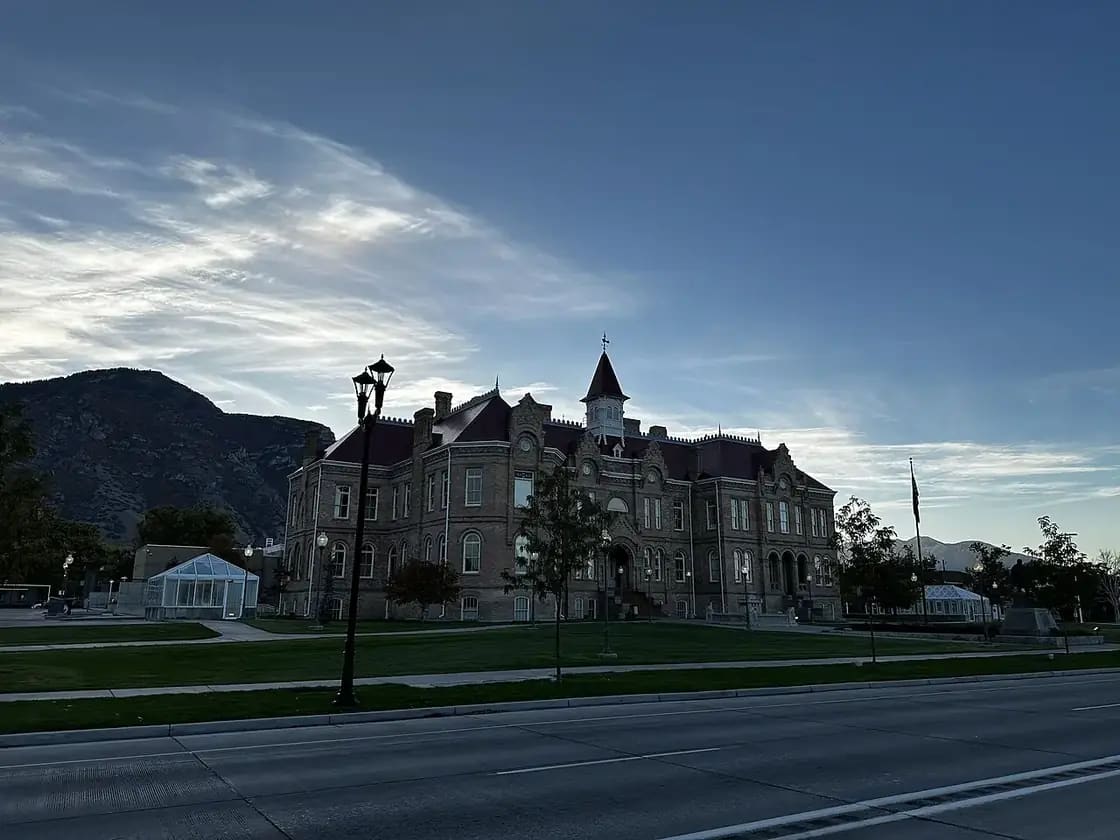

Ask longtime Provo families for the single best free resource in the city, and a surprising number will say the same thing: the library. The Provo City Library at Academy Square is far more than a place to check out books — it's a year-round family anchor, with free story times most mornings, kids' programs and summer reading, rotating exhibits, and a warm, beautiful place to spend a hot or cold afternoon. And it all happens inside one of the most significant historic buildings in Utah.
This is the family guide to what the library offers, how to use it, and why the building itself is worth knowing.
A landmark worth knowing: the building's story
Before it was a library, this was the Brigham Young Academy — the school that grew into Brigham Young University.
The building has its own guide: Brigham Young Academy: The Building That Became the Library covers the 1884 fire, the 1892 dedication, the three decades of vacancy and the fight that saved it.
The building was completed in 1891 and dedicated on January 4, 1892, designed by architect Joseph Don Carlos Young (a son of Brigham Young) working from plans by the Academy's legendary principal, Karl G. Maeser. At the time it was one of the largest school buildings in the Intermountain West, built to hold a thousand students. Brigham Young Academy — founded in 1875, opening the next year — became Brigham Young University in 1903, and this building served as BYU's "lower campus" and, later, Brigham Young High School, until the high school closed in 1968.
Then came the hard chapter. The building sat vacant for roughly three decades, deteriorating badly, and by the 1990s it was slated for demolition. What saved it was the community: Provo City purchased Academy Square in 1994, and a $16 million library bond passed by voters in February 1997, paired with $5.8 million raised by the Brigham Young Academy Foundation, funded the restoration, which broke ground in July 1999 and was dedicated on September 8, 2001. A modern glass-and-steel addition was built behind the original structure to house the working library, and the Provo City Library at Academy Square opened in September 2001. The building is listed on the National Register of Historic Places.
There's a piece of local lore worth knowing, too: as the story goes, Maeser said the building's design came to him in a dream in which Brigham Young himself appeared to him. Whether you take that literally or not, the ambition shows — a thousand-student schoolhouse at the northern edge of a frontier town, wired for electric lights (from a sawmill two blocks west) before it had indoor plumbing.
The library itself is even older than its current home. Provo City Library was founded in 1905, opened in the basement of the city courthouse in 1906 with 1,425 donated books, and moved in 1908 into a Carnegie library funded by a $17,500 grant from Andrew Carnegie — one of the hundreds of Carnegie libraries built across the country. It expanded over the decades before finally landing, a century after its founding, in the grand old Academy building it occupies today.
Why does this matter to a family? Because when your kids sit in the Story Circle or run up the front steps, they're doing it in a piece of Utah history that the community chose to save rather than lose. It's a rare thing — a grand historic building that's also a warm, welcoming, everyday place for kids.
For the youngest kids: story times & early literacy
The heart of the library for young families is its story time program, and it's excellent. The library runs age-specific sessions — full of stories, songs, fingerplays, and puppets — in the children's Story Circle:
- Book Babies — for infants and their caregivers.
- Toddler Time — for one- and two-year-olds (a caregiver stays with the child).
- Preschool Time — for ages three to five, for kids ready to sit and listen a little longer.
- Cuentos (Spanish storytime) — songs, stories, and a puppet show in Spanish, for families.
- Special Needs Storytime — a low-sound, soft-lighting session designed for children with special needs and their caregivers.
They're free, they give a young family's week a rhythm, and — not incidentally — the lobby afterward is one of the easiest places in Provo to meet other parents of little kids. Story-time days and times shift by season, so check the library's online calendar for the current schedule. Our guide to things to do with toddlers and little kids in Utah Valley has more on building a week around them.
For school-age kids
The library keeps going well past the preschool years:
- Registered afternoon programs for school-age kids (often split into younger and older groups) bring stories, activities, and hands-on projects after school. These usually require signing up in advance, so check the calendar and register early.
- Tween programs give the 9-to-12 crowd their own thing — a weekly program aimed squarely at the in-between age that's often hardest to plan for.
- STEM activities, crafts, and challenges run throughout the year, including scavenger-hunt-style challenges around the building and free take-home craft kits you can grab at the Children's Desk.
- Escape rooms and tours. The library runs bookable escape-room experiences and building tours — a fun outing for older kids and families that most people don't realize the library offers.
For a rainy or cold day, an afternoon program plus time in the children's section is a great, free outing.
Beyond books: what you can borrow and do
A modern library lends far more than books, and Provo's leans into it:
- The Children's Library of Things. Alongside the book collection, families can borrow discovery kits, toys, and early-literacy kits — themed bundles that turn into an afternoon of learning at home. It's one of the best-kept secrets for parents of little kids.
- The Library of Things. The general collection includes non-book items to borrow, stretching what a library card is worth well beyond reading.
- Digital collections and the app. A large digital library of ebooks, audiobooks, movies, and music is available to borrow through the Provo City Library app — useful for road trips, screen-time-with-a-purpose, and readers who tear through books faster than you can drive back.
The Attic: free exhibits upstairs
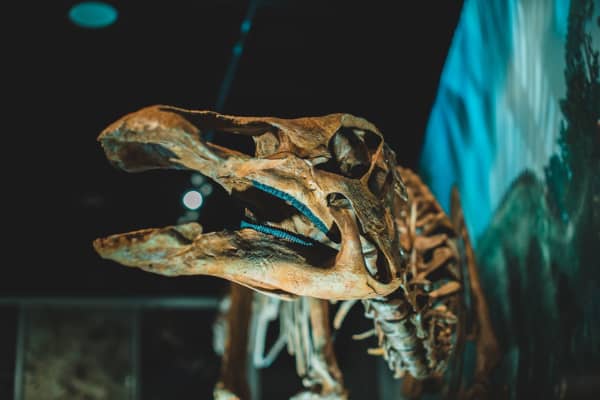
On the top floor, The Attic at Academy Square is a rotating exhibit space that brings traveling exhibits — art, science, and artifacts — to Provo, free and open to the public. Because it changes through the year, it's worth checking what's on before a visit; a good exhibit turns a library trip into a quick, no-cost cultural outing that works for a range of ages. It's the kind of thing you can pair with a story time or a downtown lunch and make an afternoon of.
The Basement Creative Lab
Downstairs, the Basement Creative Lab is a free audiovisual production studio open to Provo residents — a space for recording, editing, and creative projects. For teens and older kids with a creative streak (and for adults), it's a remarkable free resource that very few cities offer. If you've got a budding filmmaker, podcaster, or musician in the house, it's worth a look.
More than story time: services worth knowing
The library quietly does a lot that families don't always realize is there:
- Project Read. The library runs an adult literacy program, pairing adult learners with tutors — a meaningful resource for parents working on their own reading or for English-language learners in the family.
- Computers, printing, and free Wi-Fi. Public computers and printing are available, and the Wi-Fi is free — useful for homework, job applications, and the days the home internet goes down.
- Notary services and interlibrary loan. Free notary service (call ahead to confirm availability) and interlibrary loan, which can pull in books the library doesn't own from across the state.
- Curbside pickup. Reserve online and grab your holds without wrangling everyone out of the car — a small mercy with little kids in tow.
- Meeting rooms, study rooms, and a ballroom. The library rents study rooms, meeting rooms, and an event ballroom that hosts everything from club meetings to receptions. If you need a quiet room for a study group or a space for a community event, it's worth checking.
- Free Passes on a Library Card in Utah Valley
For a single free membership, it's hard to think of a better return in Provo.
The building is worth seeing on its own
Even setting the programs aside, the Academy building rewards a slow look. The grand entrance, the tall windows, the restored interior, and the bell tower — which finally got a proper bell in 1919, salvaged from the razed Provo Tabernacle — make it one of the most striking historic interiors open to the public in Utah Valley. The library offers building tours (bookable alongside its escape rooms and other experiences), which are a great way to see the restoration up close and give older kids a sense of the history under their feet. It's also simply a beautiful place to wander with a stroller on a hot afternoon.
Summer at the library
Summer is the library's biggest season for families:
- The summer reading program is an anchor of many Utah Valley kids' summers — reading challenges, prizes, and extra programming across every age group when school is out. Watch the calendar in late spring for sign-up.
- It's a cool, free refuge on a hot afternoon — air conditioning, quiet corners, and something to do, all for nothing.
- Free summer meals for kids are often hosted at or near libraries through the summer meal programs. Our kids eat free in Utah Valley guide explains how to find current sites.
Between reading challenges, programming, and simply being a comfortable place to land, the library carries a lot of the summer for local families.
Practical visitor info
- Where: 550 North University Avenue, Provo — the historic Brigham Young Academy building at Academy Square, at the north end of University Avenue.
- Hours: generally Monday–Friday until 9 p.m. and Saturday until 6 p.m., closed Sundays. Hours change for holidays and events, so confirm current hours on the library's website before a special trip.
- Parking: available on-site.
- Library card: free to Provo and Orem residents, and $62.50 for six months or $125 a year for everyone else; you'll need one to check out materials and use some services.
- Rooms & events: the library has study rooms, meeting rooms, and a ballroom that can be reserved — handy for study groups, clubs, and community events. Reserve through the library's website or app.
Tips for a great visit with kids
A few things smooth out a library trip with little ones:
- Time it around story time. Check the calendar and build your visit around a Book Babies, Toddler Time, or Preschool Time session — it gives the trip a purpose and a natural rhythm. Arrive a few minutes early; popular sessions fill the Story Circle.
- Let them pick. The children's section is designed for browsing at kid height. Giving each child the job of choosing a few books turns the visit into their outing, not an errand.
- Grab a discovery kit on the way out. A themed kit or toy set from the Children's Library of Things extends the library trip into an afternoon at home — great for the days you need one more thing to fill the time.
- Use the holds system. Reserve books online ahead of time and pick them up (or use curbside), so a quick trip stays quick when attention spans are short.
- Know the quiet vs. lively zones. The children's area is meant for kids, so you don't have to shush a toddler there — but the study and adult areas are quieter, so plan where you settle accordingly.
- Make it a two-stop outing. Because it's at the north end of University Avenue near downtown, the library pairs naturally with a park, a meal on Center Street, or an ice-cream stop — an easy way to turn a free activity into a whole morning.
Treated well, a library visit is one of the most reliable good mornings you can have with kids in Provo — and it costs nothing.
Make it a routine
The families who get the most out of the library treat it as a weekly anchor, not an occasional stop. Pick a story time and go every week; grab a stack of books and a discovery kit on the way out; check The Attic when the exhibit changes; and lean on it hard in summer and on weather days. Because it sits at the north end of University Avenue, it also pairs naturally with a downtown outing — a walk on Center Street, lunch, or a stop for ice cream on the way home.
It's free, it's beautiful, it's one of the best family resources in Provo — and it's been quietly serving the community from the same historic building for more than two decades. Put it in the rotation.
First Fridays downtown
The library sits on the downtown gallery circuit. On the first Friday of the month, the Provo Art Stroll opens galleries across downtown late into the evening, free to attend.
Who runs a Utah city library
A public library feels like a department of the city, and legally it is something slightly different — a distinct governance structure with its own board, its own ring-fenced money and its own statutory duties. The rules are in Utah Code Title 9, Chapter 7, Library Development, and they explain several things visitors find puzzling.
Start with the fact that none of this is compulsory. Utah Code § 9-7-402
provides that a city's governing body may establish and maintain a public
library. Where it decides to, it must appoint a library board of directors of
not fewer than five and not more than nine members, chosen from the citizens of
the city "based upon their fitness for the office." Only one member of the
city governing body may sit on the board at any one time, and directors serve
without compensation, though actual and necessary expenses may be paid from
library funds.
Utah Code § 9-7-403 sets the terms: three years, staggered one, two and three
years at the outset, with appointments made before the first of July each year.
A director may serve not more than two consecutive full terms. The board
annually selects a chair, and the city governing body may remove a director for
misconduct or neglect of duty.
The money is fenced off, and that is deliberate
Utah Code § 9-7-404 is the provision worth knowing if you have ever wondered
why library funding arguments are shaped the way they are. With the city
governing body's approval, the board controls expenditure of the library fund and
the construction, lease or sale of library buildings and land. And then:
all tax money received for the library is deposited in the city treasury to the
credit of the library fund, and may not be used for any purpose except that of
the city library. Money the library itself collects goes to the same fund. It is
drawn on by city officers against properly authenticated vouchers of the library
board.
Utah Code § 9-7-405 supplies the principle behind the library card. Each
library established under this part "shall be free to the use of the
inhabitants of the city where located," subject to rules the board adopts. The
board may exclude a person who willfully violates those rules — the adverb is
doing real work — and may extend privileges to people living outside the city on
terms it sets by rule, which is the statutory basis for non-resident cards.
Utah Code § 9-7-406 requires an annual report to the city governing body on the
condition and operation of the library including a financial statement, plus
an annual report to the director of the State Library Division.
The two policies every Utah library must have
Two more requirements are tied to state funding rather than to city choice, and both are visible to patrons.
Utah Code § 9-7-215, amended by Chapter 358 of the 2026 General Session,
conditions state funds on a library that offers public internet access operating
a technology protection measure — filtering software — on any device
connected through a library network, including the wireless network. The
statute is drafted in two parallel parts: one requiring enforcement during any
use by a minor, one during any use. An administrator or supervisor may
disable the filter at the request of a patron who is not a minor, and to
enable access for research or other lawful purposes. Utah Code § 9-7-216
requires the policy to be adopted in an open meeting, carry an effective
date, be reviewed at least every three years, and be posted conspicuously.
Utah Code § 9-7-218, enacted in 2023, requires a criminal background check
policy. It reaches every "qualifying position" — any paid or unpaid
position, including a volunteer position, involving significant contact with
minors, as the board determines. The policy must require a check before any offer
of employment, give a disqualified applicant written reasons and an opportunity
to respond, be distributed to applicants and posted prominently, and be reviewed
every three years.
Related Guides
- Things to Do With Toddlers & Little Kids in Utah Valley
- 28 Best Family Activities in Utah Valley
- Indoor Activities in Provo: Rainy Day & Winter Guide
- Free Things to Do in Provo
- Kids Eat Free in Utah Valley
- Provo for Families: The Complete Guide
- Scavenger Hunts in Provo: Routes That Actually Work, and How to Build Your Own
- Kids' Birthday Party Places in Utah Valley (2026)
- Public Libraries in Utah County: Cards, Fees and Reciprocal Borrowing
- Community Education in Utah Valley
- Provo's Historic Districts — Academy Square in context
- TEDxProvo
Last updated: July 2026. Library hours, program schedules, exhibits, and summer offerings change through the year — confirm current details on the Provo City Library's website before your visit.
Frequently Asked Questions
What is there for kids at the Provo City Library?
Where is the Provo City Library and what are its hours?
Is the Provo City Library free to use?
What is the building that houses the Provo City Library?
Does the Provo City Library have a summer reading program?
Who governs the Provo City Library, and how are board members chosen?
Is a Utah public library legally required to be free to use?
Why does the library filter its internet, including on Wi-Fi?
Sources
The facts in this guide were checked against these sources. Hours, fees and rules change, so confirm anything time-sensitive with the source before you go. How we make Provo.com.
- Provo City Library History, Provo City Library. Checked October 12, 2026.
- Get a Library Card, Provo City Library. Checked October 12, 2026.
- Frequently Asked Questions, Provo City Library. Checked October 12, 2026.
- Utah Code 9-7-402, Utah State Legislature. Checked October 12, 2026.
- Utah Code 9-7-405, Utah State Legislature. Checked October 12, 2026.
- Utah Code 9-7-215, Utah State Legislature. Checked October 12, 2026.
- Utah Code 9-7-218, Utah State Legislature. Checked October 12, 2026.