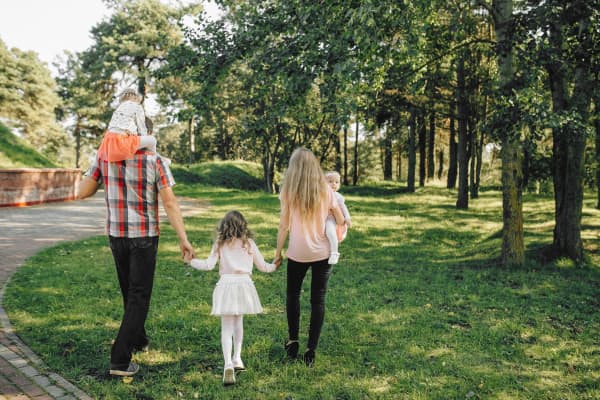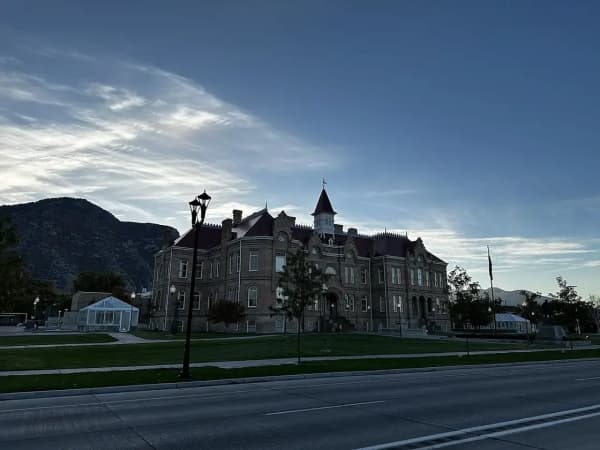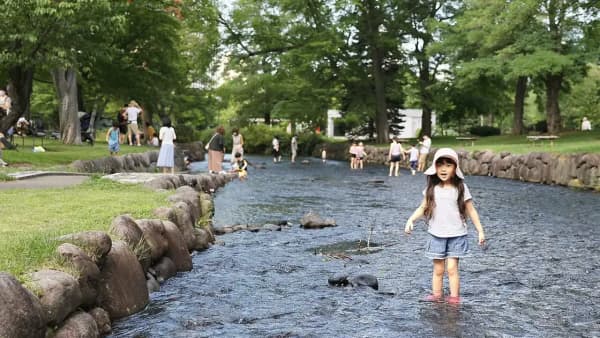

Utah Valley is built for families. Few places pack this many kid-focused attractions, parks, and outdoor adventures into such a compact area — from the world-class museums at Thanksgiving Point in the north to canyon waterfalls, a big lake, splash pads in nearly every neighborhood, and a year-round calendar of family festivals. It's one of the main reasons families move here, and a big part of what makes the valley such an easy place to entertain kids of any age.
This is our valley-wide guide to family activities, organized by type and by city, covering the whole corridor from Lehi and Thanksgiving Point down through Provo, Orem, and Spanish Fork. Most of it is free or inexpensive, and almost all of it is within a short drive.
The big anchor attractions
These are the full-day, plan-your-trip-around-them destinations.
1. Thanksgiving Point (Lehi)
The single biggest family attraction in the valley. Thanksgiving Point spans five main venues plus several additional attractions: the Mountain America Museum of Ancient Life (one of the world's largest displays of mounted dinosaurs, with a fossil dig and erosion table), the Museum of Natural Curiosity (hundreds of hands-on exhibits, an outdoor discovery garden, and a ropes course), Curiosity Farms (a real working farm where kids can meet animals), the Butterfly Biosphere, Jurassic Jungle, The Carousel, and the 50-acre Ashton Gardens. If you'll hit more than one venue, a membership pays for itself fast — and it's the best value in the valley for families who'll return. See our full Thanksgiving Point guide.
2. Loveland Living Planet Aquarium (Draper)
Just north of the county line but firmly in the valley's orbit, the Living Planet Aquarium is a full, all-weather day — sharks, otters, penguins, a rainforest dome, and a 3D theater. It pairs naturally with Thanksgiving Point for a two-stop north-end adventure.
3. Provo Beach
A large indoor entertainment center in Provo with a dozen attractions under one roof, including indoor surfing on the FlowRider, bowling, laser tag, an indoor ropes course, and an arcade. It's the valley's go-to when the weather won't cooperate and the kids need to burn energy. See our Provo indoor activities guide for more rainy-day options.
4. Splash Summit Waterpark (Provo)
In summer, Splash Summit — still listed as Seven Peaks in a lot of older write-ups — is the classic family water park — slides, pools, and a lazy river that fills an entire hot afternoon. Pack sunscreen and plan to stay.
Splash pads & water play (summer)
Summer in Utah Valley basically is splash-pad season — nearly every city has its own, most free, most open roughly June through early September. (June also brings the family outing of a different kind: the Utah Valley Parade of Homes, a one-ticket tour of the county's newest showpiece houses.) A few of the best:
5. Lehi Family Park
One of the valley's standout parks, with an aviation-themed playground, a splash pad, a long splashable "river," a sensory garden, a zipline, and shaded play areas. An easy choice for a whole morning in the north valley.
6. Palisade Park splash pad (Orem)
The main waterfall here is built to look like Mount Timpanogos, with water appearing to pour out of the mountains — plus sprayers, a stream, a playground, a pavilion, and a summer snack shack.
7. Provo Pioneer Park splash pad
Lots of sprayers (including a "curtain" of water off the building), shade, a large pavilion, and a small playground, right downtown. Easy to pair with a Center Street meal.
8. Vineyard Grove Park splash pad
A kid-favorite on the west side, with a big slide in the splash area, a shallow stream for little ones, and a huge water "dumper" that drenches everyone every few minutes.
9. Aquatic centers: Scera Pool & Lindon
For full pools, the Scera Pool in Orem has a zero-depth beach entry, a lazy river, slides, and a sand-play area, while the Lindon Aquatic Center features a pirate ship and splash pad. Both are summer staples.
Standout playgrounds & parks
10. All Together Playground (Orem)
A special, disability-friendly destination playground — large, inclusive, and built for kids of all abilities to play side by side. One of the best in the state and worth a drive.
11. Discovery Park (Pleasant Grove)
A beloved community park with creative, engaging play areas (including a water feature in summer) that keeps a wide age range busy.
12. The valley's neighborhood parks
Beyond the headliners, nearly every Utah Valley city has invested in excellent playgrounds — shaded structures, climbing areas, and open green space. For Provo specifically, see our best parks in Provo guide.
Outdoor adventures for families
13. Bridal Veil Falls (Provo Canyon)
A 607-foot double waterfall right off the canyon road — free, easy to reach, with a paved path and picnic areas. The most family-friendly waterfall in the valley. ⚠ Utah County's reconstruction work has closed the trail at the base of the falls; the waterfall is still visible from the canyon road and the paved Provo River Parkway. See our Bridal Veil Falls guide.
14. Walk or bike the Provo River Parkway
A flat, shaded, paved trail along the Provo River — perfect for strollers, balance bikes, and family rides. It runs from Utah Lake up into Provo Canyon and connects to Bridal Veil Falls. Full details in our Provo River Parkway guide.
15. Cascade Springs (off the Alpine Loop)
An easy boardwalk loop through spring-fed terraced pools with crystal-clear water and lots of wildlife — low effort, high reward, and great for little legs. Pair it with the Alpine Loop scenic drive.
16. Tube the Provo River
A Utah County summer rite of passage. The water is cold, tame, and perfect for floating, and outfitters handle the tubes and shuttle so you just show up. Best for families with older kids.
17. Utah Lake State Park
The largest freshwater lake in the state, with boating, paddleboarding, fishing, and lakeshore trails — plus some of the valley's best sunsets. See our Utah Lake guide.
18. Ride the Heber Valley Railroad
Just up Provo Canyon in Heber, the "Heber Creeper" runs scenic train rides through the canyon, with themed holiday trips (the Pumpkin Train, the North Pole Express) that kids love.
Indoor fun for cold & rainy days
When the weather turns, Utah Valley has an unusually deep bench of indoor options.
19. Trampoline & air-sports parks
Spread across Lehi, American Fork, Pleasant Grove, Provo, and Orem, the valley's trampoline and indoor air-sports parks are the default energy-burn for cold days — many with separate toddler areas and ninja-warrior courses for bigger kids.
20. Indoor go-karts and game centers
For older kids and teens, indoor go-kart tracks and family fun centers around Pleasant Grove and the north valley deliver racing, arcades, and group games regardless of weather.
21. Museums for curious kids
Beyond Thanksgiving Point, the valley has the Hutchings Museum in Lehi (fossils, minerals, and oddities) and BYU's free campus museums — the Museum of Paleontology and the Bean Life Science Museum are both kid-friendly and free.
22. Bowling, climbing & indoor play
Indoor rock gyms like The Quarry have kid programs, and the valley's bowling alleys and indoor playgrounds (many with dedicated toddler zones — bring socks!) round out the cold-weather lineup. See our Provo winter activities guide.
Seasonal family traditions
23. Cornbelly's & fall farms
Come autumn, Cornbelly's at Thanksgiving Point becomes one of Utah's most elaborate corn-maze-and-pumpkin festivals, and Hee Haw Farms (Pleasant Grove) and Glen Ray's (Spanish Fork) add mazes, pumpkin patches, and harvest fun across the valley.
24. Tulip Festival at Ashton Gardens (spring)
Hundreds of thousands of tulips bloom across Ashton Gardens from roughly early April through mid-May — a gorgeous, stroller-friendly spring outing for the whole family.
25. Winter tubing at Gateway Parks (Spanish Fork)
Tubing, skiing, and snowboarding close to town — no canyon drive required — plus indoor laser tag and VR. A low-stakes intro to winter sports for kids. More in our Spanish Fork things to do guide.
26. Holiday light displays (December)
A cherished valley tradition: drive-through and walk-through light shows pop up across Utah Valley in December, a perfect low-cost way to kick off the holidays with little ones.
27. Stadium of Fire & July 4th (Provo)
Part of America's Freedom Festival, Stadium of Fire at BYU is one of the country's biggest Independence Day celebrations, with a major concert and an enormous fireworks show — a bucket-list family night each summer.
28. Catch fireflies on a summer night
A hidden valley gem: in early summer, fireflies appear at a few spots around Utah County (ask around locally for current spots). Magical for kids who've never seen them.
Planning a family day in Utah Valley
A few local tips: splash-pad season runs roughly June through early September, so check city websites for hours before you go. Sundays see most locally owned businesses closed, making them ideal for parks, splash pads, canyon drives, and lake days. And for families relocating here, the density of kid attractions and quality parks is a genuine selling point — our guide to Provo for families covers neighborhoods, schools, and what daily family life is like.
For more, explore our summer activities and winter activities guides, the valley-wide 30 best things to do in Utah Valley, and our group and family restaurants guide for where to eat with kids in tow.
Planning something specific? We have dedicated guides for the details: things to do with toddlers and little kids (for the 0–5 crowd), where to throw a kids' birthday party, where kids eat free in Utah Valley, and the family guide to the Provo City Library.
A drive-through light show is the rare December outing that works in any weather and at any age. Both of the valley's are on our Christmas lights map.
Cold and kids: different physiology, different thresholds
A winter outing that is comfortable for adults can be hard on a small child, and the reason is physical rather than a matter of toughness.
Children lose heat faster than adults do. A small body has more surface area relative to its mass, so it sheds heat more quickly from a smaller reserve. Infants are the extreme case — limited ability to generate heat by shivering, and no ability at all to tell you what is happening. A toddler in a stroller is also doing none of the work that keeps the adult pushing it warm.
The behavioral half compounds it. Children under-report cold, both because they are absorbed in what they are doing and because they do not reliably connect "my hands hurt" to "we should go." A child who has stopped complaining is not necessarily warmer; quiet, unusually still and uninterested is a signal worth acting on, not a break.
A layering system that survives contact with actual children:
- Base layer that is not cotton. Cotton holds moisture against skin and stops insulating once damp — and children generate an impressive amount of moisture. This is the highest-value single change for a winter outing with kids.
- A mid layer for warmth, an outer layer for wind and wet, so you can shed one without losing the other. Children overheat while running and chill the moment they stop, which is a specific hazard because that sweat is what makes them cold later.
- Extremities first. Hats, mittens over gloves for younger children, and warm dry socks with boots that are not too tight, since compression reduces circulation.
- A complete spare set in the bag, including socks. Wet is the variable that ends outings.
Read the alert, then adjust the plan rather than canceling it. Since the National Weather Service's October 2024 changes, a Cold Weather Advisory is the routine tier and an Extreme Cold Watch or Warning is the serious one — see our winter activities guide for how they work now. With children, treat an Advisory as a signal to shorten the outing and stay closer to the car, and a Watch or Warning as a reason to take the day indoors entirely; our indoor activities guide has the options.
Build the plan around a warm anchor. With small children the most useful winter structure is a short outdoor block attached to somewhere warm you can retreat into on no notice — a visitor center, a library, a café, the car parked deliberately close. That converts a marginal day into a good one, and it removes the pressure to push through the early signs described in the indoor guide because turning back does not mean the day is over.
This is general guidance rather than medical advice; a child showing more than mild symptoms of cold needs professional care.
Build a routine, not a one-off decision
The tier families will meet most often is the Cold Weather Advisory, and by design. The Weather Service calibrated it to fire multiple times in a normal winter, while the Extreme Cold Warning is deliberately rare — in some regions a once-in-several-years product.
That asymmetry has a practical implication. If your winter approach is to make a fresh judgment call each time an alert appears, you will be making that call often, usually in a hurry, usually with children already dressed and impatient. The households that manage winter well here mostly are not making better decisions — they have converted the common case into a routine and reserved actual deliberation for the rare one.
What that looks like in practice:
- A packed bag that lives in the car all winter, restocked rather than assembled: spare socks and mittens, hats, a blanket, snacks. Assembling it each time is the step that gets skipped.
- A default short-outing list — places where the walk from parking to warmth is measured in yards — that gets used automatically on Advisory days without renegotiation.
- A default indoor list for Watch and Warning days, so the alternative is already decided and the outing does not simply collapse.
One more calibration note: alert criteria are tiered regionally, colder toward the north, so the thresholds behind a Utah Valley alert are not the numbers behind the same-named alert elsewhere. Reading the Salt Lake City forecast office's published criteria once, at the start of a season, is worth more than checking a temperature every weekend.
Related Guides
- Family Reunion Venues in Utah Valley
- Jr. Jazz in Utah Valley: Registration, Fees & the Draft
- Trampoline Parks & Indoor Play Places in Utah Valley
- Trunk-or-Treats and Little-Kid Halloween in Utah Valley
- Kids' Art, Music and Craft Classes in Utah Valley
- Things to Do in Utah Valley for Teens
- Geocaching in Utah Valley
Frequently Asked Questions
What are the best family activities in Utah Valley?
What can families do in Utah Valley for free?
What indoor activities are there for kids in Utah Valley?
What are the best things to do with toddlers in Utah Valley?
What family activities are there in Utah Valley in winter?
Is Utah Valley good for families with kids?
Do children get cold faster than adults?
How should I dress a child for a winter outing in Utah Valley?
Sources
The facts in this guide were checked against these sources. Hours, fees and rules change, so confirm anything time-sensitive with the source before you go. How we make Provo.com.
- Cold Weather Product Changes 2024, National Weather Service. Checked October 12, 2026.
- BYU Museum of Paleontology, Brigham Young University. Checked October 12, 2026.
- Winter Safety Tips, American Academy of Pediatrics (HealthyChildren.org). Checked October 12, 2026.
- The Legend and History of Bridal Veil Falls, Intermountain Histories (Charles Redd Center for Western Studies, BYU). Checked October 12, 2026.
- Thanksgiving Point, Thanksgiving Point Institute. Checked October 12, 2026.
- Provo Beach. Checked October 12, 2026.