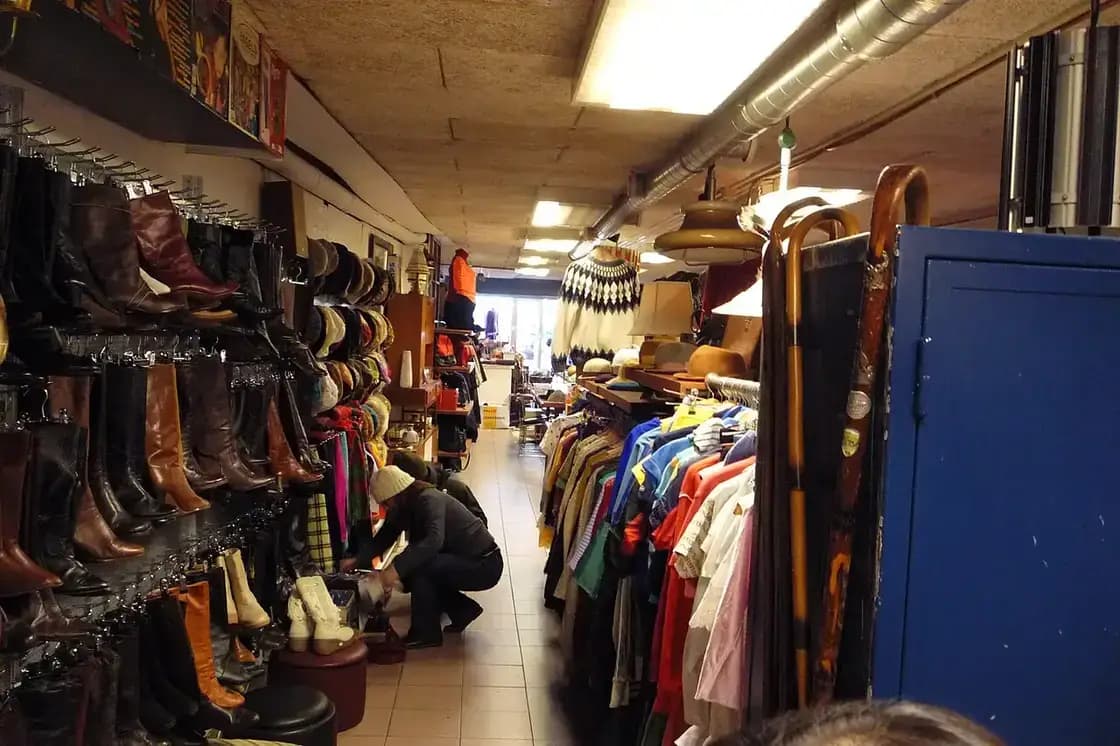

Here's something the coastal vintage crowd hasn't figured out yet: Provo is a great thrifting town. Think about the ingredients — tens of thousands of students turning over their closets every semester, a culture that donates constantly, big families cycling through clothes fast, and a downtown cheap enough (for now) that twenty-something sellers can open storefronts. The result is a secondhand scene that a city this size has no business having: sold-by-the-pound boutiques, vintage-denim drops with lines out the door, a shop that started as one BYU student's closet, and — as of May 2026 — the first Goodwill in Utah County history.
I've organized this by how you shop: the big-box dig, the downtown vintage crawl, the booth-consignment scene, the Orem side, and the beyond-clothes wildcards. Every shop below was verified open as of summer 2026 — the small-shop scene turns over fast, so a guide that doesn't check is a guide to disappointment. (Most of the small shops live on Instagram; when in doubt, check their page for this week's hours before driving over.)
Tier 1: The Big Boxes — Where the Volume Is
Deseret Industries (Provo) — on North State Street. The one every Utah kid grew up with: the church-run thrift institution, warehouse-scale, with the valley's biggest and fastest-turning inventory of clothes, furniture, books, and housewares. DI is a job-training operation as much as a store, prices stay honest, and the sheer donation volume of a place like Utah Valley means the racks refresh daily. It's not curated — that's the point. Budget an hour and dig.
Goodwill (Orem) — the new arrival. 21 W Center Street, Orem. This is the valley's secondhand news of the year: Goodwill opened its first-ever Utah County location on May 21, 2026 — a big-box space with a full retail floor. Two things make it notable beyond novelty. First, fresh inventory: a brand-new Goodwill in a donation-rich valley is a feeding frenzy in its opening year. Second — rare for this valley — it's open on Sundays (11 a.m.–6 p.m., with Monday–Saturday hours of 10–7), which instantly makes it the answer to "everything's closed and I want to thrift." Sales fund Easterseals-Goodwill job-training programs, including early-intervention services in Provo.
Savers (Orem) — the for-profit thrift superstore on the Orem side, a familiar format if you've thrifted anywhere in America: big, organized, color-coded racks, steady turnover. Locals debate DI-versus-Savers pricing endlessly; the honest answer is they're both worth a lap, and they're different enough inventories that serious hunters hit both.
Tier 2: The Downtown Provo Vintage Crawl
This is the scene that surprises out-of-towners. Within and around downtown Provo, a genuine cluster of independent vintage shops has taken root — most of them young, most of them Instagram-native, several within walking distance of each other and the Center Street restaurants. Make it an afternoon: thrift, then eat.
Thrifthood — the elder statesman of the new wave, celebrating six years downtown. A vintage treasure trove known for curated denim, jackets, and one-of-a-kind pieces; if you only hit one curated shop, this is the default answer.
Old Habits Vintage — the denim-head destination, famous for major vintage denim drops including a massive rotating collection of JNCO jeans. Yes, JNCOs. Yes, in Provo. The drops are events; follow the page.
Sad Boi Thrift — the origin story the whole scene tells: started by a BYU student selling his own closet, now a downtown staple mixing vintage and modern pieces. Peak Provo, in the best way.
Voodoo Vintage — a curated vintage clothing shop with a loyal local following for unique, well-picked pieces; consistently one of the scene's quality-over-quantity stops.
Punko Vintage — as much a community hub as a shop, known for hosting pop-up events like the Punko Vintage Fest that pull the whole local vintage ecosystem into one place. Check what's on the calendar — the fests are the scene at full strength.
Get Thrifty — a locally owned thrift store with a massive hat, jewelry, and record collection, sharing space with Provo's Vintage Groove — a two-for-one stop and the crawl's best crate-digging.
Treasure Plus — the downtown eclectic: unique jewelry, records, and an unpredictable mix. The kind of shop where the find is something you weren't looking for.
Sloppy Seconds Thrift — Provo's first sold-by-the-pound thrift store, with a boutique feel and weekly drops. Pay-by-weight plus actual curation is a rare combination, and it's built a fast following.
Tier 3: The Booth & Consignment Scene — Sell Your Closet, Shop Everyone Else's
Provo has embraced the booth-consignment model — shops where locals rent shelf or rack space and sell their own closets — which keeps inventory hyper-local and strange in the best way.
Preloved (Provo) — a Finnish-inspired booth-thrifting concept where rotating sellers stock the shelves with name-brand finds. Regulars know the rhythm: booths turn over constantly, and Friday discount days are the local cheat code.
Indy Clover (Provo) — the other booth-style anchor: name-brand scores on the buying side, and one of the easiest on-ramps in the valley if you want to sell — the shop is known for helping sellers merchandise and promote their booths.
Curveture (Provo) — a rarity: a plus-size thrift boutique, founded by a mother-daughter duo with a mission of accessible, stylish secondhand fashion. Size-inclusive thrifting is rare everywhere; a whole boutique of it is worth celebrating and supporting.
Thrift Rx (Provo) — curated, affordable secondhand with a self-described mission to be "the antidote to fast fashion" — the scene's sustainability conscience, with everyday wear alongside the vintage.
Making Space Thrift (Provo) — the specialist: a fabric and craft-focused thrift store where sewists and crafters hunt secondhand yarn, fabric, and supplies. If you make things, this is your stop; nowhere else in the valley does this.
Tier 4: The Orem Side
Orem's secondhand scene is smaller but has real characters — and it pairs naturally with a University Place day, since everything below is minutes from the mall.
Old Threads Co. — affordable vintage with a buy-sell-trade setup, located inside Wolverine Crossing — which puts it steps from UVU and makes it the campus-side vintage stop. (Fuel the trip with our best food near UVU guide.)
Flashback Society — the specialist worth planning around: true, authentic vintage western wear — boots, pearl snaps, cowboy-ready pieces — open weekends for shoppers who like their style with a little soul. Limited hours, so check before you drive.
Lu's Resale Boutique — a curated resale and vintage boutique that mixes in candles, jewelry, and gifts from local makers — more gift-shop-polished than dig-bin, and better for it.
The Farmhouse Peddler — vintage and antique booths with rotating vendors, farmhouse decor, and upcycled clothing finds; the home-decor-leaning stop on the Orem list.
Uptown Cheapskate & Plato's Closet — Orem's buy-sell-trade resale chains: bring a bag of your gently-used stuff, walk out with cash or credit and someone else's. Less vintage, more current-brand recycling — which is exactly what a student budget usually needs. (More money-stretching moves in our student discounts guide.)
Tier 5: Beyond Clothes — The Wildcards
Pando Refitters (Provo) — Provo's used bike shop and outdoor gear refitter. In a valley where the mountains are the whole point, a trusted secondhand gear shop is gold — bikes, outdoor equipment, and repairs, all at refit prices.
Pioneer Book (Provo) — a big, long-running downtown used bookstore. It anchors the same downtown blocks as the vintage crawl, and no secondhand afternoon is complete without it.
Cozy Nook Treasures (Provo) — a curated consignment shop at The Shops at Riverwoods focused on vintage furniture, home decor, and gifts, with rotating vendor booths — the polished, giftable end of the secondhand spectrum, up on the north end near the canyon mouth.
Hello Seconds (Lindon) — five minutes north of Orem, a thrift-and-consignment shop with a solid mix of clothing, furniture, and home goods; worth adding if you're doing the full valley circuit. (The circuit extends valley-wide — Lehi, Pleasant Grove, and American Fork all have vintage stops of their own — but Provo and Orem are the dense core.)
The Thrifting Calendar: Timing Is Everything Here
Provo thrifting has a rhythm no other city quite matches, because the inventory rides the academic calendar. Two universities and tens of thousands of students mean two enormous closet-purges a year, and locals plan around them.
Late April–May (move-out season) is the golden window. Graduating seniors and departing students dump entire apartments — clothes, furniture, kitchen gear, textbooks — into the donation stream in a few frantic weeks. The big boxes (DI, Goodwill, Savers) absorb most of it, and their floors are noticeably richer through May and June.
August (move-in season) flips the market: demand spikes as thousands of students furnish apartments on a budget, so the good furniture and kitchenware vanish fast. If you're a student outfitting a place, shop the first week you arrive, not the third — and check the college move-in guide for the rest of the settling-in playbook.
The rest of the year, the small-shop scene runs on drops — curated releases announced on Instagram, sometimes with lines for the big ones (Old Habits' denim drops are the famous example). Following five or six shop accounts costs nothing and is the difference between finding the good stuff and hearing about it.
Why the Racks Here Are Better Than They Should Be
Utah Valley punches far above its population on secondhand, and it is not an accident of taste. Four supply-side facts explain almost everything you will find on a rack in Provo or Orem.
Household size. Utah has the largest average household in the country by a wide margin, and Utah County runs larger than the state. Big families cycle clothing constantly — outgrown, handed down, and eventually donated in bulk rather than one bag at a time. The children's and youth sections here are deeper and better sorted than in comparable cities, and that is the single most reliable category in the valley.
Student turnover twice a year. Contracts at BYU and UVU turn over on an academic rhythm rather than a calendar one, which means tens of thousands of people move out within the same two-week windows. Late April is the big one; August is the second. What cannot fit in a car gets donated, and the donation doors are overwhelmed for a fortnight. Furniture, kitchen goods, desk lamps and winter coats appear in quantity, priced to move because the back rooms are full.
A returned-missionary wardrobe cycle. A distinctive local consequence of church service is a steady supply of barely worn business clothing — suits, dress shirts, ties, modest skirts and blouses, and dress shoes — bought new for two years of daily wear and then donated in good condition by people who never want to see them again. If you need interview clothes cheaply, this valley is one of the best places in the country to find them.
A strong donation culture, and what it costs you. Giving things away rather than reselling them is a deeply embedded local habit, which keeps volume high and prices low. The trade-off is that it also keeps the interesting stuff thin: genuine mid-century furniture, designer labels and unusual vintage move fast because a large, informed local resale community is watching the same doors you are. Volume is abundant here. Rarity is not, and it goes in the first hour.
What this means for how you shop. Go for basics, children's clothing, business wear and household goods, and expect to do well. Go hunting for a specific rare item and expect to lose, unless you are there at opening on a weekday. The calendar below is built around exactly these rhythms.
The Money Rules Nobody Explains
Three things about buying and selling used goods in Utah surprise almost everyone, and all three change what you pay or take home.
Secondhand is taxed exactly like new. Utah grants no sales tax exemption for used goods. A thrift store, a consignment boutique, an antique booth and a records shop all collect the full combined sales tax on the sale price, at the same rate a department store on University Parkway charges. The state rate is 4.85% and local city, county and transit taxes stack on top, so the combined figure differs slightly between Provo and Orem and can change quarterly. Utah also gives no exemption for clothing at any price, so a $4 shirt is taxed on the same terms as a $400 coat.
A charity's tax status is not your tax status. This is the one that generates the most confusion at the register. Deseret Industries, Savers, Goodwill and the church-affiliated shops may be nonprofit, and a donation to them may be deductible for the donor — but neither fact makes your purchase tax-exempt. The organization's exemption governs what it owes on its own income and purchases, not what a retail customer owes on a sale. If a receipt shows tax, it is supposed to.
Selling is a different transaction from donating. Consignment and booth arrangements pay you a share of the sale price, usually after the item sells and often on a schedule rather than on the spot; donation is a transfer with no payment and a possible deduction if you itemize and get a receipt. The two are frequently confused because the drop-off door looks the same. Ask which one you are doing before you hand anything over, and if you are consigning, ask what happens to unsold items and after how long — policies here range from "we return it" to "it becomes ours" and the difference is written into a contract most people never read.
The practical upshot for a thrift day. Budget roughly seven percent over the sticker prices you add up, bring a card as well as cash because several of the smaller booths and pop-ups have gone card-only, and if you are selling rather than buying, do that on a separate trip — the intake desks keep shorter hours than the sales floor.
How to Do the Perfect Thrift Day
(Thrifting is one lane of the valley's retail — the full shopping guide covers the malls, downtown, and the outlets.) Start with volume: a morning hour at DI or the new Goodwill while energy is high and bins are freshly stocked. Head downtown for the vintage crawl — Thrifthood, Old Habits, Sad Boi, Voodoo, and Get Thrifty are the walkable spine — with lunch on Center Street in the middle. Finish with a booth-shop browse at Preloved or Indy Clover, and if it's a weekend, detour to Flashback Society for the western racks.
Three ground rules. Saturday is prime time and Sunday is (almost) nothing — plan accordingly, with Goodwill as the Sunday exception. Follow the Instagrams — drops, pop-ups, and hour changes all happen there first. And go often, not long — thrift inventory is a river, not a lake, and in a valley where thousands of closets turn over every semester, the river runs fast.
Every shop in this guide was verified operating as of July 2026, cross-checked against the Utah Valley visitors bureau's current secondhand directory and local reporting. Small shops move and hours shift — check before a special trip, and if you find something's changed, tell us so we can keep this guide honest.
Related Guides
- Bookstores in Provo & Orem: Where to Buy Used, Rare, New and Textbooks in Utah Valley
- Antique Shops in Utah Valley: The Malls, the Book Rooms, and What This County Actually Stocks
- The Shops at Riverwoods: Provo's Outdoor Village, and How to Use It
- Pawn Shops in Utah Valley: The Loan, the Sale, and the Law Behind the Counter
- Provo Classifieds — the community board, the person-to-person end of the same market
- Local Makers in Utah Valley: Where They Sell, When to Buy, and How Handmade Pricing Actually Works
- Yard-sale season in Utah Valley — the Saturday circuit and how to run a sale
- Buying and Selling Used Wedding Dresses, Décor and Rings
- Kids' Consignment Sales and Gear Resale in Utah Valley
Frequently Asked Questions
What are the best thrift stores in Provo?
Is there a Goodwill in Provo or Orem?
Where do BYU and UVU students go thrifting?
Can I sell my clothes at thrift stores in Provo?
Are Provo thrift stores open on Sundays?
Do you pay sales tax at thrift stores in Utah?
What's the difference between consigning and donating?
When is the best time to thrift in Provo and Orem?
Sources
The facts in this guide were checked against these sources. Hours, fees and rules change, so confirm anything time-sensitive with the source before you go. How we make Provo.com.
- Publication 25: Sales and Use Tax General Information, Utah State Tax Commission. Checked October 12, 2026.
- QuickFacts: Utah, U.S. Census Bureau. Checked October 12, 2026.
- Orem Press Release (Goodwill opens in Orem), Easterseals-Goodwill Northern Rocky Mountain. Checked October 12, 2026.
- Utah – Easterseals-Goodwill, Easterseals-Goodwill Northern Rocky Mountain. Checked October 12, 2026.
- Pioneer Book. Checked October 12, 2026.