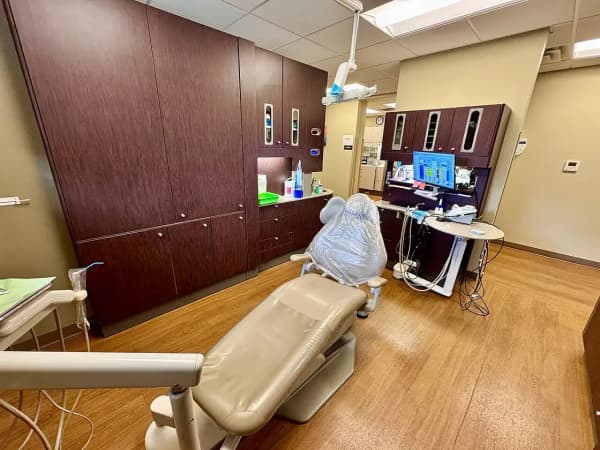

Skin is the body's largest organ, and in Utah it takes a particular beating. Between the elevation, the sun, and a population that spends a lot of time outdoors, dermatology is one of the more quietly important kinds of medical care in the valley — and skin cancer screening in particular is something many locals should take more seriously than they do. Whether you've noticed a mole that's changed, you're fighting stubborn acne, or you just know it's time for a skin check you keep putting off, this guide is meant to orient you before you book.
One thing to be clear about up front: dermatology is medical care, not just cosmetics. Dermatologists are physicians who diagnose and treat real conditions, from skin cancer to eczema, alongside the cosmetic work people often associate with the field. This article is general, plain-English information to help you be an informed patient; it is not medical advice, and anything you're worried about should be evaluated by a qualified provider who can examine your skin in person.
Why Skin Checks Matter More in Utah
Here's the fact that ought to change how Utahns think about their skin: for years, Utah has reported the highest melanoma rate in the country — roughly double the national average. Recent federal data has put the state's melanoma incidence at somewhere around 40 cases per 100,000 people, compared with roughly 22 nationally, and the state has topped or nearly topped the national rankings for most of the past decade and a half.
Public-health researchers generally attribute Utah's high rate to a combination of three things: elevation, which means stronger ultraviolet radiation; a large fair-skinned population, which carries higher genetic risk; and an outdoor-recreation culture that puts people in the sun year-round. It's counterintuitive, because Utah isn't the sunniest state, but altitude does a lot of the damage, and it isn't only a summer problem — sun reflecting off snow means skiers and snowboarders can burn in late winter and early spring without realizing it. None of this is meant to alarm you; it's meant to explain why a dermatologist here will take a skin check seriously, and why you should too.
The encouraging half of the story is that skin cancer, when it's found early, is usually very treatable. That's the entire case for regular skin checks and for paying attention to your own skin between them: the goal is to catch something small before it becomes something serious.
Sun Protection and Younger Skin
If skin checks are the detection half of the equation, sun protection is the prevention half, and it's the single highest-leverage thing anyone in Utah can do for their skin. The basics are unglamorous but they work: daily broad-spectrum sunscreen, reapplied when you're outside for a while; a hat and sun-protective clothing; seeking shade during the strongest midday hours; and extra care around snow and water, which bounce UV back at you. On a high-altitude trail or a spring ski day, that reflected and intensified light adds up faster than most people expect.
There's a local wrinkle worth naming. Utah Valley skews young — a large student population at BYU and UVU, and a lot of young families — and much of the skin damage that shows up later in life is accumulated early, often before anyone is thinking about dermatologists at all. That's why building sun-protection habits young matters so much here, and why dermatology in the valley isn't just an older person's concern. Younger patients also make up a big share of everyday dermatology visits for reasons that have nothing to do with cancer, acne chief among them. Persistent acne — including the adult acne that surprises people in their twenties and thirties — is one of the most common and most treatable reasons to see a dermatologist, and there's rarely a good reason to just live with it when professional treatment can help. The through-line is simple: prevention is cheaper and easier than treatment, and it starts long before the first skin check.
What a Dermatologist Actually Treats
Dermatology covers far more than most people expect. On the medical side, dermatologists diagnose and treat skin cancers and precancerous spots, evaluate and monitor moles, and handle a long list of everyday conditions — acne (including stubborn adult acne), eczema, psoriasis, rosacea, rashes and allergic skin reactions, warts, skin infections, hair loss, and nail problems, among many others. They perform biopsies, remove suspicious or bothersome growths, and, for skin cancers, may do specialized surgery to remove the cancer while sparing as much healthy skin as possible.
On the cosmetic side, many dermatology practices also offer treatments aimed at appearance rather than disease: things like laser treatments for sun damage and pigment, treatments for scarring, injectables, and medical-grade skin-care guidance. The lines blur here, which is part of why the field can be confusing to a newcomer — the same office might treat a child's eczema in one room and do a cosmetic laser in the next.
If you're not sure whether your issue is "medical" enough to warrant a dermatologist, that uncertainty is itself a fine reason to book a visit. A dermatologist can tell you whether something needs treatment, watchful monitoring, or nothing at all, and that reassurance has real value.
Medical vs. Cosmetic Dermatology — and Where Med Spas Fit
Because Utah Valley has a deep market for aesthetic skin treatments, it's worth drawing the distinction clearly. Medical dermatology is about the health of your skin — diagnosing and treating conditions and cancers. Cosmetic dermatology is about appearance, and it's usually elective and paid out of pocket. Many dermatology offices do both, and a physician-led setting is a reassuring place to have cosmetic work done precisely because a doctor is involved.
Separately, the valley is full of medical spas offering injectables, facials, and laser treatments in a more spa-like environment. Those can be great for elective aesthetic goals, but a med spa is not the place for a changing mole, a persistent rash, or anything you suspect might be medical. For the aesthetic side of looking your best — Botox, fillers, and the broader treatment menu — our companion guide to med spas and injectables in Utah Valley walks through how those work and how to choose a safe provider. The simple rule of thumb: medical concerns go to a dermatologist; elective aesthetics can go to either a dermatologist or a reputable med spa.
When to See a Dermatologist
Some visits are routine — a periodic skin check, ongoing management of a chronic condition like acne or psoriasis. Others are prompted by something specific, and it helps to know what shouldn't wait. Book a visit if you notice a mole or spot that fits the ABCDE warning signs — asymmetry, an irregular border, uneven or changing color, a diameter larger than a pencil eraser, or any evolution in size, shape, or feel over time. The same goes for a sore that won't heal, a new growth, a spot that itches or bleeds, or one that simply looks different from everything else on your skin.
You don't have to diagnose yourself; that's the dermatologist's job. Erring on the side of getting something checked is almost always the right call, because the downside of an unnecessary visit is small and the upside of catching something early can be significant. If your primary care provider has ever pointed at a spot and said "keep an eye on that," treat it as a nudge to get it looked at by a specialist.
What Happens at a Full-Body Skin Exam
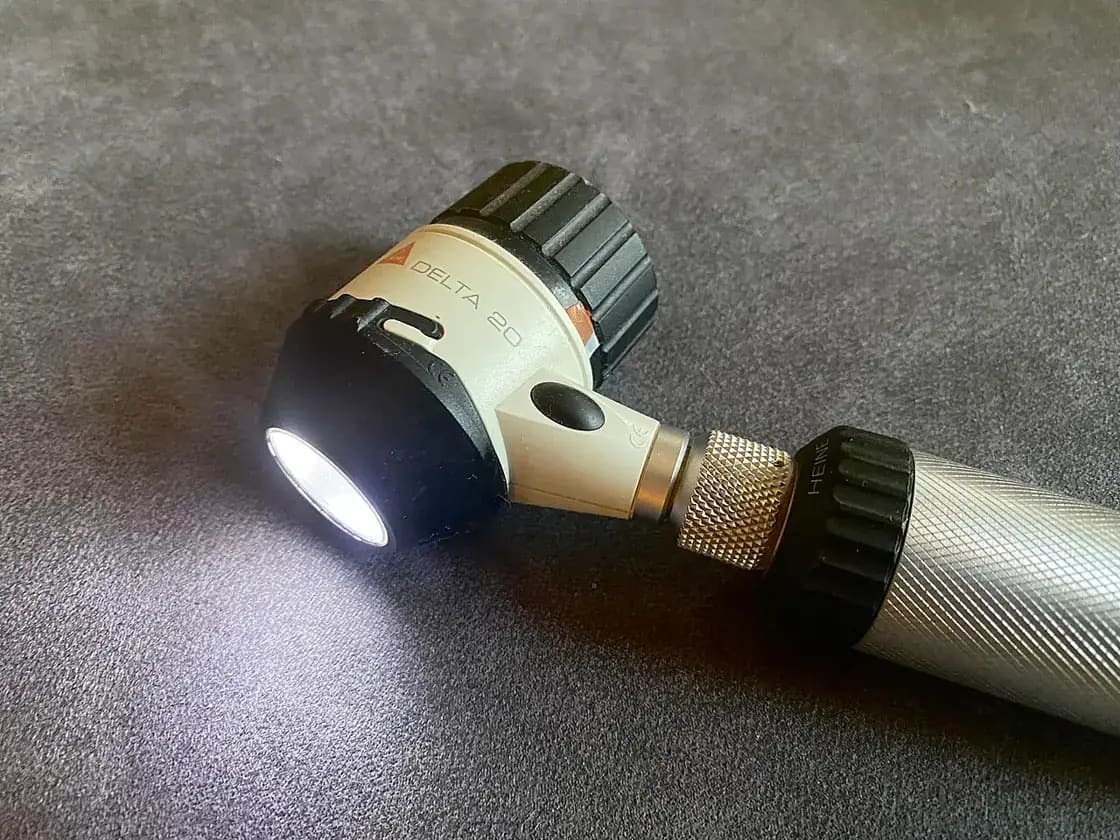
If you've never had a professional skin check, knowing the routine makes it far less intimidating. In a typical full-body exam, the dermatologist looks systematically over your skin from head to toe, noting any moles or lesions and paying particular attention to anything that looks unusual. They may use a dermatoscope — a handheld magnifier with a light — to examine specific spots more closely, which is exactly the kind of tool pictured at the top of this guide. The exam itself is quick, and you can tell the provider about anything that's been bothering you or that you've noticed changing.
If something looks concerning, the dermatologist may recommend a biopsy, which means removing a small sample of the spot to examine it under a microscope. That's a routine, in-office procedure, and it's how a definitive answer is reached rather than guessing from appearance alone. Most spots turn out to be nothing worrisome, but a biopsy is how that gets confirmed. Whatever the plan, a good provider will explain what they're seeing and what, if anything, they recommend doing about it.
If a biopsy does come back as skin cancer, the good news is that treatment is usually straightforward, especially for the common types caught early. Depending on the cancer and its location, options range from a simple in-office removal to a specialized technique called Mohs surgery, in which the surgeon removes the cancer in thin layers and checks each one under the microscope until the margins are clear, sparing as much healthy skin as possible. Several Utah Valley practices offer surgical dermatology and Mohs, and your dermatologist can walk you through which approach fits your situation. The point isn't to worry about the worst case — it's that a clear path exists, and it starts with getting the spot looked at.
Insurance, Cost, and What to Expect to Pay
Cost depends heavily on why you're going. Medically necessary dermatology — evaluating a suspicious mole, treating a skin condition, removing a skin cancer — is generally handled like other specialist care, subject to your plan's deductible, copay, and network. A biopsy or a procedure adds its own cost. Cosmetic services are a different category: most are elective and paid out of pocket, and prices vary widely by treatment and provider, so treat any figure you see advertised as a starting point rather than a quote and confirm the real cost at a consultation.
Coverage for a routine screening when you have no symptoms is the fuzziest area, and it varies by plan and by whether the screening is considered medically necessary given your risk factors. Because all of this is plan-specific and changes over time, the honest advice is to verify coverage and any referral requirement directly with your insurer and the clinic before booking, and to ask about self-pay pricing if you're uninsured or watching costs. Some conditions can also be managed initially through your primary care provider, who can refer you onward if a specialist is needed.
How to Choose a Dermatologist
A few things separate a good experience from a frustrating one. Look for a board-certified dermatologist — a physician who completed a dermatology residency and passed board certification. Utah Valley has both large, hospital-affiliated groups and independent private practices, and both models can deliver excellent care; the right fit depends on your needs, your insurance, and how quickly you can get in.
It's also worth asking who will perform your exam or procedure. Busy dermatology offices often include physician assistants and nurse practitioners working alongside the dermatologists, which is common and appropriate, but you're entitled to know who's evaluating your skin and, for anything significant, to have a dermatologist involved. Wait times for a new-patient appointment can be long in a high-demand specialty, so if you have an urgent concern, say so when you call — many offices triage worrisome spots sooner. Reading reviews across a few platforms and asking your primary care provider or dentist for a referral are both reasonable ways to build a short list.
Questions to Ask Before You Book
- Is the provider a board-certified dermatologist, and who specifically will perform my exam or procedure?
- Do you take my insurance, and do I need a referral for it to be covered?
- What's the self-pay cost for a visit, and for a biopsy or removal if one is needed?
- How soon can I be seen if I have a spot I'm worried about?
- What's your approach to skin cancer screening and follow-up for someone with my risk factors?
A Few Places to Start Looking
Utah Valley is well served for dermatology, with both hospital-affiliated groups and long-established independent practices. Treat this as a starting point for your own research rather than a ranking or endorsement, and verify current details before you book. Intermountain Health's Utah Valley Clinic – Dermatology in Provo offers comprehensive, board-certified care spanning skin cancer, general dermatology, pediatric skin conditions, and cosmetic services, with access to Intermountain's broader network. Revere Health Dermatology, one of Utah County's larger dermatology groups, has locations in Provo and Lehi (and nearby Salem) and focuses on surgical dermatology, skin cancer, pediatric, and general care.
On the independent side, Utah Valley Dermatology runs a Provo clinic offering skin checks, excisions, acne care, and general dermatology for all ages. In Orem, the Dermatology Center offers general and surgical dermatology including skin cancer treatment, and Eyre Dermatology Clinic has served the Orem area since 1971 — a long-tenured local practice. As with any medical decision, confirm the provider's credentials, check that they take your insurance, read reviews across platforms, and choose based on qualifications and fit rather than on a paid listing.
More Utah Valley Living Guides
Your skin is part of your overall health, so it's worth keeping the rest of your care set up too. If you're new to the area, start with our guide to finding a doctor in Provo, and see our guide to finding a dentist in Provo and Orem for the dental side. For elective skin and appearance treatments, our guide to med spas and injectables covers Botox, fillers, and lasers, and if a brighter smile is on your list, see cosmetic dentistry in Utah Valley. For the fitness side of feeling your best, our roundup of the best gyms in Provo covers where to put in the work.
A final reminder: nothing here is medical advice, and skin conditions vary from person to person. Use this guide to know when to get checked and what to ask, then let a qualified dermatologist who has examined your skin guide the actual decisions — and wear your sunscreen.
Related Guides
- Hair Restoration in Utah Valley: Treating Hair Loss, PRP & Transplants (2026)
- Adult Orthodontics & Invisalign in Utah Valley: Braces Aren't Just for Kids (2026)
- Assisted Living & Senior Care in Utah Valley: How to Read the System
- Eye Exams & Glasses in Provo: Who Takes What Insurance, and Where to Go
- Chiropractic vs. Physical Therapy in Utah Valley: Which One You Need (2026)
- Having a Baby in Utah Valley: Hospitals, Birth Options & What to Expect
- LASIK & Vision Correction in Utah Valley: A Practical Guide (2026)
- Urgent Care or the ER? Where to Go in Provo & Orem (and When)
Frequently Asked Questions
How often should I get a skin check if I live in Utah?
Does insurance cover a dermatology visit or a skin cancer screening?
What's the difference between a dermatologist and a med spa?
What are the warning signs of skin cancer I should watch for?
Do I need a referral to see a dermatologist in Utah Valley?
Sources
The facts in this guide were checked against these sources. Hours, fees and rules change, so confirm anything time-sensitive with the source before you go. How we make Provo.com.
- Complete Health Indicator Report: Melanoma of the Skin Incidence, Utah Department of Health and Human Services (IBIS-PH). Checked October 12, 2026.
- Health Indicator Report: Melanoma of the Skin Incidence, Utah Department of Health and Human Services (IBIS-PH). Checked October 12, 2026.
- Health Indicator Report: Melanoma of the Skin Deaths, Utah Department of Health and Human Services (IBIS-PH). Checked October 12, 2026.
- Skin Cancer: Screening, U.S. Preventive Services Task Force. Checked October 12, 2026.