
There's an outdated assumption that braces are a rite of passage for middle schoolers and nothing more. In reality, adults now make up a large and growing share of orthodontic patients, and clear aligners like Invisalign have made straightening your teeth discreet enough that most people around you won't even notice. If you've been quietly wishing your teeth were straighter — whether you never had braces, your old results have shifted, or you just decided it's finally your turn — this guide is meant to orient you before you book a consultation.
This is a plain-English rundown of what adult orthodontic treatment involves in Utah Valley: how orthodontists and general dentists differ, how clear aligners compare to braces, what it costs, and the parts people wish they'd understood up front (starting with retainers). It's general information to help you make an informed decision, not a substitute for a professional evaluation of your specific teeth and bite.
You're Not Too Old for Braces
The first thing worth saying plainly: age is rarely the barrier. Teeth can be moved at essentially any age, as long as they and the surrounding gums and bone are healthy. What matters is the condition of your mouth, not the number on your driver's license. Adults are no longer the exception in an orthodontist's waiting room, either — by some estimates roughly one in four orthodontic patients (or more) is now an adult, so if you're weighing this, you'd be in very ordinary company.
Adults come to orthodontics for a handful of common reasons. Some never had treatment as kids and finally have the means and motivation to do it. Many are dealing with teeth that have shifted over the years — which is completely normal, since teeth keep migrating slowly throughout life. A large group are fixing relapse: they had braces as teenagers, stopped wearing their retainer, and watched their teeth drift back. And some are straightening things in preparation for other dental work, or ahead of a milestone.
That last point has a distinctly local flavor. Utah Valley is full of young adults hitting big life events — graduations, new careers, and a whole lot of weddings — and a straighter smile is something people often decide to sort out around those moments. There's nothing vain about it; wanting to feel confident in your own smile is reason enough, and the tools to do it discreetly have never been better.
Orthodontist vs. Your Dentist — Who Does What
Here's a distinction that trips people up. An orthodontist is a dentist who completed several additional years of specialty residency devoted specifically to moving teeth and correcting bites. Orthodontics is the entirety of what they do, which means deep, focused expertise, particularly for complex cases and bite problems.
At the same time, many general and cosmetic dentists also offer Invisalign and other clear aligners. For a straightforward case, having your regular dentist handle mild alignment can be convenient and perfectly appropriate — some local cosmetic dentists offer it as part of their smile-focused services, which our guide to cosmetic dentistry in Utah Valley touches on. So how do you choose? For complex movements, bite correction, or simply the reassurance of a specialist overseeing the whole process, an orthodontist offers the deeper training. For a mild case with an experienced dentist you trust, that route can work well too. The key is to ask about the provider's specific experience and volume with the treatment you need — and, if you're unsure, to get more than one opinion, which usually costs nothing since consultations are typically free.
Clear Aligners vs. Traditional Braces
The two main paths to straighter teeth solve the same problem differently, and each has honest tradeoffs.
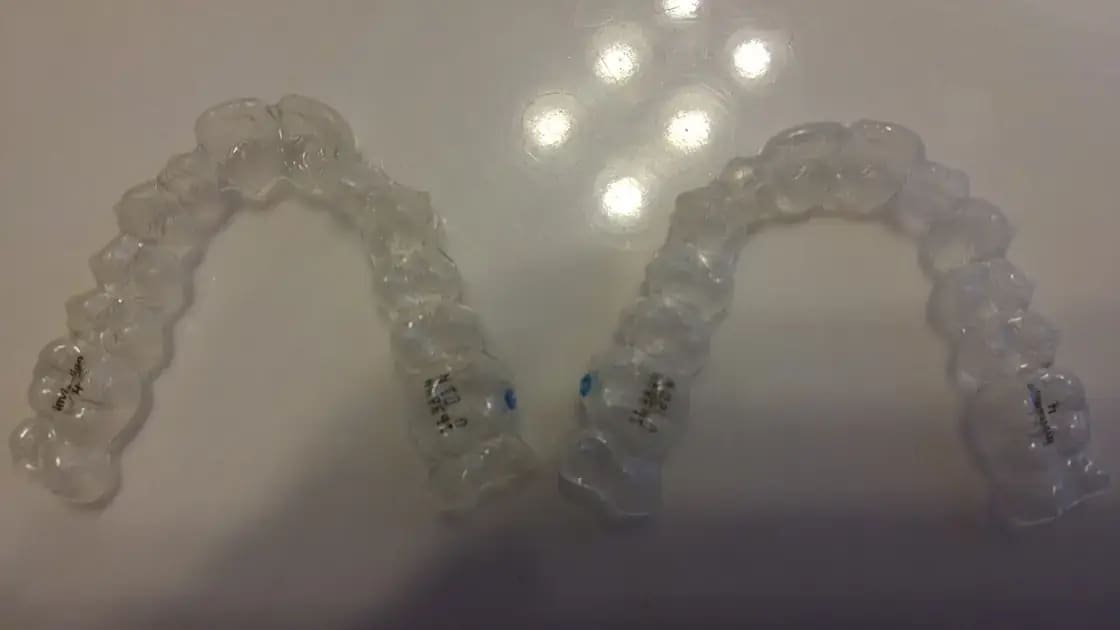
Clear aligners — Invisalign is the best-known brand, though there are others — are a series of custom, removable, nearly invisible trays. You wear each set for a week or two, then move to the next, gradually shifting your teeth. Adults love them because they're discreet and you can take them out to eat, brush, and floss normally. The catch is discipline: aligners only work if you wear them the recommended 20 to 22 hours a day, and it's easy to sabotage your own treatment by leaving them out too much. They're a great fit for many cases, but not every case.
Traditional braces — metal, or less-visible tooth-colored ceramic — are fixed to your teeth and work around the clock without depending on your willpower. They tend to handle more complex movements and bite corrections better than aligners, and modern braces are smaller and more comfortable than the ones you may remember from the 1990s. The downside is that they're visible and require more care around brushing and certain foods.
Which is right for you comes down to your specific case and your honesty with yourself about wearing aligners faithfully. A good provider will tell you candidly whether you're a strong candidate for clear aligners or whether braces would produce a better result — rather than simply selling you whichever you walked in asking for.
Comfort, Speech, and Everyday Life
Adults weighing treatment often want to know what it's like to live with, and the honest answer is that it's very manageable but not invisible. When you switch to a new aligner tray, or after braces are adjusted, expect some soreness or pressure for a day or two — that ache is the teeth moving, and it fades. Many people also notice a slight lisp in the first days with clear aligners; it almost always resolves quickly as your tongue adapts.
Day-to-day habits shift a little, too. With clear aligners, you take them out to eat and to brush, then put them right back in, and you'll want to keep them clean and always store them in their case — the classic mistake is wrapping an aligner in a napkin at a restaurant and throwing it away. With braces, you learn to brush more carefully and steer around a few foods that can damage brackets. None of this is dramatic, and most adults settle into a routine within a couple of weeks. The bigger commitment is mental: staying consistent for the length of treatment, especially the discipline of wearing aligners the full 20 to 22 hours a day. If you can do that, the everyday experience is far easier than the braces you may remember from childhood.
A Word of Caution on Mail-Order Aligners
You've probably seen ads for at-home aligner services that promise to straighten your teeth by mail, with no office visits, for a lower price. It's worth being cautious here. Sending impressions or scans by mail and moving your teeth without in-person clinical supervision has drawn safety concerns from dental professionals, and at least one large company in that space shut down. The value of an orthodontist or dentist isn't only the aligners themselves — it's the in-person exam, the X-rays, and a trained professional monitoring your teeth, gums, and bite as things move, ready to catch a problem before it becomes a bigger one. Moving teeth is a real biological process with real risks if it's done wrong. If a service skips the in-person evaluation and ongoing oversight, understand that you're trading away the part that keeps treatment safe.
What Adult Treatment Actually Involves
The process usually starts with a consultation, where the provider examines your teeth and bite, discusses your goals, and tells you what's realistic. If you move forward, they'll take a digital scan or impressions (many offices now use intraoral scanners rather than the old goopy molds) and build a treatment plan. From there it's either a series of aligners you change on schedule, or braces adjusted at periodic in-office visits, over a span that commonly runs from several months to a couple of years depending on the case.
Near the end, providers often do refinements — extra aligners or adjustments to fine-tune the result. And then comes the part that never ends: retainers. Because teeth naturally drift back toward where they started, you'll wear a retainer to hold your new alignment, typically nightly and indefinitely. This isn't optional if you want to keep your results, and skipping it is exactly how so many adults end up back in an orthodontist's chair years later. Budget for retainers, mentally and literally, as a permanent part of the deal.
Cost, Insurance, and HSA/FSA
Adult orthodontic treatment commonly runs several thousand dollars, with the exact figure depending on the complexity of your case, how long treatment takes, and the provider. Treat any advertised price as a starting point and get a real quote at a consultation, which most orthodontists provide for free.
On the payment side, some dental plans include an orthodontic benefit, but there are quirks worth knowing: it often comes as a separate lifetime maximum rather than an annual one, and some plans apply orthodontic coverage mainly to dependent children, leaving adult coverage limited. Orthodontic treatment is generally an eligible expense for HSA and FSA funds, which can meaningfully soften the cost, and nearly every office offers monthly payment plans to spread it out. Because all of this is plan-specific and changes, verify your actual benefits with your insurer and ask the office's treatment coordinator to help you understand what applies before you commit.
Straightening Your Smile Before a Wedding
Given how many weddings happen in Utah Valley, this deserves its own note, because the timing math surprises people. Orthodontic treatment takes months to a couple of years, not weeks — so if you want straighter teeth for your wedding photos, you need to start well ahead, ideally a year or more out, not a few months before. Some people wearing clear aligners do take them out for the ceremony and photos, which is one of the practical perks of the removable format.
There's also a sequencing rule that ties orthodontics to the rest of a wedding-smile plan: if you're also considering whitening or veneers, straighten first, then whiten or do cosmetic work afterward, so everything matches the final position of your teeth. Our cosmetic dentistry guide covers that whitening-and-veneers side, and our wedding planning timeline is built around exactly this kind of "start early, not last-minute" thinking. The overarching principle: give yourself a long runway, and don't let a wedding date pressure you into a rushed decision.
How to Choose a Provider
A few things separate a good experience from a regrettable one. Decide first whether your case calls for an orthodontist (the specialist, better for complex needs) or whether an experienced dentist offering aligners is appropriate for a mild case — and ask directly about the provider's experience and volume with your specific treatment. Use the free consultations to compare a couple of options rather than committing to the first one.
When you compare, look past the monthly-payment figure to the total treatment cost, and ask who monitors your progress at each visit and how they handle refinements and retainers. Pay attention to whether the provider gives you a candid assessment — including telling you if aligners aren't right for your case — rather than simply selling the option you asked about. Modern tools like digital scanning and remote check-ins can add convenience, but the fundamentals are an honest evaluation, a clear plan, and a provider you trust to see it through.
Questions to Ask at a Consultation
- Is this an orthodontist or a general dentist, and how much experience do you have with my type of case?
- Am I a good candidate for clear aligners, or would braces get a better result?
- What's the total cost — not just the monthly payment — and what does it include?
- How long will treatment take, and what happens if I need refinements?
- What's the retainer plan afterward, and is it included?
A Few Places to Start Looking
Utah Valley has plenty of orthodontic options, so treat this as a starting point for your own research rather than a ranking or endorsement, and verify current details before booking. Nord Orthodontics, with offices in Orem and Eagle Mountain, is a board-certified orthodontic practice that treats adults as well as kids and teens and emphasizes Invisalign and digital orthodontics. SuperGrin Orthodontics, serving Orem and Provo, has been around since the early 2000s and offers Invisalign and braces for all ages with free consultations and evening appointments. Harris Orthodontics in Provo offers Invisalign, traditional braces, and clear braces for adults and families. And Utah Orthodontic Care runs an Orem office serving Provo, Orem, Vineyard, and Lindon, with metal and clear braces plus Invisalign, free consultations, and payment plans.
Beyond dedicated orthodontists, remember that some general and cosmetic dentists in the valley also offer Invisalign for straightforward cases. As with any decision like this, confirm the provider's credentials and experience, understand the full cost, read reviews across platforms, and choose based on fit and qualifications rather than on a paid listing or the lowest monthly number.
More Utah Valley Living Guides
Straightening your teeth is one piece of your overall dental picture. If you're still setting up routine care, start with our guide to finding a dentist in Provo and Orem, and for the appearance side — whitening, veneers, and smile makeovers — see our guide to cosmetic dentistry in Utah Valley. If a wedding is driving the timeline, our wedding planning timeline will help you sequence everything, and for the rest of your care, our guide to finding a doctor in Provo is a good starting point.
One final note: this is general information, not a professional evaluation, and the right treatment depends on your specific teeth and bite. Use this guide to ask better questions, then let a qualified orthodontist or dentist who has examined you in person guide the actual plan — and whatever you do, wear the retainer afterward.
What Utah law requires before anyone straightens your teeth remotely
Mail-order aligners are the single biggest source of confusion in adult
orthodontics, and Utah has answered the question directly rather than leaving it
to advertising. The answer sits in Utah Code § 58-69-807, the teledentistry
section of the Dentist and Dental Hygienist Practice Act, and it is more specific
than most people expect.
Start with what is permitted. § 58-69-807(1) allows a dentist to provide dental
services using teledentistry, and (2)(a) fixes the standard of care: it is the
same as the standard in a traditional physical setting. Remote is not a lower
bar; it is the same bar delivered differently.
Then the orthodontic-specific rules. § 58-69-807(2)(e)(i) permits a dentist to
correct or attempt to correct malpositioned teeth — which is what an aligner does
— only if the dentist has performed an appropriate, in-person, physical
examination of the patient for the purpose of diagnosing, assessing and
developing a treatment plan; has reviewed the patient's relevant history,
medical records, diagnostic records and contemporaneous radiographic records; and
will provide reasonable in-person follow-up care.
There is a narrow exception, and it is narrower than it first appears.
(2)(e)(ii)(B) lets a dentist establish an initial relationship through
teledentistry alone for the purpose of making an initial diagnosis of a
malposition of teeth and determining the need for an orthodontic appliance. But
(2)(e)(iii) closes the loop: the dentist shall confirm that initial
diagnosis by conducting an in-person examination, reviewing contemporaneous
radiographic records, and reviewing the results of any other relevant test,
imaging or consultation — before the patient begins using any orthodontic
appliance.
Read those two together and the practical rule is clear. A remote scan or a mail-in impression kit can lawfully start the conversation. It cannot lawfully finish it. Somebody has to look in your mouth in person, and somebody has to look at current radiographs, before the first tray goes in. Radiographs matter more here than patients realize: aligners move teeth through bone, and root length, bone level and undiagnosed periodontal disease are not visible on a smartphone scan.
§ 58-69-807(2)(c) adds a further limit that catches a common workaround. A
dental hygienist, another unlicensed individual supervised by a dentist, or any
other provider may not carry out through teledentistry any duty that requires the
direct or indirect supervision of a dentist. A scanning technician in a shopfront
is not a substitute for the supervision the statute requires.
The provision most worth knowing before you sign anything is § 58-69-807(3),
and it is unusually protective. A licensed dental professional, or any entity
employing one, may not require a patient to sign a pretreatment agreement that
limits the patient's ability to file a complaint with the division, file a
lawsuit, join a class action, make reports to a governmental entity, submit to
binding arbitration, or otherwise limit or prohibit the patient from obtaining
relief for deficiencies in treatment. Direct-to-consumer aligner contracts have
historically bundled exactly those terms. In Utah, a pretreatment agreement that
does so is not something you have to accept in order to get treatment.
(4) completes the picture by requiring that informed consent for teledentistry
cover additional specified information, including a description of the types of
services provided remotely.
Three questions worth asking any provider, whether the sign says orthodontist, general dentist or aligner brand:
- Who is the treating dentist, by name and license number? Utah's license lookup is free, and the treating dentist is a licensed individual, not a brand.
- When is my in-person examination, and when are the radiographs taken? Under
(2)(e)(iii)both must happen before you start wearing anything. - Does the agreement contain an arbitration clause or a complaint waiver?
If so,
§ 58-69-807(3)says it cannot be a condition of your treatment.
One further point on titles. Utah issues no separate license for an orthodontist;
§ 58-69-301(2) provides for dentist and dental hygienist only. Specialist
practice is a matter of training and board certification rather than a distinct
state credential, so "orthodontist" tells you about a residency, not about a
different license. Ask where the residency was and whether the practitioner is
board certified, because the state credential will not distinguish them from a
general dentist offering the same treatment.
Related Guides
- Hair Restoration in Utah Valley: Treating Hair Loss, PRP & Transplants (2026)
- Massage Therapy in Provo: What the Person Working on You Is Legally Required to Show
- Chiropractic vs. Physical Therapy in Utah Valley: Which One You Need (2026)
- Finding an OB-GYN or Midwife in Utah Valley
- Dermatology in Utah Valley: Skin Checks, Skin Cancer & Finding a Dermatologist (2026)
- Finding a Pediatrician in Utah Valley: A Parent's Guide
- Finding a Therapist in Utah Valley: The Practical Guide
- Eye Exams & Glasses in Provo: Who Takes What Insurance, and Where to Go
- Having a Baby in Utah Valley: Hospitals, Birth Options & What to Expect
Frequently Asked Questions
Am I too old for braces or Invisalign?
What's the difference between Invisalign and braces, and which is better?
Should I see an orthodontist or my regular dentist for Invisalign?
How much does adult orthodontic treatment cost, and does insurance cover it?
Do I really have to wear a retainer forever?
Are mail-order clear aligners legal in Utah?
Can an aligner company make me sign away my right to complain or sue?
Is an orthodontist a different license from a dentist in Utah?
Sources
The facts in this guide were checked against these sources. Hours, fees and rules change, so confirm anything time-sensitive with the source before you go. How we make Provo.com.
- Utah Code 58-69-807 Teledentistry, Utah Legislature. Checked October 12, 2026.
- Utah Code 58-69-301 License classifications, Utah Legislature. Checked October 12, 2026.