
More on Provo and Orem: every guide we have published there, in one place.
Provo and Orem share a border, a mountain range, a bus line and enough overlap that many people use the names interchangeably. But they are distinct cities with different personalities — and, more usefully, with different institutions. Which side of the line you live on determines who sells you electricity, whether gigabit fiber is available at your address, and, from 2027, which school district your children attend.
This guide compares the two honestly, category by category. It also flags the places where the answer is about to change, because the single biggest thing happening to this comparison is dated and most write-ups have not caught up.
The Quick Version
Choose Provo if: you want walkable downtown energy, proximity to BYU, the best restaurant concentration in the valley, a municipal power utility, and the best residential internet infrastructure in the state for a city this size.
Choose Orem if: you want a quieter, more suburban feel, proximity to UVU, more house per dollar, and a position slightly closer to the Silicon Slopes employers north of you.
The honest headline: the two are ten minutes apart and thousands of people treat the boundary as irrelevant to daily life. The differences that bind are institutional, not cultural.
Where the Line Actually Runs
Worth settling before anything else, because local businesses get filed on the wrong side constantly and it distorts every comparison built from listings.
- The Shops at Riverwoods is in Provo, at 4801 N University Avenue, despite being routinely described as Orem. Its own landlord says Provo.
- University Place is in Orem, at the University Parkway and State Street junction. This is the one most people get right.
- Slackwater is in Provo, notwithstanding how often aggregators file it under Orem.
- UVU sits in Orem, close to the boundary but inside it. BYU is comfortably inside Provo.
There is also a genuine addressing quirk that catches new arrivals. Provo's street grid originates at Center Street and University Avenue — Provo is the exception in a county where most cities count from Main Street. Because University Parkway crosses between two different addressing origins, the same road carries different grid numbers in Orem and in Provo. Neither number is wrong. Our University Parkway guide walks the whole corridor.
Cost of Living
Orem is modestly cheaper than Provo, and the gap has narrowed. What follows is deliberately structural rather than a table of hard figures, and the reason is worth stating.
Utah is a non-disclosure state. Individual property sale prices are not public record here, which means no authoritative median home price exists for either city — only estimates assembled by private companies from partial data. Published medians for the same Utah County city in the same year routinely differ by six figures. An earlier version of this page printed a specific median for each city and a headline dollar gap between them. Those numbers were not defensible and they are gone. What replaced them is a method: our guide to Provo-area housing data shows which source measures which quantity, so you can compare two cities without comparing two different definitions.
What holds up, and what you can act on:
- Rent is close, and the difference is small enough to be swamped by the specific building. For a one-bedroom the gap between the two cities is typically a matter of tens of dollars a month, not hundreds — smaller than the spread between two complexes on the same street. Our cost of living in Provo guide publishes working ranges by unit type.
- The real housing difference is square footage per dollar, not price per city. Orem's larger footprint and later suburban build-out mean more three- and four-bedroom stock on bigger lots. Provo's family neighborhoods are older, more established, and priced accordingly. If you are comparing a Provo bungalow against an Orem split-level, you are comparing two different products.
- Both cities are effectively built out, which is why neither has cheap new inventory. Provo is boxed in by Utah Lake to the west, the Wasatch to the east, and Orem and Springville north and south. Orem is similarly hemmed. The valley's new, cheaper housing is north and west — Saratoga Springs, Eagle Mountain, Lehi — which is a different decision entirely.
- Groceries, gas and consumer prices are indistinguishable. They share the same stores.
The one line item that is not comparable is utilities, and that gets its own section below.
Schools: The Answer Changes on July 1, 2027
This is the most important part of this page and the part most comparisons still get wrong.
Provo is served by Provo City School District, which has always been independent and is unaffected by anything below.
Orem has been served by Alpine School District — long the largest district in Utah. That ends. Utah County voters approved splitting Alpine into three districts, and on July 1, 2027 Orem, along with Lindon, Pleasant Grove and Vineyard, becomes part of the new Timpanogos School District.
⚠ This inverts an argument you will see everywhere, including in an earlier version of this guide. "Orem is in Alpine, one of the largest districts in the state, so there are more options" was a reasonable thing to say and is about to stop being true. Timpanogos will be a fraction of Alpine's size. If district scale is part of your decision, the scale is changing direction.
What is not changing, and is worth saying plainly because rumor outruns fact here:
- The 2026–27 school year runs under Alpine exactly as before. Alpine keeps sole responsibility and oversight of every school and asset until the handover. Your principal, bus route and registration this fall all still run through Alpine.
- Nothing about the split by itself moves a student. District leaders have said the Timpanogos schools keep their existing staff, and current attendance boundaries stay in force.
- Boundary studies are separate. Watch board meetings rather than assuming.
Our Timpanogos School District guide has the full picture — the money split, the timeline and the parts still undecided. And whichever city you land in, the standing rule holds: verify the school assignment for the specific address, today, with the district. Boundaries have shifted before and will shift again. Our best schools guide compares individual schools.
Utilities and Internet: The City Line Decides Both
Here is the comparison nobody publishes, and it is the one with the clearest dollar consequence.
Electricity comes from a different kind of organization on each side of the boundary. Provo runs Provo City Power, a municipal utility owned by the city and, by the city's own account, the largest municipally owned electric utility in Utah. It is one of six members of the Utah Municipal Power Agency. Orem, like most of the valley, is served by Rocky Mountain Power, an investor-owned utility.
Why this matters beyond trivia:
- It changes the arithmetic on rooftop solar. Rocky Mountain Power closed true net metering to new customers in 2017; new solar customers go onto an export-credit arrangement worth considerably less than retail. Municipal utilities set their own rules. If solar is anywhere in your plans, your utility is a bigger variable than your roof, and it is decided by your address. Our Utah home solar guide has the detail.
- A municipal utility has no investors, so its surplus goes to the city rather than to shareholders — Provo Power transfers a share of revenue to the General Fund in lieu of taxes.
- Setup differs. Provo City Power connections run through the city rather than a national call center. Our Provo utilities guide covers the process.
Internet is the other real difference, though not in the direction it is usually stated. Provo was the third city in the country to get Google Fiber, after Google agreed in 2013 to buy the city's municipal network, iProvo, and upgrade it. GFiber, as the service is now branded, reaches most of Provo with symmetrical gigabit service, which is unusual for a city this size. Orem went the other way and is a founding member of UTOPIA Fiber, the open-access municipal network. On an open-access network the agency owns the fiber and multiple private providers compete over the same line, so an Orem household picks a provider the way it picks a cell carrier. UTOPIA does not serve Provo at any address, and Provo is not a member city. The honest summary is that Provo has one excellent provider on its best infrastructure and Orem has competition on its own — which of those you prefer depends on whether you value the ceiling or the choice. Verify at your exact address in either city; coverage varies street by street and no citywide percentage is reliable.
For anyone who works from home, uploads large files, or runs anything self-hosted, this is arguably the single most concrete advantage either city holds over the other — and it is entirely absent from every other Provo-versus-Orem comparison we have seen. Our Provo internet guide has plans and coverage; check your specific address, because most is not all.
Neighborhoods and Character
Provo has a defined downtown and a walkable Center Street corridor with independent restaurants, a theater, live music and a cultural identity tied to BYU and the mountains. Its neighborhoods range from dense student housing near campus to established family areas in the foothills — Edgemont, the Tree Streets, Rock Canyon.
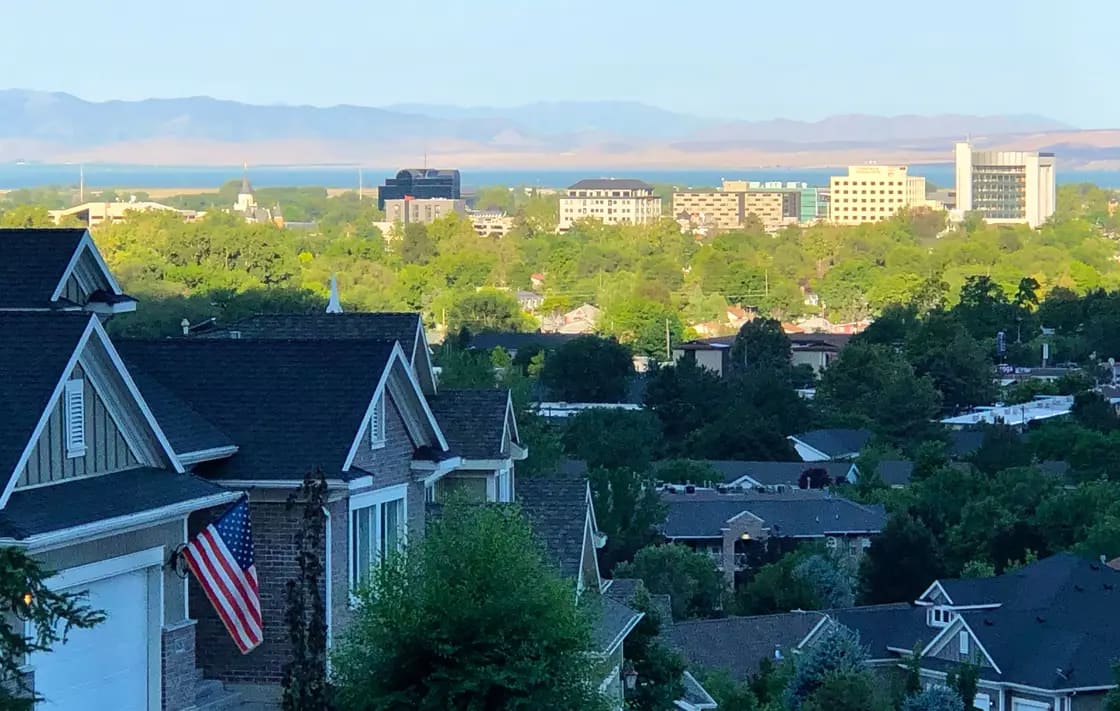
Orem is more uniformly suburban and does not have a downtown equivalent. University Parkway and State Street are commercial corridors rather than destinations; the walkable center of gravity is University Place, a redeveloped mall that now functions as Orem's town square. The neighborhoods are residential, quieter and more spread out. Orem calls itself "Family City USA" and has leaned into that identity for decades.
The lifestyle test: if you want to walk to dinner, catch a show, and feel like you are in a place, Provo fits better. If you want a quiet street, a bigger yard and short drives to everything, Orem delivers it more reliably.
Detailed breakdowns: Provo neighborhoods · Orem neighborhoods
Food and Dining
Provo wins this decisively, and the reason is geometric rather than qualitative: Provo's restaurants are concentrated and Orem's are distributed. Center Street alone holds more independent kitchens within a few blocks than Orem has in any comparable radius.
Orem has good food — Pizzeria 712 is a longtime critical favorite for wood-fired Neapolitan, and there are strong options along State Street — but it is spread across commercial strips and skews more chain-heavy. See best restaurants in Provo and best restaurants in Orem.
The practical takeaway is that this should not decide where you live. A ten-minute drive covers the entire distance between the two. Where it does matter is whether you can reach dinner without a car, and there the answer is Provo.
One shared constraint worth planning around: Sunday closures are extensive in both cities. Our Sunday dining guide is the workaround.
Transportation and Commute
Both cities sit on I-15 and both are on the FrontRunner commuter rail line, so drive times to Salt Lake City are comparable. If you work in the Silicon Slopes corridor around Lehi and American Fork, Orem puts you marginally closer. If you work at BYU or in downtown Provo, Provo saves you the daily crossing.
Two things to know before you build a life around transit:
⚠ FrontRunner does not run on Sundays. Neither does UVX. That is UTA's standing schedule, not a seasonal quirk. A Sunday plan that depends on the train does not work from either city. Our FrontRunner commuting guide has the detail.
✅ UVX is the underrated piece, and it is the strongest argument that the two cities function as one. The bus rapid transit line runs between BYU and UVU every six to ten minutes, connecting Provo's downtown and campus to Orem's campus and University Place. If you are a student at either school, UVX makes the city boundary close to irrelevant.
Both universities provide transit access with a student ID, which is the best financial perk available to a student here.
For Students
BYU students should strongly consider Provo. Campus proximity, walkability and the density of student housing make it the natural choice; living in Orem and commuting to BYU is workable but adds daily friction. Our BYU student guide covers housing.
UVU students have real flexibility. UVU sits in Orem near the boundary, Orem has more affordable apartment stock near campus, and UVU's student body skews commuter — a different living pattern from BYU's. But UVX means a Provo address is entirely viable. See UVU student housing.
One thing students underestimate: the two schools produce different neighborhood rhythms. Areas near BYU empty out in the summer and refill in August; Orem's student areas are steadier year-round because more of the population is not on an academic cycle.
For Families
Both cities are strong for families, and the honest summary is that the differences are smaller than the marketing on either side suggests.
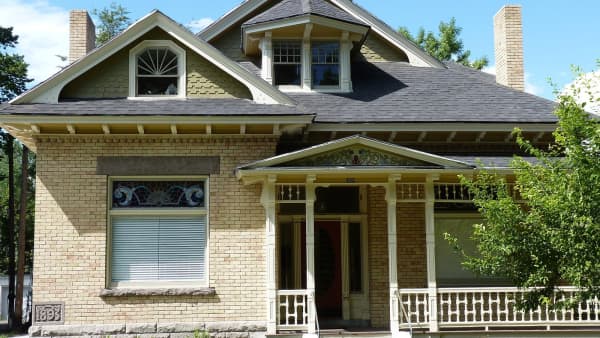
Orem offers more suburban housing stock — larger homes, bigger yards — and the "Family City USA" identity is backed by a good parks and recreation footprint. Provo's family neighborhoods are older and more established, with stronger walkability and more architectural character, and they price accordingly.
Outdoor access is effectively identical: both sit at the base of the same range, both have canyon access within fifteen minutes, and the trail network does not check addresses. See Provo for families.
The genuine family-level differentiators are the two dated ones above — school district after July 2027 and utility provider today — plus whichever specific schools serve the specific address you are considering.
Both Cities Are Shrinking, and Orem Faster
A fact that surprises nearly everyone and belongs in any serious comparison: neither city is growing.
The Utah Population Committee's subcounty estimates for mid-2024 to mid-2025 put Orem at roughly −943 residents, the largest numeric decline in the state, and Provo at roughly −498. Meanwhile Saratoga Springs added 4,682 and Eagle Mountain 4,169.
This is not decline in the sense people fear. It is geography. Both cities built out decades ago and neither has annexable open land, so the county's growth happens where the greenfield is — north and west. What Provo and Orem do from here is density and redevelopment rather than sprawl, which is exactly what downtown Provo and University Place have been.
The practical consequence for a buyer: do not expect either city to produce cheap new inventory. Our Provo population guide has the full numbers and the mechanism.
The Bottom Line
Provo and Orem are not rivals. They are complementary halves of one metro area, and a very large number of people work in one, live in the other, and treat the boundary as an administrative detail.
But if pressed: Provo has more character, better concentrated food, a municipal power utility and by far the better internet. Orem has more space per dollar, a quieter daily rhythm and a marginally better position for a northbound commute.
And whichever way you lean, weigh the two dated facts over the vibes: the school district serving Orem changes on July 1, 2027, and your electricity provider — and therefore the economics of ever putting solar on your roof — is decided the moment you pick a side of the line.
Related Guides
Frequently Asked Questions
Should I live in Provo or Orem?
Is Orem cheaper than Provo?
What school district is Orem in?
Does the school district split change the Provo vs Orem decision?
What is the difference between Provo and Orem?
Who provides electricity in Provo versus Orem?
Does Provo have better internet than Orem?
Are Provo and Orem growing?
Sources
The facts in this guide were checked against these sources. Hours, fees and rules change, so confirm anything time-sensitive with the source before you go. How we make Provo.com.
- Provo to Become Third 'Google Fiber City', Utah Governor's Office of Economic Development. Checked October 12, 2026.
- Rodizio Grill Provo, Rodizio Grill. Checked October 12, 2026.
- These were Utah's fastest-growing cities in 2025, KSL.com. Checked October 12, 2026.
- Utah County school district officially named Timpanogos, ABC4. Checked October 12, 2026.