Update, September 15, 2026 — the application described below has been WITHDRAWN. Provo City says it was withdrawn as of September 3. There is no pending Provo council vote.
Orem's City Council passed a formal resolution on September 8 opposing the project, and that resolution — R-2026-0011, published on orem.gov — states in its own preamble that "although the original application has been withdrawn, we understand that a revised proposal is forthcoming." The Salt Lake Tribune reported on September 13 that the developers are starting over.
Everything below this line describes the pre-withdrawal state of the proposal and the vote dates that were live at the time. We are leaving it standing rather than rewriting history, because the sequence of moved dates is itself the story — but no date on this page is still in play. Our withdrawal and Orem-resolution post carries where this now stands, and we will not publish another date until Provo City does.
Update, August 8, 2026: August 11 is not the vote. Provo City's project page, last updated August 5, says the request appears before the City Council for initial consideration on August 11 and that the earliest a council vote can occur is August 25 — possibly September. The Daily Herald reported the same on July 31. Earlier reporting also detailed the proposed sale of city-owned land and the draft development agreement. Read the full update here.
(Previous update, July 24, 2026: the vote originally set for July 14 was pushed to August and listed for August 11 at 5:30 p.m. That listing is now understood to be initial consideration rather than a decision.)
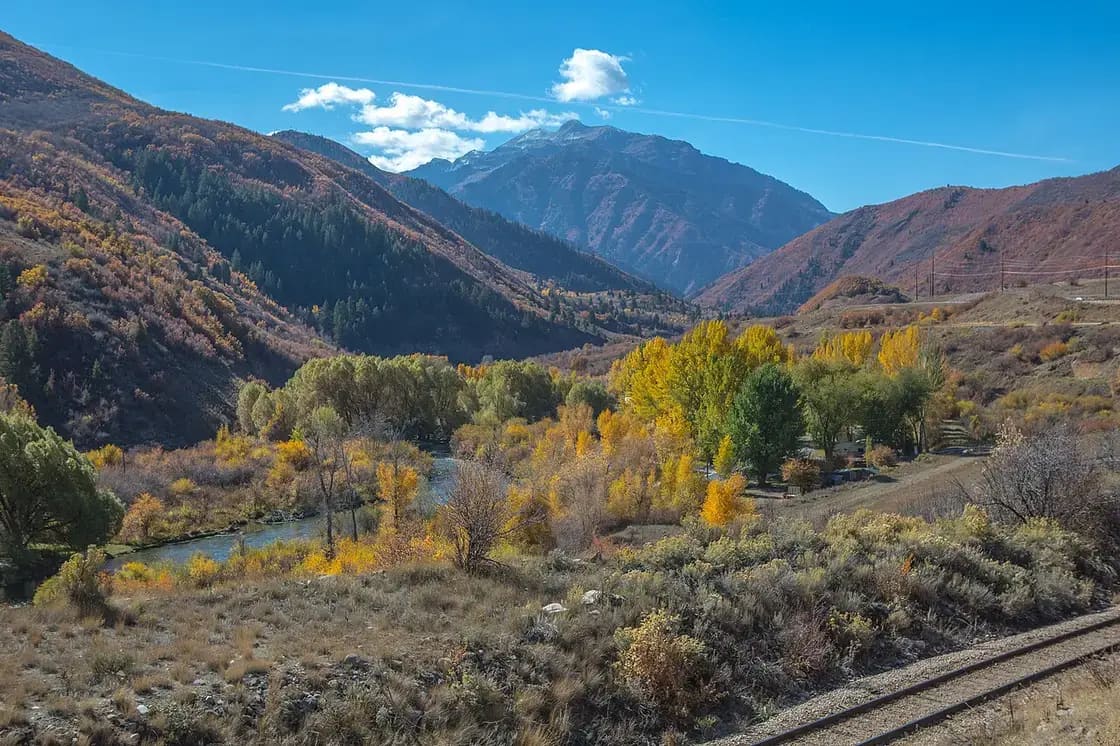
If you've driven up Provo Canyon lately, you've passed it a thousand times without a second look: the gravel operation on the south side of the highway, right where the canyon opens toward Orem. That unglamorous pit is now the center of the loudest land-use fight Provo has had in years. The original application was withdrawn on September 3, 2026, before the City Council ever voted.
Here's the whole thing, laid out plainly: what's proposed, who's behind it, who's against it, what was decided, and what a council vote would have involved.
What's proposed
Vesper Amphitheater is a private entertainment and hospitality development announced on May 19, 2026, at a press event at the site itself, fronted by two familiar names: Donny Osmond and his nephew David Osmond, who serves as the project's executive director. The Osmond connection runs deep in Provo: Alan Osmond, who died this April, championed the Stadium of Fire concert at LaVell Edwards Stadium.
The plans, as filed with Provo City, include:
- An outdoor amphitheater seating about 20,000 people, built into the hillside contours of the old quarry with seating oriented toward Mount Timpanogos — renderings draw comparisons to Red Rocks in Colorado and Tuacahn in southern Utah
- An 8,000-seat indoor configuration so the venue can operate year-round, not just in summer
- A hotel, restaurants, and walkable retail connecting the pieces
- Structured and surface parking — the draft development agreement discussed at the city would cap the venue at 20,000 seats and allow up to 8,000 parking spaces, with minimums for structured (garage) parking and a maximum footprint for surface lots
- Trail connections and restoration commitments, including conservation easements the developers said they were working on with Provo City
Developers said at the announcement that they hoped to break ground in spring 2027 and finish by fall 2029.
Where, exactly — and why the land matters
The site is 6622 US-189, on the south side of Provo Canyon Road at the mouth of the canyon, directly across the highway from Mount Timpanogos Park and Canyon View Park. The project footprint is 100.7 acres, and the ownership split is a detail that matters more than most coverage lets on: about 34 acres belong to the Provo Canyon Mining Company (the working quarry), and about 66 acres are owned by Provo City itself.
That means this isn't only a zoning question. For the full project to happen, the city would also have to agree to sell its own land to the developers — a separate City Council decision.
The land is an existing gravel pit. That fact is the load-bearing wall of the developers' entire argument — and, as we'll see, opponents read the same fact very differently.
The case for
Supporters frame Vesper as reclamation, not intrusion. "The goal is not to overwhelm the canyon but to transform it from an existing gravel pit into something more beautiful, more usable, more stable, more thoughtfully planned — a gateway to Provo Canyon," David Osmond said at the announcement.
Provo Mayor Marsha Judkins spoke at the announcement, saying "This will be a premier space that so many people from across the world are going to be able to enjoy." At public meetings, residents in favor made the economic and cultural case: a large venue the region doesn't have, jobs, sales tax revenue, and a permanent fix for an industrial scar at the canyon's entrance.
The developers also point to a specific line in the city's own planning documents. Provo's Hillsides and Canyons Plan, which guides preservation and development in the canyons, identifies the Provo Canyon gravel pit reclamation area as an opportunity, with language contemplating ecological restoration, the creation of an outdoor concert venue, or other recreational amenities. Vesper's team argues the project is in line with that vision.
The case against
Opposition organized fast, and it isn't fringe. A petition against the project has drawn thousands of signatures, calling it a "huge threat to this canyon sanctuary." Conserve Utah Valley argues the project conflicts with the Hillsides and Canyons Plan, and opponents read its concert-venue language as never contemplating anything at this scale.
Then there's traffic, the concern that came up more than any other at public meetings. US-189 through the canyon already backs up for miles on holiday weekends and during camping season — and it's the Orem City Council, not just residents, making that argument. Orem sent Provo a formal letter warning that "thousands of extra vehicle trips generated by the amphitheater could further exacerbate these existing challenges." Add noise and light in a canyon people visit specifically for quiet and dark, and you have the shape of the opposition: not anti-music, but not here.
What's happened so far
The proposal needs three things from the city: a general plan amendment (to commercial land use), a zone map amendment (to a regional shopping center zone), and concept plan approval for entertainment and hospitality uses. Here's the procedural timeline:
- May 19 — Public announcement at the quarry site
- June 1 — Neighborhood informational meeting; traffic dominates the questions
- June 24 — The Provo Planning Commission, after a roughly five-hour meeting in a packed council chamber, votes 5-2 to recommend denial of the general plan and zone map amendments, and denies the concept plan. Commissioners Jonathon Hill and Jon Lyons were the two yes votes. "This is a big freaking deal," commissioner Anne Allen said during deliberations.
The Planning Commission vote is a recommendation, not a decision. Even a negative recommendation sends the matter to the City Council for the final call.
What would have happened at the council vote
The Provo City Council would have taken up the general plan and zoning amendments in public session, with public comment, and this is where the timeline kept moving.
The hearing was originally set for Tuesday, July 14, 2026. That moved to August, and the city listed the item for Tuesday, August 11, 2026, at 5:30 p.m. in the City Council chambers. As of August 5, 2026, Provo City described that August 11 appearance as initial consideration, said discussion might extend to additional public meetings, and put the earliest possible council vote at August 25. None of it happened. Provo City says the application was withdrawn as of September 3, 2026, before any council vote.
For any revised proposal, that council vote remains the biggest gate: without the land-use changes, the project cannot proceed.
But approval would not mean construction starts. Vesper would still need to complete traffic, geotechnical, environmental, and engineering studies; sign a binding development agreement locking in its restoration and design commitments; get UDOT's sign-off on highway improvements; and secure the purchase of the city-owned acreage. As Provo Development Services Director Bill Peperone put it in July, "There's all kinds of obstacles that still have to be overcome."
If a revised proposal comes forward, watch the Provo City Council agendas at provo.gov for hearing dates and public comment.
The bigger picture
Whatever the council decides, the Vesper fight has surfaced a question Provo will keep answering for decades: what is the mouth of Provo Canyon for? The city wrote a Hillsides and Canyons Plan precisely because growth was coming for the edges of the valley, and the plan's gravel-pit language is being read in opposite directions by people who both claim its spirit. If you care how that question gets answered, the place to be is City Hall whenever a revised proposal is heard.
For the canyon as it exists today — the falls, the trails, the drive — see our guides to Bridal Veil Falls and the Provo River Trail, the Alpine Loop, and Sundance Resort. We'll cover any revised proposal on The Wire when it is filed.
This is a developing story. Facts current as of October 12, 2026.
Related Guides
- Vesper: the application is withdrawn, and Orem has formally voted no — what happened instead of the September vote, and what a revised application has to clear
- Vesper vote slips again: earliest September 8, proposal revised — where the decision stands now
- The Utah Valley Marathon: The Runner's Guide and the Spectator's Guide — Wallsburg to the Courthouse, the 1,444-Foot Drop, the Shuttle, the Canyon Closure and the First Saturday of June (2027)
- Domo Is Selling Itself to Progress Software for $400 Million. Here's What That Actually Means.
- The $500M Provo Towne Centre Redevelopment: What's Planned, What's Decided, What's Not
- Fireworks Are Banned Across Most of Utah Valley This Fourth of July — Here's Where the Rules Stand
- Winter Tires & Canyon Driving in Utah: What You Actually Need
- The Provo Mayor's Office: What the Job Actually Controls
Frequently Asked Questions
What is the Vesper Amphitheater?
Where would the Vesper Amphitheater be built?
Has the Vesper Amphitheater been approved?
Why do people oppose the amphitheater?
When would the Vesper Amphitheater open if approved?
Sources
The facts in this guide were checked against these sources. Hours, fees and rules change, so confirm anything time-sensitive with the source before you go. How we make Provo.com.
- Vesper Amphitheater news flash, Provo City. Checked October 12, 2026.
- North District, Provo City. Checked October 12, 2026.
- North Timpview Neighborhood Meeting Minutes – June 1, 2026, Provo City. Checked October 12, 2026.
- Orem City Council Letter on Vesper Amphitheater, City of Orem. Checked October 12, 2026.
- 09.08.2026 City Council Resolution, City of Orem. Checked October 12, 2026.
- Provo commission gives Vesper Amphitheater thumbs down due to traffic concerns, KSL.com. Checked October 12, 2026.
- Provo Planning Commission votes not to recommend approval for Vesper Amphitheater zone changes, Daily Herald. Checked October 12, 2026.
- Osmonds announce 20,000-seat outdoor amphitheater project in Provo Canyon, Daily Herald. Checked October 12, 2026.