Update, September 15, 2026 — the application described below has been WITHDRAWN. There is no pending Provo council vote.
Orem's City Council passed a formal resolution on September 8 opposing the project, and that resolution — R-2026-0011, published on orem.gov — states in its own preamble that "although the original application has been withdrawn, we understand that a revised proposal is forthcoming." The Salt Lake Tribune reported on September 13 that the developers are starting over.
Everything below this line describes the pre-withdrawal state of the proposal and the vote dates that were live at the time. We are leaving it standing rather than rewriting history, because the sequence of moved dates is itself the story — but no date on this page is still in play. Our withdrawal and Orem-resolution post carries where this now stands, and we will not publish another date until Provo City does.
Update, September 2, 2026: August 25 passed as a work meeting with no vote. The city now says the earliest decision is September 8 and that the proposal has changed. Details in our September update.
Advertisement
Update, August 8, 2026 — the August 11 meeting is not the vote. Provo City's project page, last updated August 5, now says the zone change request and development agreement "will appear before the City Council for initial consideration on August 11, 2026," that "discussion may extend beyond this date to additional public meetings before the City Council votes," and that "the earliest that a City Council vote on the proposal will occur is August 25th, but it may not happen until September." The Daily Herald reported the same on July 31. This page previously described August 11 as the vote. It was, when we wrote it. It isn't now.
The date everyone had circled came and went — and then the replacement date quietly stopped being a decision date too.
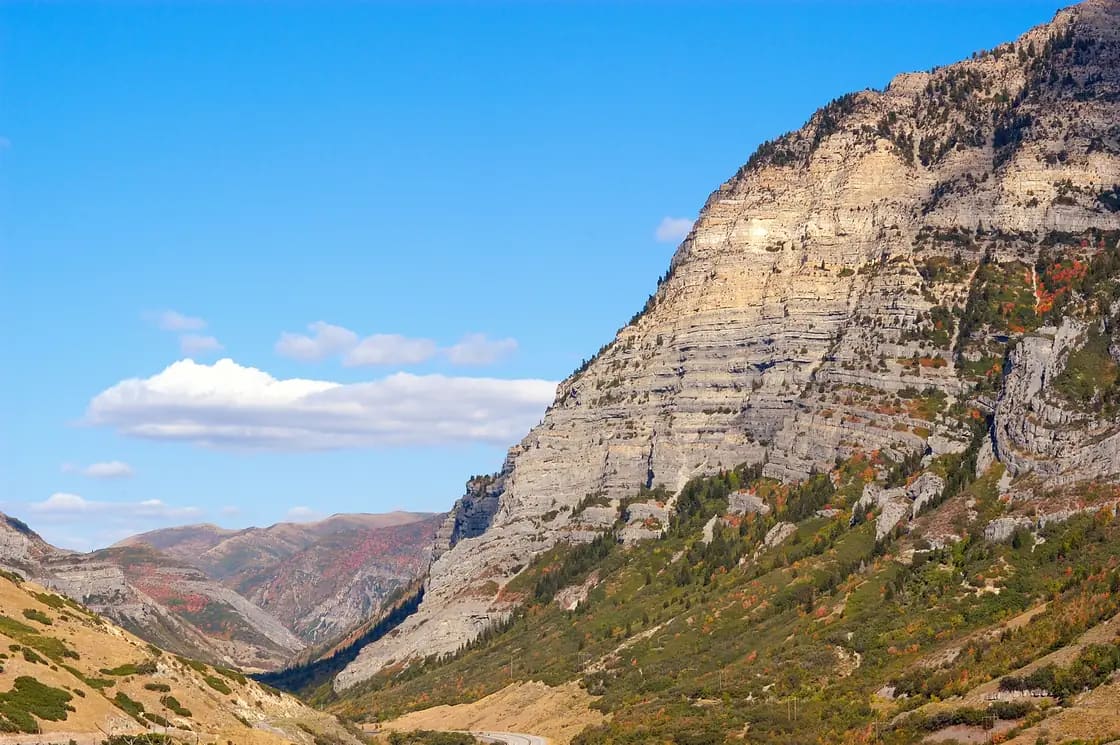
Provo's City Council was scheduled to decide the Vesper Amphitheater rezone on July 14 — the vote that would settle whether a 20,000-seat venue can be built at the mouth of Provo Canyon. That vote didn't happen; it moved to August, and Provo City listed the item for Tuesday, August 11, at 5:30 p.m. in the City Council chambers.
That meeting is still on. What changed is what it is. August 11 is initial consideration, not a decision. The item has now slipped twice, and the second slip is the kind that is easy to miss, because nothing on the calendar moved — only the meaning of the entry did.
What happens on August 11
The council takes the item up publicly for the first time. Expect presentation, questions, and public comment. Expect no vote.
Provo City's own language is worth reading closely, because it does two things at once: it commits to a start and refuses to commit to an end. The request appears for initial consideration; discussion may extend beyond this date to additional public meetings; the earliest vote is August 25; and it may not happen until September.
Council Member Jeff Whitlock, District 2, put the reason for that plainly to the Daily Herald: the council is still gathering answers "before it comes to a vote." He also framed the question as more than technical — arguing that because public land is involved, the decision turns on what Provo residents want Provo Canyon to be.
For anyone who wanted to speak on the record, this is the practical takeaway: you have more runway than the calendar suggested, and more than one meeting to use it.
That's the headline, and it's a smaller one than the city expected to be reading this month. But the weeks since the Planning Commission's denial haven't been empty. Reporting in mid-July surfaced two things that had been hazy before: the size and shape of the land deal Provo itself would have to sign, and the specific terms in the draft development agreement. Both matter more than the calendar slip.
Here's where the project stands.
What changed, and what didn't
Nothing about the proposal itself has been approved or rejected. The June 24 Planning Commission vote — 5-2 to recommend denial of the general plan and zone map amendments, plus denial of the concept plan — still stands as a recommendation. The City Council still holds the decision on the land-use changes. The only change is timing: what was a July agenda item is now an August one.
For a project of this scale, a few weeks of slippage is unremarkable. It's worth resisting the urge to read strategy into it. Council calendars move for ordinary reasons — document readiness, negotiation timelines, member availability — and neither supporters nor opponents should treat the delay as a signal about the outcome.
What the delay means, practically, is that anyone who wants to speak on the record has more runway than they thought — and now more than one meeting in which to use it. The August 11 initial consideration is at 5:30 p.m. in the City Council chambers; further public meetings may follow before any vote, with the earliest vote on August 25 and the possibility of September. Meeting agendas and public-comment procedures are posted at provo.gov. This item has now moved twice. Confirm on the agenda rather than trusting any published date, including ours.
Provo isn't just the referee — it's a seller
The detail that reframes the whole thing: Provo City owns most of the land.
The development footprint is roughly 100.7 acres. About 26.2 of those acres come from the Provo Canyon Mining Company, the private operator of the existing quarry. The remaining 74.5 acres or so would have to be purchased from Provo City itself.
That puts the city in two roles at once. It's the land-use authority deciding whether the zoning changes are appropriate, and it's the property owner negotiating a sale price. Those are different jobs with different incentives, and residents have noticed.
Mayor Marsha Judkins has been direct about where her influence sits, and it isn't the vote:
"I don't have a vote on approving this development or not. So where I have a say is kind of now, in this development agreement and the real estate contract."
On price, the picture is partial. Judkins has said she saw one appraisal and believed it came in around $1.3 million. That's her recollection of a single appraisal, not a confirmed sale price — and the underlying documents aren't public. Provo denied a public records request from KUER seeking documents and communications related to the parcel sale. Until the transaction terms are disclosed or the deal closes, the actual number should be treated as unconfirmed.
The mayor has also pushed back on the idea that the city land is pristine canyon. Most of it, she says, has already been disturbed: it's used for parking, sits beside a shooting range, and carries debris from that use. Satellite imagery is consistent with that description — the city parcel adjoins the mining company's pit rather than untouched hillside. That doesn't resolve the disagreement about whether the canyon mouth is the right place for a venue, but it does sharpen it. The argument isn't really about saving a meadow. It's about what a disturbed industrial site at a canyon entrance should become next.
The development agreement, in plain terms
The council won't vote on the rezone in isolation. It considers the development agreement alongside it, and that document is where the enforceable promises live.
As drafted and reported in July 2026, the agreement would require Vesper to:
- Place undeveloped property into a conservation easement — the mayor has said at least half the land
- Allow public use of that easement land and improve trails within it
- Obtain UDOT approval on a traffic management plan
- Use dark-sky-compliant lighting "to the extent reasonably possible"
- Deploy noise-mitigating technology to reduce off-site sound
- Incorporate natural materials and design elements
- Cap any hotel at 75 rooms
Two honest caveats. First, these are draft terms; they can be renegotiated, strengthened, or weakened before adoption, and the version the council votes on is the one that counts. Second, the qualifier on the lighting standard — "to the extent reasonably possible" — is the kind of language that does real work in a contract. Whether it functions as a genuine constraint depends on who interprets "reasonably" later.
Wilf Sommerkorn, a retired urban planner now with the nonprofit Utah Land Use Institute, told KUER that an agreement like this isn't unusual, and that cities increasingly rely on them for a specific reason:
"You do see projects that get the rezones that they're looking for, and then the projects don't happen."
A development agreement is a contract. If a project stops honoring it — even years on — the city has grounds to act.
Why the council's real power is the "no," not the "yes"
This is the part of the process most people get backwards, and it's worth walking through slowly.
If the council grants the rezone, the project does not become approved. The sequence continues:
- Council approves the general plan amendment, the rezone, and the development agreement.
- Vesper completes the technical work — traffic, geotechnical, and environmental studies — and secures UDOT sign-off on highway access and infrastructure.
- The final project plan goes back to the Planning Commission.
- If that plan meets code and follows the development agreement, the commission must approve it.
Step four is the one that surprises people. Once the zoning and the agreement are in place, the commission's later role is largely ministerial — it checks compliance, not desirability. The discretionary judgment happens now.
But the agreement also runs the other direction. Provo is writing in a provision letting the council vote to rescind the rezone if Vesper doesn't meet the requirements, effectively shutting the project down.
Sommerkorn's framing captures it: the council doesn't get final approval, but it does get final disapproval.
For residents deciding where to spend their energy, that has a practical implication. The rezone vote, whenever it is held, is the last broad discretionary decision — the moment when "should this exist here at all" is squarely on the table. After that, the questions narrow to compliance.
The studies-first objection
One recurring public demand: do the traffic and environmental studies before the rezone vote, not after.
It's an intuitive ask. A canyon served by a single main road, absorbing crowds from a 20,000-seat venue, is exactly the scenario where you'd want numbers before commitments. The Orem City Council has already written to Provo warning about strain on US-189, and traffic was the concern the Planning Commission returned to most often.
Judkins has said developers typically won't fund expensive studies without some assurance the project is moving forward. Sommerkorn largely agreed that this is the normal order of operations, and noted the alternative some developers choose: buying land and betting on a rezone that may never come, sometimes losing significant money when it doesn't.
Both things can be true. The sequence is standard practice, and standard practice still leaves the council voting on a canyon-mouth entertainment district without a completed traffic study in hand. Residents who find that uncomfortable aren't misunderstanding the process — they're objecting to it, which is a different and entirely legitimate position.
Where the public pressure stands
The petition opposing the project has passed 5,000 signatures, with concerns clustering around canyon traffic, loss of open space, and precedent. Supporters continue to make the reclamation argument: the site is two idle gravel pits, and a venue would be an improvement over what's there now.
The Osmond family backing remains the project's most visible feature, and Vesper did not respond to KUER's request for comment before its publication deadline.
Whether any of that moves seven council members is the open question August answers.
What to watch
- The August 11 council meeting (5:30 p.m., City Council chambers) — initial consideration, not a vote, per Provo City.
- August 25, the earliest date Provo City says a council vote can occur — and the city's own caveat that it may not happen until September.
- Any additional public meetings scheduled between the two. Provo City has said discussion may extend beyond August 11, which is the mechanism by which a vote date moves again.
- Confirm everything on the provo.gov agenda before attending. This item has already moved twice.
- The final development agreement language — particularly the conservation easement acreage, the lighting standard's qualifier, and the rescission clause. Draft terms change.
- Any disclosure on the land sale. The $1.3 million figure is one recollected appraisal, not a confirmed price.
- UDOT's posture on US-189. Highway access approval is a genuine gate, and it sits outside Provo's control entirely.
We'll cover the council's decision when it happens, whichever way it goes.
Related: The Vesper Amphitheater Fight, Explained · Provo Canyon and the Alpine Loop · Mount Timpanogos: The Complete Summit Guide · More from The Wire
Related Guides
- Vesper: the application is withdrawn, and Orem has formally voted no — what happened instead of the September vote, and what a revised application has to clear
- The $500M Provo Towne Centre Redevelopment: What's Planned, What's Decided, What's Not
- Fireworks Are Banned Across Most of Utah Valley This Fourth of July — Here's Where the Rules Stand
Frequently Asked Questions
Is the Provo City Council voting on Vesper Amphitheater on August 11?
When will the Provo City Council vote on the Vesper rezone?
Did the Provo City Council vote on Vesper Amphitheater on July 14?
Does Provo City own part of the Vesper Amphitheater site?
What is in the draft development agreement?
If the council approves the rezone, is the project approved?
Why does Provo want the project at all?
Sources
The facts in this guide were checked against these sources. Hours, fees and rules change, so confirm anything time-sensitive with the source before you go. How we make Provo.com.
- Proposed Provo Canyon Vesper Amphitheater Project, Provo City. Checked October 12, 2026.
- Provo City Council: News Flash, Provo City Council. Checked October 12, 2026.
- North District, Provo City. Checked October 12, 2026.
- 09.08.2026 City Council Resolution (R-2026-0011), City of Orem. Checked October 12, 2026.
- Orem City Council Letter on Vesper Amphitheater, City of Orem. Checked October 12, 2026.