
If you're a college student in Utah Valley, you already know about summer sales — even if you've never sold a thing. Maybe a roommate disappeared to Texas for four months and came back with a truck. Maybe a recruiter cornered you after a class, or a near-stranger slid into your DMs with "Hey, I'm putting together a sales team." Maybe you just noticed how many young guys in polos are knocking doors every June.
This is one of Utah's most distinctive industries, and Provo is its capital. Every summer, thousands of students fan out across the country selling pest control, solar panels, and home security door to door, chasing the promise of a life-changing paycheck. Some of them get it. Many don't. This guide is an honest look at how the whole thing works — the companies, the money, the culture, and the questions worth asking before you sign anything.
Why Utah Is the Summer Sales Capital
Door-to-door home-services sales exists everywhere, but the industry — the companies, the recruiters, the culture — is unusually concentrated in Utah, and especially in the Provo–Orem corridor. There are a few reasons.
The biggest is returned missionaries. A huge share of BYU and UVU students have spent two years knocking on doors for their church — handling rejection all day, following a disciplined schedule, and living far from home with an assigned companion. That's an almost perfect résumé for door-to-door sales, and recruiters know it. Former reps and recruiters have said openly that companies advertise more heavily in Utah specifically to reach returned missionaries.
Second, the companies are headquartered here, so they recruit in their own backyard. Many of the biggest names in pest control, solar, and alarms were founded in Utah Valley and still run their sales operations out of Provo, Orem, and Lehi. When the founders came up through this exact system, they build their recruiting pipelines around the schools they came from.
Third, there's a self-reinforcing culture. After twenty-plus years, summer sales is woven into student life here. Everyone knows someone who did it, top sellers come home with visible money, and the whole thing has been gamified — there's even a Utah-based consulting outfit, the D2D Experts, that runs industry conferences, "Golden Door" awards, and knocking competitions. Selling has become a product in its own right.
The Product: What You'd Actually Sell
Summer sales isn't one job — it's a handful of industries that use the same door-to-door model. The three that dominate:
Pest control is the biggest recruiter and the most common entry point. You're signing homeowners up for recurring treatment plans — ants, spiders, wasps, mosquitoes, rodents — usually on a quarterly service contract. It's a lower-priced, higher-volume product, which makes it a good place to learn to knock. Summer is peak pest season, which is exactly why the season runs when it does.
Solar is the higher-stakes end of the business. Rooftop solar is a large, expensive purchase, so closes are rarer and harder, but the commissions are much bigger. Solar deals also have a long tail: you often don't see the real money until the system is installed months later, which is why solar reps live and die by their "backend."
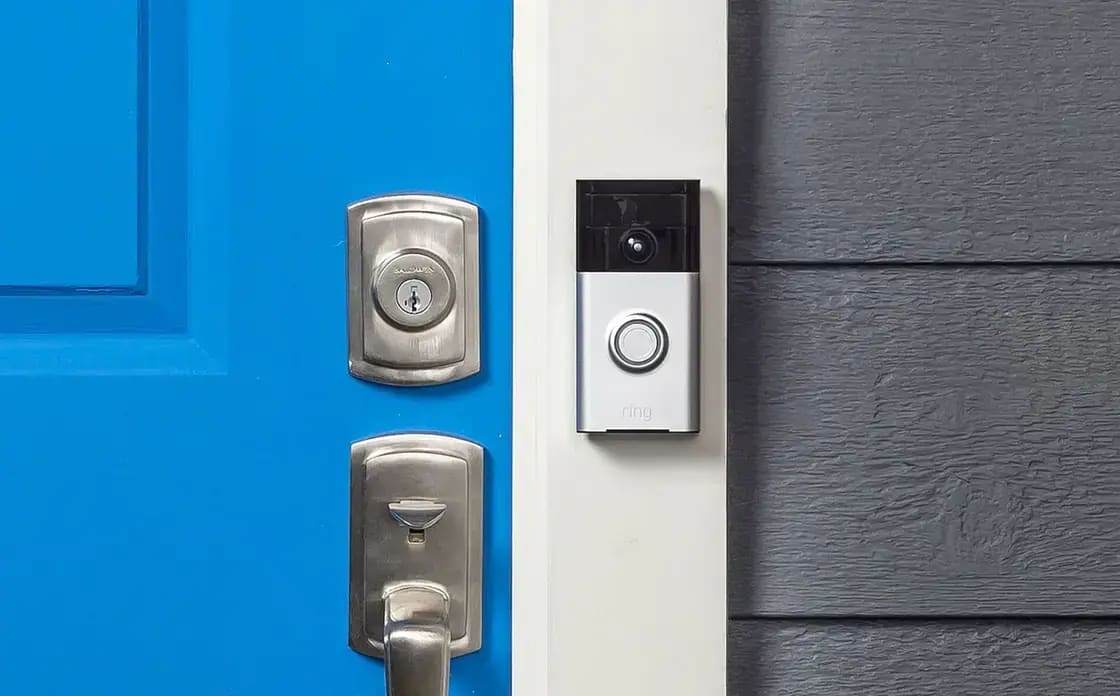
Home security and smart home — alarm systems, cameras, doorbells, automation — sits in between. It's the industry that produced Utah's most famous door-to-door success story, and it still recruits heavily each summer.
You'll also run into roofing, pest-adjacent lawn and mosquito services, and (historically) satellite TV. Different product, same playbook: knock, pitch, close, move to the next door.
The Major Utah Companies
You don't have to sell for a Utah company — reps scatter to markets all over the country — but a striking number of the industry's biggest players were born here. A few worth knowing:
Vivint is the giant, and its origin story is the summer-sales dream. It began in 1999 as APX Alarm Security Solutions, founded by Todd Pedersen and Keith Nellesen. Pedersen had gotten his start years earlier selling pest control door to door, switched to alarms, and built APX using the same knock-and-close model. The company rebranded to Vivint in 2011, grew into a smart-home powerhouse headquartered in Provo, and was acquired by NRG Energy in a deal valued around $2.8 billion. As of 2026 it serves more than two million customers — our full Vivint company profile has the whole arc. Vivint Solar, which the company spun up during that run, went public in 2014 and was later absorbed into Sunrun. The point students take from it: this billion-dollar company started with one guy knocking doors.
Aptive Environmental is one of the country's largest residential pest control companies, founded in Provo in 2015 by David Royce and Vess Pearson. It now services well over half a million households, and a private-equity firm, Citation Capital, acquired a majority stake in 2024 — a sign of how much money is in the model.
Moxie Pest Control was founded around 2000 by Jason Walton, a BYU accounting graduate who famously started the company out of his garage without outside investors. It grew into a nationwide operation doing more than $235 million in revenue across roughly 19 states, run from Provo. Walton became prominent enough to mount a 2024 U.S. Senate campaign in Utah.
Edge Pest Control, founded in Provo in 2008, made Inc. Magazine's list of the fastest-growing private companies in America and services thousands of homes a day across multiple states.
Blue Raven Solar is Utah Valley's marquee solar story — founded in Orem in 2014 and built into one of the fastest-growing, top-ranked residential solar installers in the country before being acquired by SunPower in 2021. When SunPower went through Chapter 11 in 2024, Complete Solaria bought the Blue Raven business; that company, now itself rebranded as SunPower, lists its headquarters in Orem.
LGCY Power (pronounced "Legacy Power") is the other big homegrown solar name, founded in Lehi the same year, 2014, and grown into one of the country's larger residential installers while keeping its headquarters and much of its sales force in Utah Valley. Its summer sales program is one of the best-known in the state. We profile the company in more detail in LGCY Power: Lehi's homegrown solar company.
Beyond these, dozens of smaller and regional companies — in alarms, solar, pest, and roofing — recruit on Utah campuses every spring. Some are excellent. Some are fly-by-night. Telling them apart is your job, and we'll get to how.
How a Summer Actually Works
Here's the shape of a typical summer sales season, so you know what you're signing up for.
Recruiting happens in late winter and spring. It's aggressive and personal — recruiters work friends, friends of friends, returned-missionary networks, and social media. Because a recruiter or team lead usually earns money on everyone they bring in, they have a strong incentive to paint the rosiest possible picture. That's not automatically dishonest, but it's a bias worth keeping front of mind.
The move. Most companies send teams to out-of-state markets where pest pressure is high and competition is lower — Texas, the Southeast, the Midwest, California, and beyond. You relocate for the summer, often into shared housing with your team. Some of these setups are great. Some, by former reps' own accounts, are crowded and rough. Ask specifically what the living arrangement is.
The season runs roughly May through August or September. The hours are long and the weather is hot — many reps describe eight-to-ten-hour days on foot, six days a week, knocking in the afternoon and evening when people are home. Training is usually front-loaded: a crash course in the pitch, objection handling, and the psychology of getting a quick yes at the door.
The grind is the part recruiters undersell. You will get rejected — constantly. The reps who thrive tend to be the ones who don't mind hearing "no" a hundred times to get to a "yes," and who can hold a schedule without a boss standing over them. The ones who struggle usually aren't lazy; they just didn't realize how relentless it would be.
The Money: How Pay Really Works
This is the part to read twice, because it's where students get surprised.
Summer sales is almost always commission-based. You're not earning an hourly wage; you're earning a cut of what you sell. That's why the upside can be big and the downside can be brutal — a slow summer isn't a smaller paycheck, it can be almost no paycheck.
Most companies pay in two pieces. You get a smaller amount when a customer signs — reps often cite something around $50 per close — and then a larger "backend" check later, in the fall or winter, once the solar or security system has been installed or the pest account has been serviced and stuck. For solar reps especially, the backend is where the real money lives, and it only pays out if the deal survives installation and the customer doesn't cancel.
A few structural things that trip people up:
- Commissions are often negotiated, and not always in your favor. In many companies, your team lead sets your commission and keeps the difference between what the company pays and what they pass to you. Plenty of reps have said they didn't realize their lead was earning an override on every one of their sales, or that teammates were on better splits.
- Minimum thresholds are common. Some contracts only pay full commission if you hit a sales minimum, and a few are structured so that a rep who under-sells can end the summer owing the company money after advances and expenses.
- Your costs come out of your earnings. Housing, travel, and other expenses are real, and they eat into whatever you make.
So what do people earn? The recruiting numbers — $30,000, $50,000, $100,000 in a summer — are real for the top of the field, and Utah is full of legends who hit them. But they are the ceiling, not the average. A more honest picture: a solid rep might clear a good chunk of tuition; a strong one might make life-changing money; and a large share make far less than advertised or wash out before the season ends. Treat any specific dollar promise as a best case, not a forecast.
The Honest Pros and Cons
What's good about it:
- The skills transfer. Learning to start conversations with strangers, handle rejection, and close a deal is legitimately valuable — future business owners, recruiters, and professionals of all kinds credit summer sales for their confidence and work ethic.
- The money can be real. For the right person, a few summers of sales can fund a degree or seed a business with no debt.
- The experience. Living in a new city with a team of driven peers is, for a lot of people, the adventure of their college years.
What to go in with eyes open about:
- It's exhausting and humbling. Long days, constant rejection, and heat are the job, not a rough patch.
- The culture can be intense. The industry has a well-documented "bro" streak and a hard-charging money focus that isn't for everyone. It can also push young people into overspending — some get caught in a cycle of making money one summer, blowing it, and needing to sell again the next.
- The contracts are the risk. Frustration over commissions and fine print is the single most common complaint. Consumer advocates have gone as far as flagging traveling sales crews as a risky line of work for young people, and door-to-door tactics draw regular consumer-protection warnings. None of that means "don't do it" — it means read before you sign.
How to Protect Yourself Before You Commit
If you're seriously considering a summer, do these five things first:
- Talk to former reps — including quitters. The recruiter is paid to sign you. Track down several people who sold for that specific company and ask both the ones who loved it and the ones who left what happened.
- Read the contract, and get help. Understand your base commission, backend timing, any override your lead takes, and any minimum thresholds. BYU Career Services and other campus career centers will review a sales contract with you before you sign — use them.
- Nail down the money math. Ask what you keep per sale, when backends pay, and what happens if you under-sell. If anyone is vague about how you get paid, that's your answer.
- Ask about housing and expenses. Where will you live, what does it cost, and what comes out of your check?
- Vet the manager, not just the company. In this industry your direct lead shapes your entire summer — their integrity and competence matter as much as the logo on the shirt.
The Backend Check, and Whether the Law Treats It as Wages
The single most common summer sales dispute is not about the base commission. It is about the backend — the larger payment that arrives in the fall or winter, after the system is installed or the service has run long enough to stick. A rep who finishes the summer, goes back to school, and then cannot get a straight answer about a backend check is the standard version of this story. Two legal questions decide what you can do about it, and they have to be taken in order.
Question one: are you an employee or a contractor? This is not settled by what the contract calls you. For unemployment insurance purposes, Utah Code § 35A-4-204 applies a two-part conjunctive test, and the company has to satisfy both halves for you to be outside the employee category: you must be customarily engaged in an independently established trade or business of the same nature as the work, and free from control or direction over the means of performance. The administrative rules look at whether you have a separate place of business, your own tools, other clients, the ability to realize a profit or loss, advertising, required licenses and business tax filings — and, on the control side, at whether you follow instructions, receive training, work assigned hours and are supervised. A rep who is trained by the company, assigned a territory, held to a daily schedule and managed by a team lead does not look much like an independently established business, whatever the paperwork says. Workforce Services makes the determination, not the company.
Question two: if you are an employee, are commissions wages? Yes. The Payment of Wages Act defines wages as amounts due for labor or services "whether the amount is fixed or ascertained on a time, task, piece, commission basis or other method" — Utah Code § 34-28-2. Earned commission is wages. That matters, because it pulls the backend into the separation rules: on a discharge, wages are due within 24 hours; on a resignation, on the next regular payday.
But there is a large exception sitting right next to it, and summer sales lands closer to it than most work does. Utah Code § 34-28-1 excepts employment "where an agreement exists between employer and employee providing for different terms of payment." A written contract that genuinely specifies when backend commissions vest and when they are paid is doing exactly that. Which means the contract you sign in March is the document that governs the check you are chasing in November. This is the concrete reason to read the compensation terms rather than skim them, and the reason BYU's career center offers to review them.
What to get in writing before you leave for the summer: the precise event that makes a commission earned rather than merely credited; whether a cancellation or a non-installing account claws it back, and for how long; what your team lead's override is; whether staying with the company through a following season is a condition of payment; and the date the backend is scheduled to pay.
And if it goes wrong. A wage claim goes to the Wage Claim Unit at the Utah Labor Commission for amounts of at least $50 and not more than $10,000, and it must be filed within one year after the day the wages were earned — a deadline that arrives sooner than it sounds when the wages were earned in June and the argument starts in December. Larger amounts go to court. Keep your signed contract, your account records and every message about pay; the record you kept in July is the case you have in January.
This is a general description of Utah law rather than legal advice, and classification questions in particular are fact-specific. The Labor Commission and Workforce Services publish current guidance, and a rep with a live dispute should consult them or a lawyer rather than a summary.
Not Sure Door-Knocking Is for You?
Summer sales is a genuine opportunity, but it is emphatically not the only way to make money as a student here — and it's a terrible fit for a lot of people, which is completely fine. Utah Valley has one of the strongest student job markets in the country, and plenty of it doesn't involve a doorbell.
If you'd rather build a résumé than a backend check, the region's tech corridor is right here — see our guide to internships and careers in Silicon Slopes. For flexible, lower-pressure work around your class schedule, our roundup of the best part-time jobs for students in Provo covers on-campus jobs, tech roles, and everything in between. And for the wider picture of living here affordably, start with student life in Provo.
One last note, from the other side of the door: if you do sell solar this summer — or if a rep knocks on your door — it's worth understanding what solar costs a Utah homeowner in 2026, now that the big federal tax credit has expired. Our guide to home solar in Utah breaks down the real math. Knowing it will make you a more honest seller and a much smarter buyer.
Related Guides
- On-Campus vs. Off-Campus Jobs: How to Actually Decide
- Summer Jobs in Utah Valley That Are Not Door-to-Door Sales
- The First-Generation Student's Guide to UVU: You Belong Here (and Here's the Map)
- The BYU Guide to Provo: housing, food, game days and campus
- The UVU Guide: commuting, housing in Orem and student life
- Student Budget Calculator — a summer lump against a semester of costs is the same arithmetic, inverted
Frequently Asked Questions
What is summer sales, and why is it so big in Utah?
How much money do summer sales reps make?
How does the pay structure work in summer sales?
What are the biggest summer sales companies based in Utah?
Is summer sales a scam?
What should I know before signing a summer sales contract?
Am I an employee or an independent contractor in summer sales?
What can I do if my backend commission never arrives?
Sources
The facts in this guide were checked against these sources. Hours, fees and rules change, so confirm anything time-sensitive with the source before you go. How we make Provo.com.
- Utah Code 35A-4-204, Utah Legislature. Checked October 12, 2026.
- Utah Code 34-28-1, Utah Legislature. Checked October 12, 2026.
- SunPower press release, August 5, 2024 (Ex. 99.1), SunPower Corp. (SEC EDGAR). Checked October 12, 2026.
- SunPower Inc. Form S-1 (2026), SunPower Inc., formerly Complete Solaria (SEC EDGAR). Checked October 12, 2026.