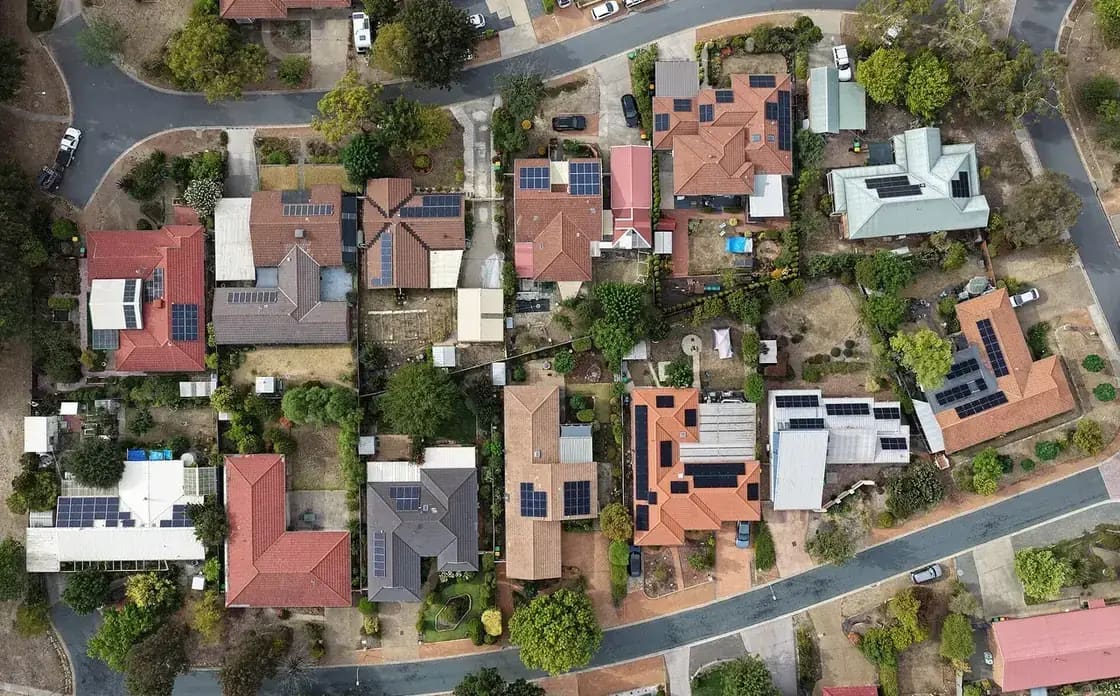

Sooner or later in Utah Valley, a friendly young rep in a branded polo will be on your porch with a tablet, ready to explain that going solar is a no-brainer: slash your power bill, let the government pay for a third of it, and come out ahead. It's a good pitch, and for years the numbers backed it up.
In 2026, it's more complicated — because the two biggest reasons solar penciled out so cleanly have both changed. The 30% federal tax credit that took a huge bite out of the price ended on December 31, 2025. And Utah's generous net metering, which used to pay you full retail for the power you sent back to the grid, was cut years ago. Solar can still be a smart move for the right home. But it's no longer automatic, and the details now decide everything.
Here's the honest, current picture for a Utah homeowner — what changed, whether it still makes sense, and exactly what to check before anyone gets you to sign.
What Changed #1: The Federal Tax Credit Is Gone
This is the big one. For roughly two decades, the federal government offered a residential solar tax credit — most recently 30% of the total system cost, applied dollar-for-dollar against your income taxes. On a $30,000 system, that was about $9,000 back. It was the single biggest lever in solar economics.
The One Big Beautiful Bill Act, signed in July 2025, eliminated that credit (technically Section 25D, the Residential Clean Energy Credit) for any system installed after December 31, 2025 — with no gradual phase-down. It just ended. Under the previous law it was supposed to stay at 30% into the 2030s; instead it was cut off nearly a decade early.
What that means in plain terms: if you buy a solar system — with cash or a loan — in 2026, there is no federal tax credit waiting for you. The systems that qualified had to be fully installed by the end of 2025. (Homeowners who installed in time can still claim it on their taxes and carry forward any unused amount, but that ship has sailed for new 2026 installs.)
There is one asterisk, and it's why you may start hearing more lease pitches. A separate commercial credit still exists through 2027, and it can be claimed on third-party-owned systems — solar leases and power purchase agreements (PPAs), where the solar company owns the panels on your roof, claims the credit itself, and passes some savings to you through lower payments. You don't own the system, and you don't get the credit directly, but it keeps a federal incentive in the picture. Whether a lease or PPA is a good deal for you is a separate question worth scrutinizing closely.
One more casualty worth naming: Utah's own state solar tax credit (once worth up to $2,000, then stepped down each year from $1,600) is $0 for residential systems installed in 2024 and later. So the state incentive is gone too.
None of this is tax advice — the rules are specific and changing, so confirm your situation with a tax professional before you count on any credit.
What Changed #2: Net Metering Became "Net Billing"
The second pillar of the old solar math was net metering, and in Utah it's been quietly dismantled for years.
Under classic net metering, your utility treated the grid like a battery: every kilowatt-hour your panels sent back earned you a full retail credit, so a kilowatt exported at noon offset a kilowatt you pulled at night, one-for-one. That's fantastic for a homeowner. It's also, utilities argued, unfair to customers without solar — and Utah's regulators largely agreed.
For the valley's dominant utility, Rocky Mountain Power, true net metering closed to new customers back in 2017. New solar customers now go onto a program called net billing (Schedule 137), and the difference matters: exported energy is credited at a fraction of the retail rate: since March 1, 2026, 4.855 cents per kilowatt-hour for June through September and 4.033 cents for October through May, well below what you pay to buy power. Those export rates are recalculated every March, so the exact figure moves.
Two practical consequences flow from this:
- The power you export is worth much less than what you'd save by using it yourself. That flips the strategy. Instead of oversizing a system to "bank" summer sun, the smarter design now maximizes how much of your own solar you use in real time — running the AC, laundry, and EV charging during daylight — because self-consumed power offsets the full retail rate while exported power only earns the reduced credit.
- Batteries get more interesting. A home battery lets you store midday solar and use it in the evening at full value instead of exporting it cheaply. Rocky Mountain Power's Wattsmart Battery program even offers a rebate (recently $400 per kilowatt, up to $2,000, plus a small annual credit) in exchange for letting the utility draw on your battery — though you'll want to read those terms, since they get access to your stored energy.
First Things First: Know Your Utility
Before any of the above applies to you, confirm who your electric utility is — because the rules aren't uniform across the valley.
Much of Utah Valley is served by Rocky Mountain Power, which is where the net-billing rules above apply. But several cities run their own municipal power utilities with their own solar policies — Provo, for instance, has long operated its own city power system, and other Utah municipalities (St. George, Murray, and more) run distinct net-metering or net-billing programs. The credit you get for exported solar, and the rules for connecting a system, can differ meaningfully depending on which utility serves your address. Check your power bill and confirm your utility's current solar interconnection and export policy before you evaluate any quote — a savings estimate built on the wrong utility's rules is worthless.
So, Does Solar Still Pencil Out?
With both big incentives diminished, the fair question is whether rooftop solar is still worth it in Utah. The honest answer: sometimes yes, but the case is narrower and the payback is longer than it used to be — or than a rep will tell you.
The reasons it can still work:
- Electricity isn't getting cheaper. Every kilowatt-hour your panels produce and you use yourself is one you don't buy from the utility, and utility rates tend to rise over time. Over a 20-to-25-year system life, that self-consumption adds up, even without a tax credit.
- Home value. Multiple analyses have found that owned solar systems tend to increase a home's value, which softens the cost if you sell.
- Design and financing discipline. A system sized to your actual usage, oriented to maximize self-consumption, and paired sensibly with a battery — bought at a fair price and financed at a reasonable rate — can still produce real lifetime savings.
The reasons to be cautious:
- The payback period is longer without the 30% credit and with export credits at half retail. A deal that used to break even in, say, 7–9 years may now take well into the double digits.
- Financing can eat the savings. Many solar loans carry hidden "dealer fees" baked into the price, so a low advertised interest rate can mask a higher real cost. This is where a lot of the disappointment comes from.
- The pitch often assumes the old world. Sales estimates built on full-retail net metering or a tax credit that no longer applies will overstate your savings. Insist that any projection reflect 2026 rules — no federal credit for a purchase, and your utility's actual export rate.
What Solar Costs in Utah in 2026
Ballpark, because every roof is different: Utah installed pricing has run around $2.50–$2.70 per watt in 2026, so a typical residential system in the 8–12 kilowatt range often lands somewhere in the high-$20,000s to high-$30,000s before financing — and, this year, without a tax credit to reduce it. Add a battery and the number climbs further.
Those are broad figures; real quotes vary a lot by installer, equipment, and system size. The single best way to compare offers is to get two or three itemized quotes and compare the price per watt, and to ask specifically what any financing "dealer fee" adds to the total. A big spread between installers on the same system size is common, and it's exactly why shopping around pays.
The Door-to-Door Caveat
Here's where this connects to another Utah institution. A large share of residential solar in this state is sold door to door, often by the same young commission reps who power the state's summer sales industry — many working for homegrown Utah Valley installers like Lehi-based LGCY Power. Many are honest and knowledgeable. But the model rewards fast closes, and the most common complaints in solar — overstated savings, confusing financing, pressure to sign tonight — track closely with high-pressure door-to-door tactics. None of that is unique to solar; it is the same due diligence you would apply to anyone doing work on the house. Our guide to hiring home pros in Utah Valley covers the free DOPL license lookup, how to get bids that compare, and the red flags worth ending a conversation over.
So, a simple rule: never sign at the door. A solar system is a 20-plus-year commitment, frequently involving a loan secured against your home. Take the proposal, thank the rep, and then do your homework. If the offer is good, it will still be good next week.
Before You Sign: A Checklist
If you're seriously considering solar, work through this first:
- Confirm your utility and rate. Rocky Mountain Power or a municipal utility? Get your actual export rate and your retail rate, and make sure the sales projection uses them.
- Know your real usage. Pull twelve months of electricity bills. A system should be sized to what you use, especially during daylight hours — not to an inflated estimate.
- Get 2–3 itemized quotes in dollars-per-watt from established local installers, and compare apples to apples.
- Read the financing carefully. Understand the true interest rate, any dealer fee folded into the price, the monthly payment, and whether the loan places a lien on your home.
- Verify the production estimate. Ask how the installer modeled your roof's orientation, shading, and output, and get the production guarantee in writing.
- Check warranties and the company. Equipment and workmanship warranties only matter if the company is around to honor them — look at how long the installer has operated and what customers say. (The solar industry has seen some big names run into financial trouble.)
- Understand lease vs. loan vs. cash. Know who owns the system, who claims any tax credit, and what happens if you sell the house.
- Know your cancellation rights. Door-to-door sales typically come with a legal right to cancel within a few days — know the window before you sign anything.
The Bottom Line
Solar isn't dead in Utah — but 2026 is a "do your homework" year, not a "sign tonight" year. The two subsidies that made the decision easy are gone or shrunk, which doesn't mean solar is a bad deal; it means the deal now depends entirely on the specifics of your home, your utility, your usage, and your financing. Run the numbers on today's rules, get competing quotes, and don't let a porch pitch rush a 25-year decision.
If You Already Signed: The Cancellation Clock
The advice above is to never sign at the door. If you already did, the relevant question is how much time you have left.
A rooftop solar agreement financed with a loan is a consumer credit sale, and when one is solicited face to face at your home it falls within Utah's home solicitation chapter, Utah Code §§ 70C-5-101 through 70C-5-105. That gives you until midnight of the third business day after signing to cancel in writing, and mailed notice counts from the moment you deposit it rather than when the company opens it. If the contract you were handed did not carry the required BUYER'S RIGHT TO CANCEL statement with the seller's mailing address, the clock has not started at all. Our guide to LGCY Power walks through the mechanics in full, including the 10-day refund duty and the rule that a seller who performed services before cancellation is owed nothing for them.
Two things are specific to solar and worth flagging here.
Speed is not always eagerness. The statute's narrow exception to cancellation requires, among other conditions, that the seller made a good-faith substantial beginning of performance before you gave notice. An installer who books a site survey or files for permits inside the first 72 hours may simply be efficient. Either way, the sooner your written cancellation is in the mail, the less room there is to argue about it.
The loan is often a separate contract. Residential solar is frequently sold with third-party financing, which means there can be two agreements with two counterparties: the installation agreement with the installer, and a loan with a lender. Canceling one does not automatically unwind the other. If you cancel, say in writing that you are canceling both, send notice to each, and confirm in writing that the loan has been closed and nothing has been reported to the credit bureaus.
This is general information rather than legal advice. The Utah Division of Consumer Protection takes complaints about door-to-door sales, and a twenty-year obligation secured against your house justifies a call to a lawyer before you rely on any summary, including this one.
If the window has already closed, cancellation is no longer the question and misrepresentation may be. A cancellation right and a deception claim are different things with different deadlines: the first asks only whether you changed your mind in time, while the second asks whether what you were told about savings, rates, financing terms, or the tax credit was accurate. Utah's Consumer Sales Practices Act, Title 13, Chapter 11, addresses deceptive and unconscionable acts in consumer transactions, and the Division of Consumer Protection accepts complaints under it. Preserve the proposal you were shown, any savings projection or bill analysis, and the texts and emails from the rep. Those documents are the case, and people routinely delete them while cleaning up a phone.
This is general information, not financial or tax advice. Incentives, utility rates, and tax rules change — verify the current details with your utility and a qualified tax professional before making a decision.
For more on the money side of living here, see our guides to the cost of living in Provo and buying a home near Provo.
Related Guides
- Hiring Movers in Utah Valley: How to Vet One, What Protects You, and the Two-Week August Crunch
- Lawn Mowing and Yard Care in Utah Valley: Timing, Hiring, and the Secondary Water Trap
- Waterwise Landscaping in Utah Valley: Lawns, Localscapes & Actually Saving Water
- Appliance Repair in Utah Valley: Utah Deliberately Does Not License the Person Fixing Your Dryer
- Asbestos and Lead in Older Utah Valley Homes: The Exemption Turns on Whether You Live There
- Garage Doors in Utah Valley: Two Federal Dates, One Spring, and the Test You Should Run Tonight
- EV Charging in Utah Valley
- Getting Things Fixed in Utah Valley: Shoes, Watches, Jewelry, Sewing Machines and Small Engines
Frequently Asked Questions
Is there still a solar tax credit in 2026?
Does Utah have net metering?
Is solar still worth it in Utah in 2026?
How much do solar panels cost in Utah?
Should I buy solar from a door-to-door salesperson?
How long do I have to cancel a Utah solar contract signed at my home?
If I cancel the solar installation, does the loan cancel too?
Can the installer keep my deposit if I cancel within the three days?
Sources
The facts in this guide were checked against these sources. Hours, fees and rules change, so confirm anything time-sensitive with the source before you go. How we make Provo.com.
- PSC approval letter, Schedule 137 revisions effective March 1, 2026, Utah Public Service Commission. Checked October 12, 2026.
- Rocky Mountain Power 2025 DSM report (Utah), Utah Public Service Commission. Checked October 12, 2026.
- Rocky Mountain Power 2024 DSM report (Utah), Utah Public Service Commission. Checked October 12, 2026.
- Utah Code 59-10-1014 Nonrefundable clean energy systems tax credits, Utah State Legislature. Checked October 12, 2026.
- Utah Code 70C-5-102 Buyer's right to cancel, Utah State Legislature. Checked October 12, 2026.
- Utah Code 70C-5-104 Restoration of down payment, Utah State Legislature. Checked October 12, 2026.