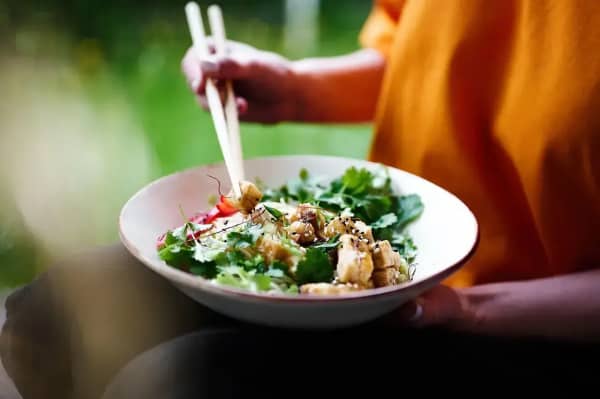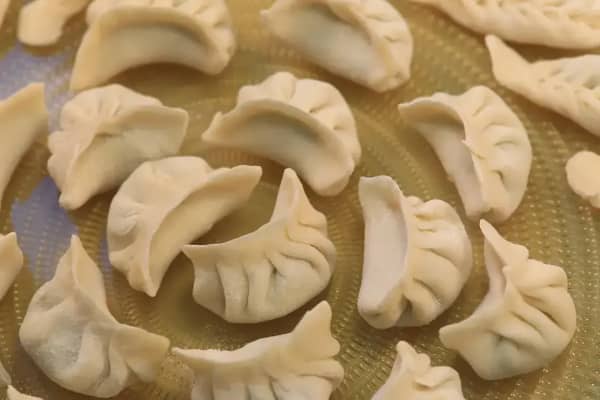
Utah Valley has a better Korean scene than its size predicts, and the reason is demographic rather than culinary. Utah County holds a substantial Korean and Korean-American community, and it also holds an unusual concentration of people who have lived in South Korea — returned missionaries from BYU and UVU who came back knowing what banchan is, what doenjang jjigae should taste like, and how to complain when it is wrong. That produces real demand, and real demand produces real restaurants.
What it has not produced is an accurate list. This page previously ranked two restaurants in Orem that are not in Orem, and left out the operator that has a restaurant in Orem and one in Provo. Both corrections are below, because they change where you drive tonight.
The corrections that matter
There is no K-Town Korean BBQ in Utah Valley. The name belongs to a cluster of unrelated restaurants elsewhere — Portland and Beaverton in Oregon, Vancouver in Washington, one in Tennessee, one in California — and no Utah Valley location appears in current listings under that name. Any tabletop-grilling plan built around it needs rebuilding.
Seoul Garden is real, but it is in Salt Lake City. The Utah restaurant of that name is at 2701 S State Street, roughly 45 miles north of Provo. Every other Seoul Garden that surfaces is in Oklahoma, North Carolina, Ohio, Texas or California. It is a fine restaurant and it is not a Provo-and-Orem answer.
And the omission was bigger than either error. Neither of the two grill houses that operate here was on this page at all.
This is a familiar shape on food listings generally: a restaurant name travels further than the restaurant does, and aggregated lists inherit the name without the map. It is worth being suspicious of any Utah Valley roundup that names a venue without an address.
The Korean bench, as it stands
1. Yummy's Korean BBQ and Sushi
All-you-can-eat Korean BBQ · $$–$$$ · 360 S State Street, Suite 102, Orem, and a Provo restaurant
The one this page should have led with. Yummy's describes itself as Utah's first all-you-can-eat Korean barbecue and dates its trading to 2012; it now runs five Utah restaurants — Orem, Provo, West Valley City, Saratoga Springs and Roosevelt — with Orem as the flagship. The Orem room has built-in tabletop grills, takes bookings, and runs unlimited rounds of galbi, bulgogi, pork belly and chicken alongside scratch-made banchan.
Two things separate it from a generic AYCE operation. The sushi comes with the barbecue, hand-rolled and included, which makes it the obvious answer for a table that cannot agree on a cuisine — and the reason it also appears in our sushi guide. And the kimchi is made in house from what the family describes as a three-generation recipe, which is not a thing most all-you-can-eat kitchens bother with.
The family behind it — Sun Choi and his parents — came to the business by way of Hawaii, which is why the menu carries a faint Hawaiian accent alongside the Korean one.
Book ahead. Tabletop grilling needs a specific kind of table and there is a finite number of them.
2. Ombu Grill
All-you-can-eat Korean BBQ · $$–$$$ · State Street, Orem
The other proper grill house, and the one Provo and Orem locals most often name in the same breath as Yummy's. Local write-ups date its opening as an all-you-can-eat Korean barbecue to around 2017; treat the year as approximate rather than established. The format is the same — you cook at the table, the meat keeps coming, the banchan is refilled on request — and the choice between the two is largely a question of which room you prefer and which one has a table.
3. Cupbop
Fast-casual Korean bowls · $ · Provo, Orem and beyond
The most accessible Korean food in the valley, and the one with the story.
Cupbop began in 2013 as a single food truck in downtown Salt Lake City, parked near the Gallivan Center. Junghun Song started it after noticing that Korean food was not represented at a Utah food convention that year; accounts of what he spent differ — Korean coverage puts it at a fifteen-million-won life savings, other reporting at a twenty-five-thousand-dollar second-hand trailer — and the discrepancy is left standing here rather than resolved, because the sources disagree. The crew became known around Utah as the crazy food truck guys, shouting "cup!" and waiting for the queue to answer "bop!"
Then the part that belongs to Provo. Song has said that the first Cupbop restaurant in the world was built on BYU's campus in 2015 — a walk-up window of roughly 200 square feet, about the footprint of the truck it replaced — and that it is still his favorite store. The Utah County queues came first; Salt Lake customers then asked for a location of their own, and Draper followed. The truck was a Salt Lake story. The restaurant is a Provo one. Cupbop now runs dozens of restaurants across several US states and well over a hundred stores in Indonesia.
Its second Provo connection is quieter: Dok Kwon, the investor who became a partner in 2020, was one of the truck's first customers — and he and his brother had been dropped off in Provo as children in 1999 when their parents flew back to Korea.
Ordering. Pick a protein, pick a base, then deal with the sauce scale, which runs from #1 sweet to #10 heat. The company's own most-ordered setting is #7.5, labeled Korean spicy, and Song is known for inventing intermediate numbers on request — a #6.35 is a real order. The fried-chicken-over-rice bowl is the bestseller. The Provo restaurant sits on 700 East and is listed as closed on Sundays; there are Orem locations including one on UVU's campus, which our UVU food guide covers.
4. Koko Lunchbox
Korean-Japanese · $$ · Near BYU, Provo
The valley's most useful cross-category restaurant. Koko appears at or near the top of Provo's Korean lists, its Japanese lists and its ramen lists at the same time, because it serves across all three. For a group split between Korean and Japanese it removes the argument entirely.
5. Bonchon
Korean fried chicken · $$ · East University Parkway, Orem
The global Korean fried chicken format, in Orem. This matters because Korean fried chicken is not a regional variation on the American dish — it is a different technique, double-fried for a thin, glassy crust that stays crisp under sauce, and then sauced to order rather than breaded with seasoning. If you have only had the American kind, this is the one to try before deciding what you think.
6. Bumblebee's KBBQ and Grill
Korean BBQ · $$ · Provo
A Provo entry that turns up consistently in local Korean listings, and one that reviewers comparing it to the Orem grill houses have specifically praised for the flavor of its beef. Worth knowing if you want Korean barbecue without leaving the city.
Also in circulation
KOU, Sushi 38 & Korean Cuisine, Chicken In The Kitchen, Noodle-N-Roll, fusion asian grill and Snowberry Cafe 38 all appear regularly in Provo and Orem Korean listings. Down the valley, Goong covers Spanish Fork. And PoPIE 1929 in American Fork makes Korean- and Japanese-style meat pies — an unusual thing that our American Fork restaurant guide covers properly, and which is filed as pizza or pasta by almost everyone else.
Two things about Cupbop's founding that do not agree
The company's origin is told two different ways by two credible sources, and this guide prints both rather than picking.
The version most widely reported — carried by national food coverage, Korean press and the company's own story page — is that Junghun Song founded Cupbop alone in 2013 with a single food truck near the Gallivan Center in downtown Salt Lake City.
The version a Salt Lake County paper published in 2017 says Cupbop was launched by three South Korean immigrants — J Park, J.K. Kim and Jung Song — and launched in Taylorsville, where a bike-shop owner had a vacant unit next door that had already been fitted out by two failed restaurants and came with the cooking equipment still in it.
These are probably not in conflict so much as describing different milestones — a truck downtown and a first leased kitchen in Taylorsville, with co-founders who left the story as it got retold. But nobody has reconciled them in print, so neither is asserted here as the settled account.
What is not contested is what happened in 2022. Song and Dok Kwon took Cupbop onto Shark Tank in season thirteen, in an episode that aired on 2 May 2022, asking a million dollars for three percent of the company. Mark Cuban countered at a million for five percent and they took it, which valued Cupbop at around twenty million dollars. By then it was already a chain of dozens of restaurants rather than a truck. For a business whose first store was a 200-square-foot window on a Provo campus, that is a considerable distance traveled in seven years.
Sunday, and why it is harder here than the restaurant count suggests
Korean restaurants in Utah Valley follow the local pattern rather than a national one: most of the independents close on Sunday, and the listings for those that do not are unreliable enough that a phone call beats any published table.
Cupbop's Provo restaurant is listed as closed Sundays. The Orem grill houses are the genuine question mark — aggregator hours for both disagree with each other, and at least one local write-up records a seven-day schedule that current listings do not support. Treat Sunday Korean barbecue as something to confirm, never to assume, particularly if you are moving a group.
The structural reason is the one our Sunday dining guide sets out: the Provo businesses that reliably open on Sunday are the ones that cannot easily close — hotels, hospitals, national chains and tenants on mall leases. An independent Korean grill house is none of those things.
The practical workaround is the fast-casual tier. Bowl-format Korean travels well, holds temperature, and is the category most likely to have someone behind a counter on a day when the grill houses are dark.
How to eat all-you-can-eat Korean BBQ without getting it wrong
The format rewards a small amount of planning.
Go with three or four people minimum. Below that the per-person price rarely clears the a la carte alternative, and the grill spends more time empty than working.
Ask for banchan refills. They are included and they are meant to be replenished. A table that never asks is leaving the best part of the meal on the pass.
Do not fill up on rice early, and pace the first two rounds — the marinated cuts arrive faster than they cook, and a crowded grill steams rather than sears.
Check what the base price includes. Premium cuts are frequently outside it, and the difference between the entry tier and the top tier is where the value question lives.
On price, published per-person figures for Utah's all-you-can-eat Korean barbecue have run anywhere from the high twenties to the low forties in recent years, and they move. No number is printed here for that reason. Look at the current menu before you commit a group of eight — our group dining guide covers the wider problem.
Korean food 101, if you are starting from nothing
Bulgogi — thinly sliced marinated beef, sweet and savory, and the standard first order for anyone who has not eaten Korean food before.
Galbi (kalbi) — marinated short rib, richer than bulgogi and the cut most worth grilling yourself.
Bibimbap — a rice bowl under vegetables, protein, an egg and gochujang. Mix it thoroughly before the first bite; it is assembled to be destroyed. Ordered as dolsot bibimbap it arrives in a hot stone bowl that crisps the rice against the sides, which is the version worth paying for.
Japchae — sweet potato glass noodles stir-fried with vegetables and sesame oil. Light, savory, and naturally free of wheat — though check the seasoning, since soy sauce usually is not. See our gluten-free guide.
Banchan — the small shared side dishes that arrive unrequested. They are part of the meal, not an appetizer course, and refills are normal.
Kimchi — fermented, salted and seasoned cabbage. It is a side dish rather than a main, it accompanies nearly everything, and it is an acquired taste that most people acquire faster than they expect.
Tteokbokki — chewy rice cakes in a sweet-hot gochujang sauce. The most divisive texture on any Korean menu and the one worth trying early to find out which side you are on.
Jjigae — the stews. Kimchi jjigae is sour, deep and the best cold-weather food in this guide; doenjang jjigae is the fermented soybean version and tastes like the thing kimchi jjigae is built on.
Cooking it at home
Utah Valley supports a small number of Asian grocers stocking gochujang, gochugaru, doenjang, dried anchovies, rice cakes and frozen mandu at prices well below the mainstream supermarkets, with a cluster on State Street. We are deliberately not naming a specific store or address here: at least one widely circulated local listing did not survive a check against the retailer's own information, and sending readers across the valley to a shop that has moved is worse than sending them nowhere. Ask at one of the restaurants above — they will tell you where they shop.
For the mainstream stores, the international aisle at the larger Macey's and the Asian section at Walmart between them cover gochujang, sesame oil, short-grain rice and instant ramyeon, which is enough to cook most of the dishes on this page. Our grocery guide maps the rest.
Korean delivery, and what does not travel
Korean splits sharply into what survives the trip and what does not. Stews and braises — jjigae, budae, anything served bubbling — hold heat well and arrive close to right. Fried chicken holds better than most fried food because of the batter style, though the sauce softens it. Banchan is the loss. The small side dishes are the part of a Korean meal that makes it a meal, and they are built for a table, not a container; some kitchens send fewer with delivery orders and some send none. Ask for rice packed separately from anything saucy. Korean barbecue does not deliver in any meaningful sense — the grill is the restaurant. Sunday is the valley's structural problem. Delivery demand peaks on the day a large share of independent kitchens close, so a Sunday app search returns a shorter and more chain-weighted list than a Saturday one. For the sit-down version this page is really about, see the venues above.
Related Guides
- Best Sushi in Provo & Orem
- Best Asian & Sushi in Utah Valley
- Best Chinese & Asian Food
- Best Ramen in Provo
- Best Food Near UVU
- Best Group Restaurants in Provo
- 30 Best Restaurants in Provo
- Best Restaurants in Orem
- Haveli Modern Cuisine: North Indian Cooking on Orem's State Street
- Koko Lunchbox, Provo: How to Order at the Korean Place Everyone Recommends
- Pupusas and Salvadoran Food in Provo: Where to Go and What to Order
- Dumpling Bao: The Chinese Kitchen Hidden Inside an Orem Grocery Store
- The Provo & Orem restaurant directory — every place we cover, with its address, filterable by cuisine and city
- Best Pho & Vietnamese Food in Provo & Orem
- The Best Barbecue in Utah Valley
- Polynesian & Hawaiian Food in Utah Valley
- Best Fried Chicken in Utah Valley
- Asian Markets and Grocers in Utah Valley
Restaurant cities and addresses verified August 2026: Yummy's against its own locations pages, Cupbop's founding and first-restaurant account against founder interviews in Utah Business and Deseret News plus the company's own story page, and the K-Town and Seoul Garden corrections against current listings for both names nationwide. Where sources disagree — Cupbop's start-up cost, Ombu Grill's opening year, Sunday hours across the board — both readings are given rather than one being chosen. Prices are not quoted because all-you-can-eat pricing moves faster than any guide can track. Confirm before you drive.
Frequently Asked Questions
Is there real Korean BBQ in Provo or Orem?
Is there a K-Town Korean BBQ or a Seoul Garden in Orem?
Where was the first Cupbop restaurant?
What should I order at Cupbop if I have never been?
How much does all-you-can-eat Korean BBQ cost in Utah Valley?
Where can I get Korean fried chicken in Utah Valley?
Are Korean restaurants in Provo open on Sunday?
Why is there a Korean food scene in Utah Valley at all?
Sources
The facts in this guide were checked against these sources. Hours, fees and rules change, so confirm anything time-sensitive with the source before you go. How we make Provo.com.
- Restored booths and other relics (Midtown 360 plaza), The Salt Lake Tribune. Checked October 12, 2026.