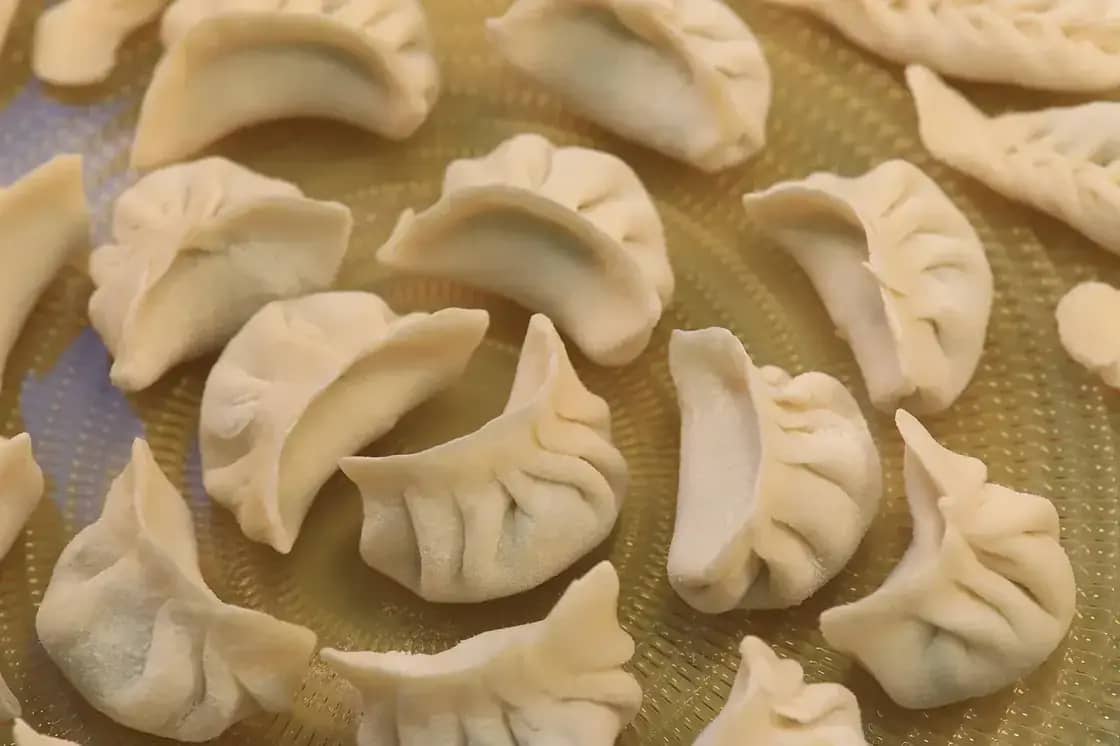

Chinese food in Utah Valley has come a long way. For years, the options were limited to a handful of Americanized takeout spots with predictable menus and cafeteria-grade orange chicken. That's changing. A growing Asian population, adventurous college-aged eaters, and a few ambitious restaurateurs have brought more authentic flavors to Provo and Orem — Sichuan numbing spice, hand-pulled noodles, proper dumpling houses, and hot pot spots that would hold their own in much larger cities.
This guide covers the best Chinese and broader Asian restaurants in the Provo-Orem area. We've included a few pan-Asian spots where the Chinese dishes are strong enough to warrant inclusion, but the focus is on places where the food feels intentional, the flavors are honest, and the experience goes beyond the standard sweet-and-sour routine.
The Best Chinese Restaurants
Four Seasons Hot Pot & Dumplings
Chinese · Hot Pot & Dumplings · $$ · University Ave, Provo
The most exciting Chinese restaurant in Provo right now. Four Seasons does two things exceptionally well: hot pot and dumplings. The hot pot setup lets you choose your broth base (the Sichuan mala is the move if you can handle heat), select proteins and vegetables, and cook at your table — which makes it inherently social and fun. The handmade dumplings are the other star, with a filling-to-wrapper ratio that suggests someone in the kitchen cares. The Asian fusion elements on the broader menu are less consistent, but stick to the hot pot and dumplings and you'll eat very well.
Best for: Groups, adventurous eaters, date nights with a built-in activity
Tai Lai Shun
Chinese · Noodles & Northern Chinese · $$ · Utah Valley
Worth the drive. Tai Lai Shun serves northern Chinese cuisine with a focus on hand-pulled noodles and dishes you won't find at typical American-Chinese restaurants. The numbing spice beef noodle soup is the signature — a big, deeply flavored bowl with tender beef and noodles that have the right chew. The portions are generous (you'll likely leave with leftovers), and the flavors are more authentic than almost anything else in the valley. The passion fruit tea is surprisingly good. Check its current address before you go; it is a short drive from Provo, and once you try it, you'll make the trip regularly. Note that it is closed Sunday.
Best for: Noodle lovers, anyone craving something beyond Americanized Chinese
Great China Restaurant
Chinese · Cantonese & Szechuan · $ · Orem
A Provo-Orem staple that's been feeding the valley for years. Great China serves a wide spread of hot dishes, fried rice variations, spring rolls, and soups at a reasonable price; ask whether a lunch buffet is running. The ham fried rice, broccoli beef, and sweet and sour soup are reliable standbys. It's not going to blow your mind with innovation, but it delivers consistent, satisfying Chinese food at a fair price. Good for families and anyone who wants variety without committing to a single entrée.
Best for: Lunch buffet value, families, reliable comfort food
Saigon Café
Chinese-Vietnamese · $ · State Street, Provo
Don't let the Vietnamese name fool you — Saigon Café's Chinese dishes are what keep regulars coming back. The ham fried rice is a go-to, the hot and sour soup has the right balance of tang and heat, and the menu is broad enough that everyone in your group can find something. It's a no-frills spot — the atmosphere is basic, the service is quick, and the prices are budget-friendly. This is the kind of neighborhood Chinese restaurant that every city needs: unpretentious, consistent, and open when you need it.
Best for: Budget-friendly takeout, quick lunch, comfort food cravings
Shoots Chinese Restaurant
Chinese · Cantonese · $$ · Riverwoods, Provo
A family favorite at the Shops at Riverwoods in north Provo, with a loyal following. Shoots does classic Chinese-American dishes well — the lemon chicken and honey walnut chicken are standouts, and the cream cheese wontons are addictive. The portions are generous, and the menu is broad enough for the whole family. Reservations are easy to make, which is a genuine perk during busy evenings and holidays. Many families have made Shoots their Christmas Eve tradition, which tells you something about both the food quality and the consistency.
Best for: Family dinners, holidays, large groups
Dumpling Bao
Chinese · Dumplings & Bao · $ · Provo
A small, focused dumpling shop that does exactly what the name promises. The dumplings are well-made with generous fillings, the bao buns are properly steamed, and the spicy cucumber salad is the ideal side. It's not a full-service restaurant — think counter-order, small space, limited seating — but the quality is high for the price. If you want dumplings and you want them done right, this is your spot.
Best for: Quick lunch, dumpling cravings, takeout
Teri Gao Asian Cafe
Chinese-Asian Fusion · $ · Utah Valley
A newer addition that's quickly become a student favorite. The teriyaki chicken and Mongolian beef are well-executed, the fried rice is solid, and the cream cheese wontons are a crowd-pleaser. The prices are very student-budget-friendly. The vibe is fast-casual rather than sit-down, which keeps things quick between classes.
Best for: Students, quick meals near campus, budget-friendly Asian fusion
Broader Asian Options Worth Knowing
While this guide focuses on Chinese food, several pan-Asian restaurants in the area serve dishes that overlap with or complement Chinese cuisine:
Five Sushi Brothers — Primarily Japanese, but the curry gyoza and pan-Asian appetizers are excellent. See our Best Sushi in Provo & Orem guide for the full review.
Bombay House — Indian, not Chinese, but if you're craving bold Asian flavors it is worth the trip. Dinner only, from 4 p.m., walk-in only. Covered in our Best Indian Food guide.
Thai Simple Dish — Outstanding Thai food that shares the wok-centric cooking traditions of Chinese cuisine. See our Best Thai Food guide.
The Asian Grocery Advantage
One underrated aspect of Provo's Asian food scene is the Asian grocery stores. If you cook at all, these shops stock ingredients that mainstream grocery stores don't carry — fresh noodles, specialty sauces, produce, frozen dumplings, and pantry staples at much better prices than you'll find at Harmons or Smith's.
Asian Market on State Street in Orem has a good selection of Chinese, Korean, Japanese, and Southeast Asian ingredients. It's worth a visit even if you're not a serious cook — the snack aisle alone is worth exploring.
What to Know About Chinese Food in Utah Valley
A few honest notes:
The scene is improving but still limited compared to Salt Lake City. If you're coming from a city with a large Chinese population — the Bay Area, LA, New York, even Salt Lake — you'll notice the gap. Provo's Chinese restaurants are good and getting better, but they're working with a smaller market and a less adventurous average diner.
Spice levels are often adjusted for local palates. If you want authentic heat, ask for it explicitly. Many restaurants default to mild unless you specify otherwise. At places like Four Seasons and Tai Lai Shun, asking for "spicy" or "authentic level" will get you closer to the real thing.
Lunch buffets are where the value is. Several Chinese restaurants in the area have offered lunch buffets that are hard to beat on a per-dish basis. If you're on a student budget, these are some of the best calorie-per-dollar meals in town.
Two different things called Chinese food, and why both are here
Utah Valley supports two distinct kinds of Chinese restaurant, and confusing them is the main reason people arrive at the wrong conclusion about the food here.
The first is American Chinese — the sweet-and-sour, orange chicken, combination-plate tradition that developed in the United States over more than a century. It is a real cuisine with its own history, not a degraded version of something else, and the valley has good examples of it. The second is regional Chinese cooking aimed substantially at people who grew up eating it: Sichuan, northern noodle and dumpling houses, Cantonese, Taiwanese. These have arrived in the valley much more recently and in smaller numbers.
Knowing which kind of restaurant you are in solves most disappointments before they happen. A restaurant doing regional Sichuan cooking will make you a passable orange chicken and will not enjoy it. A good American Chinese kitchen will produce something excellent within its own tradition and should not be judged for lacking a mapo tofu.
The practical tell is the second menu. A restaurant that keeps a separate menu — sometimes physically separate, sometimes a section in Chinese, sometimes a whiteboard of specials — is signalling exactly this split. Asking for it is not an imposition. It is usually taken as a compliment, and it is where the dishes the kitchen is proudest of live.
What drives the scene here
Three forces shape Asian dining in this valley more than anything else, and none of them are obvious from a restaurant list.
Returned missionaries. An unusually large share of Utah Valley's population has spent eighteen months to two years living in East or Southeast Asia and speaks the language. This produces a customer base for regional cooking that a valley of this size would not otherwise have, and it is a real part of why Taiwanese, Korean and Japanese food outperform expectations here.
International students and faculty. Both universities pull students from across Asia, and student demand supports the noodle houses, boba shops and small dumpling operations that cluster near campus. It also means those places track the academic calendar closely — several visibly slow down or shorten hours between semesters.
The grocery layer came first. The valley's Asian markets predate most of its regional restaurants, and they remain the backbone. They are where the restaurants themselves buy, where home cooks find what supermarkets do not carry, and often where the best cheap lunch in the neighborhood is served from a counter at the back. If you are new here, walking an Asian market is a faster education in what this valley can cook than reading any list of restaurants.
Ordering better, specifically here
Order the regional dish, not the safe one. In a restaurant that has committed to a region, the house specialty is what the kitchen is set up to do well. The hedge order is the one most likely to disappoint.
Ask about heat honestly. Sichuan and Thai kitchens in this valley have generally calibrated their default heat downward for local palates. If you want it as the kitchen would make it at home, say so — most will oblige, and some will check that you mean it.
Vegetarians should ask about stock, not about meat. Broths, rice and vegetable dishes are frequently built on chicken or pork stock, and this is rarely marked on a menu. Our vegetarian and vegan guide goes into the local version of this problem in more detail.
Halal diners have real options. There is a working halal scene in Provo and Orem, and several South and Central Asian kitchens serve halal — worth confirming directly with the restaurant rather than assuming from cuisine.
Sunday and semester breaks are the two hours-related traps. Sunday closure is widespread across the valley's independents; see our Sunday dining guide. Between semesters, the campus-adjacent noodle and boba places are the first to cut back. Call ahead in both cases rather than trusting a posted schedule.
The market run, and what to buy
The valley's Asian markets are small, independent, and stocked around what their own customers cook rather than around what a supermarket buyer thinks Americans want. That makes them worth a deliberate trip rather than an errand.
What they consistently have that supermarkets do not: fresh noodles in more than one thickness, the full range of soy products beyond firm tofu, whole fish and the cuts of pork and beef that Asian recipes assume, live or fresh shellfish depending on the week, Asian vegetables that a conventional produce section simply does not carry, and a spice and dry-goods aisle where the same ingredient is available in three grades at three prices.
What surprises people about the pricing: staples are cheaper — rice by the large bag, soy sauce, vinegars, dried mushrooms, noodles — while anything imported and perishable costs more than it would in a coastal city. Buy the shelf-stable pantry here and be realistic about the fresh imports.
The hot counter is the underrated part. Several of the markets run a small kitchen at the back or a steam table near the register, and in more than one case it is the best inexpensive lunch within a mile. It is rarely on any list of restaurants because the business is a grocery store.
A note on timing: the markets restock on their own schedules and the fresh side is noticeably better on some days than others. Regulars know which day their market gets produce and fish in. If you are shopping for something specific, it is worth asking the counter once and then planning around the answer.
Boba, and why there is so much of it
The density of bubble tea shops in Provo and Orem is unusual for a metro this size, and it is not a coincidence. It sits at the intersection of the three forces above — a young median age, a large returned-missionary population with a taste formed in Taiwan and East Asia, and two campuses full of students who want somewhere to sit that is not a bar.
That last point is the structural one. In a valley where the default third place is not a pub, boba shops, dessert counters and soda shops absorb the social function that bars serve elsewhere. They keep later hours than most restaurants here, they are busiest in the evening rather than the afternoon, and they are where a lot of the valley's actual social life happens. Our boba guide covers the shops themselves; the reason there are so many is this.
Chinese Food and Delivery: What Travels, and What to Order Direct
Chinese food is the cuisine most associated with delivery in the American imagination, and locally the picture is more mixed than that reputation suggests.
Some of it travels beautifully. Braised and saucy dishes hold their heat, improve slightly on the drive, and arrive close to how they left. Rice is nearly indestructible. Soups travel well when the container is sound and badly when it is not.
What does not travel is anything whose appeal is texture. Fried items steam themselves soft inside a closed container within about ten minutes, and there is no fixing that at your end. Crisp-skinned dishes, anything battered, and fresh rolls with delicate wrappers all arrive as a worse version of themselves. If you want those, the drive is short and the food is better.
The other thing worth knowing is that a great many of the valley's best Chinese kitchens are small, family-run, and either not on the platforms at all or on them reluctantly. Being absent from an app is not a quality signal in either direction, but it does mean that ordering only through a platform silently narrows your options to the subset that chose to be there.
Ordering directly is usually the better move for two reasons beyond price. The kitchen hears your modifications from you instead of from a ticket, and the food is made when you are going to eat it rather than sitting under a heat lamp while a driver finishes another run.
If you are ordering for a group, ask whether the restaurant does its own delivery for larger orders. Several independents here will, on their own terms, for orders above a threshold.
Our food delivery guide covers the platforms and the cost stack in more detail.
Related Guides
-
Dumpling Bao: The Chinese Kitchen Hidden Inside an Orem Grocery Store
-
Haveli Modern Cuisine: North Indian Cooking on Orem's State Street
-
Pupusas and Salvadoran Food in Provo: Where to Go and What to Order
-
The Provo & Orem restaurant directory — every place we cover in these two cities, with its address, filterable by cuisine
Last updated: April 2026. Restaurant details reflect current operations and may change.
Frequently Asked Questions
What is the best Chinese restaurant in Provo?
Is there authentic Chinese food in Provo?
Where can I get good dumplings in Provo?
Are there Chinese lunch buffets in Provo?
Is there authentic regional Chinese food in Utah Valley?
Why is Asian food in Provo better than people expect?
Are Chinese restaurants near BYU open between semesters?
Can I get vegetarian food at Chinese restaurants here?
Sources
The facts in this guide were checked against these sources. Hours, fees and rules change, so confirm anything time-sensitive with the source before you go. How we make Provo.com.
- Four Seasons Hot Pot and Dumplings in Provo offers traditional deliciousness for the indecisive, Daily Herald. Checked October 12, 2026.
- Visit to Shoots Chinese Restaurant offers fortunate timing, Daily Herald. Checked October 12, 2026.


