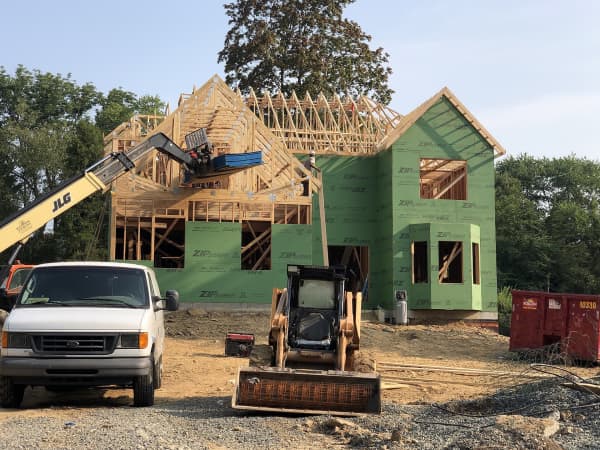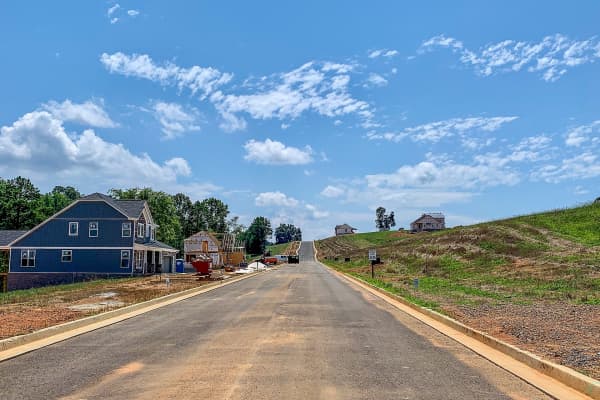

Drive ten minutes in almost any direction across Utah Valley right now and you'll pass the two versions of the same decision. On one side of the freeway, whole neighborhoods are rising out of what used to be pasture — framed houses, model-home flags, and streets that don't show up on older maps yet. On the other, tree-lined blocks in Provo, Orem, and the older parts of the valley hold homes that have been lived in for thirty, fifty, sometimes a hundred years.
For a lot of people settling into Utah Valley, that's the real choice: buy something brand new in the growth corridor, or buy an older home in an established neighborhood. Both can be the right call. They're just different trades, and the differences are bigger here than in most parts of the country, because Utah County is in the middle of one of the fastest building booms in America.
This guide lays out those trade-offs honestly — what buying new gets you, what a resale home gives up and gains, how the money really works once you get past the sticker price, and the Utah-specific programs that can tip the scales. It is not financial or real-estate advice, and it's not a pitch for either side. Prices, rates, and program terms below are current as of July 2026 and change constantly, so treat every number as a starting point to confirm, not a promise. The goal is to hand you the factors so you can decide for yourself.
Why Utah Valley Is a New-Construction Story
To understand the choice, it helps to see why there's so much new inventory in the first place. For decades, the buildable land in Utah County sat on the west side of Utah Lake and out toward the mountains — and over the last fifteen years, that's exactly where the valley exploded. Saratoga Springs, Eagle Mountain, Lehi, and Vineyard went from small towns and empty flats to some of the fastest-growing cities in the state, filled block by block with new subdivisions. On the old Geneva Steel site in Vineyard, developers are building Utah City, a 700-acre planned downtown from scratch. Saratoga Springs alone has master-planned communities from national builders like Toll Brothers and David Weekley alongside Utah names, with new collections opening faster than most people can keep track of.
The practical upshot: if you want a brand-new home in Utah Valley, you'll mostly find it in that growth corridor — the newer cities ringing the north and west of the lake — plus scattered infill projects elsewhere. If you want an established neighborhood with mature trees, a walk to campus or downtown, and a house with some history, you'll mostly find that in the older cores of Provo, Orem, Springville, Pleasant Grove, and American Fork, where "new" usually means a remodel rather than a rebuild.
That geography is the quiet driver behind almost every other difference on this list. New often means farther out. Established often means closer in. Where you land on that alone tells you a lot about which direction fits your life.
What Buying New Actually Gets You
Start with the honest advantages of a brand-new home, because there are real ones.
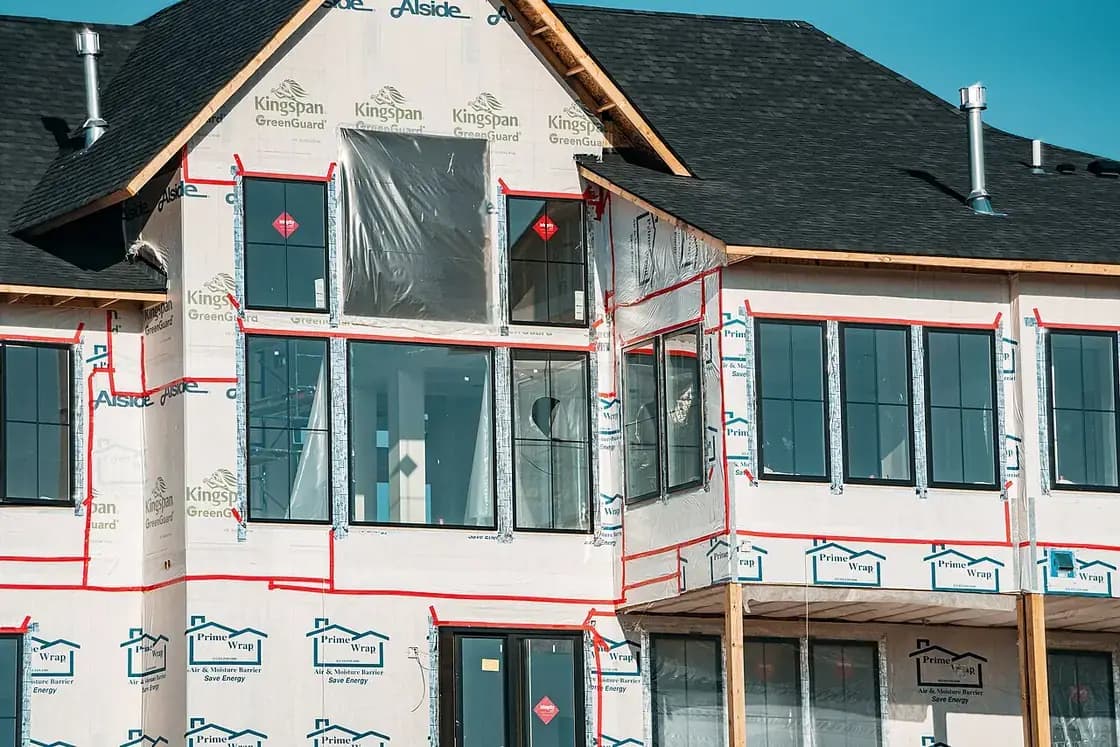
Modern layout and efficiency. New homes are built to current codes and current tastes: open main floors, bigger primary suites, more bathrooms, better insulation, and newer windows and HVAC that generally cost less to run than a mid-century house with original systems. If you value a floor plan that already fits how families live now, new starts ahead.
Less to fix, at least for a while. Everything is new, so your first several years usually don't include a failing water heater, a roof at the end of its life, or a furnace on borrowed time. Most builders also include a warranty — commonly a year of workmanship coverage and longer coverage on major structural systems — which a resale home simply doesn't come with. For a buyer who's stretched to afford the purchase and can't absorb a surprise repair, that predictability has real value.
You can make it yours. Buy early enough in a home's construction and you're choosing finishes at the design center — cabinets, countertops, flooring, fixtures. You're not inheriting someone else's remodel choices or living with wallpaper you hate until you can afford to change it.
Builders are competing for you right now. This is the piece that's specific to 2026, and it matters. After years of bidding wars, the market has shifted toward buyers, and builders — who have construction loans to pay off and inventory sitting on their books — have gotten aggressive. Whether that shift is showing up in the data, and in which dataset, is a separate question: our guide to Utah County housing data covers which sources track builder activity and which cannot see it. More on the mechanics below, but the short version is that a new home today often comes with thousands of dollars in help that a typical resale seller won't offer.
A first-time-buyer program that only works on new. Utah has a state assistance program aimed specifically at newly built homes under $450,000 (details in its own section below). For a qualifying first-time buyer, that's a genuine, Utah-specific reason the new-construction math can pencil out better than resale. It's rare for a policy to favor one side of this decision so directly, and here one does.
The Case for a Resale Home
Now the other side, which is easy to underrate when the new-home models are so shiny.
Location, location — and it's usually the older location. The single biggest thing a resale home buys you in Utah Valley is proximity. The established neighborhoods are the ones close to BYU and UVU, walkable to downtown Provo or Center Street, near the parks and the trails and the wards people have belonged to for years. Much of the new construction, by contrast, is a real commute from the valley's job and school centers. If being close in matters to you, resale usually wins that outright.
Mature everything. A resale home comes with grown trees, established landscaping, finished fences, window coverings, and often a basement that's already finished — thousands of dollars of "phase two" costs that a new-home buyer pays for later, out of pocket, on top of the purchase. The lot is done. The neighborhood is done. What you see is what you get.
Room to negotiate — on the actual price. Builders are reluctant to cut a home's list price outright, because a lower recorded price hurts the appraisals of neighbors who already closed; that's why they lean on credits and buydowns instead. An individual resale seller has no such constraint. Depending on the home and how long it's been listed, there can be genuine room to negotiate the price itself, ask for repairs, or split closing costs.
No construction risk and no lot premium. The home exists. You can walk it, inspect it, and close on a normal timeline instead of hoping a build finishes on schedule. And you're not paying a premium for a corner lot or a view that the builder charges extra for.
Sometimes more house for the money — and more character. Older Utah Valley homes, especially the larger ones in Provo's historic neighborhoods, can deliver square footage, big lots, and architectural character that a same-price new build in a dense subdivision can't. The trade is that you may inherit older systems and a renovation project or two.
The Money: Incentives, Buydowns, and the Fine Print
This is where new-construction shopping gets confusing, so it's worth slowing down.
Mortgage rates set the backdrop. As of early July 2026, the 30-year fixed rate averaged around 6.5% (Freddie Mac put it at 6.49% for the week ending July 9), and it's been drifting in the mid-6% range for months. The Federal Reserve's most recent projections leaned toward the possibility of a rate increase later in the year rather than cuts, with inflation still above target, and most forecasters expect rates to stay above 6% for the foreseeable future. The takeaway for buyers on both sides of this decision: don't build your plan around a rate drop that may not come. If the numbers work today, a future decline is a refinancing bonus; if they only work at a much lower rate, that's a sign to keep saving.
Builder incentives are real — and they're the new home's edge. Across Utah County in 2026, builder marketing and local reporting describe incentive packages that can run to tens of thousands of dollars, typically delivered three ways: an interest-rate buydown, a credit toward closing costs, or a design-center upgrade allowance. Builders generally avoid cutting the base price (again, to protect neighbors' appraisals) and instead move homes with these credits. The heaviest offers tend to land on quick-move-in homes that are already built and costing the builder daily interest, and on communities wrapping up a phase. Every one of those figures is promotional and moves week to week, so verify the exact package on the exact home directly with the builder.
Buydowns: temporary versus permanent. A rate buydown uses a lump sum — usually the builder's money — to lower your interest rate. A common structure is a temporary "2-1" buydown, which drops your rate for the first year or two before it climbs back to the note rate; it lowers your early payments but is essentially a honeymoon. A permanent buydown lowers the rate for the full life of the loan and keeps saving you money as long as you hold the mortgage. When you compare offers, know which one you're being handed — a headline "low payment" is often the temporary kind.
The sticker is not the finished price. This is the number-one thing that surprises new-home buyers. The base price is for the base house on a standard lot. Lot premiums (for size, a corner, or a view), design-center upgrades, and landscaping can add tens of thousands of dollars. Ask early for a realistic all-in price with the finishes you want, not the model-home fantasy, and compare that to your resale options.
HOAs and assessments. Most new master-planned communities carry a homeowners association with monthly dues, and some newer developments carry the risk of future special assessments. Many older Utah Valley neighborhoods have no HOA at all. Factor the dues into the monthly comparison, and read the HOA documents for what's covered and what could be charged later.
The preferred-lender question. Builders usually tie their best incentives to financing through their in-house or preferred lender, so using that lender is often how you unlock the credit. That can be worth it — but get at least one competing quote from an outside lender and compare the whole picture (rate, points, fees, and the credit's value) before assuming the preferred lender is the best overall deal. You can take the builder's credit and still shop it; just understand what you'd give up by going outside.
First-Time Buyers: The Utah Programs That Tilt the Math
For first-time buyers, Utah has assistance that's worth understanding before you choose a side — and one program in particular is new-construction-only, which is exactly why it belongs in this comparison.
The SB240 First-time Homebuyer Assistance Program. Created by Utah Senate Bill 240 in 2023 and run by the Utah Housing Corporation, this program offers up to $20,000 toward a newly constructed, not-yet-inhabited home priced at or below $450,000. The money can go toward your down payment, closing costs, or a permanent rate buydown. Importantly, it's not a grant you keep — it's a zero-interest deferred loan, repaid when you sell or refinance, with a shared-equity recapture (you pay back the lesser of the original amount or a share of your accrued equity). To qualify you must be a first-time buyer, use a Utah Housing participating lender, occupy the home, and have lived in Utah for at least a year. Funds are limited and available only until they're depleted, so timing matters. Because it applies only to new construction under $450,000, this is the clearest single reason a qualifying first-timer might find new-build math more favorable than resale.
Utah Housing's down-payment assistance. Separately, Utah Housing Corporation offers down-payment assistance that pairs with its first mortgages (structured as a deferred second or a forgivable option with a slightly higher first-mortgage rate). This one isn't restricted to new construction.
Utah County's program. Utah County has operated its own HOME deferred-payment assistance for down payment and closing costs. Amounts and eligibility change; confirm what's currently funded.
A caution that applies to all of them: these programs are governed by income limits, purchase-price caps, funding availability, and rules that change, and some marketing overstates how much you can "stack." Verify current details on each program's official page — and understand that these first-time-buyer programs are for owner-occupants, not investors — before you count on any of them.
The Trade-Offs, Side by Side
Stripped to the essentials, here's the shape of the decision:
Choose new construction if you want a modern, low-maintenance home with a warranty, you value choosing your own finishes, you can take advantage of 2026's builder incentives (or the SB240 program as a first-time buyer), and you're comfortable living farther out in the growth corridor while its amenities and schools mature.
Choose a resale home if location is your priority — close to campus, downtown, or an established ward and neighborhood — you'd rather have a finished yard and a home you can inspect and close on now, you want genuine room to negotiate on price, and you're willing to take on an older home's systems and the occasional renovation in exchange.
The honest truth is that most buyers don't decide this in the abstract. They decide it on two specific homes: a particular new build with its real all-in price and incentives, and a particular resale home with its real condition, location, and any deferred repairs. The category is a starting frame; the actual comparison is house-to-house.
Questions to Ask Before You Decide
A short filter that cuts through the noise:
- What's the true all-in price? For a new home, that's base price plus lot premium plus the upgrades you want plus landscaping. For a resale, it's the price plus any repairs an inspection turns up. Compare those, not the stickers.
- What does the monthly payment really look like once you add property tax, insurance, HOA dues, and — for a new home — the reality of the note rate after any temporary buydown expires?
- How does location score for your life? Commute, campus, ward, schools, family. Be honest about how much the extra drive time from the growth corridor would cost you every day.
- Do you qualify for a program that only works on one side — like SB240 for a new build under $450,000?
- Have you seen the builders' work? The easiest way to compare Utah County's builders in person is the annual Utah Valley Parade of Homes each June — one ticket, every builder's best current work, and the crews often on site to answer questions.
- What's your timeline and risk tolerance? Can you wait out a build that might slip, or do you need to be in a home by a certain date?
- Have you shopped the financing, including at least one lender outside the builder's preferred lender?
Answer those and the right side of this decision usually gets a lot clearer — not because new or resale is better in general, but because one of them fits your budget, timeline, and life better than the other.
Whichever way you lean, take your time, run your own numbers against current conditions, and lean on a local agent and lender you trust. This is one of the biggest financial decisions most people ever make, and in a market moving as fast as Utah Valley's, the details are worth getting right.
Related Guides
- Rent or Buy in Provo? The Honest 2026 Math
- Buying a Home in Provo: What You Need to Know
- Buying a Home Near Provo: Utah Valley's Surrounding Towns
- Utah City, Explained: Utah County's New Downtown
- The Provo Real Estate Market in 2026
- Cost of Living in Provo, Utah
- Property Tax in Utah County: How It's Assessed, How to Appeal & When It's Due
- Provo Development Tracker — which projects are approved rather than announced
- Check an agent or lender — verifying the brokerage, the originator and the title company
- Townhomes and Condos in Utah County: The Financing Trap That Decides Which One You Can Actually Buy
- Title Insurance and Closing Costs in Utah
- Impact Fees in Utah Valley
- Builder Warranties on New Construction in Utah
- Home Inspections and Appraisals in Utah Valley
- Down Payment Assistance in Utah
- Building a Home in Utah Valley
- Who builds houses in Utah Valley
- Shopping a mortgage lender in Utah
- The Utah Valley housing market, read honestly
Last updated: July 2026. Mortgage rates, home prices, builder incentives, and assistance-program terms change constantly — verify current conditions with a licensed lender, a real-estate professional, and each program's official page before making decisions. This article is general information, not financial or real-estate advice.
Frequently Asked Questions
Is it cheaper to buy new construction or a resale home in Utah Valley?
What builder incentives are available on new construction in Utah Valley in 2026?
Can first-time buyers get help buying a new home in Utah?
What are the downsides of buying new construction?
Should I use the builder's preferred lender?
Sources
The facts in this guide were checked against these sources. Hours, fees and rules change, so confirm anything time-sensitive with the source before you go. How we make Provo.com.
- S.B. 240 First-Time Homebuyer Assistance Program (2023, enrolled), Utah Legislature. Checked October 12, 2026.