
For a lot of people, the Provo dream runs into the Provo price tag. Prices in the city sit high for the valley, near-campus demand keeps a permanent floor under the market, and the valley's geography — lake to the west, mountains to the east — limits how much new housing can be built. So the most common move in Utah Valley isn't buying in Provo. It's buying near it.
The good news: you have a lot of options, and they're different from one another. The towns ringing Provo range from booming master-planned suburbs to quiet farm towns turning into subdivisions, and the price difference between them can be enormous. This guide walks the valley town by town, with the homebuyer's questions in mind: what does it cost, what will you get, and how far are you from where you need to be?
A note on the numbers before we start. Utah is a non-disclosure state, which means individual sale prices aren't public record — so this guide compares towns relative to one another rather than quoting price figures, which come from MLS aggregates and estimate models and move month to month. Our guide to Provo-area housing data names those aggregates and models one by one and says what each of them measures. Treat the comparisons here as relative positioning and direction, not quotes. And treat the whole guide as context, not financial advice: any real purchase deserves a local agent, a lender, and a hard look at your own budget. For the citywide picture Provo sits inside, see our read on the Provo real estate market in 2026.
The 2026 Market, in One Paragraph
Before the town tour, the backdrop. Utah Valley's market has cooled and rebalanced from its 2020–2022 peak. Across the county in 2026, homes are generally taking longer to sell than at the peak, and more are closing below their original list price than during the bidding-war years. Inventory has improved, and buyers have more leverage than they've had in a long time. Prices haven't crashed, because the fundamentals (population growth, the tech economy, university demand) are still strong, but the days of waiving every contingency to win a bidding war have faded. If you're shopping the towns below, you're shopping in a friendlier market than your neighbors bought in.
North of Provo: The Growth Corridor
Head north from Provo along I-15 and you're driving into the fastest-growing part of Utah — and toward the Silicon Slopes tech corridor around Lehi, which is what pulls prices up on this side of the valley.
Vineyard & Utah City
The valley's headline story. Built on a former steel-mill site on the lakeshore, Vineyard went from almost nothing to one of Utah's fastest-growing cities in barely a decade, and it's still transforming: the massive Utah City development is building out a walkable, mixed-use downtown along the water. For buyers, Vineyard skews toward newer construction and a lot of attached housing — townhomes and condos alongside single-family — which keeps its per-square-foot pricing relatively moderate for a lakeside north-valley address. It suits buyers who want brand-new, a walkable feel, and a front-row seat to the biggest development in the valley. We break the whole project down in Utah City, explained, and cover daily life in our Vineyard guide.
Lehi
The economic engine of the north valley and the priciest of the growth towns. Lehi sits at the center of Silicon Slopes, home to major tech employers, which drives both demand and premium pricing — typical single-family prices here run above Provo depending on the neighborhood, and Lehi's homes tend to sell fast. It's the obvious pick if you or your partner works in tech and wants a short commute, and you're willing to pay for it. More in our Lehi guide.
Saratoga Springs & Eagle Mountain
The twin boomtowns on the valley's northwest side, and a study in contrasts. Saratoga Springs has grown up fast around master-planned communities near Utah Lake, with amenities, trails, and newer neighborhoods pushing typical prices above Provo's — a growth premium similar to Lehi's, with a slightly longer commute.
Eagle Mountain, its neighbor, is the valley's value-and-space play. It's one of the fastest-growing cities in the state, and its master-planned subdivisions offer some of the largest new-construction floor plans at the lowest per-square-foot prices in the county, with typical values at or below Provo's despite being all-new. The catch is location: Eagle Mountain is farther from the job centers, so the commute (30–45 minutes to Silicon Slopes at peak) is the price you pay for the square footage. For young families prioritizing house size and a lower price over a short drive, it's hard to beat. See our guides to Saratoga Springs and Eagle Mountain.
American Fork, Pleasant Grove & Lindon
The established towns between Provo and Lehi, each with a real downtown and mature neighborhoods rather than brand-new subdivisions.
American Fork has been one of the more affordable higher-volume markets in the northern half of the valley, with a mix of older homes and newer builds; its combination of relative value and quick sales makes it a common landing spot for buyers priced out of Lehi and Saratoga.
Pleasant Grove sits right beside it — established, family-friendly, and fast-selling, with pricing that generally runs a notch above American Fork.
Lindon is the small, pricier one of the three: a compact community known for larger lots and a semi-rural feel, where typical prices run well above the county middle. If you want more land closer to the center of the valley, Lindon is where people look.
Read more in our guides to American Fork, Pleasant Grove, and Lindon.
Orem: Right Next Door
You don't have to go far at all. Orem shares a border with Provo, is home to Utah Valley University, and offers the widest price range in the valley — from entry-level condos to executive homes — with typical values sitting close to Provo's. Its central location is the draw: you're minutes from BYU, UVU, shopping, and the freeway, without leaving the urban core of the valley. For many buyers weighing the two cities, our Provo vs. Orem comparison is the place to start, and the Orem guide covers the rest.
South of Provo: Value and Mountain Views
Drive south and the story flips. The Nebo side of the valley — Springville down through Payson — is where the best per-dollar value lives, alongside a couple of the valley's most expensive view towns. It's the natural direction for buyers who want more house, or more land, and don't mind a slightly longer drive to Provo or Salt Lake.
Springville & Mapleton
These two neighbors sit at opposite ends of the price spectrum. Springville — "Art City" — has been one of the most affordable higher-volume markets in the entire county, with typical single-family prices running below Provo's, and homes moving quickly. It's a genuine value pick just 15 minutes south of Provo, with an established small-city feel. Details in the Springville guide.
Mapleton, right above it against the mountains, is the opposite: one of the most expensive towns in Utah Valley. It's a large-lot, mountain-view, supply-constrained community where typical single-family prices sit near the top of the valley. People pay it for space, views, and a rural-estate feel close to the canyon. Our Mapleton guide has more.
Spanish Fork, Salem, Payson & Santaquin
The heart of the south-valley value belt.
Spanish Fork has become a go-to for buyers priced out of Lehi and Saratoga — typical prices below Lehi's and Saratoga's, expanding inventory, and homes that sell fast, all about 15–20 minutes from Provo. It's grown into a full-service small city with its own strong sense of identity.
Salem is the quieter, pricier pocket next door — smaller, more rural, with larger lots and typical prices running well above Spanish Fork's.
Payson anchors the southern end of the valley and offers some of the better entry-level value around, with typical prices near the county middle and a longer but manageable commute north. Santaquin, just beyond it, is the frontier of the valley's growth — the most affordable jumping-off point for buyers willing to trade distance for price.
See our guides to Spanish Fork and Payson for the day-to-day picture.
How to Think About the Trade-Offs
Zoom out and the valley sorts into a few clear buckets:
- Pay a premium for the commute and the tech economy: Lehi and Saratoga Springs. Higher prices, but you're close to Silicon Slopes and the growth is real.
- Pay a premium for space and views: Mapleton, Salem, Lindon, Alpine, Highland. Large lots and mountain settings, priced accordingly.
- Trade commute for value: Eagle Mountain, Springville, Spanish Fork, Payson, Santaquin. More house, newer builds, or a lower price — in exchange for a longer drive to the job centers.
- Stay central: Provo and Orem. The urban core, close to the universities and everything else, with a price to match.
Two practical factors tie it together. Commute is the big one — Utah Valley's growth has strained I-15, so peak-hour drive times matter, and it's worth driving your prospective commute at 8 a.m. before you fall in love with a house. (FrontRunner commuter rail is a real option for Salt Lake–bound workers — Provo to downtown SLC in under an hour, car-free.) Schools are the other: most of the north valley falls in the Alpine School District and the south valley in Nebo, with Provo and Orem running their own, and boundaries are shifting as fast-growing areas like Eagle Mountain and Saratoga Springs move toward a new Lake Mountain district. If schools drive your decision, verify current boundaries for any specific address.
The Costs That Only Show Up Outside Provo
Moving a few exits north or south changes more than the price per square foot, and three of the differences are easy to underestimate until they are on a statement.
HOA dues, and what they cover. Master-planned communities in the growth corridor commonly carry a homeowners association where an established Provo neighborhood does not. Dues buy real things — trails, pools, landscaped common areas, sometimes front-yard maintenance — but they are a permanent monthly line item that never builds equity, they can rise, and the governing documents control what you may park, build and paint. Read the CC&Rs and the current budget before you commit, not after.
The commute, priced honestly. A house twenty minutes further out is not twenty minutes further out at 7:30 a.m. I-15 through the north county thickens on a schedule, and the same trip that takes twenty-five minutes on a Saturday can take fifty on a Tuesday. Multiply the realistic difference by two trips a day and roughly 250 workdays and price the fuel, the wear and the hours. For many households the annual number rivals the mortgage difference that motivated the move.
Amenities arrive on a lag. New subdivisions get houses first and everything else later. Schools open at capacity and then fill past it; grocery stores, urgent care and restaurants follow rooftops rather than leading them. That gap is temporary and it is also several years long, which is exactly the window in which most buyers form their opinion of a place. Ask what is built today rather than what is on the master plan, and drive the route to the nearest full-service grocery store before you decide.
The Growth Corridor Is Mostly New Construction, So Know the Clock
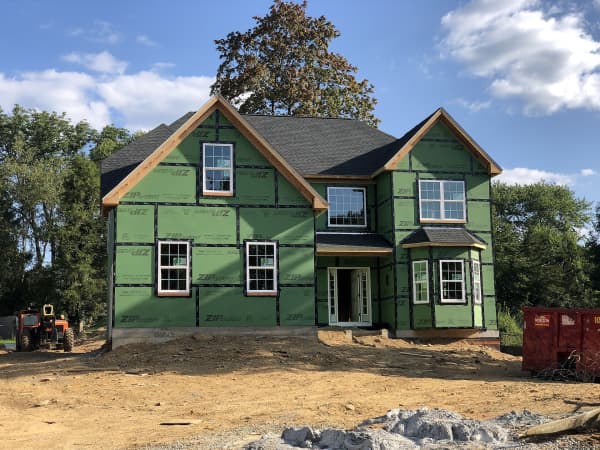
Almost everything this guide describes north and west of Provo was built recently, and a great deal of it was built fast. That is the whole reason the inventory exists and the prices are what they are. It also means a large share of buyers looking at these towns are buying a house young enough that construction quality is still a live question — and Utah's rules on that are stricter, and start earlier, than most people expect.
What you have is the builder's paperwork. Utah has not enacted a statutory new-home warranty of the kind some states have. Your protection is the builder's express written warranty, the terms of your purchase contract, and whatever common-law claims a court would recognize on your specific facts. That is worth knowing before you treat "it's new, so it's fine" as a substitute for an inspection.
The deadlines are in Utah Code 78B-2-225, and they run from completion. An action based in contract or warranty relating to an improvement to real property must generally be commenced within six years of the date of completion or abandonment. Where a contract or warranty expressly requires performance past that window, a claim for its breach must be brought within two years of discovery. A nine-year statute of repose caps it all, subject to narrow exceptions for fraudulent concealment and for willful or intentional conduct. The statute is explicit that it creates no cause of action — it only limits when one may be filed.
Completion, not closing, is the start date, and in this corridor that gap is often large. "Completion" generally means substantial completion, most commonly evidenced by the certificate of occupancy. Saratoga Springs, Eagle Mountain, Vineyard and Lehi are full of homes that sat finished through a slow patch before selling, and of second owners buying three or four years in. A house completed in 2021 and bought by you in 2026 has roughly one year left in the six-year window and four in the nine-year repose, regardless of how new it looks or how long you have owned it.
Two practical consequences when you compare towns.
- Ask for the certificate of occupancy date on every home you seriously consider, new or resale. It is a public-record fact, it takes one question, and it tells you exactly where you are standing on both clocks. Nothing on a listing will tell you this.
- Read the warranty before the offer, not at closing. The statute does not extend a period set by a valid contract, which means your contract can be tighter than the law. Arbitration clauses, notice-and-cure requirements and shortened windows are all common and all negotiable before you sign and not after.
None of this is legal advice, and a real defect dispute belongs with a Utah construction attorney. But in a corridor where the median house is barely out of warranty, the completion date is one of the most useful numbers you can ask for and one of the least often requested.
Before You Buy: The Essentials
Wherever you land, a few reminders:
- Get a local agent who works your target town. Utah Valley's micro-markets differ enough that a Springville specialist and a Lehi specialist see very different worlds. Because Utah is a non-disclosure state, a licensed agent's access to real MLS comps is valuable — you can't just look up what the neighbors paid.
- Get pre-approved before you shop. In a market with more inventory, you have leverage — but only if you can move quickly when the right house appears.
- Run the total cost. Price is one line. HOA fees (common in the master-planned north-valley communities), property taxes, commute costs, and any new-construction upgrades all belong in your math.
- Buy the commute, not just the house. The cheaper town an hour away can cost more in time and gas than the pricier one nearby. Weigh it honestly.
For more on the money side of settling in the area, see our cost of living in Provo breakdown, our rent vs. buy deep-dive (where the surrounding towns' new construction changes the math via Utah's buyer-assistance programs), our new construction vs. resale comparison (most of these growth-corridor towns are where the new homes and builder incentives are), our guide to buying a home in Provo itself, and — if you're relocating — the full moving to Provo guide. The valley is big, varied, and still (by Western standards) attainable. The trick is matching the town to your life, not just your budget.
Related Guides
- Short-Term Rental Rules in Utah Valley, City by City: What the State Decides and What Your City Decides
- Master-Planned Communities of Utah County: What They Actually Are, and What You Give Up
- 55+ and Active-Adult Communities in Utah Valley: How the Age Rule Actually Works
Frequently Asked Questions
What's the most affordable place to buy a home near Provo?
Which Utah Valley towns are the most expensive?
Is it cheaper to buy in Provo or in the surrounding towns?
What's the commute like from these towns to Provo and Silicon Slopes?
Is 2026 a good time to buy a home near Provo?
Does a new home in Utah come with a warranty?
How long after buying can I sue a builder for defects in Utah?
Is it better to buy new construction or resale near Provo?
Sources
The facts in this guide were checked against these sources. Hours, fees and rules change, so confirm anything time-sensitive with the source before you go. How we make Provo.com.
- Utah Code 78B-2-225 Construction limitation and repose, Utah Legislature. Checked October 12, 2026.
- City and Town Population Totals 2020-2025 (sub-est2025_49), U.S. Census Bureau. Checked October 12, 2026.