
More on Saratoga Springs: every guide we have published there, in one place.
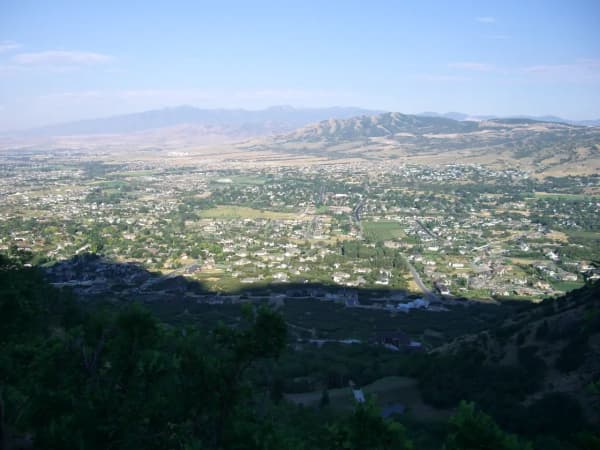
Saratoga Springs barely existed as a city a generation ago — it wasn't even incorporated until the last days of 1997. Today it's the fastest-growing city in Utah, a master-planned community spreading along the northwest shore of Utah Lake with mountain views, new neighborhoods, its own temple, and a young, family-heavy population that keeps swelling year after year.
If you're thinking about moving here, you're looking at one of the most popular family destinations in Utah Valley. This guide covers what it's actually like to live in Saratoga Springs — the housing, the schools, the famous commute, the lake lifestyle, and the growth that defines the city — from people who know the area well.
The short version
Saratoga Springs occupies the northwest corner of Utah Lake, in the fast-developing western half of Utah County. Almost everything here is new, because the city itself is new — its population went from about 17,800 in 2010 to over 37,000 in 2020, and it has since pushed into the mid-60,000s, leading the entire state in growth.
What draws people:
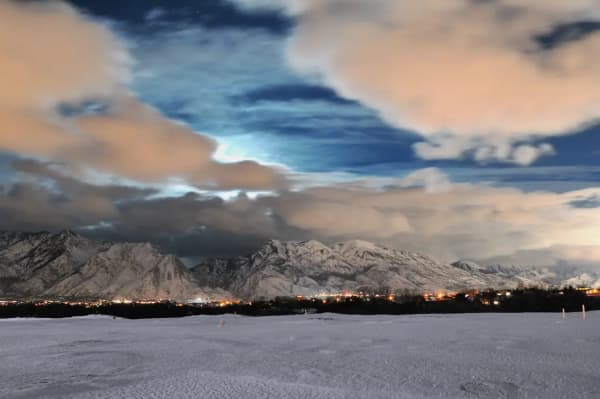
- Lake living and mountain views — direct access to Utah Lake plus a sweeping outlook toward the Wasatch, with parks and trails woven throughout.
- Modern, family-friendly neighborhoods — master-planned subdivisions, a young median age, and one of the highest rates of homeownership in the valley.
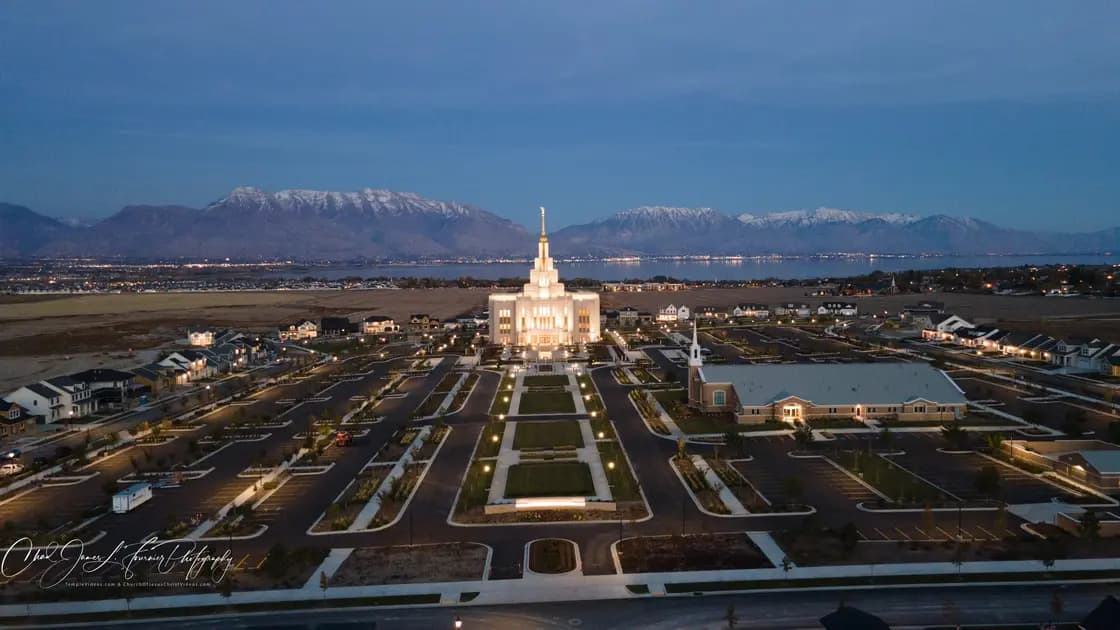
- A temple and a strong community feel — the Saratoga Springs Utah Temple, dedicated in 2023, anchors a city known for its tight-knit, family-centered culture.
- Big infrastructure investment — roughly $1.4 billion in state road projects aimed squarely at the area's growth.
What to weigh:
- It's the fastest-growing city in Utah, so traffic on the main connectors can be heavy and some services are still scaling up.
- The commute to I-15 and Silicon Slopes jobs runs through a few key corridors that get busy at peak times (though major relief is being built).
- The dining and nightlife scene is still developing compared to established cities like Provo or Orem — though it has improved fast; see our guide to the best restaurants in Saratoga Springs.
A resort town that became a boomtown
Saratoga Springs takes its name from natural hot springs near the Jordan River, and from the famous spa town of the same name in New York. Back in 1884, John Beck built Beck's Saratoga Springs resort here — a hot-springs destination with an amusement park along the water. The resort eventually faded, but the land it sat on became the seed of something much bigger.
In the 1990s, as Utah's population boomed, landowners pursued organized development, and the community incorporated on December 31, 1997, becoming a city in 2001. From there the growth was staggering — Utah's economic development office once clocked Saratoga Springs' 2000–2010 growth rate at over 1,600 percent. That explosive, master-planned origin is why the city looks the way it does today: new, spacious, and designed around parks and the lake.
Housing in Saratoga Springs
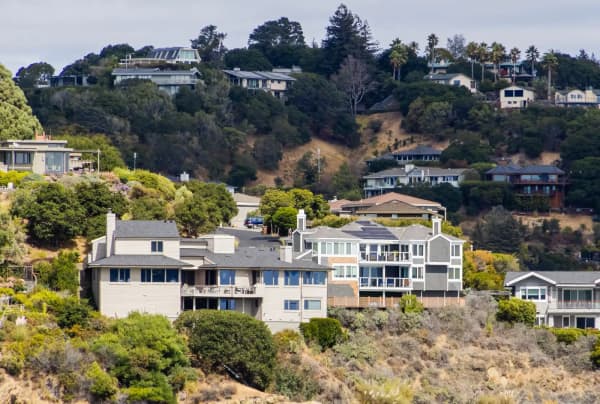
Because the city is so new, the housing market skews modern: master-planned subdivisions of single-family homes, townhomes, and a growing supply of apartments, much of it built within the last 10 to 20 years. The city has been singled out as one of the best places for homeownership in Utah, and household incomes here run high, reflecting a population of working families and professionals.
For buyers, Saratoga Springs has often been the place where a newer home with a yard is actually attainable for a young family — though strong demand and statewide price growth have narrowed that gap over time. The city is planning for build-out at more than 120,000 residents, so new neighborhoods, retail, and amenities will keep coming online for years.
That buildout status shapes the practical questions. Buying here usually means choosing between new construction — where the decisions are builder, phase, and lot premium, and where you should ask what is planned for the empty parcel behind the fence, because in a city this young something is — and a resale market whose stock is mostly under twenty years old, meaning fewer roof-and-furnace surprises but also thinner inventory of the mature-tree, big-lot variety. HOAs are close to universal in the master-planned communities, with fees and rules that vary meaningfully between developments; read the specific CC&Rs, not the category.
Commute geometry is the honest trade. The west side of Utah Lake connects to the rest of the valley through a small number of corridors — Pioneer Crossing toward Lehi and I-15, Redwood Road running the length of the city, and SR-73 — and at peak hours those carry everyone at once. Road expansion is perpetual and genuinely improving, but a buyer should drive their actual commute at their actual hour before falling in love with a floor plan.
Schools are getting a west-side story of their own: when the Alpine School District splits, Saratoga Springs joins Eagle Mountain, Cedar Fort and Fairfield in the new Lake Mountain School District from July 1, 2027 — one of the three successor districts, and the one whose boundaries finally match the west side's growth. Nothing changes for the school year now starting; the handoff is a 2027 event.
If you're weighing Saratoga Springs against neighboring cities, it helps to see current prices side by side. You can browse what's on the market across Utah Valley — homes for sale, rentals, and student housing — in our real estate marketplace, and if you're moving from outside the area, our moving to Provo guide covers the practical side of relocating to the valley.
Getting around: the commute and what's being built
Saratoga Springs sits on the northwest side of Utah Lake, a little removed from I-15, so the commute is the thing newcomers ask about most. Most residents reach the freeway and the Silicon Slopes job centers in Lehi via Redwood Road, Pioneer Crossing, and SR-73 (the Cory Wride Highway). Because the city has grown faster than its road network, those connectors can be congested at peak times.
The good news is that relief is actively being built. The state greenlit roughly $1.4 billion in road projects for northwest Utah County, including extending Mountain View Corridor south to SR-73 in Saratoga Springs and adding Pioneer Crossing flex lanes, with construction underway in the mid-2020s. The city is also widening key local roads like Saratoga Road and Pony Express Parkway. If a predictable commute is a top priority, drive your specific route at rush hour before you buy — but know the trajectory is toward more capacity, not less.
Schools
Saratoga Springs is currently served by the Alpine School District, but a significant change is coming. Utah County voters approved splitting the large Alpine district into three, and Saratoga Springs — together with Eagle Mountain, Cedar Fort, and Fairfield — will become part of the new Lake Mountain School District — the name was made permanent in late 2025 — which officially assumes operations on July 1, 2027, making 2027–28 the first school year under the new district.
The area's explosive growth has strained existing schools: Westlake and Cedar Valley high schools are both running over capacity, which is why the district broke ground in 2025 on a third high school in Saratoga Springs, set to open around 2028. For families, the takeaway is that schools here are part of a system being actively reorganized and expanded to keep up with growth. Because boundaries can shift quickly, confirm current school assignments directly with the district when choosing a home.
Things to do
Saratoga Springs' quality-of-life pitch is built around the outdoors and the lake. The city's position on Utah Lake gives residents boating, paddleboarding, and fishing access, plus a large network of parks and trails — including lakeshore paths and the Pony Express Parkway Trail — that make it easy to bike, run, or walk a dog without getting in the car. The Talons Cove golf course adds another recreation anchor; for the full list — Neptune Park, the lakeshore trails, golf, and Splash Days — see our guide to things to do in Saratoga Springs.
The Saratoga Springs Utah Temple, dedicated in 2023, is both a religious landmark and a defining feature of the cityscape. And beyond the city itself, you're a short drive from the canyons, skiing, and the full slate of Utah Valley restaurants, events, and recreation. For ideas just beyond Saratoga Springs' borders, browse our guides to things to do in Utah Valley and keep an eye on the Provo.com events calendar for concerts, markets, and festivals happening nearby.
Who actually provides your utilities
Saratoga Springs is served by Rocky Mountain Power, which places it with the northern and western Utah County cities rather than with the municipal-power towns down the valley.
It is a distinction worth understanding when you are comparing cities on cost. Provo, Lehi, Springville, Spanish Fork, Payson and Salem each own an electric utility, buy wholesale power through joint agencies their own elected officials govern, and set retail rates locally. Saratoga Springs buys from a regulated investor-owned utility, and rate questions are settled in front of the Public Service Commission. Lehi — a short drive up the road and the city many Saratoga Springs residents commute through — is on the other side of that line, running Lehi City Power as a municipal utility. Same commute, different governance of the electricity bill.
Water is where a fast-growing western-shore city faces its most consequential decisions, and it is worth reading the city's own materials rather than a general guide. As across Utah Valley, properties can be served by two separate systems — treated culinary water indoors and untreated secondary water for irrigation — and whether a specific address has a secondary connection is a parcel-level fact, not a city-level one. Utah's statewide metering law is now reshaping the cost of the second pipe everywhere in the valley. Our guide to secondary water and water shares sets out the shares, the buyer's checklist and the deadline.
Natural gas is Enbridge Gas Utah — the same utility that operated as Questar and then Dominion Energy Utah before Enbridge completed the acquisition in 2024, so older relocation packets will name a company that no longer exists under that name.
Saratoga Springs is not a UTOPIA Fiber city. The open-access municipal network reaches Cedar Hills, Lindon, Orem, Pleasant Grove and Payson within Utah County, but not the western-shore communities. In practice, the newer master-planned subdivisions here are often well served by private fiber built in with the development, while older sections can be markedly worse — this is one of the few utilities where the build year of your street matters more than the city you are in.
Who responds when you call 911
Saratoga Springs operates its own police department, headquartered on Saratoga Road, with a police chief, an assistant chief and a victim services coordinator on staff.
That is a meaningful difference from its immediate neighbor. Eagle Mountain, on the other side of the Cedar Valley, contracts its law enforcement to the Utah County Sheriff's Office, which runs a dedicated Eagle Mountain division of more than thirty sworn deputies. Two cities of comparable scale in the same corner of the county have taken opposite approaches to the same problem, and if you are choosing between them, it is a legitimate factor: a city department answers to the city council, while a contract division answers to an elected county sheriff and is renegotiated on a contract cycle.
One practical detail that catches new residents: non-emergency police contact goes through Utah Valley Dispatch, not the department's office number, and the city says so explicitly. Emergencies are 911 as everywhere. Animal control questions in this part of the county often route to the Utah County animal shelter in Lindon rather than to a city facility.
Like every small and mid-sized department in Utah County, Saratoga Springs draws on county specialist resources — major crimes, forensics, SWAT, search and rescue, accident investigation — rather than staffing them internally. That is the design of policing here, not a shortfall, and it is why the Sheriff's Office maintains those units countywide.
The thing to watch in a city growing as fast as this one is whether public safety staffing keeps pace with rooftops. Officer-to-resident ratios are a standard measure and they are discussed openly in municipal budget sessions across the valley. For how those decisions get made and which body makes them, see who decides what in Utah Valley.
Who Saratoga Springs is right for
Saratoga Springs tends to be a strong fit if you want a newer home in a family-centered community, you value parks, trails, and lake access, and you're comfortable being part of a city that's still growing into itself. Young families, first-time buyers, and outdoorsy households who want space and views do especially well here.
It's less of a fit if you need a deep, established dining-and-nightlife scene today, or if a long, sometimes-congested commute to I-15 would wear on you — though the major road projects underway are aimed directly at that second concern.
If you're a BYU or UVU student, Saratoga Springs is farther from both campuses than cities like Orem or Provo, so it's more of a family-and-professional community than a student hub — but for those who want a quieter, newer place to live and don't mind the drive, it's worth a look. Browse current student housing options to compare what's available closer to campus.
The bottom line
Saratoga Springs is the fastest-growing city in Utah for a reason: it pairs new, attainable housing and a family-friendly culture with genuine lakeside, mountain-view living — and the state is pouring serious money into the roads to keep up. It rewards people who want a fresh start in a community that's still being built, with the lake at their doorstep. If that's you, it's one of the most appealing addresses in Utah Valley.
When you're ready to take the next step, start with current listings in our real estate marketplace, and if you're relocating from out of state, our complete moving guide walks through everything from utilities to neighborhoods across Provo, Orem, and the surrounding cities.
Neptune Park is the west-side entry on our Christmas lights map, and the only display on it that sits on the far shore of Utah Lake.
Related Guides
- Saratoga Springs Neighborhoods Guide: Where to Live — area by area, and what the names actually mean
- Living in Lindon, Utah (2026): The Complete Guide
- Living in Mapleton, Utah (2026): The Complete Guide
- Living in Orem, Utah (2026): The Complete Guide
- Living in Payson, Utah (2026): The Complete Guide
- Living in Pleasant Grove, Utah (2026): The Complete Guide
- Living in Alpine, Utah (2026): The Complete Guide
- Living in Highland, Utah (2026): The Complete Guide
- Lake Mountain School District: The West Side Gets Its Own Schools
- Which School District Am I In? Utah County Before and After the Alpine Split
- Who Decides What in Utah Valley — who to watch here before a decision is made rather than after
- Saratoga Springs vs. Eagle Mountain: The Two Fastest-Growing Cities in Utah, Compared for People Deciding Between Them
- Every Rec Center in Utah Valley, Compared: Provo, Orem, Lehi, American Fork, Pleasant Grove, Springville and Spanish Fork
- Saratoga Splash Days
Frequently Asked Questions
Is Saratoga Springs, Utah a good place to live?
How fast is Saratoga Springs growing?
What school district is Saratoga Springs in?
Is there a temple in Saratoga Springs?
What is the commute like from Saratoga Springs?
What is there to do in Saratoga Springs?
Does Saratoga Springs have its own police department?
Who provides electricity in Saratoga Springs?