Five months ago, the Utah Jazz were the NBA's most patient rebuild. Today they employ a former Defensive Player of the Year, the No. 2 pick in the draft, and a front office that spent the first week of July making the kind of moves contenders make. For Utah Valley — where the valley adopted this team generations ago and where this June's draft night split local loyalties straight down the middle — the 2026–27 season suddenly matters in a way it hasn't since the Mitchell-Gobert years.
Here's what happened, what the roster looks like now, and what to watch for from the Provo side of the Point of the Mountain.
The trade that ended the rebuild
The pivot came on February 3, when Utah acquired Jaren Jackson Jr. from Memphis in an eight-player deadline blockbuster. The price was real — Walter Clayton Jr., Kyle Anderson, Taylor Hendricks, Georges Niang, and three future first-round picks — but so is the player: a two-time All-Star, the 2022–23 Defensive Player of the Year, and squarely in his prime. John Konchar, Jock Landale, and Vince Williams Jr. came along in the deal.
The message wasn't subtle. After several seasons of tearing down, the Jazz front office decided the young core was ready for reinforcement instead of more patience.
Draft night: Peterson at No. 2
Then the lottery cooperated, and on draft night in June the Jazz used the No. 2 overall pick on Kansas guard Darryn Peterson. If that name rings a bell around here, it should: Peterson spent two years as the shadow rival of BYU's own AJ Dybantsa, who went No. 1 to Washington. The full saga of that rivalry, and the strange way it left Utah fans rooting in two directions at once, is in our draft-night feature.
July has only fed the hype. Peterson opened at the Salt Lake City Summer League, faced Memphis's No. 3 pick Cameron Boozer, and then met Dybantsa in Las Vegas, the first professional meeting of the top two picks. Summer League settled nothing, which is exactly why these two will be measured against each other for the next decade.
The Kessler goodbye
The complicated part of the offseason arrived on July 8, when the Jazz completed a sign-and-trade sending Walker Kessler — the shot-blocking center Utah drafted and developed — to the Los Angeles Lakers. Kessler, who missed most of last season after shoulder surgery, was expected to sign a four-year, $130 million deal in L.A.; the Jazz receive unprotected first-round picks in 2031 and 2033 plus pick swaps in 2028 and 2030. With Jackson in the frontcourt, the front office took the draft capital.
It stings, but it's the kind of clean resolution rebuilds rarely get: a beloved player paid elsewhere, a war chest of unprotected Laker picks in return.
The team you'll watch
The projected core: Lauri Markkanen and Jaren Jackson Jr. in a frontcourt that can shoot, switch, and punish mismatches; Keyonte George and Peterson in the backcourt; last year's No. 5 pick Ace Bailey on the wing; Will Hardy — whose creative, motion-heavy system has been the league's best-kept secret for years — finally coaching a roster built to win. Nobody serious is predicting a title in the West's meat grinder, but "first playoff appearance since 2022" has moved from fantasy to a legitimate over/under conversation.
The 2026–27 schedule, from Provo
The NBA released the schedule in late summer. The parts that matter for planning a trip north:
| Opener | Wed., Oct. 21, at Memphis, 6 p.m. |
| Home opener | Fri., Oct. 23, vs. New Orleans, 7:30 p.m. |
| Opening homestand | Five straight at home, Oct. 23-31: New Orleans, the Lakers, Memphis, San Antonio, Portland |
| Longest homestand | Six games, Mar. 10-23 |
| Longest road trip | Five games, Mar. 1-8 |
| Regular-season finale | Sun., Apr. 11, at Golden State |
| Back-to-backs | 13 |
Holiday games at the Delta Center: Denver on Friday, November 27, the day after Thanksgiving; Indiana on Saturday, December 26, at 3 p.m.; and Boston on New Year's Day at 7:30 p.m. Of the three, the December 26 afternoon game is the easiest for a family coming up from Utah County.
National TV: six games, including two at home: Houston on February 9 (NBC) and Washington on February 27 (Prime Video).
The circled game: Wizards at Jazz, Saturday, February 27, 1 p.m. The first Delta Center meeting between AJ Dybantsa and Darryn Peterson, on a Saturday afternoon, which means no last-train problem for anyone riding FrontRunner home to Provo.
Other big home dates: Miami (November 10), Denver (December 12), New York (December 30), Philadelphia (March 23), and Oklahoma City (March 30).
The Mammoth question
Utah's NHL team, the Mammoth, shares the Delta Center, and the Jazz and Mammoth play on the same day 19 times this season. On every one of those dates, though, at least one team is on the road, so there is no Jazz-Mammoth doubleheader at the Delta Center on the published schedules. Two of the NBA Cup games had not been placed when the schedule came out, so check again in December. If you want both in one weekend, pair a Jazz home game with a Mammoth home game on the next night; our Delta Center game-night guide covers both.
Tickets
The Delta Center lists DeltaCenter.com, UtahJazz.com, UtahMammoth.com and SeatGeek as the only authorized ticket outlets, and says it is not responsible for tickets bought elsewhere. The box office is at 301 S Temple and opens at 1 p.m. on game days. Everyone 2 and older needs a ticket.
For how camp and the preseason went, including Darryn Peterson's 23-point night and Jusuf Nurkic's foot injury, see our training camp and preseason review.
The Utah Valley viewing guide
The circled game: Wizards at Jazz on Saturday, February 27 — Dybantsa's return to the state that made him, against Peterson. Expect that night to feel like a BYU home game transplanted 45 minutes north.
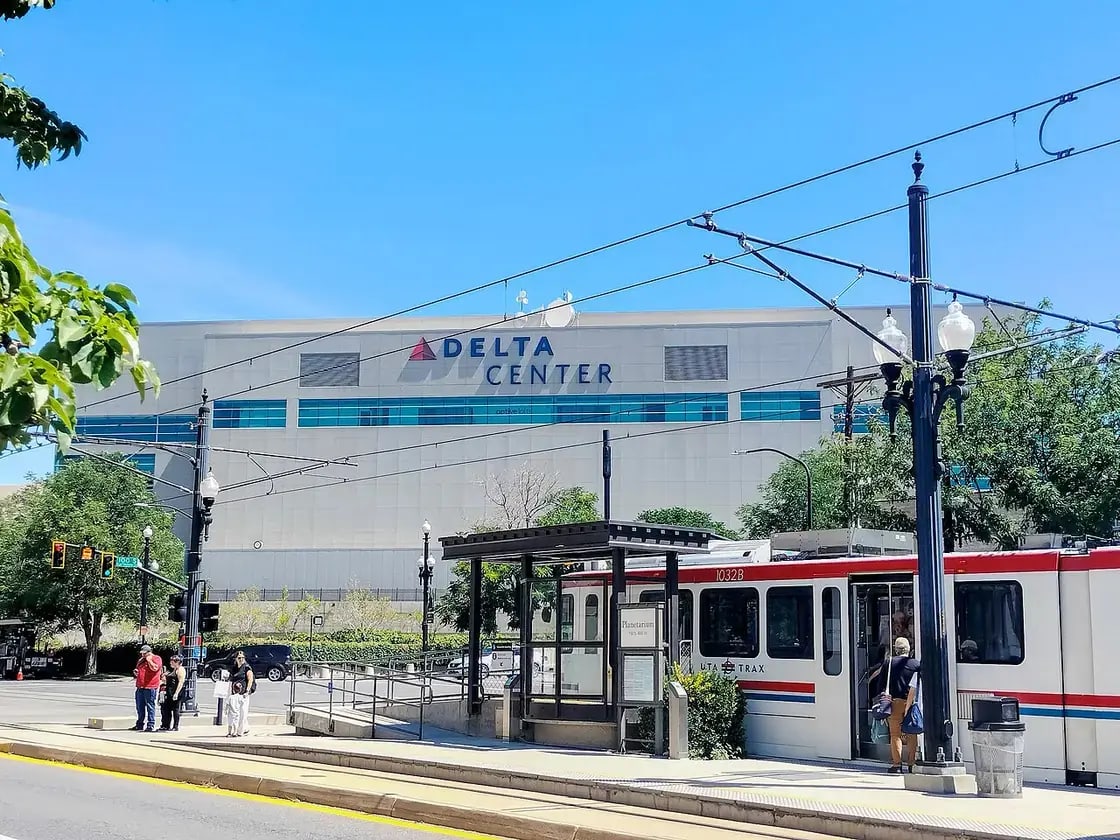
Getting there from the valley: FrontRunner from Provo Central or Orem Central to Salt Lake Central puts you a short walk from the Delta Center with zero I-15 involvement — just check the last southbound train time on weeknights. The commuter guide covers the FrontRunner basics.
Staying local: every Jazz game is a sports-bar night in the valley — our where-to-watch guide has the screens, and tip-off season conveniently overlaps with BYU basketball and UVU's first Big West winter for the fullest local hoops calendar in memory.
The season tips off in October. For the first time in a while, Utah Valley has three basketball teams worth planning a week around — and two rookies, one in purple and one in Wizards red, guaranteed to keep the valley arguing all winter.
Related Guides
- BYU Basketball 2026-27: The Schedule, the New Roster, and What Provo Should Expect
- The USYS Boys National Championships Arrive at Epic Sports Park July 13–23
- The Visiting Fan's Guide to Provo: What Big 12 Fans Should Know (2026)
- Game Night at the Delta Center from Utah Valley
Frequently Asked Questions
Who did the Utah Jazz get in the Walker Kessler trade?
Is Jaren Jackson Jr. on the Jazz?
How has Darryn Peterson looked for the Jazz so far?
When do the Jazz play the Wizards in Salt Lake City in 2026–27?
When is the Jazz home opener for 2026–27?
Is there a Jazz and Mammoth doubleheader at the Delta Center this season?
Where do I buy Jazz tickets?
How can Utah Valley fans get to Jazz games without driving?
Sources
The facts in this guide were checked against these sources. Hours, fees and rules change, so confirm anything time-sensitive with the source before you go. How we make Provo.com.
- NBA.com. Checked October 12, 2026.
- NBA.com. Checked October 12, 2026.
- NBA.com. Checked October 12, 2026.
- Delta Center Tickets, Delta Center. Checked October 13, 2026.
- Utah Jazz release regular-season schedule, open at Memphis before 5 straight games at home, KUTV. Checked October 13, 2026.
- Utah Jazz schedule: Five takeaways from 82-game slate, KSL Sports. Checked October 13, 2026.
- Jazz, Mammoth games overlap 19 times in 2026-27 season, KSL Sports. Checked October 13, 2026.