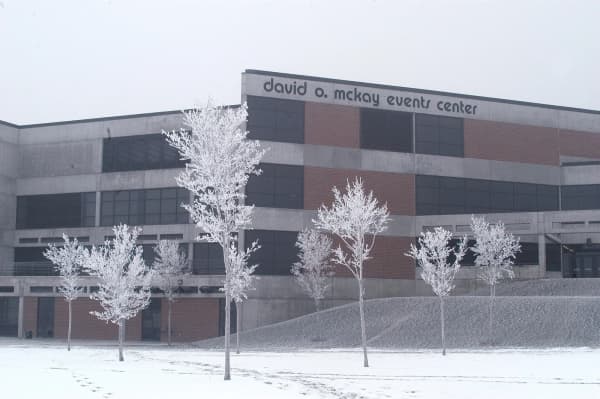

Here's the thing nobody tells you at UVU orientation: your commute is your college experience. With a record 48,670 students enrolled in fall 2025 and most of them arriving by car or bus rather than walking from a dorm, UVU runs on a daily migration that BYU students across the Parkway never have to think about. Get the commute right and campus feels easy. Get it wrong and you'll spend your semester circling lot L6 at 8:55 a.m., watching your GPA idle with the engine.
I've made every mistake in this guide personally, so you don't have to. Everything here — fares, permit rules, lot names — was verified against UVU Parking Services and UTA's current published policies as of this writing.
First decision: drive, ride, or both?
UVU commuting comes down to three honest options, and the right one depends on where you live:
Drive and park if you're coming from somewhere transit doesn't serve well — Payson, Spanish Fork, Saratoga Springs back roads — or if your schedule stacks work and class in ways a bus can't match. This is the default for most Wolverines, which is exactly why the parking section below matters.
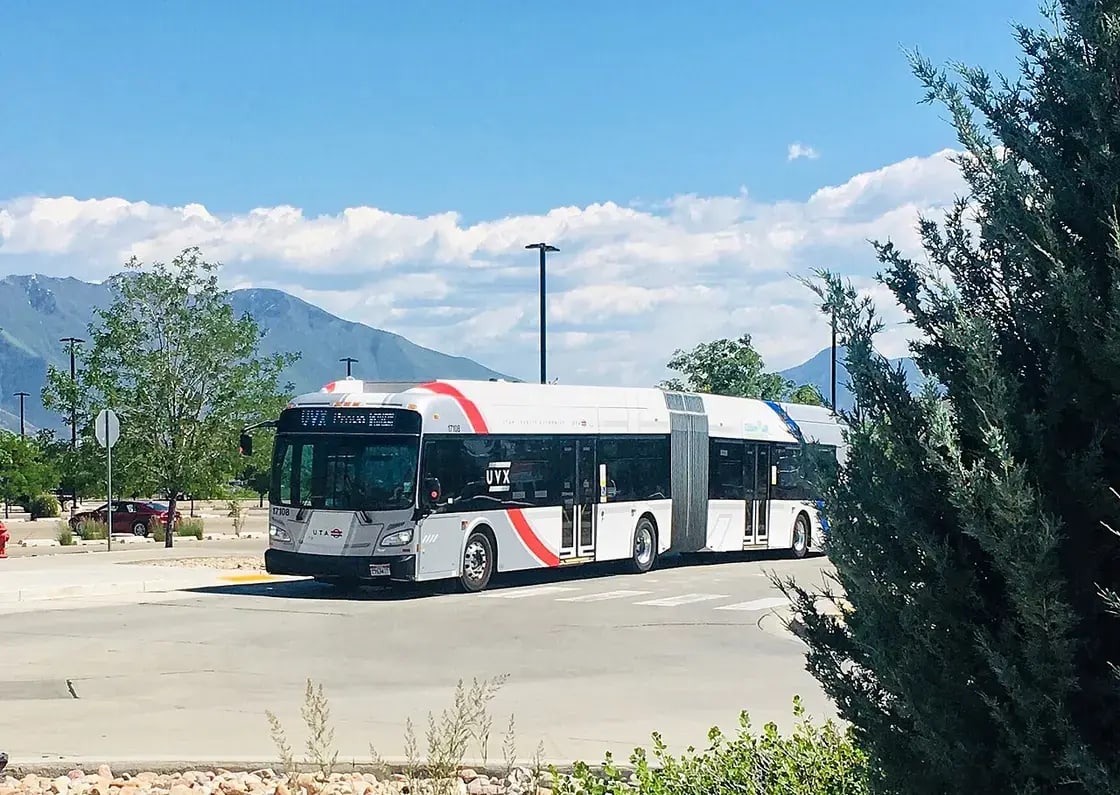
Ride UVX if you live anywhere along the Provo–Orem spine: downtown Provo, the BYU-adjacent neighborhoods, University Place, or the west Orem apartments near campus. The bus rapid transit line stops right at UVU and runs frequently at peak.
FrontRunner + the bridge if you're commuting from the north — Lehi, American Fork, Vineyard, even Salt Lake. This is the sleeper option most new students don't know exists, and it's covered in full below.
Plenty of commuters mix all three across a week. That's normal. The goal isn't purity; it's arriving on time without hating your life.
The perk hiding in your student ID
Before we talk about paying for anything: you probably don't have to.
Every current UVU student registered for at least one credit hour gets a full UTA transit pass built directly into their UVU ID. Not a discount — the whole system: UVX, regular buses, TRAX, FrontRunner, the S-Line streetcar, and UTA On Demand, all at no cost. Faculty and staff get the same deal, and UVU even extends it to spouses and dependents under 24 through a Dependent ID card you can request at Campus Connection in the Sorensen Center.
This matters more than it used to. UVX ran fare-free for its first six years, but since August 18, 2024, the general public pays a regular fare — $2.50 per trip, or $1.25 reduced. UVX has no fareboxes and takes no cash on board; regular riders pay by tapping a FAREPAY card or activating a Transit app ticket, and fare inspectors check the same way they do on TRAX. For students, the drill is simple: tap your UVU ID on the card reader at the platform when you board, and tap again when you exit. Tapping off matters — it's how the pass validates, and skipping it is the most common way students end up in an awkward conversation with a fare inspector.
Two housekeeping notes: the pass activates automatically about five days before the semester starts and deactivates if you drop below one credit, and if you lose your card, a replacement UVID runs $20. Non-students in your carpool who ride occasionally should know about UTA's fare capping — a regular FAREPAY card maxes out at $5 a day and $20 a week for local service, so heavy riding stops costing more after two trips.
Parking, decoded
UVU's parking system is license-plate based — your plate is your permit. There's no hangtag for student permits; cameras on patrol vehicles read plates against the permit database. You can register up to two vehicles to your student account, but only one may be on campus at a time, and your plate has to face the roadway (no backing into a stall if you don't have a front plate — that's a citation).
The two student permits
Yellow is the workhorse: a paid permit valid in any yellow or purple student lot on the main campus east of I-15. It was recently listed at $115 for the year — cheap by state standards (the University of Utah's cheapest comparable pass runs several times that) — but confirm current pricing on UVU's Parking Portal, because Parking Services is fully self-funded and sets its own rates. You can buy for up to three consecutive semesters at once.
Purple is the free option, and it comes with a catch: it's valid only in the lot near the Health Professionals building on the west side of the freeway, and it still requires registration. From there you're connecting to main campus by bus or a serious walk. If your schedule is light or your budget is tight, it's a legitimate play; if you're on campus daily, most students find the yellow permit worth it.
The parking garage and the visitor pay lots are a separate universe — student permits aren't valid there, payment is required from 5 a.m. to midnight seven days a week, and the garage's annual pass is priced for people with salaries, not student loans. Use the pay lots for what they're good at: the occasional short, must-be-close errand.
Where to park
UVU Parking Services publishes its own confession about which lots are hopeless, and it's worth taking at face value: L3, L5, L6, L8, L14, M21, and M25 fill first every morning because they're closest to the buildings. The official recommendation — which matches every experienced commuter's habit — is to skip the hunger games entirely and head for L9, L10, or M29. They're farther out, but demand is lower and the walk to class averages about ten minutes. Ten guaranteed minutes of walking beats fifteen speculative minutes of circling every single time.
Timing is the other half of the strategy. The crunch is the mid-morning block when the 9, 10, and 11 a.m. classes overlap. If your schedule allows it, arriving before the first wave or building your semester around afternoon classes changes the entire experience — and the first two weeks of fall semester are their own special chaos, when even the far lots tighten up. Plan margin accordingly, and know that Parking Services tickets from week one (they issue extra warnings the first week, but the warnings run out fast).
The after-5 rule (and the free-weekend rule)
Memorize this one: after 5:00 p.m. on weekdays, on weekends, and during school holidays, no permit is required in regular yellow, purple, or green stalls. Evening students effectively park free. So do weekend visitors — which becomes very relevant at Wolverine games. The pay lots and garage are the exception; they charge around the clock, every day.
The FrontRunner play (north-valley commuters, read this)
If you live in Lehi, American Fork, Vineyard, or anywhere up the I-15 corridor — including Salt Lake — the best-kept secret of UVU commuting is that you may not need the freeway at all.
FrontRunner stops at Orem Central Station, and a pedestrian bridge connects the station directly to campus over I-15. The bridge opened in 2021 precisely to make this commute work: off the train, over the freeway, onto campus, no transfer required. If the weather's ugly or your first class is on the far side of campus, UVX also links Orem Central to the campus stop. Either way, your UVU ID covers the entire FrontRunner fare — a commute that would cost a non-student real money (FrontRunner is distance-priced, starting at $2.50 and climbing per station) costs you nothing.
The honest trade-offs: FrontRunner runs on a schedule, not a frequency, so you build your morning around a departure time; and southbound trains in the morning crunch are popular. But against I-15 at 8:50 a.m. — a corridor whose congestion our FrontRunner & commuting guide covers in painful detail — a train you can do homework on wins by a mile. Or by ten of them.
Building a commuter-proof schedule
The deepest commuter skill isn't transportation at all — it's schedule design. A few rules veterans swear by:
Cluster, don't scatter. Two long days on campus beat five short ones. Every trip has a fixed overhead cost (drive, park, walk); fewer trips means less overhead. UVU's block scheduling and online sections make two- or three-day campus weeks achievable.
Never schedule a class you can't be late to at 9 or 10 a.m. If the morning crunch owns a slot, don't give that slot your hardest class.
Give campus a reason beyond class. The commuter trap is treating UVU like a drive-through — arrive, class, leave — and wondering why college feels thin. Park once and stay: the study spots are good, the on-campus food is legitimately better than it has any right to be (R&R BBQ in the Keller Building is not a normal college perk), and the student guide covers how to make a 48,000-person school feel small.
Keep a car kit. Phone charger, granola bars, a layer for the canyon wind that rips across those west lots in winter. Commuters live out of their cars a little; embrace it.
The bottom line
UVU is the largest university in Utah and the most commuted-to campus in the state, and the students who thrive here treat the commute as a system to be optimized, not a fate to be endured. Get the free-transit pass working, pick your lot before you leave the house, learn the after-5 rule, and — if you're a north-valley commuter — give the train one honest week before you dismiss it.
Everything else about UVU life — housing near campus, food, game days, and the guides for students 25 and older and first-generation students — lives on the UVU Guide hub. Drive safe, tap off, and leave L6 to the optimists.
The Campus Safety Layer a Commuter Actually Needs
A commuter's relationship with campus safety is different from a resident's, and the difference is mostly about geography and time of day. You are not worried about a residence hall. You are crossing a parking structure at 9:40 p.m. in February with a laptop bag, and then driving home.
Three pieces of infrastructure are worth knowing before you need them.
The number, and the fact that there are two kinds
UVU Police is a law enforcement agency with its own dispatch line, and the university also runs an online reporting form for incidents that are not urgent -- a theft you discovered hours later, damage to a parked car, something you want on record without a call. There is a separate reporting channel for designated Campus Security Authorities, which is how a coach, an advisor or a club officer routes something they were told about.
Save the non-emergency dispatch number now. The moment you need it is not the moment to be searching a university website on a phone in a cold parking lot.
The crime that will happen to you
Ask a commuter what they worry about on campus and you will hear about assault in a parking structure. Ask UVU Police what gets reported and the answer is theft -- laptops, textbooks, phones and bags, generally left unattended for a few minutes in a library, a lab, a study space or a gym.
That gap between perceived and actual risk is worth taking seriously, because the mitigations are completely different. The parking-lot fear produces escorts and pepper spray. The real pattern produces a much duller habit: your bag comes with you, every time, including the four-minute trip to the printer. For a commuter this matters more than for a resident, because everything you own for the day is in one bag rather than distributed between a dorm room and a backpack.
Public property is in the data; the lot you park in may not be
The Clery Act's reporting geography has three parts, and one of them is public property immediately adjacent to and accessible from campus -- the sidewalks and streets on the edge. That means some of what happens on your walk in is captured in the university's Annual Security Report and some of it is not, depending on which side of a property line it happened on.
For a commuter this has one practical consequence. If you want to understand the route rather than the campus, the university's annual report is only part of the picture and Orem's municipal data covers the rest. And if you want current information rather than a three-year aggregate, look for the daily crime log: institutions with a police department maintain one, entries go in within two business days of a report, and a rolling recent window is public. It is the right document for "what has been happening in the structure I park in," and almost nobody thinks to read it.
If something happens to your mobility, the parking answer changes
One underused route: the accessibility offices handle temporary conditions, not only permanent ones. A broken ankle, a knee surgery, a pregnancy complication, a course of treatment with side effects -- BYU runs a separate intake form for conditions expected to last under six months, and UVU works with temporary conditions as well.
For a commuter specifically, this can affect parking access and the practicality of a class schedule spread across distant buildings, which are exactly the things that make an injury academically expensive rather than merely painful. The request has to be made going forward, though: UVU states that a late request does not create retroactive adjustments. For the built-environment side of getting around the valley -- transit, curb cuts, venue access -- see our guide to wheelchair-accessible Utah Valley.
The Building You Are Only In Twice a Week
A residential student learns a building by accident. A commuter with two classes in a building they enter twice a week does not, and that is the gap worth closing deliberately.
Institutions are required to have emergency response and evacuation procedures, to publicize them, and to test them at least annually through drills or exercises, keeping records of each test. Those procedures exist for every building you use. The problem is that they are absorbed by proximity, and a commuter has less proximity than anyone.
The fix costs about thirty seconds per building, once. On your way in, note where the nearest exit is that is not the one you came through -- which is the one people default to under stress, and the one that produces a crowd. If you park in a structure, note which stairwell you use, because structures are disorienting when the lighting changes.
If a drill happens while you are on campus, treat it as the free rehearsal it is rather than an interruption to a class you drove forty minutes for. It is scheduled precisely so the first time is not a real one.
If you are new to campus and wondering why security and event planning feel heavier than at other Utah schools, the background is the September 10, 2025 shooting and the reviews that followed.
Related Guides
- UVU's Aviation Program: What It Is & Why Provo's Sky Is Busy
- Canyon & commute conditions — University Parkway's worst days are academic-calendar days, not weather days
- Student Budget Calculator — commuting costs are monthly while tuition is not, and the calculator keeps them apart
- The Institute of Religion at UVU
- UTA Fares and Passes Explained for Utah County
- Commute Cost Calculator — drive, carpool or FrontRunner, priced by the month from published figures
Frequently Asked Questions
Is UVX free for UVU students?
How much is a UVU parking permit?
Which UVU parking lots fill up first?
Do I need a UVU parking permit after 5 p.m.?
Can I take FrontRunner to UVU?
What is the most commonly reported crime on UVU's campus?
Does the university's crime report cover my walk from the parking lot?
Can a temporary injury get me closer parking or a schedule adjustment?
Sources
The facts in this guide were checked against these sources. Hours, fees and rules change, so confirm anything time-sensitive with the source before you go. How we make Provo.com.
- Utah Transit Authority: UVX, Utah Transit Authority. Checked October 12, 2026.
- UVU Parking Services main landing page, Utah Valley University. Checked October 12, 2026.
- UVU-UTA Transit Pass FAQs, Utah Valley University. Checked October 12, 2026.
- Utah Valley University Continues Educating the Most Utahns With New Record Enrollment, Utah Valley University. Checked October 12, 2026.