
On July 1, 2026, UVU athletics did something it had been building toward for two decades: the Wolverines officially became full members of the Big West Conference, closing the book on 13 seasons in the WAC and opening the most consequential chapter in the program's Division I history. New rivals, a stronger league, and — for the more than 46,000 students who can attend games for free — the same unbeatable deal as always.
This is the game-day guide the UVU hub promised: how tickets work, what The Den is, how to handle the UCCU Center, and why this particular fall is the right time to start caring. Written by someone who spends a lot of her own life in college gyms — take it from a setter: the atmosphere pages of this story are trustworthy.
The new era, in one section
The short version of the realignment story: UVU announced in June 2025 that it would leave the Western Athletic Conference, and the move became official on July 1, 2026, with the Wolverines joining a Big West lineup of Cal Poly, Cal State Bakersfield, Cal State Fullerton, Long Beach State, CSUN, UC Irvine, UC Riverside, UC San Diego, UC Santa Barbara and California Baptist — and UVU walks in as the largest school in the conference by enrollment and the Big West's first Utah member since Utah State departed in 2005.
Why students should care: the Big West is a strong mid-major league, particularly in basketball, baseball, and volleyball — meaning better opponents in the building on a random Thursday. UVU also isn't arriving as a charity case. The Wolverines left the WAC on a high: men's basketball won the outright WAC regular-season title in 2026 and made the NIT for the second straight year (the program's fourth appearance, headlined by that 2023 run to the NIT Final Four), volleyball swept the WAC regular-season and tournament titles in 2025 with an NCAA Tournament trip, women's soccer earned an at-large NCAA bid, and baseball made the 2025 NCAA Tournament — where the Wolverines stunned Oregon in their opener.
Thirteen sports make the move; wrestling stays in the Big 12, where it competes as an affiliate. And the first Wolverines to wear the Big West banner in actual competition? Men's and women's soccer, this fall, at the newest venue on campus.
Tickets: the five-free rule
Here is the policy that makes UVU games the best entertainment value in Utah Valley, quoted nearly verbatim from the athletic department because it's almost too good to paraphrase:
Every UVU student enrolled in at least one credit hour is automatically a member of The Den — the official student fan organization — and receives up to five complimentary tickets for every regular-season home game, while supplies last.
Five. Not one. UVU frames the policy explicitly around its student body — older students with spouses and kids, commuters bringing roommates or a date, first-gen students bringing the family that's never set foot in a college arena. Your people get in free with you.
The mechanics matter, so don't skip them: students must reserve tickets in advance to be admitted — showing up with just your ID isn't the system. Reserve through UVU's online ticket site, entering your UVU ID number as the offer code, and the free allotment applies. Everyone else in the building has options too: faculty and staff get 50% off men's basketball season tickets, alumni get a single-game discount, groups of ten or more get a rate, and per the UCCU Center's guest policies, children under six don't need their own ticket at UVU sporting events.
Even the full-price tickets are modest by Big 12-across-the-Parkway standards — this is the affordable half of the valley's college-sports economy, and it's not close.
The Den
The student sections at the UCCU Center — sections 9 through 12, behind and around the action — belong to The Den, named for the one place a wolverine defends with everything it has. Seating is general admission, first-come, first-served, which produces the correct incentive: the BYU game and the marquee conference nights reward the students who show up when doors open, not the ones who stroll in at tip.
Beyond seats, Den membership (automatic, remember) includes tailgates, giveaways, contests, and the general license to be loud in an arena built to reward it. The Den's whole identity is the wolverine's scouting report — ferocity out of proportion to size, documented ability to take down much larger prey — which, as UVU enters a conference where it's suddenly the biggest school, is due for a fun identity crisis.
The UCCU Center (and the rest of the venue map)
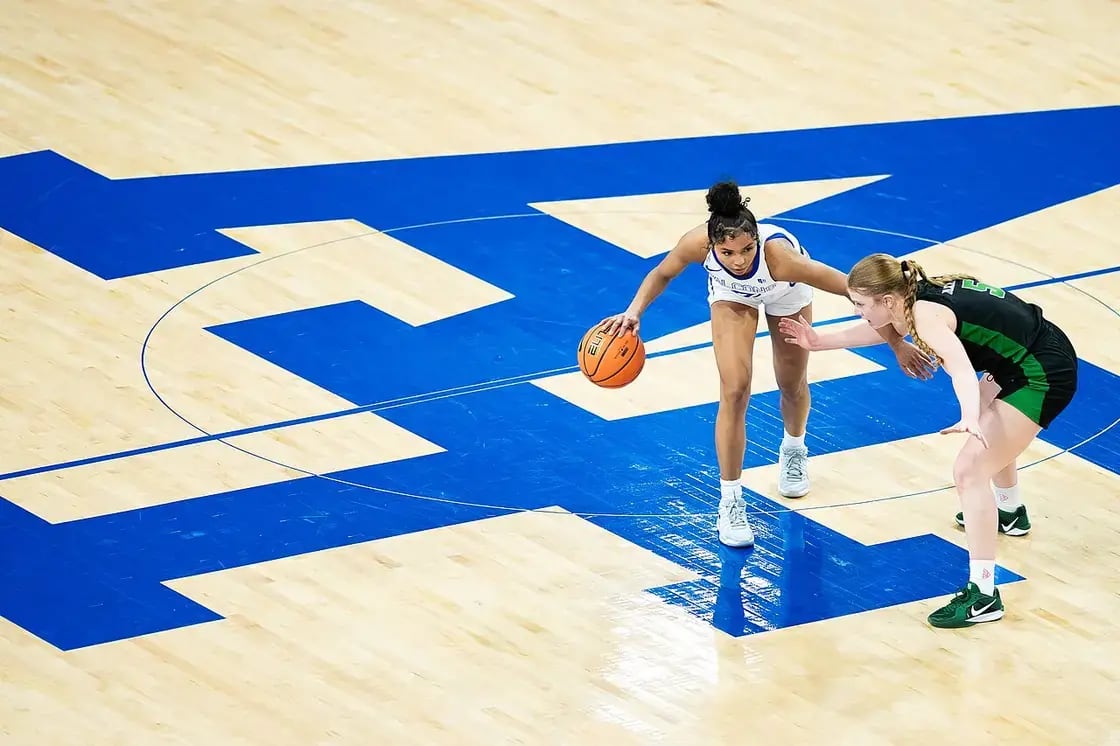
UCCU Center — basketball's home, roughly 8,500 seats, right on campus in Orem. Big enough to feel like a real D-I environment, small enough that a full Den changes the game. Practical notes worth knowing before your first trip: the building runs a clear-bag policy (clear bags up to 12" x 6" x 12", or a one-gallon resealable bag — leave the backpack in the car), re-entry rules vary by event, and the campus is dry, full stop. Box office questions go to the UCCU Center Ticket Office at (801) 863-7464, and accessibility accommodations are handled through the same office — they ask for five business days' notice where possible.
Lockhart Arena — the 2,000-seat room next door where volleyball plays (and one of the loudest small venues in the state when the Wolverines' recent NCAA-Tournament-caliber teams are rolling). For every Wolverine team on one page, see UVU athletics, sport by sport. For this winter's basketball team, see UVU men's basketball's Big West debut. For this fall's soccer team, see UVU women's soccer 2026. For this fall's volleyball team, see our look at UVU volleyball's first Big West season.
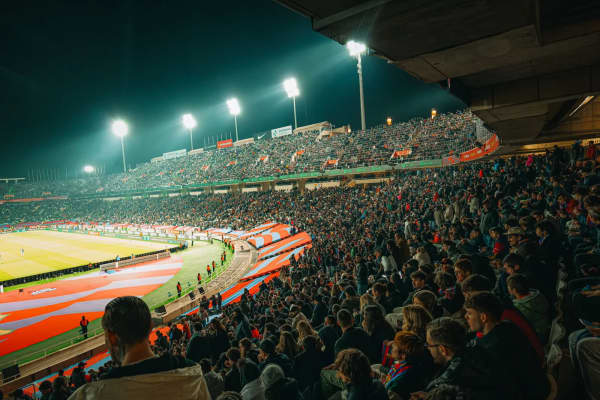
UCCU Stadium — soccer's home and the newest building on the map: a soccer-specific stadium that opened in 2025 on the site of the old soccer field, with more seats, suites, a press box and a student deck wrapped around the pitch. This is where UVU's Big West era begins this fall with men's and women's soccer, and if you've never done college soccer under lights, this is the season to fix that.
⚠ Be careful with the price you will see quoted for it. Construction estimates, the final reported cost and the size of the credit union's overall gift to the university have all circulated as "the price," and they are not the same number.
UCCU Ballpark — baseball's home, with fixed seats plus a grass berm down the third-base and left-field side. Berm seating with a spring sunset over the valley is one of Utah County's best-kept cheap-date secrets — the date-night crowd sleeps on it every year.
And the venue map has a summer chapter nobody local writes down. UCCU Stadium is not dark once the college season ends. It is the home ground of Utah United, whose sides play in USL League Two and the women's USL W League through the summer months — which means competitive soccer in Orem in June and July, in the exact window when both UVU and BYU are out of season and the valley's sports calendar is usually empty. The university also opens the building to high school matches and tournaments, club championships and local lacrosse. If your mental model is "college stadium, college calendar," you will miss the half of the year it is easiest to get a good seat.
(Yes, everything is named UCCU. The credit union's naming-rights enthusiasm is its own campus tradition — so expect the name to outlast your degree.)
Getting there and parking (the free-after-5 hack)
Game-day parking at UVU is refreshingly uncynical, because the university's own rules work in your favor: no permit is required in regular student and employee lots after 5:00 p.m. on weekdays, or anytime on weekends and school holidays. Since most basketball tips and nearly all marquee games fall in exactly those windows, the realistic answer to "where do I park for the game?" is "in a normal lot, for free." Athletics' official guidance is first-come, first-served with certain lots reserved for VIPs and staff, so arrive early for the close-in rows on big nights. The two standing exceptions: the pay lots and the parking garage charge seven days a week regardless of events.
The car-free version is even easier: UVX stops on campus and is free for students (tap your ID on and off), which turns a Provo-side apartment into a door-to-arena trip with zero parking thoughts. Coming from up north, FrontRunner to Orem Central plus the pedestrian bridge works for games exactly as it does for class — the full playbook is in the commuter guide.
Pre- and post-game food is a solved problem on this side of the Parkway: the best food near UVU guide has the map, University Place is one UVX stop away for a proper post-win dinner, and the cheap eats list covers the student-budget version.
The rivalry (and the calendar)
The circle-it game remains UVU–BYU basketball — the crosstown meeting that turns the valley's quiet two-school coexistence into an actual argument for one night. UVU has real wins in the series, the UCCU Center crowd for it is unrecognizable from a normal Tuesday, and now that the schools no longer share even a conference tier, the neighborly needle is entirely the point. (Cougars: your side of the street is covered in the BYU basketball game-day guide.)
As for new circles on the calendar: Big West play brings the Wolverines a fresh set of California rivals — and keep an eye on California Baptist, the fellow WAC-to-Big West traveler with whom UVU has been quietly building a rivalry through the shared move. Schedules live at the athletic department's site, GoUVU.com; specific dates and times churn too fast for an evergreen guide, so bookmark the source.
The bottom line
A Division I program entering an ambitious new conference, an 8,500-seat arena on your own campus, a brand-new soccer stadium, and a ticket policy that hands every student five free seats to all of it: Wolverine game days are the most underpriced experience at the biggest university in Utah. The Big West era starts this fall. Reserve the tickets, bring four people, get there early, and help The Den make the new neighbors regret the invitation.
The rest of UVU life — commuting, housing, food, and the guides for students 25+ and first-gen students — lives on the UVU Guide hub.
Getting Alerts, Getting Help, and Getting a Seat That Works
Three practical layers of a game day tend to go unexamined until the one time they matter.
Emergency notification and timely warning are two different systems
Universities operate two distinct alerting obligations under federal law, and people conflate them constantly.
An emergency notification goes out for a significant emergency or dangerous situation involving an immediate threat to health or safety on campus. It is immediate and it is broad.
A timely warning is issued for a reported crime within the university's reporting geography that represents an ongoing threat, and its purpose is to let people take steps to protect themselves. It may arrive well after the incident.
For an event with several thousand people in one building, the emergency system is the one to be inside. Alerts generally route to the contact details a student has on file, which means two things worth acting on: check that your number is current before the season rather than during an incident, and understand that a visiting parent or a non-student guest is probably not receiving anything. If you are bringing people, you are their notification system.
Who you are talking to
Campus policing and event security are different functions, and knowing which is which saves time. A campus police department is a law enforcement agency with dispatch and officers. Event and building security staff a venue, manage access and handle the ordinary friction of a crowd.
For anything requiring a report or a response, you want the police line. UVU Police maintains a dispatch number and an online form for non-urgent reports. For a lost bag, a seating dispute or a question about re-entry, venue staff are the correct and faster answer.
Accessible seating is a request, not a queue
The single most common accessibility mistake at a college sporting event is treating accessible seating as something to sort out at the gate. It is nearly always an arrangement made in advance through the ticket office, and the supply is finite in a way that general seating is not.
Ask about it when you buy, not when you arrive. The questions that actually matter are rarely on a seating chart: which entrance is step-free, whether the accessible section has a companion seat next to it rather than behind it, where the nearest accessible restroom is relative to the section, and whether accessible parking is in the lot you were planning to use or a different one.
If a temporary injury is the reason -- crutches, a boot, a recent surgery -- the same request applies, and it is worth making even for a single game. Separately, the campus accessibility offices handle temporary conditions for academic purposes, which is a different process and a different office from event seating, but the same underlying situation often triggers both.
For the wider picture of getting around venues, transit and the outdoors in this valley with a mobility need, see our guide to wheelchair-accessible Utah Valley.
Where to Look in the Report, If You Ever Do
A footnote for anyone who takes the earlier advice and opens the Annual Security Report expecting a short document.
It is not short. Federal law requires dozens of distinct policy disclosures in every report, with a further set added by the Violence Against Women Reauthorization Act, covering everything from the law enforcement authority of campus security personnel to the institution's working relationships and written agreements with local police agencies. Institutions may arrange these in whatever order reads best, so two universities' reports will not have the same structure.
If you are reading it for event-related reasons, three sections are the ones worth finding: emergency response and evacuation procedures, timely warning procedures, and the description of campus security personnel's authority and their relationship with outside agencies. The statistics tables are the part everyone reads and the least useful for deciding what to do on a Saturday.
Related Guides
- UVU's Aviation Program: What It Is & Why Provo's Sky Is Busy
- UVU Student Guide (2026): Housing, Parking, Costs & Campus Life
Frequently Asked Questions
Do UVU students get free tickets to Wolverines games?
What conference is UVU in now?
How big is the UCCU Center?
Where do you park for UVU basketball games?
What is The Den at UVU?
Will I get a campus alert during an event if I am not a student?
What is the difference between an emergency notification and a timely warning?
How do I arrange accessible seating for a UVU game?
Sources
The facts in this guide were checked against these sources. Hours, fees and rules change, so confirm anything time-sensitive with the source before you go. How we make Provo.com.
- UVU to join the Big West Conference, Utah Valley University. Checked October 12, 2026.