
Sundance is Provo's home mountain — 20 minutes up the canyon, intimate and beautiful. But it's also small. If you're a serious skier or rider, or you just want variety, the good news is that Provo sits within 60–90 minutes of some of the best skiing in North America. The Wasatch Range delivers the "Greatest Snow on Earth" that Utah's license plates promise, and Provo is positioned to access resorts on both sides of the mountains.
This guide covers every ski resort accessible from Provo, organized by drive time.
Under 30 Minutes
Sundance Mountain Resort
Distance: ~20 minutes · Vertical: 2,150 ft · Summit: ~8,250 ft · Skiable acres: ~540 and growing · Pass: Independent (not on Ikon or Epic)
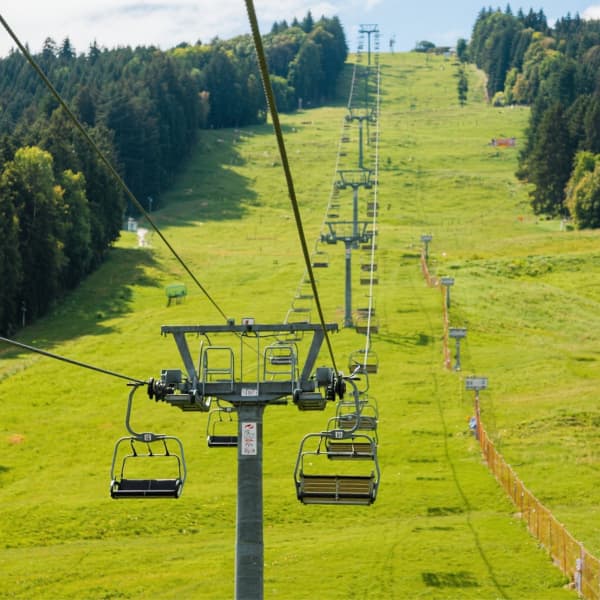
Provo's backyard mountain, and the entry on this page that has changed most. Sundance is uncrowded and beautiful — the trees, the canyon setting, and the aesthetic sensibility Robert Redford spent five decades imposing on it make it feel like skiing inside a film. Lift lines are short by Utah standards, and the absence of a crowd is a luxury you do not appreciate until you have spent a Saturday in a thirty-minute line at Park City.
⚠ Do not use an old picture of this mountain to make a pass decision. Under its current ownership, Sundance has been expanding its terrain in recent seasons. The Electric Horseman, a high-speed quad with more than 1,850 vertical feet, debuts in 2026–27.
The acreage undersells what changes. Sundance's best terrain has always been high and behind the front face, and getting there meant a slow multi-lift journey that most people did once and then quietly stopped doing. One high-speed ride replaces that. The back mountain stops being an expedition and becomes a lap — which is a different mountain, not a bigger one.
Best for: Genuine after-work and before-work sessions, night skiing, beginners, families, and anyone re-running the pass math on the assumption that Sundance is a beginner hill. Full detail in our Sundance Guide.
The Cottonwood Canyons: About an Hour to an Hour and a Quarter
Brighton Resort
Distance: ~80 minutes (via Big Cottonwood Canyon, at the top of the canyon) · Vertical: 1,875 ft · Trails: 66 · Pass: Ikon
The best value in the Wasatch for Provo-based skiers. Brighton has excellent terrain variety, reliable snow (Big Cottonwood Canyon gets hammered with powder), night skiing, and a laid-back vibe that contrasts sharply with Park City's scene. It's popular with locals for good reason — the skiing is great, the crowds are manageable on weekdays, and the Ikon Pass makes it affordable for frequent skiers.
Best for: Intermediate to advanced skiers, night skiing, Ikon Pass holders, powder days.
Solitude Mountain Resort
Distance: ~75 minutes (via Big Cottonwood Canyon) · Vertical: 2,047 ft · Trails: 82 · Pass: Ikon
Brighton's neighbor in Big Cottonwood Canyon. Solitude lives up to its name — it's consistently less crowded than other Wasatch resorts. The terrain is varied, the tree skiing is excellent, and the Nordic center offers cross-country skiing if you want a change of pace. Solitude's village base area is pleasant and compact.
Best for: Skiers who hate crowds, tree skiing, families wanting a quieter resort experience.
Snowbird
Distance: ~65 minutes (via Little Cottonwood Canyon) · Vertical: 3,240 ft · Trails: 169 · Pass: Ikon
The big mountain. Snowbird has the most vertical drop in Utah, some of the most challenging terrain in North America, and snow that's world-class. The tram takes you to 11,000 feet, and the expert terrain — Cirque, Great Scott, the Gad Chutes — is steep, deep, and serious. Snowbird is also the most crowded Wasatch resort on powder days — Little Cottonwood Canyon traffic can add 30–60 minutes to your drive.
Best for: Advanced and expert skiers, powder hounds, anyone who wants big-mountain skiing close to home.
Alta
Distance: ~65 minutes (via Little Cottonwood Canyon) · Vertical: 2,538 ft · Trails: 119 · Pass: Ikon
The purist's mountain. Alta is skiers-only (no snowboarding) with legendary snow, classic terrain, and a no-frills approach to the ski experience. The powder skiing at Alta is among the best in the world. If you're a dedicated skier who prioritizes the snow and the skiing over the scene, Alta is where you want to be.
Best for: Skiers (no snowboarding allowed), powder days, tradition.
The Wasatch Back: About an Hour
Deer Valley Resort
Distance: ~50 minutes to the new East Village base via Provo Canyon and US-40; ~65 minutes to Snow Park · Vertical: 3,000 ft · Trails: 103 · Pass: Ikon
The luxury option. Deer Valley limits daily ticket sales to prevent overcrowding, grooms its runs immaculately, and offers a resort experience (lodges, dining, service) that's a clear step above everything else in Utah. Like Alta, it's skiers-only. Ticket prices reflect the premium — this is not a budget day trip.
Best for: Skiers who want a premium experience, groomers, families with money to spend.
Park City Mountain
Distance: ~60 minutes to Mountain Village; ~65 minutes to Canyons Village · Vertical: 3,226 ft · Trails: 341 · Pass: Epic
The largest ski area in the United States by acreage, a status it acquired by merging with Canyons — and one worth treating as current rather than permanent, since neighboring Deer Valley is midway through an expansion large enough to change the ranking. Park City offers massive terrain variety, a vibrant base village with restaurants and shopping, and the full resort experience. The downside is crowds — Park City is the most visited resort in Utah, and weekends during peak season can feel like a theme park. Epic Pass holders flock here, which means lift lines can be significant.
Best for: Epic Pass holders, visitors wanting the full resort town experience, intermediate skiers with all-day stamina.
Season Pass Strategy for Provo Skiers
This is the section most people come here for, and it is the section that has aged fastest.
The worked, price-by-price version with 2026-27 figures now lives in our ski pass math guide; what follows is the strategy in outline.
Ikon covers the Cottonwood resorts — Brighton, Solitude, Snowbird, Alta — plus Deer Valley. That is the cluster a Provo skier can reach in about an hour, which is why Ikon has been the default recommendation on this page and everywhere else for years. Epic covers Park City, which is the largest ski area in the country and also the longest drive and the biggest crowd. Sundance sells its own pass and is on neither.
Two things complicate the old advice.
First, the tiers are not interchangeable. Both Ikon and Epic sell a full pass and a cheaper restricted version, and the restricted versions carry blackout dates that land on precisely the days a working skier wants — the Christmas and New Year stretch, the January and February holiday weekends. A pass bought on price and used on holidays is a pass that does not work. Read the blackout calendar before the price, and check the per-resort day limits, because access on a multi-resort pass is rarely unlimited everywhere.
Second, the Sundance calculation has changed. The old logic said: buy Ikon for the real skiing, pick up occasional Sundance tickets for evenings. That was sound when Sundance was a small beginner-leaning hill. It is a weaker argument against a mountain that has grown by roughly a third and is about to have high-speed access to its entire lift-served terrain. The honest reframing is that proximity beats acreage on a Tuesday. A pass to a mountain an hour away gets used on Saturdays. A pass to a mountain twenty minutes away gets used on weekday evenings, on half-days, on the two free hours between a morning class and an afternoon shift — and over a season that is far more skiing.
So the strategy, restated for this winter:
- If you ski mostly weekends and want variety and vertical, Ikon still wins. The Cottonwoods are better mountains and there are five of them.
- If you ski often and locally, and your realistic session is two hours, Sundance's own pass deserves a serious look for the first time in years — especially with the student rates, which are among the best deals in Utah skiing.
- If you are a Park City person, Epic, and accept that you are committing to the drive.
- The combination worth pricing is a Sundance pass for volume plus a handful of Cottonwood day tickets for powder, rather than the reverse. Run it against your honest number of ski days, not your aspirational one.
We are deliberately not printing this season's prices. Pass pricing moves every year, dynamic pricing means the same lift ticket costs different amounts depending on when you buy it, and a number copied from an older guide is worse than no number. Buy in advance rather than at the window, and check whether a BYU or UVU ID still gets a discounted rate — our student discounts guide tracks what is available.
Getting There Is the Real Constraint, Not the Drive Time
Provo is on the wrong side of the mountains, and the drive times on this page are all no-traffic figures. Plan around the system, not the number.
You cannot drive over the Wasatch from Provo in winter. The Alpine Loop closes with the first serious snow and does not reopen until late spring, so every Cottonwood or Park City trip runs north on I-15 first and then east. There is no shortcut, and looking for one on a map in December is how people end up at a gate.
The canyons are single-road and they queue. Little Cottonwood (Snowbird and Alta) and Big Cottonwood (Brighton and Solitude) each have exactly one road in. On a powder morning or a Saturday afternoon, 30 to 60 minutes of added time is normal rather than exceptional, and avalanche control work can close a canyon road outright with no notice.
Traction law is enforced at the canyon mouth. Utah requires snow tires or carried chains on these roads through the winter, and compliance is checked. All-season tires on a two-wheel-drive car is the configuration that gets turned around, and it does not matter how good a driver you are — our guide to winter tires and canyon driving covers what qualifies, because the three-peak-mountain-snowflake rating and the M+S marking are not the same thing and only one of them satisfies the law.
Parking is now a reservation problem. This is the change most Provo skiers have not absorbed. Alta requires a parking reservation on Fridays, weekends and holiday periods during the morning window — free to its own passholders, paid for everyone else, Ikon holders included. Brighton requires paid reservations along the canyon road. Snowbird runs a hybrid of free first-come lots, paid advance reservations and a carpool program that gives free parking to vehicles with three or more people. Reservations release on a schedule and the good days go early. Sort this out days ahead from Provo, not at six in the morning at the bottom of the canyon.
The bus is underused from down here. UTA runs ski bus service into both Cottonwood canyons from valley park-and-ride lots through the season, and the fare is waived entirely for Ikon passholders and for season passholders at Alta, Snowbird, Brighton and Solitude. The catch for a Provo skier is the first leg — you still have to get to the Salt Lake valley — so it works as FrontRunner plus bus rather than as a door-to-door trip. On a big powder Saturday, it is often faster than the car and it removes the parking question entirely.
Night Skiing Is Utah Valley's Actual Advantage
The thing Provo has that Salt Lake's ski suburbs do not is a mountain close enough to ski after dinner.
Sundance runs night skiing on selected evenings from mid-December, and the combination of a twenty-minute drive and lit runs is what makes skiing a routine here rather than an outing. A Salt Lake skier lives closer to better mountains and still needs to commit most of a day to them. A Provo skier can leave the house at six, ski, and be home before the kids are asleep. Over a season, the mountain you can ski in two hours delivers more days than the mountain you love in eight — and that asymmetry is the single best argument for living in Utah Valley if you ski.
It also changes what a bad snow year does to you. When the Cottonwoods are thin, an hour each way for mediocre conditions is a wasted day. Twenty minutes for mediocre conditions is just an evening.
Practical Tips
Check the road before you check the snow. UDOT publishes live canyon status for both Cottonwoods, including closures for avalanche control, and it is the first thing to look at on a storm morning — a fourteen-inch overnight total is irrelevant if the road is shut. Leaving before 8 a.m. remains the single most effective tactic, and carpooling earns free parking at Snowbird at three or more occupants.
Gear rentals are available at all resorts and at several Provo and Orem shops, and renting in the valley rather than at the resort is both cheaper and faster — you skip the morning rental queue entirely, which on a powder Saturday is worth more than the money. BYU's Outdoors Unlimited rents ski and snowboard gear at student-friendly prices, and it is one of the more useful things a student ID unlocks here.
Buy the lift ticket before you leave the house. Every resort on this list now prices dynamically, which means the window rate on the day is close to the worst price available and the gap is not small. This is the least glamorous money-saving advice in Utah skiing and the most reliable.
Avalanche awareness. If you're venturing into backcountry terrain, check the Utah Avalanche Center forecast. The Wasatch sees significant avalanche activity, and backcountry skiing without proper training and equipment is dangerous.
Two different legal regimes, and the boundary rope is the line between them
Skiing in Utah is governed by two entirely separate liability statutes, and which one you are under depends on whether somebody sold you a ticket.
Uphill of the ticket window, you are under Utah's recreational-use chapter. Utah Code § 57-14-102 lists skiing and snowshoeing as recreational purposes by name, and Utah Code § 57-14-201 provides that an owner of land owes no duty of care to keep the land safe for anyone using it for a recreational purpose, and no duty to warn of a dangerous condition on it. Utah Code § 57-14-101 confirms that public and private owners are both covered, which matters because most of the terrain in question is national forest. Backcountry touring, uphill travel on public ground and snowshoeing come with no duty owed to you by anybody.
Utah Code § 57-14-202 conditions that on use permitted without charge, and Utah Code § 57-14-204 removes the protection where the owner charges a person to enter or use the land. A lift ticket is a charge. The recreational-use chapter therefore stops at the resort boundary — which would leave lift-served skiing under ordinary negligence law if nothing else applied.
What applies instead
Something else does apply: Title 78B, Chapter 4, Part 4 of the Utah Code, the Inherent Risks of Skiing Act, first enacted in 1979 and substantially rewritten in 2020.
Utah Code § 78B-4-401 sets out the reasoning in unusually plain terms. The Legislature found that skiing contributes significantly to the state's economy, that few insurance carriers were willing to write liability cover for ski area operators, and that premiums had risen sharply because of confusion over whether a skier assumes the sport's inherent risks. The stated purpose is to establish as a matter of law that certain risks are inherent, and to provide that a skier may not recover from an operator for injuries resulting from them.
Utah Code § 78B-4-402 then defines those risks, and the list is long and specific: changing weather; snow and ice conditions as they exist or may change, including hard pack, powder, packed powder, wind pack, corn, crust, slush, cut-up snow and machine-made snow; surface and subsurface conditions including bare spots, forest growth, rocks, stumps, streambeds, cliffs and trees; variations or steepness in terrain, whether natural or produced by slope design, snowmaking or grooming, including terrain parks and features such as jumps, rails, fun boxes, half pipes and freestyle-bump terrain; and impact with lift towers and other structures and their components, including signs, posts, fences, hydrants and water pipes.
Read that list against a bad day at any Utah resort and very little is left over. Machine-made snow is inherent. A groomed roller is inherent. A lift tower is inherent.
What is left over
The Act is not a blanket immunity, and the Utah Supreme Court has said so. The listed risks are expressly non-exclusive, but every hazard, listed or not, is limited by the statutory phrase requiring it to be an integral part of the sport. An operator's own negligence in something that is not integral to skiing is a different question, decided case by case.
For a Utah Valley skier the practical consequences are these. Inside the ropes, your recourse for the ordinary hazards of a mountain is close to nil by statute, and the release you clicked through when you bought the pass sits on top of that. Outside the ropes, on public land, nobody owed you a duty in the first place — no avalanche forecast is a warranty, no closed gate is a promise about what is behind it, and Utah Code § 57-14-205 confirms the chapter does not relieve you of your own duty to exercise care.
The gear, the training and the partner check are not belt-and-braces. In Utah they are most of the system.
Related Guides
- Sundance Mountain Resort Guide
- Winter Activities in Provo
- Day Trips from Provo
- Best Gyms & Fitness in Provo
- Fall in Provo: The Complete Autumn Guide (2026)
- Outdoor Movie Nights in Utah Valley: Where to Watch Under the Stars (2026)
- The Sundance Film Festival's Utah Era Is Over: What Happened, and What Stays
- Getting to Sundance and the Resorts Without a Car
- Avalanche Safety in Utah Valley — what changes past the boundary rope
- Snowshoeing Near Provo — the low-barrier way into the same terrain
- Winter and Ski-Season Jobs for Students
- Ski Passes for Utah Valley Families: The Pass Math
- Learning to Ski or Snowboard Near Provo
- Backcountry Skiing 101 from Utah Valley
- Big and Little Cottonwood Canyons From Provo: The Summer Edition
- Ski-Day Picker — which mountain fits your pass, your start point and the time you have
Last updated: April 2026. Resort details, pass pricing, and trail counts change seasonally.
Frequently Asked Questions
What is the closest ski resort to Provo?
Is Sundance still a small mountain?
Which ski pass is best if I live in Provo?
Do you need a parking reservation to ski the Cottonwood canyons?
Can you ski before or after work from Provo?
How long does the drive to the Cottonwood canyons really take from Provo?
Is it worth driving from Provo to Park City to ski?
Can you take a bus to the ski resorts instead of driving?
Sources
The facts in this guide were checked against these sources. Hours, fees and rules change, so confirm anything time-sensitive with the source before you go. How we make Provo.com.
- Electric Horseman, Sundance Mountain Resort. Checked October 12, 2026.