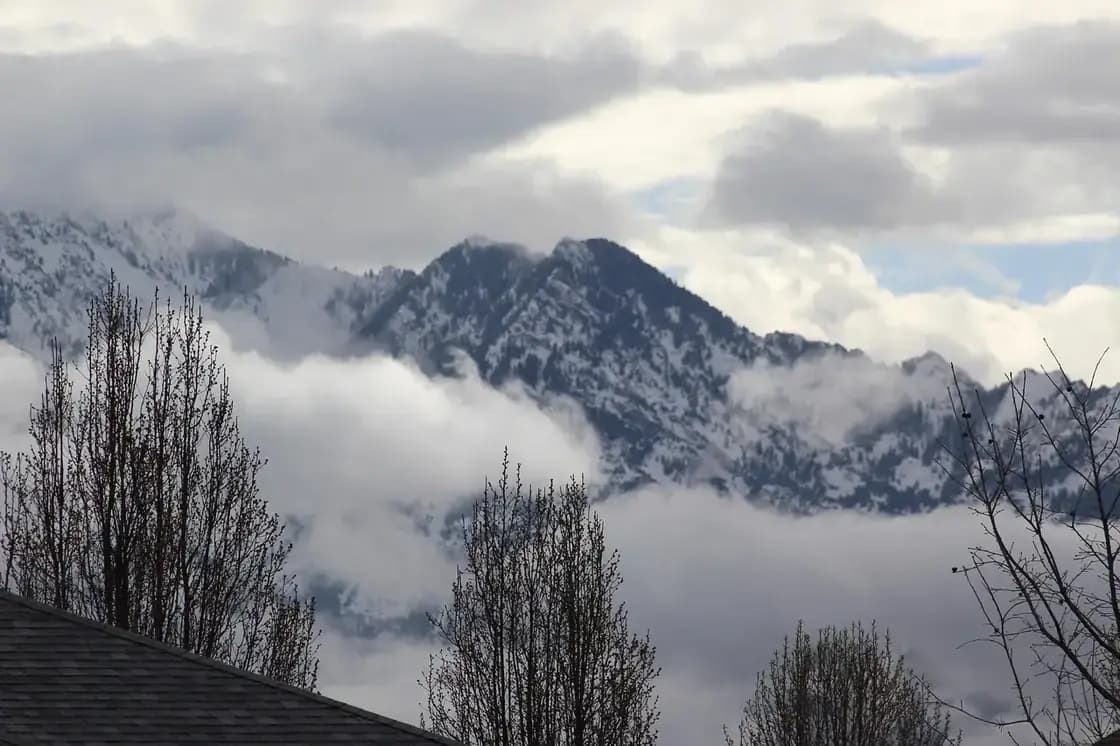

Winter in Provo lasts roughly five months — November through March — and if you're not prepared for it, those months can feel long. The handover is gradual rather than sudden: the first snow usually dusts the peaks in October, while the valley below is still in full fall color. But if you lean into it, winter in Utah Valley is excellent. World-class skiing is 25 minutes away, the frozen canyon landscapes are stunning, and the community doesn't hibernate — holiday markets, ice skating, indoor attractions, and campus events keep the city lively even when the temperature drops.
This guide covers the best winter activities in and around Provo, from the obvious (skiing) to the underrated (Homestead Crater hot springs in a limestone dome).
Skiing & Snowboarding
Sundance Mountain Resort
Distance: 25 minutes · Provo Canyon
Fetched live from AirNow when this page loads, so it is current whichever day you are reading this.
The backyard ski hill for Provo residents. Sundance runs about 540 skiable acres with a 2,150-foot vertical drop after the 2025–26 Far East expansion, and the Electric Horseman Express high-speed quad debuts for the 2026–27 season with a further 165 acres. It's intimate, uncrowded, and cheaper than the big Wasatch resorts, though the old $39 college day ticket is no longer the product — the student-facing option is now a young-adult season pass, and day rates are dynamic. Night skiing runs on selected evenings from mid-December and is rare in Utah.
Best for: Quick weekday sessions, budget-conscious skiers, night skiing, and anyone who prefers a relaxed atmosphere over mega-resort crowds. See our complete Sundance guide. The mountain doesn't shut down when the snow melts, either — scenic lift rides, ziplining and mountain biking take over, which we cover in the summer activities guide.
Big Resorts (45–90 minutes)
For bigger terrain, the Wasatch Front resorts are an easy day trip. Snowbird and Alta in Little Cottonwood Canyon (about 75 minutes from Provo) offer some of the best expert terrain and deepest snow in North America. Brighton and Solitude in Big Cottonwood Canyon (about 70 minutes) are more family-friendly with excellent intermediate terrain. Park City Mountain Resort and Deer Valley (about 90 minutes) offer massive acreage and a resort-town experience.
Pro tip: Buy season passes early. The Ikon Pass covers Sundance, Brighton, Solitude, and Deer Valley. Epic covers Park City. Individual resort passes (especially Sundance's) are often the best value for frequent skiers.
Cross-Country Skiing & Snowshoeing
Soldier Hollow in Midway (45 minutes from Provo) offers groomed cross-country trails — the venue was built for the 2002 Winter Olympics. Closer to home, the Bonneville Shoreline Trail and upper canyon trails offer snowshoeing when snow conditions allow. Sundance also has Nordic skiing trails.
Snow Tubing
Soldier Hollow Tubing
Distance: 45 minutes · Midway
The best tubing experience in Utah. Soldier Hollow's Olympic venue has been converted into a massive tubing hill with multiple lanes, a conveyor lift back to the top, and nighttime tubing sessions. It's a blast for families, groups, and anyone who wants snow fun without skiing ability. Reservations are recommended, especially on weekends and holidays. Our Soldier Hollow guide covers the venue itself — how the tubing pricing works now, and why there is night tubing but no night skiing — and the Heber Valley & Midway guide covers the rest of a winter day over there, including the current status of the Ice Castles.
Woodward Park City
Distance: 75 minutes · Park City
A year-round action sports facility with an outdoor tubing hill in winter. More of a full-day destination that also includes indoor trampolines, skateboarding, and other activities.
Ice Skating
Peaks Ice Arena
Location: 100 N Seven Peaks Blvd, Provo
Provo's primary ice arena offers public skating sessions throughout the winter. The facility is well-maintained, skate rentals are available, and the prices are reasonable. It's the default ice skating option for Provo residents and a solid activity for families, dates, and groups.
Outdoor Rinks
Several communities in Utah Valley set up seasonal outdoor ice rinks during the winter months. Check local listings for current locations and hours — these can vary year to year but typically operate from late November through February.
Indoor Activities
When the inversion settles in and the valley turns gray, these indoor options keep cabin fever at bay:
Provo Beach — An indoor entertainment complex whose headline attraction is the FlowRider indoor surf simulator, alongside a ropes course, laser tag, an arcade, bowling and a miniature croquet course. (The wave pool people sometimes attribute to it is at the Provo Rec Center, and that one is outdoor and summer-only.) Good for families and groups, especially on cold or inversion days. Closed Sundays.
BYU Museums — The Museum of Art, Monte L. Bean Life Science Museum, and Museum of Peoples and Cultures are all free and open year-round. A museum afternoon is an underrated winter activity.
Covey Center for the Arts — Live theater, concerts, and dance performances throughout the winter season. Check the schedule for BYU performing arts shows, which are consistently high-quality and affordable.
Escape Rooms — Provo has several escape room companies (Getout Games, Red Giant, Escapes in Time) that make for excellent winter group activities.
Rock Climbing Gyms — Indoor climbing is a perfect winter activity for the outdoor-oriented crowd. The Quarry and Momentum climbing gyms are both accessible from Provo.
Winter Hiking
Provo's trails don't close in winter — they just require different gear and different expectations.
Rock Canyon — The canyon's natural shade keeps snow on the trail, but it also keeps conditions manageable with microspikes. The winter canyon scenery — snow-dusted walls, frozen creek crossings — is beautiful and uncrowded.
Provo River Parkway — The paved trail is maintained and walkable year-round. A winter walk along the river with snow on the mountains is peaceful and easy.
Y Mountain — Doable in winter with microspikes, but the south-facing slope can be icy and variable. Choose your days carefully and start early when conditions are firmest.
Bridal Veil Falls — The falls freeze into dramatic ice columns in deep winter. The paved trail to the viewpoint is accessible, though the dirt trail to the base can be icy, and the area is under multi-year reconstruction, so check access before you drive. This is also not a novelty for climbers: Provo Canyon holds the highest concentration of ice in the Salt Lake and Utah County area, centered on the falls and the formation down-canyon called Stairway to Heaven, both reached from Nunn's Park. Our rock and ice climbing guide covers the routes, the seasons and the named hazards.
Essential winter gear: Microspikes or traction devices, trekking poles, layers, and extra water. Winter air is dry and dehydrating even when it's cold.
Holiday Season
November–December Highlights
Provo comes alive during the holidays. Downtown Center Street hosts holiday markets and seasonal events. BYU's campus features holiday concerts, performances, and the annual Christmas Around the World program. The Covey Center and SCERA in Orem run holiday theater productions. Many neighborhoods put up impressive light displays — driving through east-side neighborhoods in December is a local tradition.
Thanksgiving Point (Lehi, 30 minutes north) hosts a large winter light display called Luminaria that's worth the drive. The gardens are transformed with millions of lights across themed zones.
New Year's
The Provo Recreation Center has hosted a family New Year's Eve party with an early fireworks show for families with bedtimes and a midnight one for everyone else. It's family-friendly and a good alternative to the bar-focused celebrations in Salt Lake.
The Inversion: What It Is and How to Deal
From December through February, cold air can get trapped in Utah Valley beneath a layer of warmer air, creating a persistent gray haze called an inversion. During inversions, the valley floor is cloudy, cold, and smoggy, while the mountains above are sunny and clear. Inversions can last for days and affect air quality.
How to deal with it: Drive up the canyon. Seriously. A 15-minute drive up Provo Canyon puts you above the inversion and into sunshine. Sundance, the Alpine Loop road (when open), and higher-elevation trails are all above the inversion line. Many Provo residents plan their winter weekends around escaping up-canyon.
Air quality: Check air quality reports (airnow.gov) during inversions, especially if you have respiratory sensitivities. On red air quality days, limit outdoor exercise in the valley.
Practical Winter Tips
Invest in a good coat. Provo winters are cold — lows in the teens and twenties are common December through February. A proper winter coat, waterproof boots, and warm layers aren't optional.
Snow tires or chains. Required on many canyon roads from November through March. Even in the valley, snow tires make a significant difference on steep residential streets after a storm.
FrontRunner runs year-round. Train service to Salt Lake City means you can access Jazz games, concerts, and SLC's indoor attractions without driving in winter conditions.
The canyon is warmer than you think. Provo Canyon is often warmer than the valley floor during inversions. A mid-winter canyon walk can be sunny and pleasant while the valley sits under cold gray clouds.
Lights are the one winter activity that needs no gear and no skill, and Utah County has fifteen organized displays across ten cities. Our Christmas lights map sorts them by which are free, which need booking and which keep you in the car.
The forecast terms changed, and older guides are now wrong
If you learned to check Utah winter weather more than a couple of years ago, some of the vocabulary in your head no longer exists.
On October 1, 2024, the National Weather Service retired its wind chill products as part of a national Hazard Simplification effort. The renaming was not cosmetic:
| Retired | Replaced by |
|---|---|
| Wind Chill Advisory | Cold Weather Advisory |
| Wind Chill Watch | Extreme Cold Watch |
| Wind Chill Warning | Extreme Cold Warning |
| Hard Freeze Watch / Warning | folded into Freeze Watch / Warning |
The substantive change sits underneath the names. The old products required a wind threshold — cold alone, however severe, did not trigger a wind chill product because wind chill is by definition a function of wind. The new products are issued on temperature or wind chill, with no wind threshold at all. The agency's own summary of the reasoning is blunt: cold is dangerous with or without wind, and the previous suite encouraged people to believe otherwise.
Wind chill itself has not gone away as a concept or a number — forecasters still calculate and communicate it. What changed is that a still, clear, brutally cold morning now generates an alert where it previously might not have.
How to use the tiers. Think of them as three different questions rather than three severities of the same one:
- Cold Weather Advisory — seasonably cold, expected to occur multiple times in a normal winter. This is a dress for it signal, not a stay-home signal.
- Extreme Cold Watch — dangerous cold is possible. This is the planning signal: the one that should make you move a canyon day, not the one that cancels it.
- Extreme Cold Warning — dangerous cold is expected or occurring. Designed to be rare.
Criteria are tiered regionally, colder in the north, so a Warning in northern Utah is not the same temperature as a Warning issued elsewhere in the country. The Salt Lake City forecast office publishes the thresholds that apply to Utah Valley; check that office's criteria rather than assuming a national number.
Why the valley floor and the canyon are two different forecasts
A Provo winter forecast is a poor description of a Provo Canyon afternoon, and the gap runs in both directions.
Cold air is dense and sinks. On clear, calm nights it drains off the surrounding high terrain and pools on the valley floor, which is why the coldest reading in the region is frequently the bottom of the valley rather than the mountain above it. That is the opposite of the intuition most people bring from flatter places, where higher always means colder.
The practical consequences for planning a winter day:
- A morning that is bitter in Provo can be noticeably milder a thousand feet up the canyon. Judging a canyon trip from your driveway thermometer routinely gets it backwards.
- Wind is the variable that flips it. The canyon is a wind channel; the valley floor on a pooling night is dead calm. Mild-looking air moving fast up-canyon takes heat off exposed skin far faster than colder still air on the valley floor.
- Sun angle does a lot of work. In midwinter the low sun leaves large parts of the canyon in shade all day. A north-facing trail and a south-facing trail at the same elevation on the same afternoon are meaningfully different environments.
The scheduling rule that falls out of this: check the forecast for the specific place and elevation you are going to, look at wind rather than temperature alone, and treat shade as a terrain feature. Our Sundance guide covers the resort end of the canyon, and winter tires and canyon driving covers getting there.
The other half of the change: freeze alerts
The same October 2024 overhaul consolidated the freeze products. Hard Freeze Watches and Warnings were folded into ordinary Freeze Watches and Warnings, with stronger language used inside the product when conditions warrant it, rather than a separate alert name.
Worth knowing that these are a different service aimed at a different audience. The Weather Service scopes its frost and freeze products around vegetation and agriculture — they are keyed to the growing season and to crop and garden impacts, not to human safety. A Freeze Warning in April is telling Utah County's orchard growers and anyone with tomatoes in the ground to act; it is not telling hikers anything.
That distinction matters here more than in most places. The southern end of the valley around Payson and Santaquin is orchard country, and the shoulder seasons are when a freeze product carries real consequences. In deep winter the freeze products go quiet — everything is frozen, there is nothing growing to warn about — and the cold products above are the ones to read.
Related Guides
- Things to Do in Provo in the Snow: The In-City List
- Nativity & Crèche Events in Utah Valley
- Sundance Mountain Resort Guide
- Complete Provo Hiking Guide
- Free Things to Do in Provo
- Day Trips from Provo
- Alpine Loop Scenic Drive
- Skiing Near Provo: Beyond Sundance
- Christmas in Provo: Holiday Events Guide
- Snow Days in Utah Valley: What to Do With Kids
- Spring in Provo & Utah Valley
- Year-Round Hikes Near Provo — what stays reachable when the canyon gates shut
- Utah Valley Hike Finder — filter every trail by difficulty, length, season, dogs and fees
- Canyon & commute conditions — a closed seasonal gate is a vehicle closure, not an area closure
- Ice Fishing Near Provo: Which Water Freezes, and the Four-Inch Rule
- Indoor Golf Simulators in Utah Valley: How to Play Through a Wasatch Winter
- Sledding in Utah Valley — reading a hill, and the runout that causes the injuries
- Snowshoeing Near Provo — gear, terrain and the etiquette rule that matters
- Avalanche Safety in Utah Valley — the forecast, the terrain, and the parking-lot decision
- Christmas Tree Farms and Cut-Your-Own Permits Near Provo
- Ski-Day Picker — which mountain fits your pass, your start point and the time you have
Last updated: April 2026. Ski resort pricing, hours, and conditions change annually — always check directly before planning.
Frequently Asked Questions
What is there to do in Provo in the winter?
What ski resorts are near Provo?
How cold does it get in Provo in winter?
What is the Homestead Crater?
What happened to wind chill advisories in Utah?
What is the difference between a Cold Weather Advisory and an Extreme Cold Warning?
Is it colder in Provo or up Provo Canyon in winter?
Should I judge a canyon trip by the temperature at my house?
Sources
The facts in this guide were checked against these sources. Hours, fees and rules change, so confirm anything time-sensitive with the source before you go. How we make Provo.com.
- Utah Valley Express (UVX) Fares, Utah Transit Authority. Checked October 12, 2026.
- Thanksgiving Point: Luminaria, Thanksgiving Point. Checked October 12, 2026.
- New High-Speed Quad and Terrain Expansions, Sundance Mountain Resort. Checked October 12, 2026.
- Things to do on New Year's Eve in Utah County, Daily Herald. Checked October 12, 2026.