
Utah Lake is the largest natural freshwater lake in Utah, it sits ten minutes from downtown Provo, and it has the worst local reputation of anything in the valley. Some of that reputation is earned. Most of it rests on a misunderstanding about what kind of lake this is.
This guide covers where to get on the water, what the algal bloom advisories mean in practice, and the two decade-long recovery efforts — carp removal and the June sucker — that explain why the lake you visit in 2026 is not the lake people remember complaining about.
Quick facts
- Surface area: roughly 97,000 acres, about 390 square kilometers
- Dimensions: roughly 24 miles long by 13 miles wide
- Average depth: about 10.5 feet (maximum about 14)
- Type: natural freshwater lake, the remnant of the freshwater portion of ancient Lake Bonneville
- Outlet: the Jordan River, which flows north to the Great Salt Lake
- Signature species: the June sucker, found naturally nowhere else on earth
- Main access: Utah Lake State Park, east shore, off Center Street in Provo
- Managed by: Utah State Parks at the park, with the Utah Lake Authority coordinating lake-wide restoration
The thing almost nobody tells you first
Utah Lake is one of the largest natural freshwater lakes west of the Mississippi River. That fact almost never appears in a travel write-up, because Utah Lake does not look like the famous big western lakes. Lake Tahoe is famously clear and deep. Utah Lake averages about 10.5 feet.
That single number — the depth — drives nearly everything else about the lake, and it is where the reputation problem begins.
Why the water is brown, and why that is not the same as dirty
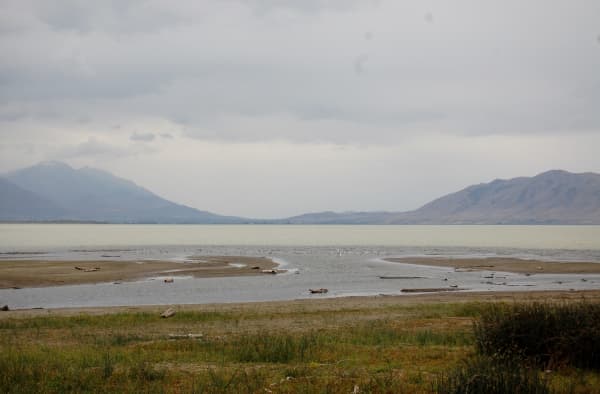
A lake this wide and this shallow has no refuge from wind. Every breeze that crosses it puts bottom sediment back into the water column, all over the lake at once. The turbidity is the lake's natural resting state. It was turbid when the Timpanogos people fished it, it was turbid before the valley was farmed, and it will be turbid after every restoration project finishes.
This has a consequence that inverts most people's intuition about algae.
Classic lake management says nutrients drive algal blooms: cut the phosphorus, cut the blooms. Long-standing analysis of Utah Lake argues that the lake's algal growth is instead limited mainly by light, because the suspended sediment blocks it — and that phosphorus loading would have to fall to a level the watershed cannot realistically reach before nutrients became the limiting factor at all.
Recent remote-sensing work points the same direction. In plain terms, the worst blooms in Utah Lake tend to form when the water gets clearer, not murkier.
So the folk logic — brown water means bad water, clear water means safe water — is close to backwards here. The days the lake looks its most inviting are, statistically, the days most likely to be carrying a bloom.
Harmful algal blooms, without the panic or the hand-waving
Utah Lake does get harmful algal blooms, primarily from cyanobacteria, mostly in late summer and early fall, and they are a genuine health issue for people and especially for dogs.
Utah's advisory system has three tiers, issued by local health departments against thresholds set by the state health department:
- Health Watch — the lowest level, a heads-up.
- Warning Advisory — a threshold has been exceeded; a bloom or waterborne pathogen is likely present. Avoid contact with the water, keep pets out, and discard the skin and guts of fish you keep.
- Danger Advisory — the bloom is very large or toxin levels are high. The waterbody is often temporarily closed.
Motorized boating and sailing are generally still considered safe under a watch or a warning. Paddleboarding, kayaking, swimming and wading are the activities that get restricted, because they put you in contact with the water.
Two things are worth holding in mind at once. First, blooms here are seasonal and expected — the Utah Lake Authority's own public education line is that if you know it is going to happen at the end of summer, you can plan around it rather than panic about it. Second, Utah Lake is not uniquely afflicted; a great many Utah waterbodies get advisories, and the lake gets disproportionate attention because it is large, adjacent to a metro area, and photogenic when it goes wrong.
Check the DEQ recreational water quality map before a contact-water trip. It carries live, site-specific status, and it is the only source that will be current on the day you go.
The carp story, which is the real restoration story
Common carp were introduced to Utah Lake by the U.S. government in the late 1800s as a food source. It worked far too well. By the early 2000s, carp made up roughly 91% of the total fish biomass in the lake.
The damage is mechanical rather than chemical. Carp root through bottom sediment to feed, and in doing so they rip out the submerged vegetation that juvenile native fish use as cover from predators. Remove the vegetation and you remove the nursery.
After research through the 2000s, a mechanical removal program began in September 2009, run through the June Sucker Recovery Implementation Program using commercial netting, seining and automated trap systems. The Utah Lake Authority reports more than 35 million pounds removed, against a program target of a 75% reduction in carp biomass, which was met.
Two recent developments are worth knowing:
- Carp are off the fish advisory. Historic advisories reflected legacy contamination in a long-lived bottom feeder, with runoff from the Geneva Steel mill in Vineyard a suspected source. The state's current advisory table lists Utah Lake only for channel catfish. Our Geneva Steel history covers the mill itself.
- There is a public bounty. The Utah Lake Authority runs a "Great Carp Hunt" in the spring — the 2026 edition ran April through June and paid a per-fish bounty plus a season-long grand prize. Amounts and dates change annually; check the authority's site rather than this page.
The Utah Lake Authority's stated goal is a lake free of carp and invasive plants such as phragmites, tamarisk and Russian olive.
The June sucker: a fish that exists in one place
The June sucker lives naturally in Utah Lake and the lower reaches of its tributaries, and nowhere else on earth. It is named for when it spawns.
It was listed as endangered in 1986, when the wild population was believed to be under a thousand fish, most of them old — the population was not recruiting, meaning young fish were not surviving to replace the adults. Carp had eliminated the cover they needed.
In 2021, after carp removal, hatchery refuges and habitat work, the U.S. Fish and Wildlife Service downlisted the June sucker from endangered to threatened. That is a rare direction of travel for a fish in the interior West, and it is the strongest single argument that the lake's trajectory is upward.
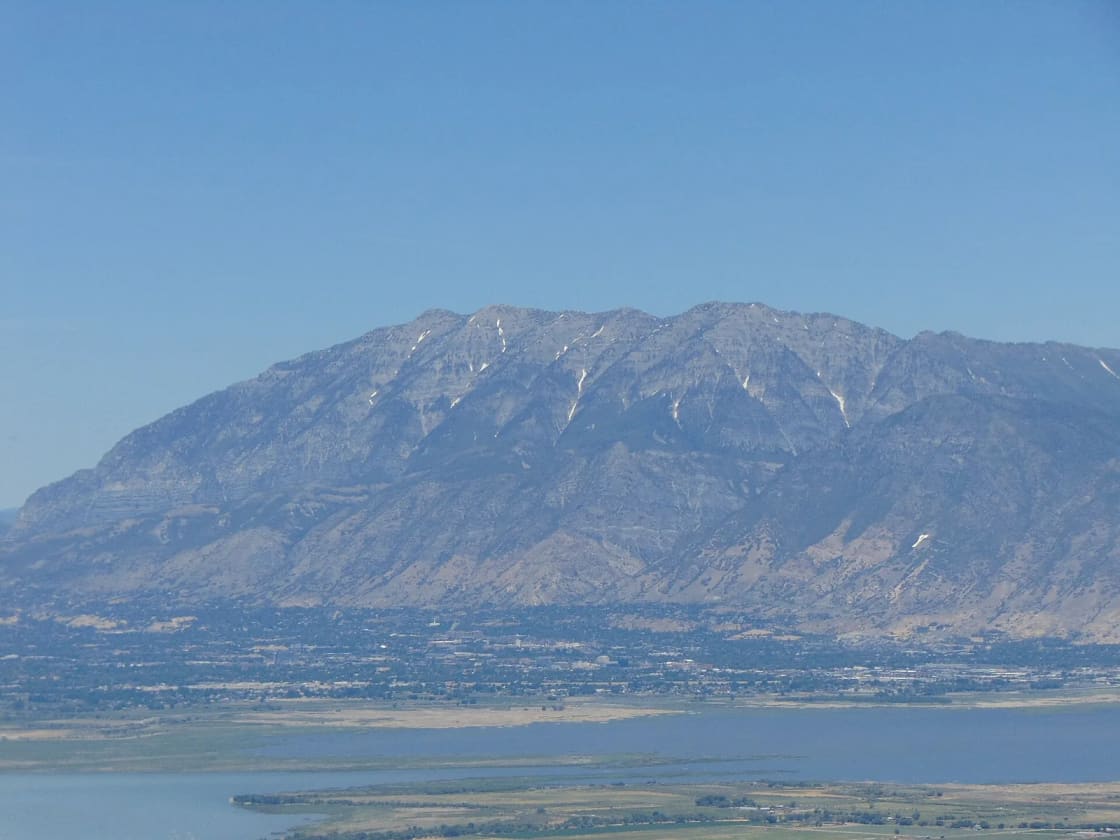
The habitat piece is now visible from the shore. The Provo River Delta Restoration Project rebuilt a functioning river-to-lake interface on the eastern shore, now open to the public with trails, a wildlife-viewing observation tower, non-motorized boat launches, fishing platforms and a new trailhead at Skipper Bay. The land it occupies was part of Utah Lake itself until a dike was built in the late 1920s. Cost figures differ by source: the project's own FAQ gives an estimate of about $51 million when construction began, while coverage at the opening reported $53 million.
Since 2015 a flow workgroup has purchased and delivered water specifically to keep the lower Provo River from going dry during the spawning run — which is to say the fish's survival now depends on water rights being bought on its behalf every year.
The island project, and why it failed
Between roughly 2018 and 2023 the dominant Utah Lake story was a proposal by a company called Lake Restoration Solutions to dredge the lakebed and build about 18,000 acres of artificial islands for housing, habitat and recreation, at a cost reported around $6 billion, framed as restoration.
The Utah Division of Forestry, Fire and State Lands rejected the permit application, concluding the project would not be in the best interests of the people of Utah. The Department of Natural Resources upheld it. The company sued the state, and separately sued a BYU ecology professor, Ben Abbott, who had been its most visible critic. A judge threw out much of the suit against the state in 2023. In June 2023 Lake Restoration Solutions announced it was dissolving and dropped its lawsuits.
The legal reason it failed is the useful one for a visitor to understand: the land under the water is public. Utah Lake's bed is sovereign land held under the public trust doctrine, which is a much higher bar than an ordinary permit. That is also why the Legislature responded by creating the Utah Lake Authority and a defined process for any future rehabilitation proposal, rather than leaving the next one to be argued from scratch.
Where to get on the water
Utah Lake State Park
The main access point and the most developed: a marina with boat ramps, a swimming beach, picnic pavilions, restrooms and paved shoreline paths, ten minutes from downtown Provo off Center Street. There is an entrance fee. This is the right default for a first visit, for boating, and for anyone who wants facilities.
Lincoln Beach
The south end of the lake, near Spanish Fork, on the bay side of the peninsula formed by the northern tip of West Mountain. Quieter, more agricultural in feel, and popular with anglers and people who would rather not share a ramp. Utah County has invested in the site in recent years — there is now a boat ramp, a floating dock at the jetty, a pavilion and a campground with hookups, alongside a sand beach and adjacent wetlands that make it one of the better birdwatching spots on the lake. It is also the site with the longest harmful-algal-bloom advisory history on Utah Lake, so check conditions before driving. Full detail in our Lincoln Beach guide.
Lindon Marina
North-east shore. Worth one note that trips people up constantly: its posted street address is on Vineyard Road in Vineyard, various platforms file it under Orem, and a state page has given a Lindon address. It is also privately owned rather than a city facility. Do not assume the city in the listing is the city you will drive to.
Sandy Beach and the west side
The western shore, toward Saratoga Springs and Eagle Mountain, gets the least traffic and the best light in the evening. Access is more informal; check conditions and ramp status before towing a boat.
The Provo River Delta and Skipper Bay
The newest access on the lake and the most interesting on foot: trails, an observation tower, non-motorized launches and fishing platforms, reached from Delta Gateway Park at 311 N Lakeshore Drive. A pedestrian bridge links the original channel trail to the Skipper Bay trail to make a 3.8-mile loop. Non-motorized boats only, and waterfowl hunting is permitted in signed areas in season, so read the signs.
What to do
Boating and water sports. The lake's size makes it the region's main powerboat and waterski venue, and mornings are calmest — a wide, shallow lake builds chop fast once the afternoon wind comes up.
Paddleboarding and kayaking. Excellent early, and increasingly good at the delta, which is sheltered. Our guide to kayaking and paddleboarding around Provo covers rentals and launch points. Watch the advisory status, since this is contact recreation.
Fishing. Year-round, for white bass, channel catfish, walleye, black bass and carp. The Old Provo Channel at the delta is now managed by the Division of Wildlife Resources as a community fishery, with aeration systems installed in 2023 and expanded in 2024 to hold dissolved oxygen up, and stocked sport fish. Our fishing guide has the rest of the valley's water.
Birding. Utah Lake is a serious stop on the Pacific Flyway, and the shallow, marshy fringes are the productive part. The new delta wetlands have added habitat that did not exist five years ago. Winter brings bald eagles.
Sunsets. The lake faces west into the Lake Mountains with nothing in the way, which is why it is the valley's default sunset spot. It is also, reliably, the least crowded good thing to do on a summer evening.
Season by season
Spring brings high water, the June sucker spawning run in the lower Provo River, and cold water temperatures. Wind is at its least predictable.
Summer is peak use and peak bloom risk. Go early in the day for calm water, and check advisories before contact recreation.
Fall is the lake's best-kept secret: warm water into early October, thin crowds, good fishing and migratory birds arriving.
Winter is quiet and occasionally spectacular. The lake sometimes freezes enough for ice fishing, but that varies enormously year to year and ice is never something to take on trust here. Eagles are the draw.
One standing caveat that applies in every season: Utah Lake's surface elevation moves a great deal between wet and dry years, which changes how far the water sits from a given parking area and whether a given ramp is usable. Below-average snowpack years show up on this lake faster than on a deep reservoir.
Practical tips
- Check the DEQ advisory map before any trip involving contact with the water, and again if you are bringing a dog.
- Mornings are calm, afternoons are choppy. Plan paddle trips for the first half of the day.
- Bring shade. There is very little natural shelter along most of the shoreline.
- Follow the boat inspection rules. Utah's mussel program requires stops at operating inspection stations; the rules are covered in our Deer Creek and Jordanelle guide.
- Do not judge the water by its color. Judge it by the current advisory.
Related guides
- Provo River Delta update: Old Provo Channel piers and ramps — what is usable at the delta right now
- Utah Lake History
- Kayaking and Paddleboarding in Provo
- Fishing Near Provo
- Provo River Parkway Trail
- Deer Creek and Jordanelle Reservoirs
- Geneva Steel: A History
- Bear Lake from Provo: Turquoise Water, Raspberry Shakes, Real Distance
- Where to Swim in Utah Valley: Pools, Splash Pads and Open Water
- Kid-Friendly Fishing Ponds in Utah County
- Antelope Island from Provo — the closer, freshwater lake people confuse it with
- Birdwatching at Utah Lake and the Provo River Delta
- Every Paved Trail in Utah Valley: Provo River Parkway to Murdock to the Jordan River, and How They Connect
- Utah Lake Algal-Bloom Season, Explained
Related Guides
- The Great Salt Lake and the Bonneville Salt Flats From Provo: Two White Landscapes, Two Very Different Days
- Boat, Jet-Ski and Paddle Rentals Near Provo
Frequently Asked Questions
Can you swim in Utah Lake?
Why is Utah Lake always so muddy?
Is Utah Lake polluted?
What is a harmful algal bloom advisory and what does each level mean?
What fish are in Utah Lake?
Why are they removing carp from Utah Lake?
Can you eat fish from Utah Lake?
What happened to the plan to build islands on Utah Lake?
Sources
The facts in this guide were checked against these sources. Hours, fees and rules change, so confirm anything time-sensitive with the source before you go. How we make Provo.com.
- Frequently Asked Questions, Utah Lake Authority (utahlake.gov). Checked October 12, 2026.
- Endangered and Threatened Wildlife and Plants; Reclassification of the Endangered June Sucker to Threatened, U.S. Fish and Wildlife Service (Federal Register). Checked October 12, 2026.
- Provo River Delta Restoration Project. Checked October 12, 2026.
- Utah fish consumption advisories, Utah Department of Environmental Quality. Checked October 12, 2026.