
Provo's outdoor reputation is built on trails, but the valley is unusually well supplied with flat water. Inside forty minutes of downtown you can reach a shallow inland sea, two mountain reservoirs on the same river, a motor-free alpine lake that is arguably the best beginner paddleboard water in the county, and a river with three different personalities along its length.
What almost no local guide tells you is that Utah attaches two legal requirements to paddling that catch visitors out, and that one of them applies even to an inflatable paddleboard bought that morning. Start there, because both are free or nearly free to satisfy and both are enforceable at the ramp.
Before you launch: two Utah rules that catch paddlers out
You need the mussel-aware boater course, even for a paddleboard
Utah's Division of Wildlife Resources puts it about as plainly as a state agency can: if it floats, it's a boat. All boaters, resident and nonresident alike, must complete the annual Utah mussel-aware boater education course and carry proof of completion in the vehicle they launch from — either a printed copy or the course saved in the DWR Hunting and Fishing app. DWR states explicitly that this covers human-powered kayaks, canoes and paddleboards, not only motorboats.
The distinction worth understanding is the money. Operators of motorized watercraft must also enroll in the state AIS program and pay an annual fee — $20 for Utah residents, $25 for nonresidents — and display a current-year decal. Paddlers take the course but do not pay that fee. So the requirement on a kayaker is a free online course, renewed each year, with proof carried to the water.
The point of all this is quagga mussels. Lake Powell is currently the only Utah water with a confirmed population, and the state's whole apparatus of inspection stations, dip tanks and mandatory dry times exists to keep it that way. If you have been on Lake Powell or arrived from out of state within the past 30 days, there are decontamination requirements before you launch anywhere in Utah. For everyone else the practical obligation is the course, stopping at any inspection station that is operating, and cleaning, draining and drying your gear when you leave the water.
Life jackets: carried by everyone, worn by children
Utah requires a wearable personal flotation device aboard for every person, and children 12 and under must wear one while underway. Rental shops include PFDs, and it is worth knowing which of those two rules you are satisfying: an adult who stows a life jacket under the bungees is legal, and an adult who wears it is safer.
On a paddleboard the calculation is different from a boat, because the failure mode is different. You are not going to fall out of a canoe on a calm morning; you are absolutely going to come off a board, probably more than once, and on a mountain reservoir the water that felt pleasant from the shore is cold enough to take your breath away. Wear it, or at minimum use a coiled leash and a belt-pack inflatable.
Where to paddle
Utah Lake — the closest, the biggest, the most misunderstood
Ten minutes from downtown Provo and roughly 150 square miles (about 96,000 acres) of surface, Utah Lake is the default and the one people have the most opinions about. It is extremely shallow — an average depth of about nine to ten feet across the whole thing — which has two consequences for a paddler. It warms early in the season, so it is usable weeks before the reservoirs are pleasant. And it has no refuge from wind: every breeze crosses the entire lake at once and puts sediment back into the water column, which is why it looks the way it looks.
Utah Lake State Park has the easiest launch and the most parking. Lincoln Beach at the south end is the quieter option and works well for carrying a board down to the water. For everything about the lake's ecology, the carp removal program and the June sucker recovery, see our Utah Lake guide.
The practical rule is time of day. Morning is glass and afternoon is chop, reliably, and the wind on a lake this wide builds a short steep wave that is unpleasant on a paddleboard. If you have one window, take the early one.
Tibble Fork Reservoir — the best water in the county to learn on
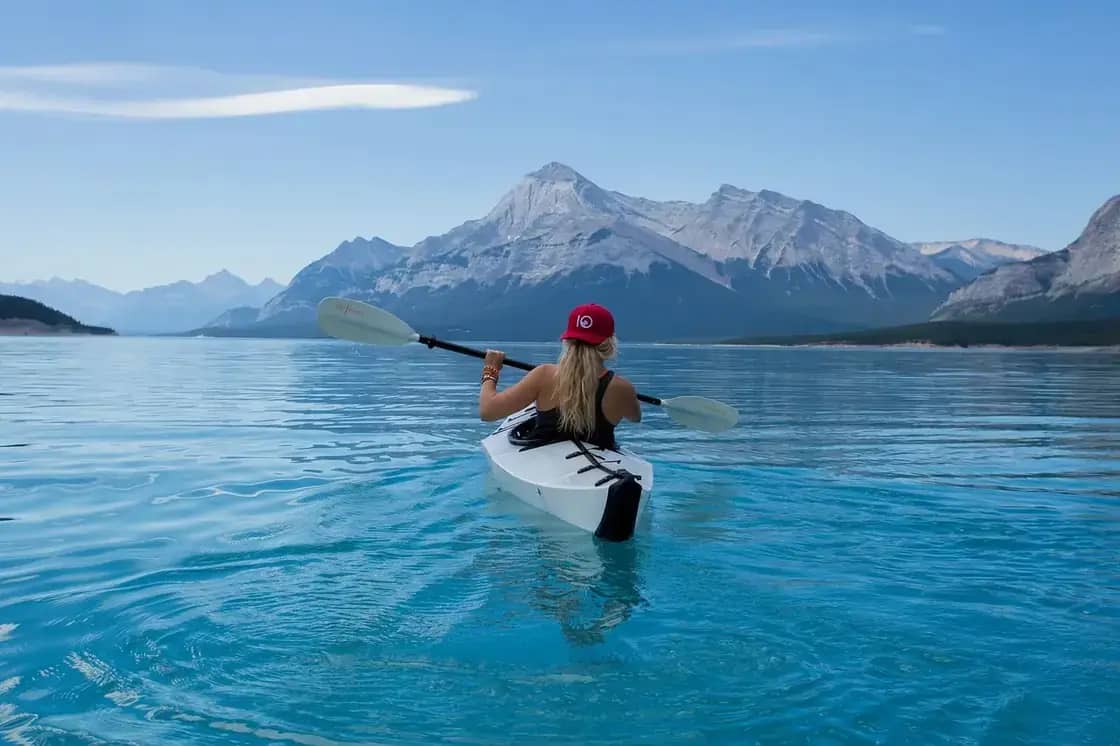
Up American Fork Canyon, small, ringed by mountains, and — the part that matters — closed to motorized use entirely. The Forest Service prohibits motors on the reservoir and on its banks, so kayaks, canoes, paddleboards and rafts are the whole of the traffic. There is a launch that lets you get a board onto the water without wading in.
No motors means no wake, no traffic to watch for, and no engine noise, which is exactly the environment a first-time paddleboarder needs. Our Tibble Fork guide covers the access road, the fee situation and the 2023 state health consultation on sediment metals, which concluded that ordinary recreation there — swimming, paddleboarding, kayaking, beachcombing — was not expected to harm people's health.
The catch is temperature. This is snowmelt held at altitude and it stays cold long after the valley is baking.
Deer Creek Reservoir — plan around the wind, not the weather
Twenty-five minutes up Provo Canyon, dramatically more scenic than Utah Lake, and built around open-water boating. Deer Creek State Park has the ramps and shoreline access, and day-use fees apply.
Deer Creek runs a daily wind cycle that sorts the whole reservoir by time of day: glassy in the morning, choppy in the afternoon. That is not a weather forecast, it is a pattern, and it is why windsurfers and wave-runners show up in the afternoon and waterskiers go early. For a paddler it means the same thing it means for a waterskier — go in the morning. Turning up at two on a Saturday hoping for mirror water is picking the wrong half of the day.
Motorboats share the water here, so stay near the edges and be visible. Our Deer Creek and Jordanelle guide breaks down which reservoir suits which activity in more detail.
Jordanelle Reservoir — bigger, quieter, and the better place to learn
Thirty-five minutes out, upstream of Deer Creek and higher. Jordanelle is larger and generally calmer, and it is split into three separate recreation areas that function almost as different parks. Note that plenty of still-live listings describe only two — Ross Creek is the newer addition, and Utah State Parks' own site now lists three.
For paddling specifically, Jordanelle has a substantial wake-free zone, which makes it a better learning environment than Deer Creek despite being further from Provo. If you are choosing between the two reservoirs purely to paddle, this is the one.
The Provo River — three rivers wearing one name
The river changes character completely along its length, and the name does not warn you.
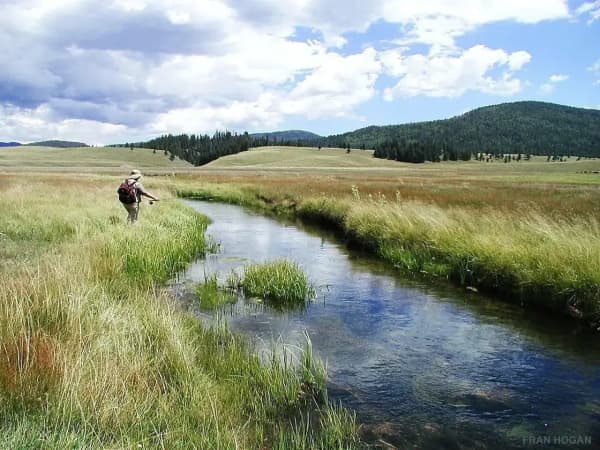
The Middle Provo, between Jordanelle and Deer Creek, runs through Heber Valley meadow and ranchland. It is gentle, scenic, and the section where the access rules below matter most.
Provo Canyon, below Deer Creek, is the steeper water — Class II to III in a good spring runoff, roughly May and June, and a serious proposition when it is up. Commercial rafting operators run it in season. This is not casual paddleboard water.
Through Provo itself, the river is Class I and mellow, with wadeable stretches. The Provo River Parkway runs alongside for much of it, which makes shuttling easy.
Flow is everything on all three. Spring runoff brings the highest water; by late summer some sections are too low to float at all.
The rule nobody publishes: you may float it, you may not stand up in it
This is the single most useful thing on this page for anyone planning to paddle the Provo River, and Utah's most-litigated version of the question happened on this exact river.
Under H.B. 141, the Public Waters Access Act of 2010, which remains in force, the public has a right to float on public water even where it crosses private land — and specifically does not have a right to walk on a privately owned streambed. Utah's Division of Wildlife Resources names kayakers and tubers alongside anglers in describing who the restriction covers.
What the law allows, on DWR's own account:
- Floating on the surface, including over private land that is closed to trespass
- Fishing while floating
- Incidentally touching private bed as required for safe passage
- Portaging around a dangerous obstruction
What it requires:
- The water must be sufficient in width, depth and flow to float your vessel
- You must keep moving. You and your vessel move with the current — no anchoring, no stopping
- You must enter and exit at a public access point or with the landowner's permission
Landowners close property by posting notice, and irrigated pasture, cultivated land and certain fenced areas are presumed closed even without a sign. Violations carry trespass exposure.
The case that settled this ran for more than a decade on a stretch of the upper Provo through private ranch land in Wasatch County, between the Uintas and Jordanelle. The Utah Stream Access Coalition argued the restriction was unconstitutional; in 2023 the Utah Supreme Court upheld the Act, affirming a 2021 district court ruling. A separate 2017 decision granted recreational access on a segment of the upper Weber River on historic-navigability grounds, which is why you will see confident and contradictory summaries online — they are describing two different rivers under two different theories.
For a paddler the operating rule is simple enough to remember: through, not out. Put in on public ground, keep moving, take out on public ground.
Utah Lake, algal blooms, and why paddlers need a different answer than boaters
Most write-ups handle this with a shrug — water quality has improved, most people are fine. That is not good enough for the two activities this page is about, because paddling is contact recreation and motorboating is not.
Utah issues harmful algal bloom advisories in three tiers through local health departments, using thresholds set by the state health department: a Health Watch, a Warning Advisory, and a Danger Advisory, the last of which often comes with a temporary closure. The distinction that matters here is what each tier says about activity. Under a watch or a warning, motorized boating and sailing are generally still considered safe while contact recreation is not.
A waterskier stays out of the water by design. A paddleboarder falls in. So an advisory that leaves the lake open for boats is an advisory that should change your plans — and if you are checking a single thing before driving to Utah Lake in late summer, check the current advisory status rather than the forecast.
And the folk rule is close to backwards. Utah Lake's murk is natural turbidity from wind stirring a shallow bed, not evidence of contamination. Analysis of the lake has long argued its algal growth is limited mainly by light, because suspended sediment blocks it. A study published in January 2026 examining six years of satellite imagery found that 94% of intense bloom events occurred when turbidity was below 120 Nephelometric Turbidity Units — that is, the worst blooms tend to form when the water gets clearer. The day the lake looks its most inviting is, statistically, among the likelier days to be carrying a bloom.
Keep dogs out of the water under an advisory, and rinse off afterward.
Rentals and gear
BYU Outdoors Unlimited is the cheapest route for anyone with a campus connection, renting kayaks, canoes and paddleboards at student rates. Inventory is limited and summer weekends go early, so reserve rather than turning up.
Local outfitters in Provo and Orem rent by the hour and the day, and some deliver to the water. Rates move with the season and with demand, and inflatable paddleboards have gotten cheap enough that a shop's day rate and a low-end purchase price are no longer far apart — worth pricing both if you expect to go more than a few times. Call for current rates rather than trusting a number in an article, including this one.
Seasonal rentals appear at some state park concessions in peak summer, but treat them as a bonus rather than a plan. For boats and jet skis as well as paddle craft, our guide to boat, jet-ski and paddle rentals covers the marina concessions at Utah Lake, Deer Creek and Jordanelle.
What you need beyond the boat: a PFD, a leash for a paddleboard, a dry bag, water shoes, and more sun protection than you think. Water reflects UV and you will burn faster than on a trail. For river paddling in cold months, a spray skirt and appropriate layers.
Season, temperature and the thing that hurts people
Utah Lake is usable earliest because it is shallow and warms fast. The canyon reservoirs lag by weeks and stay cold all summer — Tibble Fork especially. The river peaks with runoff in May and June and drops through late summer.
Cold water shock is the real hazard on this list, not the mussels and not the blooms. Snowmelt held at altitude affects strong swimmers exactly as readily as weak ones; the involuntary gasp on immersion is a reflex, not a fitness problem. There are no lifeguards on any of these waters. Ease in rather than jumping, keep children within arm's reach, and put life jackets on paddlers rather than stowing them.
Wind is the other one. On every water here the pattern is the same — mornings are calmer — and on Utah Lake and Deer Creek in particular the afternoon change is reliable enough to plan around.
The water level is somebody's decision, and that somebody cannot be sued for it
Everything about paddling the Provo depends on flow, and flow on this river is not weather. It is a release schedule. Which raises a question worth having a clear answer to: if a release changes conditions under you, who is responsible?
Almost certainly nobody, and the reason is statutory rather than accidental.
Utah's Governmental Immunity Act — Title 63G, Chapter 7 of the Utah Code — starts from immunity. Utah Code § 63G-7-101 provides that a governmental entity and its employees are immune from suit unless the chapter expressly waives it, and that the immunity returns where the injury arises out of one of the conditions the Act specifically retains.
Utah Code § 63G-7-201 sets out those retained conditions, and three of them sit directly over a managed river:
- the management of flood waters, earthquakes, or natural disasters;
- the construction, repair, or operation of flood or storm systems; and
- the exercise or performance, or the failure to exercise or perform, any function under Title 73, Chapter 10 — the chapter governing the Board of Water Resources and the Division of Water Resources.
Add the general retained immunity for the exercise or performance of a discretionary function, whether or not the discretion is abused, and a decision about how much water to send down a canyon is about as thoroughly insulated as a decision can be in Utah law.
The same section also retains immunity for a latent dangerous or defective condition of a dam or reservoir, which is the counterpart to the waiver in Utah Code § 63G-7-301 for a defective, unsafe, or dangerous condition of a dam, reservoir or other public improvement. The visible defect can be sued over; the hidden one cannot. For a paddler, the practical translation is that a strainer, a diversion structure or a submerged remnant is not something anyone owes you a warning about.
What that means on the water
It means the flow information you can find is information, not a warranty, and nobody is on the hook for the gap between what the gauge said this morning and what the river is doing when you get there.
Three habits follow from that, and experienced paddlers here already have them:
- Check the release, not just the forecast. Storage decisions upstream move this river far more than rainfall does, and they move it on a schedule that has nothing to do with your plans.
- Re-read the water at the put-in every single time. A run you know at one level is a different run at another, and the features that matter to a paddleboard change with a few hundred cubic feet per second.
- Treat every diversion, headgate and bridge pier as unmarked. They are.
If something does go wrong
Utah Code § 63G-7-402 bars a claim against a governmental entity unless a written notice of claim is filed within one year after the claim arises, and Utah Code § 63G-7-401 names the officer it must be delivered to. Utah Code § 63G-7-403 gives the entity sixty days to acknowledge, prevents you filing suit for sixty days, and requires the action to be commenced within two years of the claim arising. Utah Code § 63G-7-501 bars the whole thing from small claims court, and Utah Code § 63G-7-603 bars punitive damages against a governmental entity entirely.
None of which should put anyone off the river. It should reframe what the river is: a piece of managed infrastructure that happens to be beautiful, run by people who owe you no duty about how they run it.
Related Guides
- Old Provo Channel boat ramps: open, edges unfinished — the two newest non-motorized launches
- Utah Lake Guide
- Deer Creek and Jordanelle Reservoirs
- Tibble Fork Reservoir
- Provo River Parkway
- Fishing Near Provo
- Summer Activities in Provo
- Lincoln Beach: Utah Lake's Quiet South Shore, and What to Check Before You Drive
- 25 Best Date Night Activities in Utah Valley (2026)
- Where to Swim in Utah Valley: Pools, Splash Pads and Open Water
- Payson Lakes and Payson Canyon: The Complete Guide
- Utah Lake Algal-Bloom Season, Explained
Last updated: August 2026. Course requirements, fees, advisories and river flows all change — verify with the Utah Division of Wildlife Resources and the managing agency before you launch.
Frequently Asked Questions
Where can I kayak or paddleboard near Provo?
Do I need a permit or a course to paddle in Utah?
Do I need a life jacket for kayaking in Utah?
Can I paddle the Provo River where it crosses private land?
Is it safe to paddle Utah Lake during an algal bloom advisory?
Does clear water on Utah Lake mean it is safe?
Where is the best place to learn to paddleboard near Provo?
When is paddling season near Provo?
Sources
The facts in this guide were checked against these sources. Hours, fees and rules change, so confirm anything time-sensitive with the source before you go. How we make Provo.com.
- Aquatic Invasive Species, Utah DWR. Checked October 12, 2026.
- Boating in Utah in 2026?, Utah DWR. Checked October 12, 2026.
- Utah Supreme Court Rules Stream Access Subject to Private Property Rights, Utah Attorney General. Checked October 12, 2026.
- Frequently Asked Questions, Utah Lake Authority. Checked October 12, 2026.
- Utah Code 63G-7 (Governmental Immunity Act) sections 101, 301, 401, 402, 403, Utah Legislature. Checked October 12, 2026.