
The wedding cake is doing two jobs at once: it's a centerpiece guests photograph and a dessert they eat, and those two jobs don't always want the same thing. Picking one is different from choosing a birthday cake, and in Utah Valley — where the reception itself often revolves around dessert and mingling rather than a seated dinner — the cake carries even more weight than usual. Get the decisions right and you'll have a show-stopper that also feeds a big crowd without a big invoice.
The valley has a deep bench of cake talent, from century-old bakeries to boutique cake artists working out of licensed home kitchens, so the "where" isn't the hard part. The hard part is the wedding-specific stuff national checklists skip: how much cake you need, the cutting-cake trick that saves the most money, how buttercream behaves in a hot July, how tastings and delivery work, and how far ahead to order. This guide walks through all of it, and points you toward local bakers to start your search.
Tiered Cake, Cutting Cake, or Both?
Here's the most important cake decision, and the one that saves the most money. A large tiered cake sized to serve every guest is expensive, because tiers, structure, and decoration cost far more per slice than plain cake. For a big reception, that math gets painful fast.
The local solution is the cutting cake plus sheet cakes. You order a small, gorgeous tiered cake for the display table and the cutting photo, and several plain sheet cakes — same flavors — kept in the kitchen or a back table. Guests are served from the sheet cakes; the beautiful tiered cake stays intact as the centerpiece. Nobody can tell, the photos look identical to a giant cake, and you've paid decoration prices on only a fraction of the servings.
Because so many Utah Valley receptions run open-house style and feed a large crowd, this trick is close to standard practice here, and it's the first thing to ask any baker about. If your wedding is small and seated, a single tiered cake sized to serve everyone may make more sense — but for anything over roughly a hundred guests, the cutting-cake-plus-sheets approach is usually the smarter buy.
How Much Cake Do You Actually Need?
Servings math trips people up. Wedding-cake slices are cut smaller than a birthday-cake slice, so a cake "serves 100" at wedding-portion sizes. But if your reception is dessert-forward with several other sweets on the table, not every guest takes cake — many bakers and planners suggest sizing for around 75 to 100 percent of your guest count depending on how much other dessert you're offering. For an open-house reception, where guests come and go over a few hours, our open-house reception guide walks through the attendance math.
The format matters, too. A seated dinner where cake is the dessert needs a full serving for everyone. A dessert-reception with cookies, a candy table, and other treats can size the cake down, since guests graze. Tell your baker your guest count, your reception style, and what else will be on the dessert table, and let them size it — over-ordering cake is one of the more common and avoidable wedding overspends.
Buttercream vs. Fondant (and the Utah Heat Factor)
The icing choice is part taste, part engineering. Buttercream — soft, rich, and what most people prefer to eat — is the popular default. Its weakness is heat: a hot outdoor Utah July or August afternoon can soften buttercream, so a summer outdoor reception needs a baker who plans for it with a sturdier recipe, a shaded display, and a cake that isn't set out hours early.
Fondant — a smooth, rolled icing — holds crisp edges, supports elaborate designs, and stands up to heat far better, which is why it shows up on the most sculptural cakes. The trade-off is flavor; plenty of guests peel it off, and it costs more. A frequent compromise is a buttercream cake with fondant accents — the taste of buttercream with fondant only where sharp detail is needed.
The practical move: tell your baker whether your reception is indoors or outdoors and in which month, and let them steer the recipe. A cake artist who works this valley knows exactly how a July estate wedding differs from a February ballroom.
Tastings: How They Work
Do a tasting before you commit — it's where you lock flavors and design, and it's fun. Most local bakers charge a small tasting fee that's often credited toward your order if you book, and many offer a mix-and-match format: a few cake flavors, a few fillings, and a couple of buttercreams in separate containers so you can build combinations. Some smaller bakers run discounted monthly tasting-box days as a lower-cost way to sample.
Bring your color palette, a few inspiration images, and your guest count. Ask about flavor combinations that travel and hold well, and don't be afraid to request a flavor you don't see on the standard menu — many custom bakers will accommodate it. The tasting is also your read on the baker: responsiveness, flexibility, and whether they listen are the same traits you'll rely on as the date approaches.
Cake Styles: From Classic to Trending
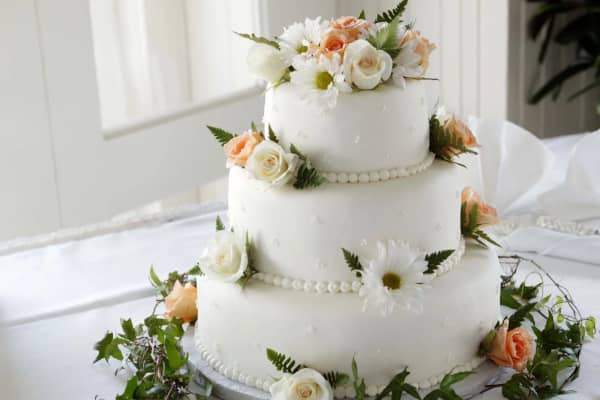
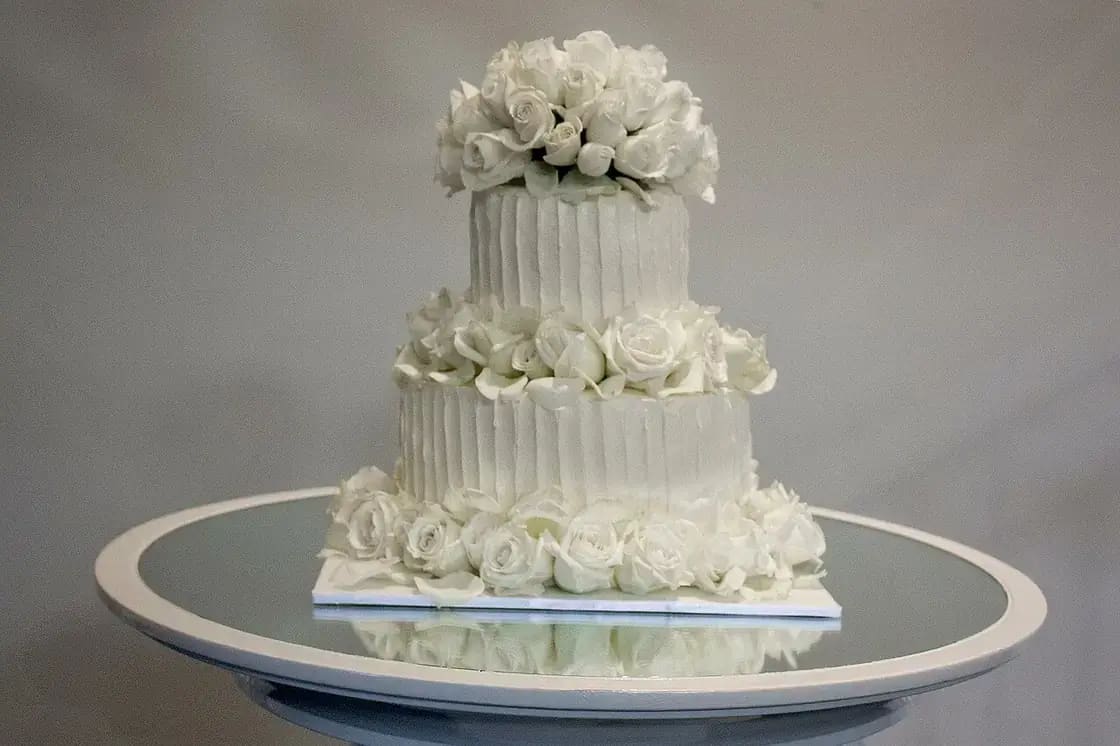
Knowing the look you want makes the tasting and the quote go faster, since design drives a big share of the price. A few styles dominate right now. Classic tiered cakes — smooth, elegant, often white or ivory with clean lines — never go out of style and photograph beautifully against any venue. Textured buttercream finishes, from combed and swept to sculptural, have surged because they look artful without the cost of fondant detailing. Naked and semi-naked cakes, with little or no outer icing and fresh fruit or flowers between the layers, suit garden and rustic weddings and often cost less because there's less decoration.
On the more decorative end, pressed-flower cakes, hand-painted designs, and vintage-inspired piped detailing (the retro lambeth style) have all come back into fashion, and each adds to the price and the lead time. Fresh flowers are a common, affordable way to elevate a simpler cake — coordinate them with your florist so the blooms are food-safe and match your palette. Bring a few reference images to the tasting, but stay open: an experienced cake artist can often suggest a look that hits your vibe for less.
Delivery and On-Site Assembly
Tiered cakes travel badly, especially in summer heat, so delivery and on-site assembly are worth paying for rather than transporting a stacked cake in your own car. Most bakers deliver for a fee and assemble the tiers at the venue, which keeps the cake clean, level, and intact — and puts responsibility for any travel damage on the professional, not on you.
Confirm the logistics: delivery cost (it can rise with distance and venue), what time they'll arrive relative to when photos and guests begin, and where the cake will be displayed and kept cool until served. Coordinate with your venue on the display table and any refrigeration, and if you're doing the cutting-cake-plus-sheets approach, make sure someone — the caterer or venue staff — knows to cut and serve the sheet cakes from the back. That hand-off is a small detail that occasionally gets dropped. It's also the kind of thing a day-of coordinator exists to catch, which is why day-of coordination is the most popular level of help locally — the cake arriving is one problem, someone owning it once it's there is another.
Custom Lead Times
Order a custom wedding cake four to eight weeks out at a minimum, and earlier for peak-season Saturdays. The most sought-after local cake artists can book many months — occasionally a year or more — ahead for prime May, June, September, and October dates, so if you have a specific baker in mind, reach out early. Rush orders are sometimes possible for a fee if a baker isn't fully booked, but they limit design options and aren't guaranteed, especially close to a peak weekend. Lock the baker after your tasting, get the design and delivery details in a written order, and you've removed one of the easier things to leave too late.
Beyond Cake: The Dessert-Table Culture
Utah Valley's dessert-reception tradition means the cake often shares the table with a spread of other sweets, and leaning into that can be both delicious and economical. Popular additions include cupcakes (easy to serve, no cutting), cookies and cookie bars, mini cheesecakes, pies, cake pops, chocolate-dipped treats, churros, and donut walls. Some couples skip a traditional tiered cake entirely in favor of a dessert bar, keeping only a small cutting cake for the photo.
A dessert table also solves variety and dietary needs at once — a few flavors and a dedicated allergen-friendly option give every guest something. Many local bakers and dessert caterers specialize in exactly this, and it pairs naturally with the open-house reception format. If you go this route, size the cake down accordingly, and think about presentation — a well-styled dessert table is a photo moment of its own.
Two local flavors worth knowing: pie has a genuine following in Utah, and a pie table (or a mix of cake and pie) is a warm, slightly nostalgic option that plays especially well for fall weddings. And a growing number of couples add a groom's cake — a second, smaller cake in a flavor or theme that reflects the groom's personality, often a chocolate or a playful design that contrasts the main cake. Neither is required, but both are easy, affordable ways to add character to the dessert spread, and a dessert caterer can usually fold them into a single order alongside the cake.
The Cutting Moment: Toppers, Stands, and Tradition
A few small details finish the cake and are easy to leave until too late. Toppers range from a classic monogram or fresh flowers to a custom figurine or a meaningful keepsake — decide early if you want something custom-made, since those take time. A cake stand changes the whole presentation; many bakers provide one, but confirm whether it's included or rented and who returns it. And think about the cutting itself: it's a photographed moment, so position the display table where your photographer can get a clean shot with good light, and have your baker or venue tell you where to make the first cut so the cake stays camera-ready for any remaining photos.
Some couples also keep the top tier to freeze for their first anniversary — a longstanding tradition. If that's you, tell the baker so they build a tier suited to freezing, and plan for someone to box and transport it at the end of the night. None of these are essential, but they're the finishing touches that make the cake feel like yours.
What Wedding Cake Costs in Utah Valley
Custom wedding cakes are usually priced per serving, commonly somewhere around $4 to $10 a slice with a local baker, with fondant, sugar flowers, hand-painting, and multiple tiers pushing toward and past the top of that range. A modest tiered cake for a smaller wedding might land in the low hundreds; a large, elaborate cake for a big reception can reach four figures. Plain sheet cakes cost far less per serving, which is exactly why the cutting-cake-plus-sheets approach saves so much for a big crowd.
Budget separately for the tasting fee (often credited to your order) and for delivery and setup. As with every wedding vendor, prices move constantly and vary by design and season — treat these as a starting point and get a current, itemized quote directly. For bakers' published tier, serving and sheet-cake prices, see our wedding cake prices guide.
Local Bakers to Start From
Utah Valley's cake market is deep, so treat this as a starting point rather than a ranking. Long-running and well-regarded options include Provo Bakery (a Provo institution baking for over a century, with wedding cakes among its offerings); Bucko Bakery (an Orem cake artist specializing in custom buttercream wedding cakes, with tastings and venue delivery); Cakes by Camryn (a Provo boutique bakery); Ambrosial Cakes (a Utah Valley baker known for affordability); Say it With Cake Bakery (custom cakes with delivery across Orem, Provo, Lindon, and Vineyard); and dedicated cake designers such as The Mighty Baker, For the Sweet (a Provo wedding-cake and dessert bakery), and Sweet & Dulce Bakery (custom cakes serving Utah County), among many others.
Browse portfolios, book a tasting, confirm current pricing and availability directly, and remember that any paid listings in our vendor directory are advertisements — your own tasting and comparison are what should drive the choice.
Planning the Rest of the Day
For the wider local cake and dessert landscape — the shops, custom-cake artists, and dessert spots across the valley — our guide to the best desserts and bakeries in Provo and Orem covers the full field, and our Provo and Orem catering guide handles the rest of the reception food. To see where cake fits in the overall numbers, our Utah Valley wedding budget guide breaks down what a local wedding really costs — including the sheet-cake economy — and our month-by-month planning timeline maps when to order each piece.
For the rest of the vendors — flowers, photography, music, and formalwear — our Utah Valley wedding vendor directory covers each category with booking windows and the questions worth asking, and our wedding florists guide covers the cake flowers that finish the display. The cake table is also a photographed moment — our wedding photographer guide covers finding someone who will catch it.
The cake is the rare vendor where the smart budget move and the beautiful result don't conflict. Order a small stunning tiered cake for the photos, serve sheet cakes to the crowd, plan for the heat if you're outdoors, and book the tasting early — and you'll get the centerpiece and the dessert without overpaying for either.
Deposits, Dates and What a Cake Contract Is Really Buying
A wedding cake sits in an awkward legal category that couples rarely think about until something goes wrong. You are not buying a cake off a shelf. You are reserving a specific baker's capacity on a specific Saturday, then commissioning a perishable object made to your specification and delivered to a place and time that cannot move. Nearly every surprising clause in a cake contract follows from those facts.
What the deposit is for. Couples read a deposit as a down payment on the cake, refundable in principle if the cake is never made. Bakers price it as payment for the date — the Saturday they have now stopped selling to anyone else. Peak Utah Valley Saturdays in June, September and October are a finite inventory, and a cancellation three weeks out is unlikely to be resold. That is why cake deposits are commonly non-refundable while the balance is not, and why the refundable portion usually shrinks as the date approaches.
Whether a particular clause holds up is a fact-specific question. A forfeiture that represents a reasonable estimate of what the baker loses is treated very differently from one that looks like a punishment for canceling. The practical version for a couple: a deposit sized to the real cost of a lost Saturday is normal and defensible; a clause taking the full contract price for a cancellation six months out is worth questioning before you sign, not after.
Custom goods do not come with a change-of-mind right. Once a design is agreed and the baker has ordered ingredients, blocked the schedule and possibly built sugar work in advance, you have commissioned something that exists for you and nobody else. There is no general right to return it. Wedding cakes are also perishable, which forecloses the usual remedies — a cake cannot be restocked.
Read the substitution and delivery terms, because both matter more than the flavor. Ask specifically:
- Delivery and setup — who transports it, who assembles tiers on site, what time they arrive, and what happens if the venue is not ready.
- Who owns the risk in transit, and whether the contract limits liability to a refund of the cake price. Summer heat is a real Utah Valley variable and a buttercream cake in a hot car is a foreseeable failure.
- Substitution rights — whether the baker may vary decorative elements, flowers, or a specific ingredient if supply fails, and whether they will tell you first.
- Rentals — cake stands and separator plates are frequently the baker's property with a deposit and a return deadline attached, and that deposit is the one most commonly forgotten in the week after a wedding.
- What happens if the baker cannot perform — illness, an oven failure, a family emergency. A refund is the minimum. Ask whether they have a network to cover an emergency, which established bakers usually do.
Force majeure clauses are worth reading now. Most event contracts carry one, and their scope varies enormously — some cover only true impossibility, others cover government restrictions, venue closure or supply failure, and some entitle the vendor to keep everything paid. Ask what happens if the wedding is postponed rather than canceled: the fair and increasingly common answer is that the deposit transfers to a new date subject to availability, which is a very different outcome from forfeiting it.
None of this is a reason for suspicion. Utah Valley's cake market is deep and mostly staffed by people who take the day as seriously as you do. It is a reason to read the two pages you are handed before signing them. This is general information rather than legal advice; terms vary by baker.
Related Guides
- Utah Valley Bridal Expos: How to Work One Without Getting Worked
- Wedding Videographers in Utah Valley: Films, Costs & Booking (2026)
- Wedding DJs and Bands in Utah Valley: Music & Entertainment (2026)
- Wedding Hair and Makeup in Utah Valley: A Bride's Guide (2026)
- Wedding Dress Shopping in Utah Valley: Bridal Shops, Modest Gowns & Alterations (2026)
Frequently Asked Questions
How much does a wedding cake cost in Utah Valley?
How far in advance should you order a wedding cake?
What is the cutting-cake-and-sheet-cake trick?
Should a Utah Valley wedding cake be buttercream or fondant?
Can you get gluten-free, vegan, or allergen-friendly wedding cake in Utah Valley?
Are wedding cake deposits refundable?
Can I cancel or change my wedding cake order?
What should I check in a wedding cake contract besides the price?
Sources
The facts in this guide were checked against these sources. Hours, fees and rules change, so confirm anything time-sensitive with the source before you go. How we make Provo.com.
- Cottage Food Production, Utah Department of Agriculture and Food. Checked October 12, 2026.
- Home Consumption and Homemade Food Act, Utah Department of Agriculture and Food. Checked October 12, 2026.