
Utah Valley may be the best place in the country to get married without emptying your savings. The same things that make it one of the most wedding-dense corners of America — two big universities, a young median age, and a culture that celebrates marriage — have also built a deep, competitive vendor market and a set of local customs that keep costs down. Couples here regularly host beautiful, well-attended weddings for a fraction of what the same day would cost in New Jersey or California.
That doesn't mean it's free, and it doesn't mean the sticker shock isn't real when the quotes start landing. This guide lays out what a wedding costs in Provo, Orem, and the rest of the valley in 2026 — the honest numbers, where the money goes, why Utah runs cheaper than most of the country, and how to spend less without ending up with a day that looks like you spent less. A quick note before the numbers: wedding pricing moves constantly, and every figure below is a reported starting point drawn from recent local and national data, not a quote. Season, day of the week, and guest count change everything, so treat these as a map and confirm current pricing directly with each vendor.
The honest numbers: what a Utah wedding really costs
Start with the national picture, because it's the anchor everyone compares against. The Knot's 2026 Real Weddings Study, based on more than 10,000 couples married in 2025, put the average American wedding at $34,200, with an average guest count of 117. In the most expensive states the same celebration costs far more: The Knot puts New Jersey at $57,000, New York at $49,000 and Massachusetts at $45,000.
Utah is consistently one of the least expensive states in the country to marry. The same study put the average Utah ceremony and reception at $18,000, roughly half the national figure.
Keep in mind that an average is easy to pull upward. Utah has become a magnet for luxury and destination weddings, and a small number of very expensive celebrations raise the average without changing what a typical wedding costs. So if you're a normal couple planning a normal Utah Valley wedding, plenty of weddings come in well below even that $18,000 figure.
Narrowing to Utah Valley specifically, local venues that publish real pricing describe the landscape for a typical 140-to-170-guest wedding roughly like this: budget-conscious couples tend to spend somewhere in the $13,000 to $18,000 range all in, mid-range weddings run about $19,000 to $30,000, and premium or destination-style celebrations climb from $33,000 into the $50,000s and beyond. Across all of them, one rule holds: venue, catering, and photography together will eat up more than half your total, which is exactly why those three decisions matter most and should come first.
Why Utah Valley weddings cost less
It's worth understanding why the numbers here are lower, because the reasons point straight at where you can save.
Couples marry younger and plan shorter engagements. A shorter runway means fewer months for the budget to creep, and younger couples tend to lean on family, friends, and DIY rather than buying every service.
Many receptions are alcohol-free. In much of the country, the bar is one of the single largest line items on a wedding invoice. In Utah Valley, a large share of receptions serve no alcohol at all, which quietly erases a cost that can run into the thousands elsewhere.
The reception model itself is different — and cheaper per head. The classic Utah Valley reception is often a larger, open-house-style event built around dessert, punch, a receiving line, and conversation, rather than a smaller sit-down dinner with assigned seating and a plated meal for every guest. Counterintuitively, this keeps costs down even though the guest lists are big: feeding two hundred people cake and treats at an open house costs a fraction of plating dinner for a hundred. The per-guest number is what does the work.
The vendor market is deep and competitive. Utah has the highest number of weddings per capita of any state, so there are a lot of florists, caterers, photographers, and bakers competing for that business, which keeps prices moderate across the board.
The climate does you a favor. Utah's dry summers mean outdoor weddings rarely need the expensive tent-and-rain-plan insurance that soggier regions build into every budget.
Off-peak dates are common and normal here. Weekday and off-season weddings carry no stigma in Utah Valley — they're everywhere — and venues routinely discount them 20 to 30 percent.
A realistic budget, by tier
Here's how the money tends to shake out at different spending levels for a Utah Valley wedding of average size. These are composite ranges, not quotes, and the right tier depends entirely on your guest count and priorities.
Under about $8,000 — the DIY and true-budget wedding. Entirely doable here, and common. The playbook: a low-cost or no-cost space — a church cultural hall, a family backyard, a city park, or one of the valley's cheap downtown halls — paired with a dessert-and-mingle reception rather than dinner, drop-off catering or a treats table instead of full service, an up-and-coming photographer, in-season and DIY flowers, sheet cakes or a dessert table, a playlist or a friend running music, and an off-the-rack or rented dress. The savings come from format and help, not from cutting corners on what shows.
About $8,000 to $15,000 — the common Utah Valley wedding. This is where a great many local weddings land. It buys a real reception center — booked on a weekday, in the off-season, or on a non-peak Saturday — plus buffet or drop-off catering, an established mid-tier photographer, a florist handling the bouquets and a few key arrangements, a custom cake, and a DJ. Comfortable, polished, and nowhere near extravagant.
About $15,000 to $25,000 — the mid-range wedding. Roughly the average-to-comfortable band. Now you can book a sought-after garden estate, golf-course ballroom, or in-demand reception center on a Saturday, add full-service catering, hire a top-tier photographer and often a videographer, order fuller florals, and bring on a coordinator so the day runs without your family working it.
$25,000 and up — premium and destination. Resort and estate venues, all-inclusive packages, a full vendor team, and the kind of production that pulls Utah's average upward. If this is your range, the tradeoffs on this page matter less; if it isn't, don't let a venue's Saturday brochure convince you it should be.
Where the money goes: the big line items
Venue — usually your single largest expense. Utah Valley reception centers commonly rent for somewhere between about $850 and $3,000 for a day, depending heavily on the day of the week and the season; broaden the search across all of Utah and the typical range runs more like $2,000 to $10,000, with resort and golf-course properties quoting custom. A weekday or off-season date is the easiest 20-to-30-percent discount in the whole budget. Our Utah Valley wedding venues guide walks the standouts by area and price.
Catering — the second-biggest, and it scales with your guest list. Full-service catering in Utah runs roughly $70 to $120 per person; most Utah Valley receptions land somewhere around $3,500 to $8,000 for the food, though drop-off trays, food trucks, and dessert-only receptions cost dramatically less. Because this line moves directly with headcount, it's the category where trimming the guest list pays off most. Our Provo and Orem catering guide covers the local players across every format and budget.
Photography — worth protecting. The Knot's national average for a wedding photographer is $3,000, and Utah photographers commonly land somewhat below that for full-day coverage, though packages swing with hours, a second shooter, engagement sessions, and albums. This is the one line most couples agree not to cut, because the photos are what you keep.
Flowers — The Knot's national average is $2,800, and this line is very controllable. The lever here is enormous: sticking to what's in season for your date, ordering fewer but larger statement pieces, and reusing ceremony arrangements at the reception can cut this line in half without anyone noticing.
Cake and desserts — from as little as $75. Local bakers start low, and the open-house reception model plays to your advantage: a small tiered cutting cake paired with sheet cakes (or a dessert table of cookies, mini treats, or churros) feeds a big crowd for far less than an all-tiered showpiece. Our guide to the best desserts and bakeries in Provo and Orem rounds up the local cake shops and custom-cake artists.
Attire. A wedding dress plus alterations often runs somewhere around $1,400 to $2,000, but Utah Valley's deep bridal market — including shops specializing in modest and off-the-rack gowns, plus rental options — makes it easy to spend far less. Suit and tuxedo rentals are faster and cheaper; just give a wedding party a month or more of lead time.
Music. A wedding DJ in this market commonly runs somewhere between about $500 and $1,500, while a live band starts well north of $2,000. A good DJ here is also your emcee, which is worth paying for even on a budget.
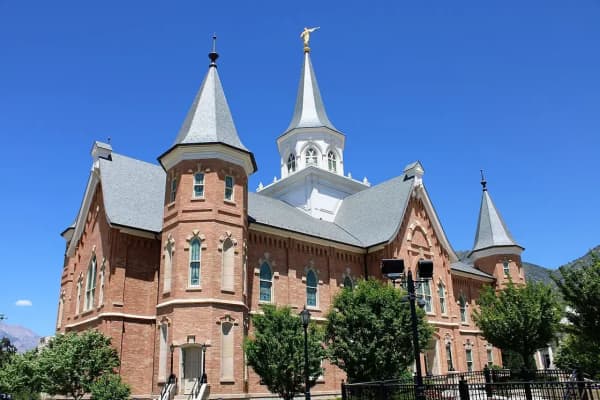
Everything else. Wedding bands (separate from the engagement ring) often run several hundred to a thousand-plus dollars each; invitations and stationery a few hundred; hair and makeup a few hundred more; favors and transportation whatever you choose. Officiant costs are frequently zero for temple sealings, where a family member or church leader often performs the ceremony at no fee — one more quiet reason local budgets run lean.
The costs couples forget to budget for
The line items above are the ones everyone plans for. The budget blowups usually come from the ones people don't, so pad your number for these before you commit:
- Gratuities and service charges. Many caterers and venues add a service charge (sometimes 18 to 22 percent) that isn't the same as a tip, and hair, makeup, delivery drivers, and a coordinator are all typically tipped on top. On a five-figure wedding, tips and service fees alone can run several hundred to over a thousand dollars.
- Alterations. A dress rarely fits off the rack. Budget for alterations as a separate line — they can add a few hundred dollars and several fittings to a gown you've already paid for.
- Delivery, setup, and cleanup fees. Flowers, cake, rentals, and catering often carry separate charges for getting to your venue and breaking down afterward, and some venues bill a cleanup fee if you don't handle it yourself.
- Postage and printing extras. Invitations, save-the-dates, RSVP cards, thank-you notes, and day-of signage add up, and heavier or square invitations cost more to mail.
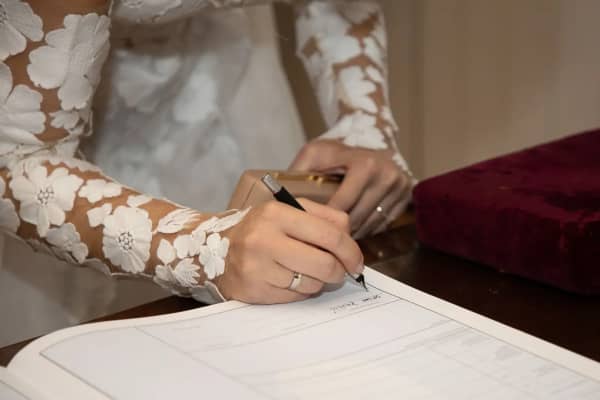
- The marriage license and small legal bits. Utah County says most couples pay $71.75 for a marriage license, including all fees, and a $20 discount is available for completing premarital education — minor, but real, and easy to forget until the week of.
- The honeymoon. It's easy to pour everything into the wedding and forget the trip that follows, but the honeymoon is its own line item competing for the same dollars. Decide early what it gets, and remember that a minimoon now and a bigger trip later is a common way to ease the crunch — our honeymoon ideas guide covers the options and the local logistics.
- A buffer for the unexpected. Set aside five to ten percent of your total for the things no spreadsheet catches: the extra centerpiece, the last-minute headcount bump, the vendor overage.
Smart ways to spend less (without a day that feels cheap)
- Marry on a weekday or in the off-season. The single easiest discount there is. December through March and Monday through Thursday are the cheapest windows, and they're completely normal here.
- Trim the guest list before anything else. It's the highest-leverage move you can make, because it lowers catering, cake, rentals, invitations, and favors all at once.
- Choose your reception format early. An open-house dessert reception and a plated sit-down dinner aren't priced the same way, and deciding up front keeps you from comparing quotes that aren't comparable.
- Work with the seasons on flowers. In-season stems, fewer-but-bigger arrangements, and reusing ceremony pieces at the reception stretch a floral budget further than almost anything else.
- Consider an all-inclusive venue. Packages that bundle catering, rentals, and setup often beat the à la carte total, because you skip the stack of separate delivery and vendor fees.
- DIY the things you'll enjoy, hire the things you won't. Invitations, favors, and some decor are satisfying to make; catering, photography, and running the day are not the places to save.
- Lean on the local infrastructure. A church cultural hall or a city park can be a beautiful, nearly free reception space, and family or ward help on setup and cleanup is a Utah Valley tradition for a reason.
What not to skimp on
A few things reliably reward the money: photography, because it's the only part of the day you get to keep; a coordinator if your family is handling setup, so the people you love can attend the wedding instead of working it; enough food, whatever the format; and the contract itself — read it before you sign. The gaps that blow up budgets are almost always in the fine print: Saturday-versus-weekday pricing, what the venue rental includes, overtime rates, and cleanup responsibility.
Once you've got the number roughly framed, the next step is sequencing the work so nothing gets booked too late or paid for twice — our Utah Valley wedding planning timeline lays out the whole thing month by month. To pick the individual vendors and learn what to ask each one, our wedding vendor directory covers every category, and if your celebration includes a temple sealing, our guide for out-of-town guests explains how that two-part day is usually structured.
The good news underneath all of this: Utah Valley is a place where a modest budget still buys a beautiful wedding. Start with your guest count and your venue, protect the two or three things that matter most to you, and let the local customs — the shorter guest-per-dollar math, the dessert receptions, the deep vendor bench — do the rest of the work in your favor.
Related Guides
- Wedding Rentals in Utah Valley
- Wedding Invitations & Stationery in Utah Valley
- Getting a Marriage License in Utah County: Cost, Timing & the 32-Day Clock
- Wedding Florists in Utah Valley: Flowers, Costs & Booking (2026)
- Wedding Cakes in Utah Valley: Bakers, Costs & the Cutting-Cake Trick (2026)
- Wedding Videographers in Utah Valley: Films, Costs & Booking (2026)
- Engagement Rings in Utah Valley: A Buyer’s Guide
- Reception center or backyard? — where the venue fee goes
- Buying and Selling Used Wedding Dresses, Décor and Rings
Frequently Asked Questions
How much does a wedding cost in Utah Valley?
Can you have a nice wedding in Utah Valley for under $10,000?
Why are weddings cheaper in Utah than most of the country?
What is the single biggest way to cut a wedding budget?
How much should we budget for a 150-guest Utah Valley wedding?
Sources
The facts in this guide were checked against these sources. Hours, fees and rules change, so confirm anything time-sensitive with the source before you go. How we make Provo.com.
- Apply for a License, Utah County Clerk. Checked October 12, 2026.
- The Average Cost of a Wedding, The Knot (2026 Real Weddings Study). Checked October 12, 2026.