
Flowers are one of the easiest places in a wedding budget to spend more — or less — than you meant to, often without realizing it until the quotes come in. They're also one of the most visible parts of the day: the bouquet in every photo, the arch you say your vows under, the color that ties the reception together. In Utah Valley, where the peak wedding months are also when every other couple wants flowers, getting this right means understanding a few things national checklists gloss over.
The good news is that the valley has a deep floral market — full-service wedding florists, neighborhood flower shops that do weddings, custom designers working out of their homes, and companies renting premium faux arrangements. That range means you can build a floral plan around almost any budget, as long as you know what you're buying and when to book it. This guide walks through what a wedding flower order includes, the three ways to buy, how Utah's seasons move the price, delivery and setup, what it costs, and the questions worth asking before you commit.
What a Wedding Flower Order Actually Includes
"Wedding flowers" is really several separate categories, and knowing them helps you compare quotes and decide where to spend.
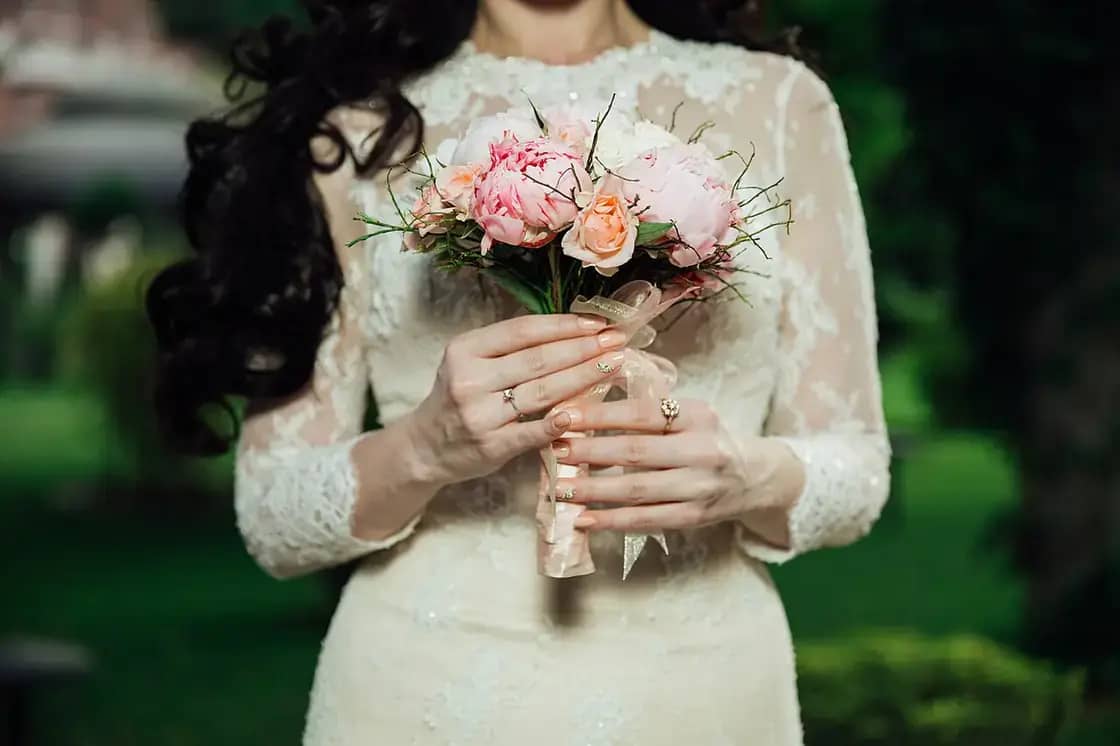
Personal flowers are the ones people carry and wear: the bridal bouquet, bridesmaid bouquets, boutonnieres for the groom and groomsmen and fathers, and corsages for mothers and grandmothers. These are non-negotiable for most weddings and the first thing to price.
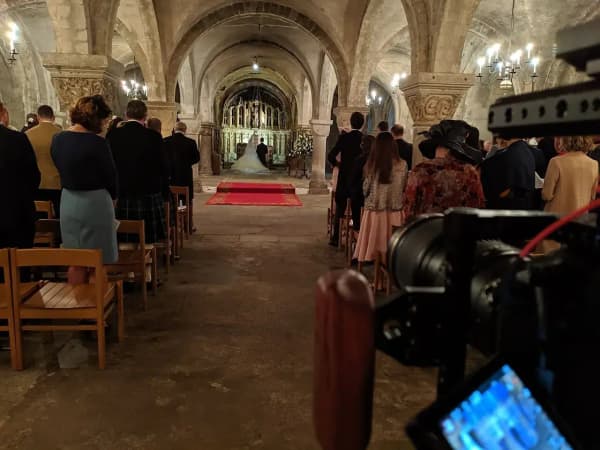
Ceremony flowers dress the space where you marry: an arch or arbor, aisle arrangements, altar or stage pieces, and any petals. A statement floral arch is one of the most photographed elements of an outdoor wedding — and one of the priciest single pieces.
Reception flowers cover the guest-table centerpieces, the head or sweetheart table, the cake table, and sometimes the entrance or gift table. Centerpieces scale directly with your table count, so this is where a large guest list quietly inflates the flower budget.
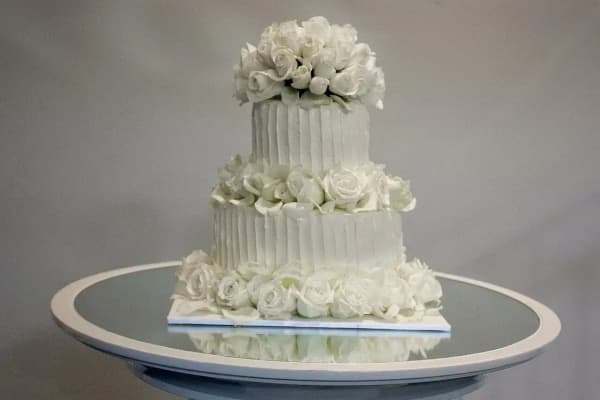
Extras round it out: cake flowers, a flower crown or hair flowers, a toss bouquet, and arrangements for a welcome sign or guest book. None are required, but they add up if you're not tracking them. Anything going in your hair has to be built into the style rather than pinned on at the end, so it belongs in the conversation with your stylist — our hair and makeup guide explains why the trial run is where that gets settled.
Matching Flowers to Your Style and Palette
Before you talk to a florist, it helps to gather a little visual direction — a few saved images, your color palette, and your dress and bridesmaid colors. Flowers are how most of your color story reaches the eye, so the palette conversation is really the whole design conversation. Bring your florist not just colors but a feeling: soft and romantic, wild and garden-gathered, structured and modern, or moody and dramatic each call for different stems and shapes.
Texture matters as much as color. The same palette reads completely differently as tight, uniform roses versus a loose, foraged mix of blooms, greenery, and grasses. And think about how the flowers will sit against your venue: a downtown reception center with neutral walls gives you a blank canvas, while a garden estate under Mount Timpanogos already brings its own greenery, so heavy floral installations can be lighter there. A good local designer will translate a Pinterest board into what's realistic for your date, your budget, and your space — and often improve on it.
Three Ways to Buy Flowers in Utah Valley
How you source flowers matters as much as which flowers you pick, and the valley supports three distinct approaches at three price points.
A full-service wedding florist designs a cohesive look, sources everything, and handles delivery, setup, and teardown. This is the highest-touch, highest-cost route, and it's the right one for structural pieces (arches, hanging installations), large weddings, and couples who want a guaranteed result without the day-before labor. Utah Valley has florists who specialize specifically in weddings and events, and most of them know the local reception centers by name.
A neighborhood flower shop that does weddings can be a strong middle option — often more affordable than a dedicated event designer, especially for personal flowers and simpler centerpieces. Provo and Orem have several established shops that handle both everyday orders and weddings.
DIY with wholesale or bulk flowers trades money for time. Buying stems in bulk from a wholesaler, a warehouse club, or a grocery floral department and arranging them with family the day before can cut the flower budget dramatically — it works best for loose bouquets and simple table arrangements, and least well for anything structural. A faux or silk-rental route is a fourth path worth knowing: several Utah companies rent premium artificial florals that photograph beautifully, survive summer heat, and cost a fraction of fresh — popular for large installations couples don't want to pay full price for.
Many couples blend these: a florist for the bouquets and the arch, DIY for the guest tables. There's no wrong answer, only the one that fits your budget and your tolerance for wedding-week labor.
The Seasonality Play
Utah's growing seasons move your flower budget, because in-season stems are cheaper and fresher — they don't have to be flown in from another hemisphere. Ask your florist what will be at its best for your specific date, and you'll usually save money while getting flowers that look and last better.
As a rough map: spring brings tulips, ranunculus, lilac, and peonies (a beloved but short-window bloom that commands a premium outside late spring). Summer delivers dahlias, zinnias, sunflowers, garden roses, and an abundance of options. Fall leans into chrysanthemums, dahlias, and the dried, textural, and moody palettes that photograph so well against the Wasatch foliage. Winter relies on roses, rich greenery, and imported blooms, which can push the price up.
If you have your heart set on peonies for a September wedding, you can still have them — they'll just cost more and travel further. A good local florist will either source them or suggest a stunning in-season stand-in, and the savings from staying seasonal can be redirected to a bigger arch or more candles.
The Peak-Month Crunch
Utah Valley's peak wedding months — May, June, September, and October — are exactly when florists are busiest, so the good shops book out and rush orders get expensive. Two moves protect you. First, book early — three to six months for most weddings, sooner for elaborate orders or peak Saturdays. Second, bring your florist the venue before anything else. An arch at an outdoor estate in June and a mantel arrangement in a downtown reception center in February are entirely different jobs, and the venue shapes what's even possible.
The Multipurpose Trick
One of the smartest ways to stretch a flower budget is to make arrangements do double duty. Aisle arrangements can move inside to sit on tables, stairways, or a fireplace mantel. A ceremony arch can be repositioned behind the sweetheart table at the reception. Large altar pieces become entrance or head-table statements. Local wedding florists do this routinely — the key is telling them up front that you want repurposable pieces, so they design arrangements that travel and reassemble cleanly. Done well, it can cut a floral order meaningfully without cutting the impact.
Delivery, Setup, and Teardown
For anything beyond hand-carried bouquets, ask exactly what's included in delivery. A full-service florist typically delivers, installs the arch and centerpieces on site, and returns to tear down and collect any rented vessels or structures — labor that's often a separate line item and worth confirming. If you're doing personal flowers only, you may just pick them up. Either way, coordinate timing with your venue: most reception centers have delivery windows and load-in rules, and the florist needs enough setup time before photos begin. If you're repurposing ceremony pieces at the reception, decide who moves them and when — that hand-off is a small detail that causes real day-of stress if nobody owns it. Naming the owner in advance is exactly what a day-of coordinator is for: their whole job is to execute the plan you already built, so the timeline runs and the vendors get cued without a family member chasing it. Our guide to wedding planners and day-of coordinators covers what that costs and when it's worth it.
The Utah Reception Factor
The local reception style shapes your flower order more than couples expect. Many Utah Valley receptions run as a larger, open-house-style event centered on dessert and mingling rather than a smaller seated dinner — guests flow through over a couple of hours rather than sitting at assigned tables all night. That format changes where flowers earn their keep. With fewer full dinner tables, you may need fewer elaborate centerpieces and can instead concentrate the budget on the pieces guests gather around and photograph: the entrance, the couple's table, the dessert or cake table, and the ceremony backdrop.
If you're doing a traditional plated dinner instead, guest-table centerpieces become a bigger line item because every table needs one and they scale with your count. Either way, tell your florist which format you're planning before you get a quote, because a dessert-reception flower order and a plated-dinner flower order aren't priced the same way — and designing to the wrong one is an easy way to overspend. Our budget guide below breaks down how the reception format ripples through the rest of the numbers, too.
What Wedding Flowers Cost in Utah Valley
Flower costs scale with how much you order, so the range is wide. A pared-down package — a bridal bouquet, a few bridesmaid bouquets, boutonnieres and corsages, and a handful of centerpieces — sits at the low end, and a fuller wedding with a ceremony arch, aisle pieces, elaborate centerpieces, and cake flowers can cost several times as much. Get itemized quotes from two or three florists for your actual list. For published per-item prices and packages from Provo, Orem and Lehi florists, see our wedding flower prices guide. Many full-service florists set an order minimum, particularly for peak-season Saturdays.
The biggest levers are the ones above: staying in season, keeping the guest-table count reasonable (centerpieces scale with tables), repurposing ceremony pieces, and mixing real personal flowers with faux or rented installations. As with every wedding vendor, prices move constantly — treat these figures as a starting point and get a current, itemized quote directly.
Questions to Ask Your Florist
- Have you worked my venue, and do you know its setup and load-in rules?
- What's in season and best-priced for my date, and where can we substitute to save?
- Is delivery, setup, and teardown included, and are rented vessels returned or kept?
- Do you have an order minimum, and does it change by season or day of the week?
- Can pieces be designed to repurpose from ceremony to reception?
- What's your backup plan if a specific flower isn't available that week?
Keeping the Flowers: Bouquet Preservation
If your bouquet means enough to keep, preservation is a small local industry of its own — and it's decided before the wedding, not after, because the flowers have to be handled quickly while they're still fresh. The common options are pressing and framing (flat, botanical, wall-hangable), resin (blooms suspended in a paperweight, block, or ring dish), and freeze-drying (three-dimensional preservation of the arrangement's shape). Utah Valley has specialists who focus specifically on wedding-flower preservation, and some florists coordinate it as an add-on.
The practical part is logistics: most preservation artists need the bouquet within a day or two of the wedding, so arrange a hand-off in advance — often a family member drops it off while you're on your honeymoon. Ask about turnaround (finished pieces can take weeks or months), what the process costs, and whether they'll work from a bouquet made by a different florist. It's an easy detail to forget in the wedding-week rush, and forgetting it is the one part of the flower plan you can't redo.
Local Florists to Start From
Utah Valley's floral market is deep, so treat this as a starting point for your own search rather than a ranking. Established options include Bloom and Bramble Florist (based in Orem, serving Provo and the valley, with wedding work including downtown temple weddings); Foxglove Flowers & Gifts (a Provo florist with wedding services); Provo Floral and the Flower Patch (long-running Provo flower shops that handle everyday orders and events); Best Buds Flowers (a Provo wedding-focused florist); and dedicated wedding designers such as Wild Earth Floral Designs, Caroline Pearl Floral, and Nannette York Floral and Decor, among many others across Provo, Orem, Lindon, and Lehi.
Browse portfolios, confirm current availability and pricing directly, and remember that any paid listings in our vendor directory are advertisements — your own comparison of style, quotes, and reviews is what should drive the choice.
Planning the Rest of the Day
Flowers set the color story, and the venue sets the canvas — our Utah Valley wedding venues guide covers the reception centers, estates, and ballrooms your florist will be designing for. To frame the whole budget and see where flowers fit, our wedding budget guide lays out what a local wedding really costs, and our month-by-month planning timeline maps when to lock each vendor.
When it's time for photos, the flowers travel with you — our wedding and engagement photo locations guide maps the best backdrops by season, and our guide to choosing a wedding photographer covers how to find the right one. Flowers also finish the cake display, so our Utah Valley wedding cakes guide is worth reading alongside this one. For the full slate of vendors — music, formalwear, and more — our Utah Valley wedding vendor directory covers each category with booking windows and the questions worth asking.
Flowers reward a little planning more than almost any other vendor. Bring your florist the venue and the date, stay seasonal where you can, make your arrangements work double duty, and you'll get a day that looks abundant without an abundant invoice.
Substitution, Weather and the Clause Every Floral Contract Has
Flowers are the only wedding vendor whose product is grown rather than made, and that single fact drives most of what is unusual about a floral contract. A cake can be baked to a recipe. A photograph can be retaken. A specific peony in a specific color on a specific Saturday in Utah depends on a harvest thousands of miles away, a cold chain, and a flight.
Every competent florist reserves the right to substitute, and you want them to have it. A substitution clause lets your florist swap a stem that arrived poorly, failed to open, or never shipped, for the closest available equivalent. Without it they would be contractually obliged to deliver something that does not exist. Couples occasionally push back on the clause; the useful move is not to remove it but to define it.
Good clauses are bounded, and boundaries are what to ask for:
- Substitute within color and shape first, so the arrangement reads the same from three feet away even if a botanist could tell.
- Value protection — a substitute of equal or greater wholesale value, never a cheaper filler stem quietly swapped into a premium arrangement.
- Notification — will they tell you, and by when? Some florists call the day before; others substitute silently and explain afterward. Both are defensible; knowing which one you have is what matters.
- Name your untouchables. If a specific flower carries meaning — your grandmother's favorite, a color matched to something irreplaceable — say so explicitly and ask what happens if it fails. A florist can often pre-order a backup or source from a second wholesaler, but only if they know it matters.
Peonies are the local worry and deserve a sentence. They have a short natural window, they are the single most-requested wedding flower in this valley, and outside their season they are imported at a premium with more supply risk. A florist who tells you a peony-heavy design in the wrong month is expensive and fragile is doing their job, not upselling you away from it.
Heat is a Utah Valley design constraint, not a footnote. An afternoon outdoor ceremony in July is a hostile environment for cut flowers, and hydrangeas, dahlias and garden roses are among the first to show it. This is a design conversation rather than a contractual one: hardier varieties, arrangements built later, shade for the arch before guests arrive, water sources in the mechanics. It is also worth asking what the contract says about flowers that wilt in conditions nobody controls, because the honest answer is usually that it is not the florist's risk once the arrangements are delivered in good condition.
Delivery, setup and the parts that come back. Confirm the delivery window against your photography timeline — bouquets need to arrive before portraits, not before the ceremony. Ask who installs an arch and who dismantles it, whether there is a strike fee, and when they return. And check what is rented rather than sold: vases, arch structures, candelabra and stands are frequently the florist's property with a return deadline and a replacement charge, and they are almost always the thing nobody has been assigned to collect at midnight.
Postponement. Ask what happens to the deposit if the date moves. Flowers cannot be held, so a postponement inside the ordering window means product already purchased, and the fair answer is usually that hard costs are non-recoverable while labor and design time transfer. Get it in writing at signing. This is general information rather than legal advice; terms vary by florist.
Related Guides
- Utah Valley Bridal Expos: How to Work One Without Getting Worked
- Wedding DJs and Bands in Utah Valley: Music & Entertainment (2026)
- Wedding Videographers in Utah Valley: Films, Costs & Booking (2026)
- Wedding Dress Shopping in Utah Valley: Bridal Shops, Modest Gowns & Alterations (2026)
- The Utah Flower Market at Grove Station: Utah-grown flowers direct, Wednesdays
Frequently Asked Questions
How much do wedding flowers cost in Utah Valley?
How far in advance should you book a wedding florist?
Which wedding flowers are in season in Utah, and does it save money?
Should you use real flowers or faux/silk for a Utah Valley wedding?
Do you need a florist, or can you do wedding flowers yourself?
Can my florist substitute different flowers than the ones we agreed?
What happens to wedding flowers in Utah summer heat?
What should I confirm about floral delivery and setup?