
The music decision at a wedding looks like a music decision, but it's really a hosting one. A great wedding DJ in this market is also the emcee who runs your reception — announcing the entrance, introducing the wedding party, cueing the toasts, and keeping a multi-generational, often largely non-drinking crowd on the dance floor. That last part is its own skill, and it's the reason a phone playlist on shuffle so often falls flat: there's nobody at the helm.
Utah Valley has a deep entertainment market, from solo DJs to hybrid DJ-and-band acts to full live bands, and a lot of them know the local wrinkles that national checklists miss — church-building rules, family-friendly floors, and the two-part temple-and-reception day. This guide walks through whether to hire a DJ, a band, or go the playlist route, what a wedding DJ provides, the Utah-specific considerations, what it all costs, and the questions that separate a packed dance floor from an awkward one.
The DJ Is Really Your Emcee
Before you compare song libraries, understand what you're buying: a host. The best wedding DJs spend as much energy on the microphone as on the music. They read the room and adjust the set when a song isn't landing, they make the announcements that move the night along, and they keep your timeline — dinner, toasts, first dance, bouquet toss, send-off — running without your family having to chase it.
That hosting role is why experience matters more than a flashy setup. A DJ who has run a hundred receptions knows how to fill a dance floor with a family crowd, how to handle a program that runs long, and how to keep the energy up without making the night about themselves. When you interview DJs, ask as much about how they emcee as about what they play.
DJ, Band, or a Playlist?
There are three ways to handle wedding music, and they trade off cost, flexibility, and hosting.
A DJ is the most common choice and usually the best balance. One professional covers an enormous song range across every genre and generation, mixes seamlessly, hosts the night, and runs the sound — all for far less than a band. This is the default for most Utah Valley weddings.
A live band brings undeniable energy and a wow factor, and some couples love the spectacle of live music. The trade-offs are cost — you're paying several musicians, so bands run considerably more than DJs — and a more limited song range, since a band can only cover so much. A hybrid act, where a DJ works alongside a small live band or vocalist, is a growing middle option that some local companies offer. For ceremony music specifically, a live musician (a string trio, a guitarist, a pianist) can be worth it even if you use a DJ for the reception.
A phone playlist on shuffle is the budget route, and it can work for a very small, casual gathering. But it leaves nobody to host, nobody to read the crowd, and nobody on the microphone for introductions and toasts — so the burden of running the night falls on you or a family member. Couples who try it to save money often wish they hadn't. If budget is the driver, a newer DJ building their portfolio is usually a better value than going without one entirely.
The Utah Wrinkle: Church Buildings, Clean Playlists, and a Family Floor
Two things about weddings here reshape the music decision.
Church-building rules. A large share of Utah Valley receptions happen in church cultural halls, and The Church of Jesus Christ of Latter-day Saints maintains standards for entertainment in its buildings. Experienced local DJs know those expectations well — music selected and edited for content, and a wholesome, family-friendly tone — and many are happy to run a reception to that standard whether or not it's in a church. If that matters to you, say so up front and confirm the DJ has done church-building weddings; it's a routine request here, and the right DJ will have a default clean-playlist approach ready.
A multi-generational, often non-drinking floor. Many receptions here draw a big, all-ages crowd, and a lot of them are alcohol-free. Keeping that floor moving without the loosening effect of a bar is a genuine skill — it takes song choices that bridge grandparents and college friends, and an emcee who can coax people up to dance. A DJ experienced with this crowd is worth more than a bigger light rig. Ask specifically how they handle a family-friendly, largely sober dance floor.
What a Wedding DJ Actually Provides
Packages vary, so compare the whole thing. Beyond curating and mixing the music, most local wedding DJs provide some or all of:
- Master of ceremonies duties — announcements, introductions, cueing the program.
- A professional sound system sized to your venue. This is worth flagging to your videographer as well: a wedding film is carried as much by sound as by picture, and filmmakers typically run their own lavalier mics on the officiant, the groom, and the podium rather than relying on room noise. Our wedding videographer guide covers why the audio is half the film.
- Wireless microphones for the ceremony, officiant, and toasts.
- Dance-floor lighting and uplighting to set the room's mood and color.
- A do-not-play list and a planning process to capture your must-plays and must-avoids.
- Add-ons — cold-spark machines, fog or dry ice, a custom monogram in light, karaoke, and sometimes a photo booth. (Confirm your venue allows spark and fog effects; some prohibit them.)
Get clear on exactly what's included versus extra, since two DJs at the same headline price can differ a lot once lighting and ceremony sound are added.
Building the Playlist and the Do-Not-Play List
Good wedding DJs run a planning process in the weeks before the day, and it's worth engaging with fully. You'll typically give them your must-play songs — the first dance, parent dances, a few crowd-pleasers you love — and, just as importantly, a do-not-play list of songs or genres to avoid. That list is where a lot of couples save themselves regret, and it's where the family-floor consideration comes in: a great DJ balances the songs you requested with the ones that will get a multi-generational, largely non-drinking Utah crowd dancing.
Trust their instincts here. You know your taste; they know what fills a floor. The strongest results usually come from giving the DJ a clear sense of your vibe and a handful of anchors, then letting them read the room in real time rather than scripting every song. If a clean or edited-content playlist matters to you, provide that direction early so they can source appropriate versions rather than scrambling on the day.
Special Moments the Music Carries
Several of the day's most photographed moments are cued by your DJ, and mapping them in advance keeps the reception flowing. The grand entrance sets the tone as the couple and wedding party are announced in. The first dance, and often parent dances, are emotional high points that need the right song and a clean fade. Traditions like the bouquet and garter toss, a cake-cutting song, and the grand exit or send-off each need their own cue. A good DJ walks you through which of these you want, in what order, and builds them into the timeline so nothing gets forgotten in the moment.
If your reception is open-house style rather than a seated program, the music's job shifts toward a warm, continuous backdrop with a few featured moments, rather than a tightly scripted sequence — tell your DJ which format you're running so they pace the night correctly.
Ceremony Music vs Reception Music
The ceremony and the reception have different musical needs, and it's worth planning them separately. The ceremony wants a prelude as guests arrive, a processional, and a recessional — often softer, and sometimes a place where a live musician shines. If your day includes a temple sealing followed by a separate reception, the reception is where the DJ's hosting really matters, since that's the big gathering.
A single DJ can usually cover both ceremony and reception audio, and many packages bundle a ceremony sound system and a microphone for the officiant. But if you want live ceremony music — a string trio at an outdoor estate, a pianist in a chapel — book that separately and coordinate the hand-off to the reception DJ so there's no dead air.
Uplighting: An Easy Way to Transform a Room
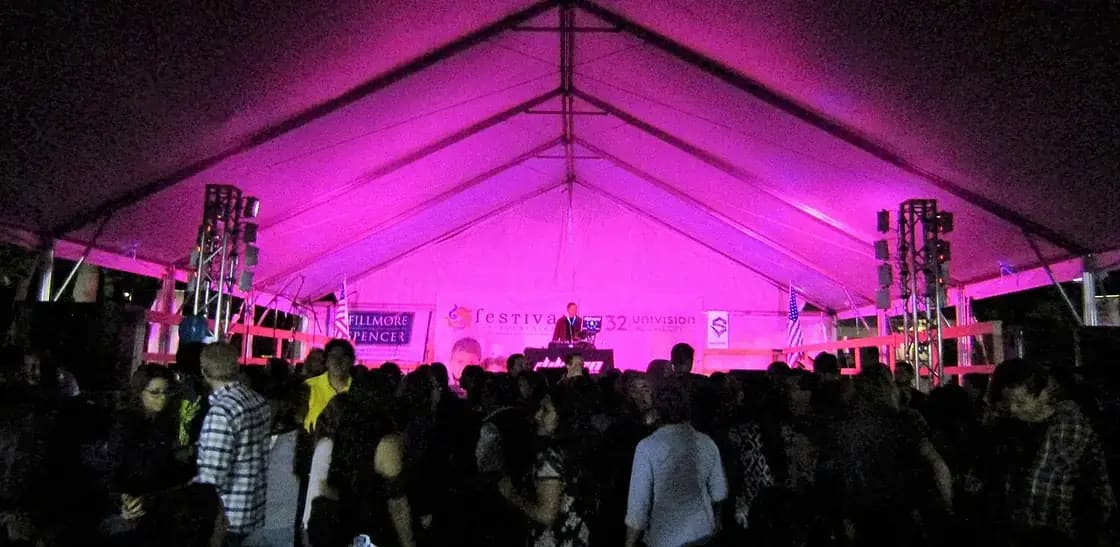
One add-on punches above its weight in Utah Valley specifically: uplighting. Because so many receptions happen in church cultural halls or plain multipurpose rooms, a set of color uplights placed around the perimeter can transform a bare, fluorescent-lit space into something that reads warm and intentional in photos — usually for a few hundred dollars on top of the DJ package. It's one of the highest-impact, lowest-cost upgrades available, and most wedding DJs offer it.
Ask to see photos of the DJ's uplighting in a room like yours, and pick a color that complements your palette rather than fighting it. Pair it with dimmed overhead lights and candles on the tables, and even a spartan hall can look styled. Dance-floor lighting is a separate consideration — enough to create energy without turning the reception into a nightclub, which rarely suits a family crowd. A good DJ will calibrate both to your venue and your vibe, so ask how they balance ambiance lighting with dance-floor effects.
What Wedding DJs and Bands Cost in Utah Valley
Local wedding DJs commonly start somewhere around $500 to $1,200 for a straightforward reception, with experienced, sought-after DJs and fuller packages — uplighting, ceremony audio, MC services, effects — rising to roughly $1,500 to $2,500 or more. Live bands cost considerably more, often several thousand dollars, because you're paying multiple musicians for the night.
The biggest price levers are hours of coverage, whether ceremony sound and lighting are bundled, and the DJ's experience and demand for your date. As with every wedding vendor, a peak Saturday costs more than a weekday, and prices move constantly — treat these as a starting point and get an itemized quote directly.
How Far Ahead to Book
DJs and bands typically fill three to six months out, and the best-known names go sooner for peak dates. Because a DJ can only take one event per day, popular ones book their May, June, September, and October Saturdays early. Bands need even more lead time, since coordinating several musicians' calendars is harder. If your date is fixed and you have a specific entertainer in mind, reach out as soon as your venue is locked.
Questions to Ask
- Have you worked my venue, and do you know its sound restrictions and any hard cutoff time? Some estates and neighborhoods enforce a strict end hour.
- How do you handle a family-friendly, multi-generational floor, and can you run to LDS church-building standards if needed?
- What's your backup plan for equipment failure or illness?
- How do you emcee — how involved are you on the microphone, and can you match our style?
- What exactly is included — ceremony sound, wireless mics, uplighting — and what costs extra?
- What's the overtime rate if the reception runs long, and do you provide a written contract?
Local DJs and Entertainment to Start From
Utah Valley's entertainment market is deep, so treat this as a starting point rather than a ranking. Provo- and Orem-area options include Vezmon Event Services (an Orem wedding DJ company), DJ Cal-X and DJ Azuquita (experienced Provo-based wedding DJs and emcees), and Brick House Entertainment (a Provo DJ service). Broader Utah entertainers who regularly serve the valley include OHLR (a well-reviewed Utah DJ group offering DJ, MC, and full production) and One Above Entertainment (known for a hybrid DJ-and-band show). For live music, ensembles like the Ken Foster Trio perform at Utah reception venues.
Browse reviews across platforms, confirm current availability and pricing directly, and remember that any paid listings in our vendor directory are advertisements — your own comparison of style, reviews, and hosting approach is what should drive the choice.
Planning the Rest of the Day
Music sets the energy, but the venue sets the room and its sound rules — our Utah Valley wedding venues guide covers the reception centers, estates, and halls your DJ will be working in. To frame the whole budget and see where entertainment fits, our wedding budget guide lays out what a local wedding really costs, and our month-by-month planning timeline maps when to lock each vendor.
If your day includes a temple sealing plus a separate reception, our guide for out-of-town guests explains how the two parts fit together. And for the rest of the vendors — photography, flowers, cake, and formalwear — our Utah Valley wedding vendor directory covers each category with booking windows and the questions worth asking, while our wedding photographer guide covers the vendor whose work, like your DJ's, shapes how the day is remembered. On the day itself it is usually a coordinator cueing your DJ rather than you — our wedding planners and coordinators guide covers what that role does.
The music is where the party lives or dies. Hire for hosting as much as for playlists, confirm your DJ knows this valley's venues and crowds, and book early — and the dance floor takes care of itself.
Who Actually Holds the Music License
Almost nobody asks this question, and for most Utah Valley weddings it turns out not to matter. It is worth two minutes anyway, because the small number of situations where it does matter are ones you can only fix in advance.
Playing recorded music to a crowd is a licensed activity. Songwriters and publishers hold a public performance right, and businesses that play music for guests normally pay for a blanket license covering it. In the United States those licenses come from performing rights organizations — ASCAP, BMI, SESAC and GMR — each representing a different catalog, which is why venues that license properly tend to hold several rather than one.
A private wedding is a different case from a bar. The performance right attaches to public performance, and a gathering confined to family and social acquaintances is not obviously that. A wedding reception in a relative's back garden looks nothing like a nightclub. The legal analysis is not as tidy as either side of the argument suggests, and there is no bright line drawn at a guest count.
In practice the venue solves it, and that is the useful takeaway. Commercial reception centers, hotels, golf clubs and event barns that host music regularly usually hold blanket licenses already, because they host far more than weddings and the licenses cover everything. The couple never sees it. The situations where a gap can appear are the ones where no commercial venue is involved: a private property, a rented hall run by a small organization, a public park, a family farm. If your reception is at one of those and you are hiring a DJ or band, it is a reasonable question to ask the DJ — some carry their own license, many do not, and a professional will answer without being defensive.
Where it does reliably bite: the video
The public-performance question is fuzzy. Putting music under a video is not. Combining a recording with moving images requires a synchronization license from the copyright owners, and those are priced for commercial media. This is the mechanism that mutes wedding films — automated content matching on the major platforms flags the track, and the film plays silently or is blocked.
That makes one detail worth coordinating between your DJ and your videographer before the day, and it is the kind of thing neither will raise unprompted. If your first dance uses a commercially released recording, the film of your first dance carries that recording. Our wedding videographers guide covers how studios handle this — usually a licensed-music public version alongside a private version with the real song.
Live bands, and the question worth asking
A live band performing a cover is performing someone else's composition, which is the same public performance right seen from a different angle. Again, at a licensed venue this is covered. Two things are worth asking a band directly: whether they have played your specific venue before, and how they handle requests for songs outside their set, since a band that learns a request is doing more work than a DJ queuing a file.
What to do with all this. For a reception at an established Utah Valley venue: nothing, it is handled. For a reception at a private home, a park, or a small rented hall: ask your venue contact whether music licensing is covered and ask your DJ whether they carry their own. And regardless of venue, tell your videographer which songs matter most to you, early enough that they can plan around them. This is general information rather than legal advice; venue and vendor arrangements vary, so confirm with yours.
Related Guides
- Utah Valley Bridal Expos: How to Work One Without Getting Worked
- Wedding Cakes in Utah Valley: Bakers, Costs & the Cutting-Cake Trick (2026)
- Wedding Florists in Utah Valley: Flowers, Costs & Booking (2026)
- Wedding Hair and Makeup in Utah Valley: A Bride's Guide (2026)
- Wedding Dress Shopping in Utah Valley: Bridal Shops, Modest Gowns & Alterations (2026)
Frequently Asked Questions
How much does a wedding DJ cost in Utah Valley?
How far in advance should you book a wedding DJ or band in Utah Valley?
Should you hire a DJ, a band, or just use a playlist?
Do wedding DJs in Utah Valley follow LDS church-building music rules?
What does a wedding DJ do besides play music?
Do I need a music license for my wedding reception?
Should I ask my DJ about music licensing?
Can our first dance song end up muting our wedding video?
Sources
The facts in this guide were checked against these sources. Hours, fees and rules change, so confirm anything time-sensitive with the source before you go. How we make Provo.com.
- Chapter 1 - Circular 92 (Copyright Law of the United States, 17 U.S.C. §§ 101-122), U.S. Copyright Office. Checked October 12, 2026.