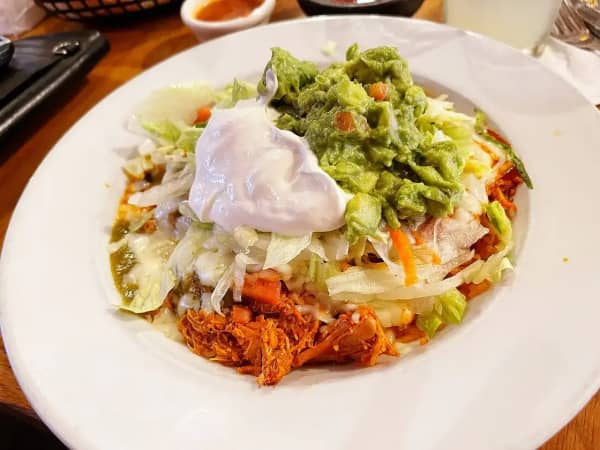

Being a student in Provo doesn't mean surviving on ramen and cereal. The city has genuine, satisfying meals available for under $10 — if you know where to look. This guide covers the best cheap eats, grocery strategies, and budget tips to keep you well-fed without destroying your bank account.
Best Meals Under $8
Street Tacos Don Joaquin — $5–6 for 3 tacos
The best tacos in Provo at prices that feel almost unfair. Three authentic street tacos on corn tortillas with perfectly seasoned meat, onion, cilantro, and lime. Al pastor and carnitas are the standouts. Add a horchata for $2 and you're still under $8 for a great meal.
El Gallo Giro — $7–8 for a burrito plate
Massive burritos with your choice of meat, rice, beans, and fresh salsa. The portions are large enough that one burrito can be two meals if you're strategic about it. The carne asada is excellent.
BYU Creamery — $4–7 for meals and groceries
BYU's on-campus grocery store and deli has surprisingly affordable prepared food alongside groceries. The chocolate milk is legendary (and cheap), and the deli sandwiches and hot food options are priced for student budgets.
Guru's Café — $7–9 for bowls and wraps
Guru's portions are generous and the menu spans comfort food, açai bowls, and wraps. The açai bowls are filling enough to count as a meal, and the wraps are packed with ingredients. Not the cheapest option on this list, but the quality-to-price ratio is strong.
Café Río — $8–9 for a salad or burrito
The sweet pork barbacoa salad is a cult favorite for a reason. At $8–9, it's a lot of food with fresh ingredients and real flavor. The tortillas are pressed to order, which makes a difference.
Mi Lindo Guadalajara — $6–8 for authentic plates
Genuine Mexican home cooking at prices that reflect the neighborhood (Freedom Blvd), not the downtown markup. Pozole, birria, and huaraches are all available for under $8 and come in portions meant to fill you up.
Costco Food Court — $1.50 for hot dog + drink, $2 for pizza slice
The most aggressively affordable meal in the Provo area. A hot dog and fountain drink for $1.50 has been unchanged for decades, and the pizza slices are massive. Ask at the warehouse whether its food court requires a membership card before you go without one. The Orem Costco is a short drive from both campuses.
Best Buffets & All-You-Can-Eat
India Palace Lunch Buffet
Slightly above our $10 threshold, but the value is exceptional. A full spread of Indian curries, naan, rice, salads, and desserts that you can eat as much as you want, in the middle of downtown on Center Street. If you go hungry and eat strategically, this can fuel you for most of the day. Note that Bombay House, which ran the buffet students used to name first, is now dinner-only — doors at 4 p.m.
Pizza Pie Café — Orem
All-you-can-eat pizza, pasta, salad bar, and breadsticks. The pizza quality is solid for a buffet, and the variety means you won't get bored. Popular with students for a reason.
Check the address before you drive. This is now an Orem restaurant at 573 W 1600 N. The Provo location on University Parkway has closed — the business said so itself on Facebook — and directory sites have been slow to catch up, so a search for buffets "in Provo" can still return it. Closed Sunday.
Grocery Shopping on a Budget
Eating out every meal is expensive even at the cheapest spots. The real savings come from smart grocery shopping and basic meal prep.
Best Budget Grocery Stores
WinCo Foods (Orem) — The best overall value for groceries in the area. Bulk bins, low prices across the board, and no membership fee. The trade-off is it's cash/debit only (no credit cards) and the nearest location is in Orem.
Macey's — A local chain with competitive prices and a good selection. The Provo location is convenient to both campuses. Their weekly deals and digital coupons can save 15–20% on a typical grocery run.
Smith's — Standard Kroger-owned grocery with a fuel rewards program. Prices are moderate, but the fuel points add up if you're driving.
Costco (Orem) — Requires a $65/year membership but pays for itself quickly if you're buying in bulk. Split a membership with roommates. Best for rice, chicken, eggs, bread, frozen vegetables, and snacks.
BYU Creamery — Convenient but not the cheapest for full grocery runs. Best for quick grabs, dairy products, and the chocolate milk.
The $30/Week Grocery Template
Here's a realistic grocery list that feeds one person for a week for approximately $30:
- Rice (5 lb bag): $4
- Dried beans or canned beans (4 cans): $4
- Eggs (18 count): $3
- Chicken thighs (2 lbs): $4
- Frozen vegetables (3 bags): $4
- Bread: $2
- Bananas, apples, or seasonal fruit: $3
- Tortillas: $2
- Salsa: $2
- Peanut butter: $3
Total: ~$31. This gives you the building blocks for burritos, rice bowls, stir-fries, egg dishes, sandwiches, and snacks for an entire week. Add $5–10 for spices, cooking oil, and condiments on your first shopping trip.
Meal Prep Tips
Cook rice in bulk. Make a big batch on Sunday and use it all week — in burritos, stir-fries, rice bowls, and as a side. A rice cooker ($15–$20) is one of the best investments a student can make.
Rotisserie chicken hack. A $5 rotisserie chicken from Costco or Smith's provides protein for 3–4 meals. Shred it and use in tacos, salads, rice bowls, and sandwiches throughout the week.
Breakfast for dinner. Eggs, toast, and fruit is a complete meal that costs under $2 to prepare. Don't limit breakfast foods to morning.
Freeze your bread. Bread goes stale fast when you're only feeding one person. Freeze half the loaf and pull slices as needed — they toast perfectly from frozen.
Split Costco runs with roommates. Bulk buying only works if you can use it before it spoils. Splitting bulk chicken, rice, and produce with 2–3 roommates gives you Costco savings without the waste.
Free Food on Campus
Both BYU and UVU have surprisingly frequent free food opportunities:
- Club meetings and events often provide pizza, snacks, or catered food. Join clubs strategically.
- Career fairs and employer events almost always have free food. Show up, eat, and maybe find a job.
- Department socials and open houses regularly offer refreshments.
- BYU Devotional and Forum events sometimes have post-event refreshments.
- Check campus event calendars weekly — free food events happen more often than you'd expect.
The Monthly Food Budget Framework
| Budget Level | Monthly Cost | Strategy |
|---|---|---|
| Bare minimum | $150–$200 | Grocery-only, meal prep, minimal eating out |
| Comfortable | $250–$350 | Mostly groceries + eating out 2–3 times/week at budget spots |
| Social | $350–$500 | Mix of cooking and regular restaurant meals with friends |
Most students land in the $250–$350 range. The key is making cooking your default and eating out your treat, rather than the other way around.
The Traps That Quietly Blow a Food Budget
Most students who overspend on food are not eating expensively. They are leaking money through four specific channels, and every one of them is invisible on a per-transaction basis.
Delivery is the largest single leak. A delivery order carries a delivery fee, a service fee, inflated menu pricing and a tip, and the total is routinely close to double the counter price of the same food. Two delivery orders a week is a meaningful fraction of a monthly food budget spent on the act of not walking. The honest fix is not willpower — it is deleting the apps during the semester and reinstalling them if you genuinely still want them.
The daily drink habit compounds. A drink that costs a few dollars, bought most days, is one of the largest recurring lines in a typical student food budget and one of the least noticed, because no individual purchase feels like a decision. Pricing it monthly rather than per-cup is usually enough to change the behavior without eliminating it.
Convenience pricing on campus is real. The same packaged item costs more in a campus convenience location than in a grocery store, which is entirely rational for the vendor and expensive for a student buying lunch that way four days a week. Campus convenience is a tool for the day you forgot, not a system.
Buying for a recipe rather than for a week is the grocery version of the same problem. Three recipes with three separate ingredient lists generate more waste than a week planned around overlapping ingredients, and the waste is money.
Cooking for One Without Wasting Food
Student kitchens waste food at a high rate for a structural reason: grocery packaging is sized for households and student cooking is not. A few habits close most of the gap.
Buy the things that do not spoil in bulk and the things that do in single portions. Rice, dried pasta, beans, oats, frozen vegetables and frozen proteins tolerate a month in storage. Fresh herbs, salad greens and soft fruit do not survive a week of good intentions. The budget damage is almost always in the second category.
Cook once, eat three times, and vary the finish rather than the base. A pot of rice and beans becomes a different meal with eggs, with salsa, or wrapped in a tortilla. Cooking three different meals in a week is a much larger time and money commitment than cooking one base and changing what goes on top, and it is the main reason meal prep gets abandoned by week three.
The freezer is the actual budget tool. Bread, cooked portions, and proteins bought on discount all keep, and a student with freezer discipline can buy on price rather than on need. Most student food waste is food that was fine two days before it was thrown away.
Split bulk purchases with roommates. Warehouse quantities are excellent value and terrible for one person. An agreement to split a bulk purchase three ways converts the best pricing available in the valley into portions a single student can finish.
Eating Cheaply Without a Car
The cheapest food in Utah Valley is not always the closest, and transportation is a real line in a food budget.
UVX is free with a student ID, which matters more for groceries than for restaurants: a car-free student can reach a wider set of stores than the nearest convenience option, and the price difference between a convenience purchase and a grocery purchase is larger than the price difference between most restaurants.
Plan grocery trips around what you can carry. This is the constraint that quietly pushes car-free students toward expensive small purchases. Buying a rolling cart or a decent backpack is a one-time cost that pays for itself within a semester by making a proper grocery run possible.
Sunday is a hard stop. Neither UVX nor FrontRunner runs on Sunday. A car-free student who plans to shop on Sunday is planning to walk, and a week's groceries is not a walking load. Shopping Friday or Saturday is the version of this plan that works.
Split rides rather than ordering delivery. A shared grocery run with a roommate who has a car costs a share of gas. The same trip converted into a delivery order costs several times that. Where a car exists in the social group, using it once a week is the cheapest transport available.
The Starter Cupboard
A student kitchen stocked with the right dozen items can produce a week of meals from small, cheap additions. One stocked without them turns every meal into a separate shopping trip, which is where the money goes.
The base layer: rice, dried pasta, dried or canned beans, oats, flour, cooking oil, salt and pepper. These are the cheapest calories available and they keep for months.
The flavor layer is what makes the base layer edible repeatedly: garlic, onions, soy sauce, hot sauce, cumin, chili powder, dried oregano, and a hard cheese that keeps. This is the difference between eating rice and beans for a week and eating four distinct meals.
The freezer layer: frozen vegetables, frozen chicken or another protein bought on offer, and bread. All three remove the timer that makes fresh versions of the same items expensive.
The refresh layer, bought weekly in small amounts: eggs, a couple of fresh vegetables, and one thing you actually look forward to. That last item is not indulgence — a budget with no pleasure in it is a budget that collapses in week three and takes the whole month's savings with it.
What to skip: single-use spices for one recipe, pre-cut produce, individually packaged anything, and specialty ingredients bought for a dish you have not made before. Each of those is a reasonable purchase and collectively they are where a careful grocery list quietly becomes an expensive one.
The weekly system beats the individual deal
Every cheap-eats guide, including this one, optimizes the individual meal. The larger saving is structural, and it comes from three habits rather than from finding a better special.
Buy staples in bulk, and split them. Utah is an unusually easy state in which to buy rice, beans, oats, flour and pasta in quantity at low per-unit prices — the same infrastructure that supports the household preparedness pantry. A bulk shop split three ways between roommates costs less per person per week than most single restaurant meals.
Cook once, portion for the week. For a commuting student this is worth more than any discount, because the real cost of eating off campus is not just the meal — it is surrendering a parking space at midday and hunting for another one on return, which in the busy weeks costs more time than the food is worth.
Learn the calendar. Prices and hours near both campuses move with the academic year. Between semesters the campus-adjacent restaurants quiet down and some cut hours, while the promotions aimed at students thin out too. The expensive weeks — around tuition deadlines and finals — are also when campus and community food resources see their heaviest use. Using them is ordinary, not exceptional.
Delivery Is the Biggest Avoidable Line in a Student Food Budget
If you are trying to bring a food budget down, delivery is almost always the first thing to cut, and the arithmetic is worth doing once properly rather than feeling vaguely guilty about it.
A delivery order carries four separate costs, and only one of them is the food. There is a delivery fee. There is a service fee, usually a percentage. There is the tip. And there is the part almost nobody notices: the menu prices inside the app are frequently higher than the same restaurant's own prices, because the platform's commission is built into them. Stack those on a twelve-dollar order and the real cost can approach twenty.
Do that three times a week through a semester and it is a very large number — comfortably more than the difference between cooking and not cooking for most students.
The substitutions are unglamorous and they work. Pickup removes the fee, the tip and often the markup in one move. Walking removes them entirely, and in central Provo a great deal is walkable. Ordering as a group splits fixed fees across several people. And the weekly system this page already describes beats any individual order, because the cheapest food is the food already in your kitchen.
Where delivery is worth it: when you are ill, when the weather is dangerous, when you have no car and need something outside walking distance, or when the order is large enough that the fees disappear into it.
Treat it as a tool for specific situations rather than a default, and the budget takes care of itself.
Our food delivery guide breaks the cost stack down in detail.
Related Guides
-
Kids Eat Free in Utah Valley: Deals & Free Summer Meals (2026)
-
The Provo & Orem restaurant directory — every place we cover, with its address, filterable by cuisine and city
-
River Rock Cafe: Eating at Utah Valley Hospital When You Did Not Plan To
-
Student Budget Calculator — food is one line in a bigger picture; this one shows what is left after tuition lands
-
Breakfast Burritos in Provo: The Four Kinds and How to Tell Them Apart Last updated: April 2026. Prices are approximate and may vary.
Frequently Asked Questions
Where can I eat cheap in Provo as a student?
How much should I budget for food in Provo?
What are the best lunch deals in Provo?
What is the biggest mistake students make with a food budget in Provo?
How do I grocery shop in Provo without a car?
How do I stop wasting food when cooking for one?
Is a campus meal plan cheaper than cooking?
What is a realistic monthly food budget for a student in Provo?