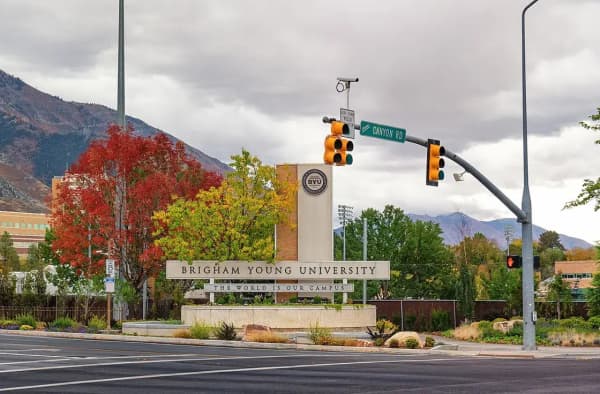

Utah Valley University is the largest university in Utah — more than 48,000 students as of fall 2025, a record — and one of the most unique institutions in the state. Unlike traditional universities, UVU is an open-enrollment school with no minimum GPA or test score requirements for admission. It serves a remarkably diverse student body: recent high school graduates, working adults, career changers, veterans, international students, and parents returning to school. The average student age is higher than typical universities, and many students work full-time while pursuing degrees.
This guide covers the practical side of being a UVU student — the things you need to know to navigate campus, the city, and student life effectively.
Campus Basics
UVU's main campus sits in Orem, along University Parkway (800 North), with easy access from I-15. The campus has grown significantly in recent years with modern buildings, expanded facilities, and improved landscaping. Key locations to know:
Wolverine Student Center — The hub of campus life. Food options, the bookstore, student government offices, event spaces, and study areas are all here. This is where you'll spend time between classes.
Fulton Library — UVU's main library with study spaces, computer labs, group study rooms, and access to databases and research tools. The library is large, well-maintained, and significantly less crowded than BYU's HBLL. During finals week, it's still one of the quieter study options in the valley.
UCCU Center — UVU's arena for basketball, concerts, and major events. The Wolverines joined the Big West Conference on July 1, 2026 — the biggest move in program history — and games are a growing part of campus culture; our game-day guide covers tickets (students get up to five free per game) and The Den.
Roots of Knowledge — A 154-foot stained-glass installation in the Fulton Library depicting the history of human civilization. It's stunning and worth visiting even if you're not a student. Free and open during library hours.
Housing
UVU does not have on-campus housing and does not require students to live in any specific type of housing. This gives you complete flexibility in where you live but also means you're navigating the open rental market on your own.
Where UVU students live: Most UVU students live in Orem, though many also live in Provo, Vineyard, American Fork, and other Utah Valley cities. The areas along University Parkway and near the UVX bus route are the most convenient for campus access.
Rent: Shared rooms cost less than one-bedrooms, and rates move every season, so compare current listings. Orem's west side and the Vineyard area offer the most affordable options. For a complex-by-complex breakdown of the best student apartments near campus, see our dedicated UVU Student Housing guide; for the search process itself, our guide to finding student housing in Provo & Orem walks through every step. See also our Orem Neighborhoods Guide and First-Time Renter's Checklist for detailed guidance.
No approved-housing requirement means no restrictions on where you live, no conduct codes tied to your housing, and no academic-calendar lease obligations. You lease like any other renter. New to it all? Our college move-in and first-week guide covers what to bring, the apartment walkthrough, and getting set up in your first days.
Transportation
UVX Bus Rapid Transit
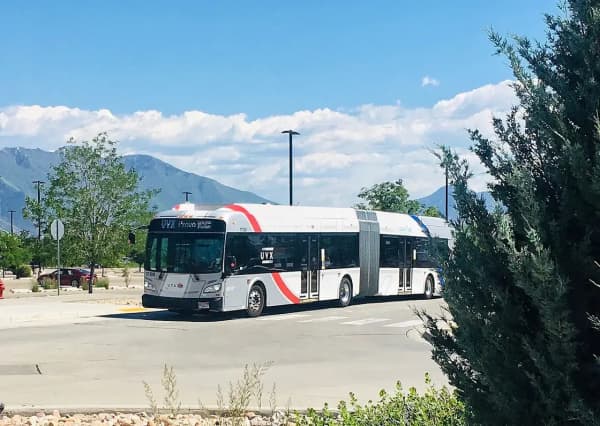
The UVX is your best friend. This bus rapid transit line runs frequently along University Avenue and University Parkway, connecting UVU directly to BYU and downtown Provo. It's free for UVU students and the fastest way to get between Orem and Provo.
UTA Buses & FrontRunner
All UTA buses and the FrontRunner commuter rail are free for UVU students with a valid student ID. FrontRunner connects you to Salt Lake City in about 70 minutes — free access to concerts, Jazz games, the airport, and SLC's restaurant and nightlife scene. This is one of the most valuable student perks available. See our FrontRunner guide.
Driving & Parking
Unlike BYU (where parking is a perpetual headache), UVU has relatively ample parking — but you still need a permit for most lots. UVU uses color-coded student permits (Yellow and Purple lots, plus a parking-garage option), available for a single semester or three consecutive semesters through the Parking Services portal. Permit prices are set each school year, so check the current rate on UVU's Parking Services site rather than relying on an old figure. There are also sixteen pay-by-phone lots (via the Passport Parking app) and a discounted Day Pass if you only drive in occasionally. The Parking Services office is at 936 S 400 W in Orem. Even with parking available, free transit and biking are worth considering to save on gas, a permit, and the walk from the far lots.
Academics
What Makes UVU Different
Open enrollment means anyone can attend, but it doesn't mean the academics are easy. UVU offers everything from certificates and associate degrees to bachelor's and master's programs across 200+ programs. The aviation program, nursing program, and business school are particularly well-regarded.
Flexibility is the defining feature. Evening classes, online options, and hybrid formats are designed for students who work. Many UVU students balance full-time jobs with part-time or full-time course loads. The university is structured around this reality rather than fighting it.
Smaller class sizes than you might expect for a school this large. The student-to-faculty ratio is strong, and professors are generally accessible. Office hours are used less frequently than at research universities, but the professors who teach at UVU chose to be there — teaching is the priority, not research.
Academic Support
Tutoring Center — Free tutoring across most subjects. Walk-in and appointment options available. Significantly underused relative to the quality of help available.
Writing Center — Free help with papers, essays, and any writing assignment. Available for all students regardless of class or major.
Career Services — Resume help, interview prep, job fairs, and internship connections. UVU's career services are strong given the school's focus on career-ready education.
Transferring Into UVU
A large share of UVU students arrive as transfers — from Salt Lake Community College, from BYU, from out-of-state schools, or returning after time away. UVU's open-enrollment model makes the admissions side straightforward: there's no minimum GPA or test-score barrier to get in. The part that takes attention is credit transfer.
A few things to know:
- Use the transfer credit tools early. UVU evaluates transcripts from regionally accredited institutions, and Utah's public colleges (SLCC, Snow, Dixie/Utah Tech, USU) have well-worn articulation pathways into UVU. Submit your official transcripts as soon as you're admitted so your evaluation isn't the thing holding up registration.
- General-education credits usually move cleanly between Utah public institutions thanks to the statewide general-education framework. Major-specific and upper-division courses are evaluated case by case — talk to an academic advisor in your intended department, not just the general admissions office.
- Coming from BYU? Many students move BYU → UVU (and vice versa) for cost, program fit, or a change in life circumstances. Credits generally transfer, but confirm how your specific courses map. See our BYU vs. UVU comparison and Provo for Transfer Students guide for the full picture.
- Returning after a mission or a break? UVU's flexibility is built for exactly this. Re-enrolling is simpler than at most schools, and the older-than-average student body means you won't feel out of place starting (or restarting) at 21, 25, or 40.
Jobs & Working While in School
UVU is built around students who work — many attend specifically because it accommodates a job. There are two broad paths:
On-Campus Jobs
On-campus positions are the easiest to balance with classes because supervisors expect your schedule to shift each semester. Roles range from library and Wolverine Student Center desks to lab assistants, tutoring, research help, IT, and department office work. Pay generally runs from around minimum wage up into the low-$20s per hour depending on the role and your experience.
Find and apply through Handshake (UVU's student job platform) and the university's student employment listings. A few practical notes:
- Apply at the start of the semester — the best positions fill in the first couple of weeks.
- On-campus jobs build your network. Working in your own department is one of the better ways to get to know professors and hear about internships first.
- Student employees can't get an employee parking permit — you'll still need a student permit (or transit/biking) to get to your shift.
Off-Campus & Internships
Utah Valley's job market is strong, and UVU sits in the middle of Silicon Slopes — the tech corridor running from Provo up through Lehi. Internships in tech, finance, healthcare, and aviation are plentiful, and UVU's career-focused programs are designed to feed students into them. Use Career Services for resume help and internship connections, and check our guides to internships in Provo and coworking spaces if you're freelancing or doing remote work alongside school.
Food on Campus
UVU's on-campus dining has improved but remains limited compared to larger universities. The Wolverine Student Center has several food options including a food court with rotating vendors. For better food, the restaurants along University Parkway are a short drive or bus ride away.
Best nearby options: Bangkok Wasabi (Thai-Japanese fusion), Pizzeria 712 (best pizza in the valley), Maria Bonita (Mexican), and Vessel Kitchen (healthy bowls). See our Best Restaurants in Orem for the full rundown.
Budget eating: WinCo Foods (cheapest groceries) is easily accessible from campus. Meal prepping saves significant money compared to eating out daily.
Student Life & Activities
Clubs & Organizations
UVU has 100+ student clubs and organizations covering academic interests, cultural groups, recreation, service, and special interests. The club fair at the beginning of each semester is the best way to find your community. If nothing fits, starting a new club is straightforward through the student government office.
Recreation
UVU's fitness facilities are available to enrolled students. The recreation programs include intramural sports, outdoor recreation trips, and fitness classes. Access to the Provo Recreation Center is offered at a discounted student rate rather than free — rates and promotions change, so confirm the current student price with the rec center before assuming.
Events
Campus programming includes concerts, speakers, cultural events, and entertainment throughout the semester. The UCCU Center hosts larger events. The student government (UVUSA) runs a regular schedule of free and low-cost activities.
UVU vs. BYU: Key Differences
This comparison comes up constantly in Utah Valley. They're fundamentally different schools serving different student populations:
Cost: UVU tuition is significantly lower than BYU for non-LDS students. For LDS students, BYU's subsidized tuition is remarkably affordable. Both are well below national averages for their respective categories.
Culture: BYU has a strong LDS cultural identity with an honor code, dress standards, and religious requirements. UVU is a secular public university with no religious affiliation or behavioral codes. The campus cultures feel very different.
Student body: BYU skews younger (18–24) and predominantly LDS. UVU's student body is older on average, more diverse, and includes many working adults and non-traditional students.
Housing: BYU requires contracted housing for single students' first two semesters. UVU has no housing requirements.
Academics: BYU is a nationally ranked research university. UVU is an open-enrollment teaching institution. Both offer quality education, but the focus and reputation are different.
Athletics: BYU competes in the Big 12 (Power 4 conference). UVU competes in the Big West (as of July 2026). BYU football Saturdays are a major cultural event; UVU's athletic scene is growing but smaller.
Neither is better — they serve different needs. Many students choose UVU specifically because of its flexibility, affordability, and secular environment.
Money-Saving Tips
Ride free transit. Your student ID gives you free access to all UTA services, including FrontRunner to Salt Lake City. This alone saves $100+/month.
Use the gym you have already paid for. UVU's campus recreation facilities are included with enrollment. ⚠ The Provo Rec Center is not free — Provo City states everyone entering pays admission, and UVU students get a discounted rate, not free entry. Check what enrollment already covers before buying anything.
Apply for financial aid. UVU's financial aid office administers federal aid, state grants, and institutional scholarships. Many students qualify for more aid than they realize.
Work on campus. UVU posts campus employment opportunities that offer flexibility around class schedules.
Student discounts are everywhere. See our Student Discounts guide — your UVU ID unlocks savings at restaurants, software services, entertainment venues, and more.
For Parents
If you're a parent helping a student choose or settle into UVU, here's the honest picture of the three things you're probably weighing.
Cost. UVU is one of the more affordable four-year universities in the country. Full-time resident undergraduate tuition and fees run roughly $6,500 per year (about $3,250 per semester) for 2025–26, with non-resident tuition several times higher — which is why establishing Utah residency matters for out-of-state families. Add living costs (rent, food, transportation), and a realistic all-in annual budget off-campus lands in the low-to-mid $20,000s. Many students offset a large share of that by working, which UVU's schedule is designed to allow, and 35% of students receive grants or scholarships. Tuition is set by the Utah Board of Higher Education and adjusts modestly most years, so treat any specific figure as a starting point and verify the current rate.
Safety. Orem consistently ranks among the safer cities of its size in the country, and the UVU campus has its own university police department. The broader Utah Valley area is low-crime by national standards. The most useful safety conversation with a UVU student is usually about commuting — late-night transit schedules, parking-lot walks, and winter driving on I-15 — rather than campus crime.
Housing. This is the biggest structural difference from BYU: UVU has no on-campus housing and no housing requirement, so your student rents on the open market like any other tenant. That means more freedom but also more responsibility — leases, deposits, roommates, and landlords to vet. Most UVU students live in Orem, Vineyard, or Provo. Our First-Time Renter's Checklist and Orem Neighborhoods Guide are good things to read together before signing anything, and our Cost of Living in Provo guide breaks down realistic monthly numbers.
The reassuring part for parents: UVU's flexibility and affordability make it forgiving. A student who needs to work, change majors, transfer in, or take a lighter load can do all of that here without derailing — which is exactly why so many families choose it.
New students often ask about September 10, 2025, when Charlie Kirk was killed on campus, and about what changed afterward. Our one-year account of the shooting and its aftermath covers the security review, the memorial question and the campus climate.
Related Guides
-
Student Discounts & Deals in Provo
Advertisement -
Provo Classifieds — the community board, for housing contracts, textbooks and local gigs
-
Student Budget Calculator — semester-shaped budgeting built for UVU's tuition and commuting costs
-
UVU's New Concurrent Enrollment Scholarship — $3,500–$5,000 a year for freshmen with UVU concurrent credit Last updated: April 2026. Academic programs, tuition, and campus services are subject to change — verify directly with UVU.
Frequently Asked Questions
What should I know about UVU as a student?
Does UVU have on-campus housing?
How is student life at UVU different from BYU?
How much does UVU cost for parents budgeting for a year?
Can I transfer to UVU, and will my credits move?
When does UVU move-in happen, and is it like BYU's?
How do UVU students get to campus, and is parking difficult?
Do I qualify for Utah in-state tuition at UVU?
Sources
The facts in this guide were checked against these sources. Hours, fees and rules change, so confirm anything time-sensitive with the source before you go. How we make Provo.com.
- Utah Valley University Continues Educating the Most Utahns With New Record Enrollment, Utah Valley University. Checked October 12, 2026.
- About | Roots of Knowledge, Utah Valley University. Checked October 12, 2026.
- Utah Valley University Joins Big West Conference, Utah Valley University. Checked October 12, 2026.
- UVU-UTA Transit Pass FAQs, Utah Valley University. Checked October 12, 2026.
- Utah Valley University Housing & Residence Life: UVU-Housing, Utah Valley University Housing & Residence Life. Checked October 12, 2026.