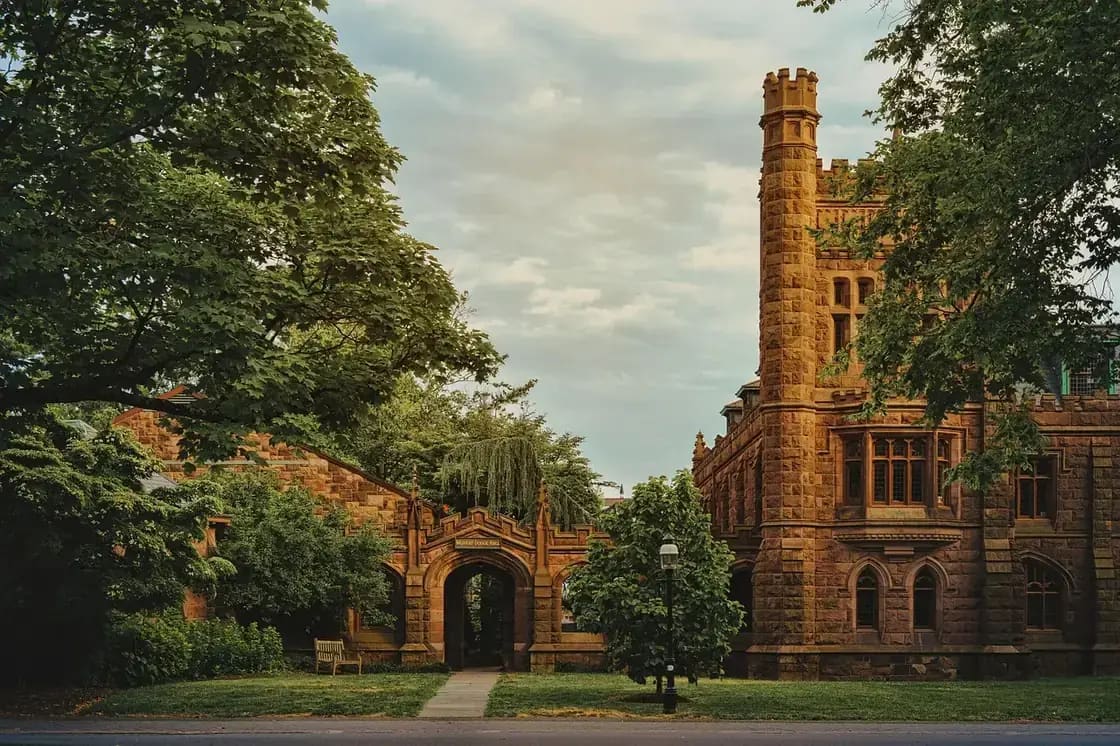

Transferring to a new school is its own kind of challenge — different from starting college fresh and different from returning after a mission. You're arriving at a place where everyone else already has their friend groups, knows the campus shortcuts, and understands the unwritten rules. Add in the credit transfer uncertainty, the housing scramble, and (if you're coming to BYU) a campus culture that's unlike anything you've experienced before, and the transition takes genuine effort.
This guide is for anyone transferring to BYU or UVU, whether from a community college, another four-year university, or a completely different life situation.
Credit Transfers
At BYU
BYU evaluates transfer credits through the Registrar's Office, and the process can be strict. A few things to know:
Not all credits transfer equally. BYU evaluates each course individually against their curriculum. A course that counts toward your major at your previous school might transfer as an elective at BYU — or not transfer at all. Religion credits from non-BYU institutions generally don't fulfill BYU's religion requirements.
Request an evaluation early. Send your transcripts to BYU Admissions as soon as possible. The credit evaluation takes time, and knowing exactly where you stand helps you plan your remaining coursework.
AP/IB credits still apply. If you earned AP or IB credit before your first institution, those scores can still be evaluated by BYU. Make sure your official scores are on file.
Plan for extra semesters. Most transfer students to BYU need at least one additional semester beyond what they anticipated due to credit gaps, religion course requirements, and curriculum differences. This isn't a failure — it's a normal part of the transfer process. Build it into your timeline and budget.
At UVU
UVU's open-enrollment model and community-college heritage make credit transfers significantly smoother. The university has articulation agreements with many Utah institutions, and the transfer evaluation process is generally more generous than BYU's. Contact UVU's Transfer Services office for a preliminary credit evaluation before applying.
Housing
At BYU
If you're a single undergraduate transferring to BYU, you'll need to live in BYU contracted housing for your first two semesters (unless you've already completed two semesters at BYU previously or live with qualifying family).
Start your housing search 4–6 weeks before your start date. The BYU Off-Campus Housing site is the primary resource. Read our Best Apartments Near BYU guide for specific recommendations.
Timing matters. If you're transferring for fall semester, the best apartments fill by June. Winter semester transfers have more options and better prices.
At UVU
No housing requirements. UVU is primarily a commuter school, so you have complete flexibility on where to live. See our Provo Neighborhoods Guide and Orem Neighborhoods Guide to find the right area.
The Social Adjustment
This is the hardest part for most transfer students, and it's worth addressing directly.
The Challenge
At your previous school, you built friendships organically over time — in dorms, in classes, through shared experiences. At BYU or UVU, you're entering an established social ecosystem where most people already have their circles. Nobody's being exclusive on purpose — they're just already connected, and you're starting from zero. It's the same wall grad students and young professionals hit here, where the honest advice is that you have to build a social life intentionally rather than wait for the city to hand you one.
What Works
Your ward is your fastest path to connection (at BYU). Ward activities, FHE groups, and Sunday meetings provide immediate access to people who live near you and are (theoretically) interested in welcoming newcomers. Show up, introduce yourself, and volunteer for activities. See our Making Friends in Provo guide.
Join clubs and organizations immediately. Don't wait until you're "settled in." The first two weeks of the semester are when clubs recruit and groups form. Missing that window means waiting until the next semester for another natural entry point.
Take a smaller class or seminar. Large lecture halls make it nearly impossible to meet classmates. If you can fit a smaller, discussion-based class into your schedule, the intimate setting facilitates conversation and connection.
Connect with other transfers. BYU's First Year Experience office provides resources for transfer students (yes, even though you're not technically a "first year"). UVU's Transfer Student Services can connect you with other students in the same situation. There's comfort and practical help in knowing people who understand the transfer experience.
Be patient but persistent. Building genuine friendships takes a full semester of consistent presence. The people who struggle most are those who give up after a few weeks of not clicking with anyone. Keep showing up.
Academic Adjustment
At BYU
BYU's academic culture may feel different from your previous school — depending on where you're coming from.
The workload is real. BYU students are, on average, academically motivated. If you're transferring from a less rigorous program, expect to level up your study habits. Use the Research and Writing Center, tutoring services, and professor office hours — they're free and helpful.
Religion courses are required. Regardless of how many credits you transfer, you'll need to complete BYU's religion course requirements. These are unique to BYU and don't transfer from other institutions. Plan them into your schedule early.
Academic advising is essential. Meet with your major's academic advisor within your first two weeks. They'll map out your remaining requirements, identify any credit gaps, and help you build a realistic graduation timeline. Don't try to figure it out alone — the curriculum is complex enough that advisor input saves semesters.
At UVU
UVU's academic environment is more flexible and accommodating of nontraditional paths. Evening classes, online options, and a culture that understands working students make the academic adjustment smoother for most transfers. The challenge is more about staying engaged with a commuter campus than about keeping up academically.
Provo Orientation
Beyond the school-specific adjustment, you're also adjusting to Provo as a city. The guides below cover the practical stuff:
- Getting around: FrontRunner & Commuting Guide
- Finding food: Best Food Near BYU and Student Budget Eating Guide
- Understanding the culture: The Complete BYU Student Guide or UVU Student Guide
- Exploring the outdoors: Complete Hiking Guide
- Saving money: Student Discounts & Deals
The Transfer Advantage
It's easy to focus on what's hard about transferring, so here's the other side: transfer students bring perspective that freshmen don't have. You've already figured out how to navigate a campus, manage your time, and handle academic pressure at another institution. You know what kind of studying works for you. You've probably made (and learned from) the social mistakes that freshmen are still making.
You're not starting college. You're continuing it in a new place with more experience and better self-knowledge than most of the people around you. That's an advantage — use it.
The Calendar Nobody Hands You
Transfer students arrive with a mental model of the academic year built at their previous school, and Utah Valley's does not match it. Three timing facts do more damage than any credit-transfer surprise.
The two campuses do not start together. UVU's fall term opens roughly two weeks ahead of BYU's. If you are transferring between them, moving with a friend who is going to the other one, or coordinating a lease with a roommate at the other school, those two weeks are a real logistical gap rather than a rounding error.
Housing demand peaks before the term does, not with it. The best contracted units are committed well before the semester starts, and a transfer student who begins looking when a first-year student would be arriving is looking at what is left. Start earlier than the calendar suggests is necessary.
Credit evaluation runs on its own clock, and it is slower than yours. The single most consequential thing you can do in the first month is get your evaluation moving, because everything downstream — which courses you register for, whether your graduation date is realistic, how many semesters you are budgeting for — waits on it. A transfer student who registers for a first semester before the evaluation lands is frequently registering for the wrong classes.
Plan for a semester you did not expect. Most transfer students into BYU need at least one additional semester beyond what they anticipated. Treating that as the base case rather than the bad case changes the financial planning and removes most of the disappointment.
Money, and the Part That Surprises People
The financial picture for a transfer student is different from a first-year's in ways that are easy to miss until they arrive.
Aid does not always travel. Scholarships and grants attached to your previous institution generally end when you leave it, and institutional aid at a new school is frequently weighted toward incoming first-year students. Ask the financial aid office directly what transfer students are eligible for, and ask before you commit rather than after.
The extra semester has a cost, and it is not only tuition. Another semester is also another term of rent, another term of not working full time, and a later start on whatever comes next. This is the strongest practical argument for pushing hard on the credit evaluation early.
Cost of living here is lower than most places students transfer from, and that helps. Utah Valley's rents are below what students arriving from larger metros expect, and the transit situation reduces the need for a car. Our cost of living in Provo guide covers the picture in detail.
A car is optional here in a way it is not everywhere. UVX connects both campuses with downtown Provo and is free with a student ID, which means a transfer student can reasonably defer the single largest expense a new arrival usually takes on. Deferring it for one semester while you learn the geography is a better decision than committing to it in week one.
Building a Social Life When Everyone Else Already Has One
This is the part transfer students consistently rate as the hardest, and the advice that works is narrower than the advice usually given.
Repetition beats variety. Attending six different events once each produces almost no friendships. Attending one thing weekly for a semester produces several. The mechanism is simply seeing the same faces enough times that a conversation can continue rather than restart, which is why intramurals, a class-adjacent club or a weekly activity outperforms a broad social calendar.
Arrive before you need to. The weeks immediately before a term starts are when groups are most open, because nobody has settled yet. A transfer student who moves in early and shows up to pre-term activities enters at the same moment everyone else does; one who arrives the day before classes enters after.
Your ward is a floor, not a ceiling. For students who participate, a congregation provides an automatic baseline network, and it is useful. It is also not sufficient on its own, and treating it as the whole plan is a common way to reach November without close friends.
Say the word transfer out loud. It is a conversational shortcut that works: it explains why you do not know things, invites people to help, and reliably surfaces the other transfers in the room, who are the people most likely to be looking for exactly what you are looking for.
Give it two semesters. The first one is logistics. Most transfer students report that the second is when the place starts to feel like theirs, and knowing that in advance stops a normal first semester from reading as a failure.
Questions to Ask in Your First Advising Appointment
Transfer students frequently leave a first advising meeting having confirmed what they already knew and missed the things that determine their timeline. These are the questions worth arriving with written down.
Which of my transferred credits count toward my major, and which landed as general electives? The total number that transferred is the reassuring figure. The number that count toward the degree is the useful one, and they are rarely the same.
Which required courses are offered only once a year, and when? A single annually offered course that you miss by one semester can add a full year. This is the question that most often changes a graduation date, and almost nobody asks it in a first meeting.
What are the prerequisite chains in my major, and how long is the longest one? A three-deep chain of courses that must be taken in sequence sets a hard floor on how fast you can finish, regardless of how many credits you arrive with.
How many credits do I need in residence here to graduate? Most institutions require a minimum number earned on campus, and it can bind even for a student who transferred in nearly enough credits.
Is there a petition process for a credit that was evaluated as an elective? There usually is, it usually has a deadline, and it is usually worth using for anything close to the line.
What does a realistic graduation term look like from where I am standing today? Ask for the answer in terms rather than credits, and ask the advisor to say it out loud. It is much harder to plan against a number than against a date.
Why Accreditation Is the Thing That Actually Moves Your Credits
Credit transfer feels arbitrary from the inside, and students usually blame the receiving school's advising office. The real structure is more predictable than that once you know what the gatekeeping variable is, and it is accreditation.
Institutional accreditation by a body recognized by the U.S. Secretary of Education is the practical precondition for two things: credits that other institutions will consider, and eligibility for federal financial aid. Both BYU and UVU are accredited by the Northwest Commission on Colleges and Universities, which is such a body. Between these two schools, then, the largest structural obstacle to transfer simply does not exist — and that is worth knowing before you start negotiating.
It is also the only obstacle accreditation removes, and this is where expectations go wrong. Accreditation does not obligate any institution to accept any particular credit. Transfer decisions belong to the receiving institution, course by course, and they turn on whether the content matches what that school requires, not on whether your previous school was legitimate. A fully accredited institution can decline a fully accredited course because the syllabus does not line up with its own. That is a normal outcome, not an insult, and it is not an accreditation problem.
Two further cautions are worth carrying. First, accreditation is institutional rather than programmatic — the commission accredits the university as a whole and does not certify individual programs. If you are transferring into a field with its own professional accrediting body, that is a separate question with a separate answer. Second, be careful with credits from providers whose accreditation is unrecognized or of a different type; those are the transfers that fail late and expensively, and the time to check is before you enroll, not after you have paid for a year of it.
The practical move, then, is not to argue about legitimacy. It is to get course equivalency in writing from the receiving institution before you commit — which is the specific thing to ask for in the advising appointment described below.
Related Guides
- The Complete BYU Student Guide
- UVU Student Guide
- BYU vs UVU: Which School Is Right for You?
- Making Friends in Provo
- Best Apartments Near BYU
- Student Discounts & Deals
- The BYU Guide to Provo: housing, food, game days and campus
- The UVU Guide: commuting, housing in Orem and student life
- Student Budget Calculator — a transfer semester often has an odd length; the calculator asks rather than assuming four months
- In-State Tuition in Utah
- Finding Roommates in Provo
Last updated: April 2026. Transfer policies and credit evaluation processes change — verify current requirements directly with your target school.
Frequently Asked Questions
What should transfer students know about BYU?
Is it hard to transfer to BYU?
How do I make friends as a transfer student in Provo?
Do BYU and UVU start on the same date?
Will my scholarships transfer with me?
How early should I start looking for housing as a transfer student?
Do I need a car as a transfer student in Provo?
How long does it take to feel settled after transferring?
Sources
The facts in this guide were checked against these sources. Hours, fees and rules change, so confirm anything time-sensitive with the source before you go. How we make Provo.com.
- UTA School Pass Programs: Brigham Young University, Utah Transit Authority. Checked October 12, 2026.
- Utah Transit Authority: UVX, Utah Transit Authority. Checked October 12, 2026.
- Student Housing Policy, Brigham Young University. Checked October 12, 2026.
- UVU-UTA Transit Pass FAQs, Utah Valley University. Checked October 12, 2026.
- BYU Off-Campus Housing, Brigham Young University. Checked October 12, 2026.