
Thanksgiving Point is the largest family attraction in Utah County and one of the largest in the state — a non-profit campus in Lehi, about 25 minutes north of Provo, running seven ticketed venues, a golf course and a cluster of restaurants across a site you cannot cross quickly on foot. It is the kind of place where you can easily spend a full day, and families with young children come back repeatedly rather than trying to cover it in one go.
Before anything else, the fact that ruins more visits than any other: Thanksgiving Point is closed on Sundays. The whole campus — every venue, the gardens, the restaurants — along with Thanksgiving Day and Christmas Day. It is not a reduced-hours Sunday. It is shut. For an out-of-state family with a free Sunday, or for anyone whose weekend plan assumed a big attraction would be open on the weekend, that is a wasted drive up I-15, and remarkably few third-party listings say so plainly.
The Attractions
There are seven ticketed venues, not the three or four most guides describe. Working from the ones that fill a day down to the ones that fill an hour:
Mountain America Museum of Ancient Life
Highlight attraction · Allow 2–3 hours
One of the world's largest displays of mounted dinosaurs, with dozens of complete skeletons and more than fifty hands-on exhibits, with a heavy emphasis on the dinosaurs that lived in what is now Utah. The exhibits are well designed, engaging for adults as well as children, and considerably more impressive than most first-time visitors expect from a suburban museum.
Don't miss: the sauropod skeletons in the main hall, the fossil dig activity, and the marine reptile gallery.
Best for: families with children roughly four to fourteen. Two to three hours for a thorough visit; longer if your children are the sort who read the placards.
Museum of Natural Curiosity
Allow 2–3 hours
The hands-on science and play museum, and the one most often left out of write-ups that fixate on the dinosaurs. Its appeal runs younger and rowdier — water play, climbing, building, an outdoor section — and for children under about eight it frequently beats the dinosaur museum on sheer time occupied. If you are choosing between the two museums for a young family, this is the one to consider.
Ashton Gardens
50 acres · Allow 2–3 hours
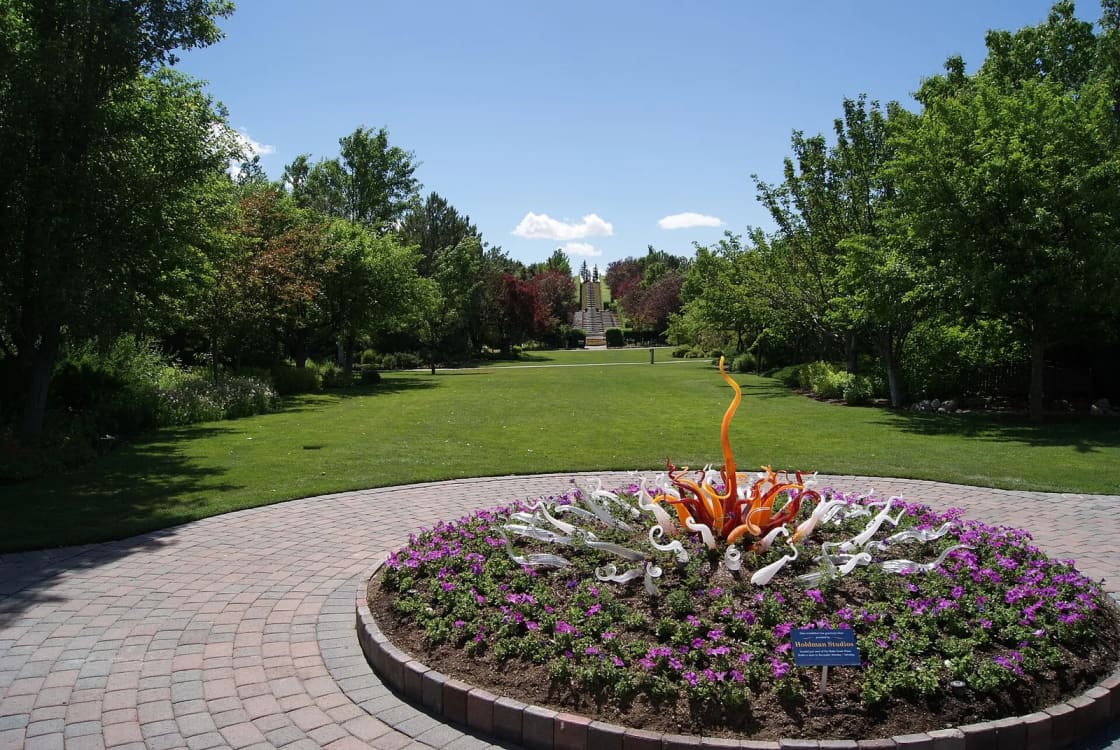
Our full Ashton Gardens guide covers ticket structure, the September closure dates and the photography rules in detail. The gardens are organized as a series of rooms, with trees, shrubs and grasses acting as living walls between 17 themed spaces — a fragrance garden, a rose garden, a formal parterre, native prairie and mountain plantings, and the long processional lawn that most of the wedding photographs you have seen from here were taken on.
On the size: the operator's own current figure is 50 acres and 17 themed spaces. You will very frequently see 55 acres and 15 gardens instead. The older figure is still widely repeated, but the current one is the operator's.
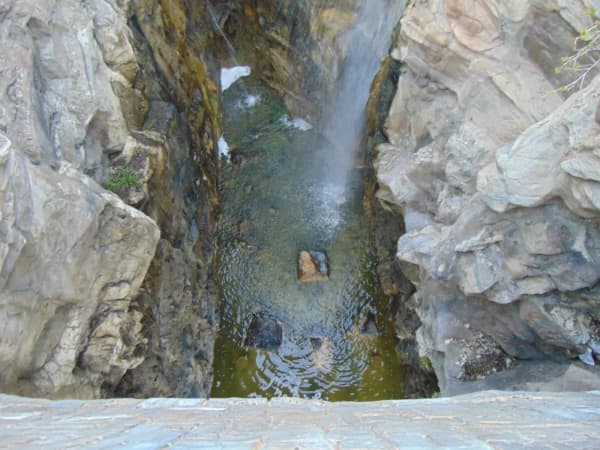
The waterfall. Ashton Gardens contains what Thanksgiving Point describes as the largest manmade waterfall in America, and at the time of writing it is switched off, in line with the Lehi Water Conservation Management Plan. It is the single most photographed thing on the property and the single most likely thing to be missing when you arrive, and essentially every regional listing still leads with it.
Seasonal highlight: the Luminaria winter light display transforms the gardens into a walk-through light installation and is one of the best holiday displays in Utah. Note that it runs Monday to Saturday and is closed on Sundays, as well as Christmas Eve and Christmas Day, and that it sells out on timed entry.
Closures worth knowing: the gardens close entirely for several days each September to host the Timpanogos Storytelling Festival and the Garden of Quilts, and post occasional early-closure and late-opening days around other events. These are announced on the gardens' own page and nowhere else, so a September visit should be checked rather than assumed.
Curiosity Farms
Working farm · Allow 1–2 hours
A farm venue where children can meet goats, cows, pigs, ponies and rabbits, ride the ponies and the train, watch cow-milking and animal shows, and learn how farming and food technology work. Baby goats appear in season. It is aimed squarely at younger children, roughly two to eight, and gives suburban children a hands-on farm experience they will not get otherwise.
⚠ This venue was called Farm Country until September 2024 and a great deal of published material still uses the old name. If a listing says Farm Country, it means this.
Butterfly Biosphere
Indoor tropical habitat · Allow 45 minutes–1 hour
Our full Butterfly Biosphere guide covers the time-ticketing, Butterfly's First Flight and where the butterflies come from.
A glass-enclosed tropical habitat filled with hundreds of free-flying butterflies from around the world, plus exhibits on life cycles and pollination. It is calm, warm and short — which makes it the right venue to pair with a longer one rather than a destination on its own.
Mountain America Jurassic Jungle and the Carousel
The two smaller venues, both ticketed, both usually treated as add-ons rather than destinations. They matter for planning in one specific way: if you buy an All-Access Pass, they are included, and a tired family at four in the afternoon has somewhere short and cheerful left to go.
Golf
Thanksgiving Point Golf Club is a full 18-hole course on the same campus and runs on its own booking and pricing entirely separately from the attraction venues. It is not part of any attraction pass.
Included with venue admission
Two sculpture installations are included rather than separately ticketed, and both are quiet spaces that most visitors walk past. The Light of the World Garden is a 2.5-acre sculpture garden by the artist Angela Johnson depicting the life and miracles of Jesus Christ. The Tree of Life, by the same artist, is a bronze exhibit depicting Lehi's vision from the Book of Mormon — which sits rather neatly in a city named Lehi.
Where it came from, and why that changes how you read the place
Thanksgiving Point is not a theme park that happens to have a garden. It is a 501(c)(3) non-profit with an education mission, and once you know that, several otherwise puzzling things about the campus make sense — the field trips, the day camps, the free daily STEM programs that come with admission, and the fact that a site this size runs on memberships and donations rather than on ride tickets.
The origin is a Utah Valley story. Thanksgiving Point grew out of a working farm in Lehi, bought and developed by Alan and Karen Ashton, whose name the gardens carry.
Today the campus covers about 155 acres and seven discovery venues, run by the nonprofit Thanksgiving Point Institute. Our Silicon Slopes explainer covers the tech story that grew up around it.
The practical consequence for a visitor is that the education programming is not an add-on. Daily STEM discovery programs are included with venue admission and free to members, and there is a full calendar of youth classes, teen programs and summer day camps that most day visitors never notice is running around them.
The seasonal calendar
Three of the best reasons to come here are not permanent venues at all, and none of them are on the standard ticket.
The Tulip Festival takes over Ashton Gardens in spring, with a huge planting of bulbs. The exact window is set by the bloom rather than the calendar, which is why the dates shift year to year and are announced fairly late — plan around Thanksgiving Point's own calendar rather than last year's dates, and do not book travel on a guidebook's figure.
Cornbelly's runs each autumn on part of the Thanksgiving Point grounds and is one of Utah's most elaborate corn maze and pumpkin festivals. ⚠ It is operated separately and ticketed separately — a Thanksgiving Point admission or All-Access Pass does not get you in. What membership does get you is a discount on Cornbelly's regular-priced tickets and season passes, claimed at the ticket booth on presentation of your card, and it cannot be combined with any other offer.
Luminaria is the winter light walk through the gardens, on timed entry, and it sells out in advance. Closed Sundays, Christmas Eve and Christmas Day.
Between them, those three cover spring, autumn and winter — and each one is a different ticket from the one you would buy on an ordinary Tuesday.
Planning Your Visit
Tickets, passes and the membership question
Each venue carries its own admission, and there is also an All-Access Pass covering all seven venues for a single day. Which one is cheaper depends entirely on how many venues you will realistically get through, and the honest answer for most families with young children is two.
Four structural facts that stay true when the prices move:
- Online is cheaper than the gate, by the same margin on every tier rather than only on the adult ticket. Buy before you drive.
- Children under three are free. Members are free at all seven venues, and members bring guests at a reduced rate.
- Group rates are available, but ask about the minimum size, payment rules and blackout dates around the big seasonal events before you plan around them. A group booking also does not buy you a private space — it is a public site, and amplified music and microphones are not permitted.
- Seasonal All-Access promotions have run in some summers. If your visit falls in summer, check for one before buying anything else.
Prices at the individual venues move, and earlier versions of this page carried figures that had fallen well behind — one of them survived in this page's own FAQ for some time after the body had been corrected, which is exactly how a stale number outlives its correction. Check the operator's own page for the venue you are visiting, and price the pass and the membership against your actual plan.
Every Kid Counts: the rate nobody publishes
Thanksgiving Point runs a needs-based admission program that almost no third-party guide mentions. Present an Electronic Benefits Transfer card — SNAP or WIC — with photo ID, and up to six people in the immediate household receive discounted admission: dependent children free, and adults or teens in the household at a low flat rate each. It is in person only and cannot be applied to an online purchase.
For a family that would otherwise never come here, that converts the most expensive attraction in the county into an affordable day. It is the most useful single thing on this page and it is buried on the operator's own site.
Photography: the rule that catches people out
This is the most-broken rule on the property, because the definition is far broader than visitors assume.
Casual snapshots are fine — informal, non-posed photographs of the plants, the gardens or the people you came with, for private use.
A photography session requires a Photo Pass, reserved in advance. Thanksgiving Point defines a session as any photo or video shoot, posed or candid, with extended time, outfit changes, props, special attire or equipment, says the rule covers personal-use sessions too, and explicitly includes mobile phones. A parent directing a posed family shoot on an iPhone is inside the definition.
Commercial, promotional and business-use photography and videography are not permitted at all, and content shot here may not be used commercially. Given how routinely these gardens appear on lists of Utah Valley's best engagement photo locations and photography spots, that is worth knowing before a photographer's deposit is paid.
When to visit
Best seasons: spring for the gardens in bloom and baby animals at the farm; autumn for cooler weather and harvest programming. Summer is busiest, particularly once school is out.
Best days: weekdays are markedly quieter than weekends, and Tuesday to Thursday during term time is the calmest the campus gets. Saturday is the busiest day of the week — and, with Sunday closed, Saturday absorbs a full weekend of demand into one day. That is a specific reason to come on a weekday if you can.
How much time: half a day for one or two venues, a full day for three or more. Most families do two or three per visit and are done.
Getting around the site
Fifty acres of gardens is a great deal of walking, and the campus as a whole is larger again. The gardens rent golf carts on a first-come basis — a two-hour rental in season, shorter rentals during the winter off-season — along with electric scooters and wheelchairs, which can be booked online in advance for a fee or taken in person subject to availability. Strollers and wagons are available in person. No rentals go out in the last ninety minutes before closing, which is exactly when a family with a tired four-year-old starts wanting one.
⚠ Guided garden tours are on hiatus for the season, according to the gardens' own page, with a return planned for 2027. Do not build a visit around a docent-led tour.
Getting there from Provo
Thanksgiving Point is in Lehi, about 25 minutes north of Provo on I-15. Take the Thanksgiving Point exit and follow the signs. Parking is free and plentiful at all venues.
By transit: the Lehi FrontRunner station is roughly three miles away, so the train plus a short ride-share is possible. Two cautions. Driving is far more practical with young children and gear. And FrontRunner does not run on Sundays — which is academic here, because neither does Thanksgiving Point.
Dining
There are several restaurants on the campus. Harvest is the full-service option at the gardens, with garden views; the Trellis Café sits inside the Garden Visitor Center and runs through the garden season with what is one of the better patios in the county. Quick-service options operate at the museums and the farm.
Because the campus is closed on Sunday, so are its restaurants — worth knowing if you were planning Sunday dinner at Harvest. Our Lehi restaurants guide covers the alternatives, and the surrounding area has filled with options within a five-minute drive.
Beyond Thanksgiving Point: Lehi
While you are in the area, Lehi has several other things worth knowing about. The Outlets at Traverse Mountain sit just off I-15. The flour mill that appeared in Footloose is here — built as Lehi Roller Mills and now trading as Lehi Mills, and not downtown, despite how often it is described that way. And the technology corridor now branded Silicon Slopes has reshaped the whole north end of the county. See our things to do in Lehi guide for the fuller picture.
Thanksgiving Point's winter draw is Luminaria, the walk-through in Ashton Gardens, and it is the one display in the valley that closes on Sundays. It sits alongside every other Utah County display on our Christmas lights map.
Related Guides
- Nativity & Crèche Events in Utah Valley
- Ashton Gardens Guide
- Butterfly Biosphere Guide
- Things to Do in Lehi
- Day Trips from Provo
- Free Things to Do in Provo
- Summer Activities in Provo
- Winter Activities in Provo
- Things to Do With Toddlers & Little Kids
- Kids' Birthday Party Places in Utah Valley
- Museum of Natural Curiosity: A Complete Guide to Thanksgiving Point's Play Museum
- Timpanogos Cave National Monument: The Complete Visitor Guide (2026)
- Thanksgiving in Utah Valley: Who's Open and What Sells Out
- Sphere of Light: Thanksgiving Point's Planned Stained-Glass Center — the next building on the campus, and what is not yet known
- Luminaria at Thanksgiving Point: The Light Walk, Explained
- Santa in Utah Valley: Breakfasts, Photos, Runs and Parades
- The Tulip Festival at Thanksgiving Point
- Loveland Living Planet Aquarium from Provo: The Drive, the Tickets, the Exhibits, and a Plan for the Day
- Free Passes on a Library Card in Utah Valley
Last updated: August 2026. Pricing, hours and attractions change — check thanksgivingpoint.org for current information before you travel.
Frequently Asked Questions
What is Thanksgiving Point?
Is Thanksgiving Point open on Sundays?
How much does Thanksgiving Point cost?
Is there a discount for low-income families?
Do I need a permit to take photos at Thanksgiving Point?
Is Thanksgiving Point worth visiting?
Which venue should we do if we only have time for one?
Is Ashton Gardens 50 acres or 55?
Sources
The facts in this guide were checked against these sources. Hours, fees and rules change, so confirm anything time-sensitive with the source before you go. How we make Provo.com.
- Discounts with WIC, Utah DHHS WIC. Checked October 12, 2026.
- Thanksgiving Point: Our Mission, Thanksgiving Point. Checked October 12, 2026.
- Ashton Gardens at Thanksgiving Point, Thanksgiving Point. Checked October 12, 2026.
- Curiosity Farms, Thanksgiving Point. Checked October 12, 2026.
- Farm Country Becomes Curiosity Farms, Thanksgiving Point. Checked October 12, 2026.
- Museum of Ancient Life, Thanksgiving Point. Checked October 12, 2026.
- Photography Policy, Thanksgiving Point. Checked October 12, 2026.