
If you've been invited to a wedding in Utah Valley and it's being held at a temple, and this is new to you, you may have questions — especially if you've learned that you won't be attending the ceremony itself. This guide is here to make the day clear and comfortable, whether you're a close relative flying in or a friend making the trip. Temple weddings are central to the culture here, and while a few things work differently than a wedding you may be used to, the warmth and the welcome are exactly the same. Here's what to expect, and how to make the most of your visit.
A note on our approach: this is a practical guide written for guests, not an explanation of religious doctrine. If you have questions about the meaning of a temple sealing, the couple and their family will be glad to share as much or as little as they'd like. Our aim is simply to help you navigate the day.
What a Temple Wedding Is
In The Church of Jesus Christ of Latter-day Saints, a temple wedding is called a sealing, and it takes place inside a temple. Temples are considered sacred spaces set apart for specific religious ceremonies, and entering requires a temple recommend — a card issued to adult members who meet the faith's standards. Because of that, the sealing ceremony is attended only by the couple and by family and friends who are members and hold a current recommend.
The ceremony itself is usually brief — often somewhere between 20 and 45 minutes — and relatively simple compared with the length of many wedding ceremonies. It happens in a room within the temple, with the couple and their invited, recommend-holding guests present.
If you're not a member, or you're a member who doesn't currently hold a recommend, you won't attend the sealing. This includes many children, even in the immediate family. It's worth saying plainly: this is normal, it's expected, and it isn't a comment on how close you are to the couple. It's simply how temples operate, and every family with a temple wedding navigates it the same way. The couple will have planned the day so that you're very much included in everything around the ceremony.
If You Can't Attend the Sealing
So what do you do during the ceremony? The answer is one of the nicest parts of the day.
Temple grounds are open to everyone, and they are almost always beautifully landscaped — manicured gardens, fountains, walkways, and the temple itself as a backdrop. Guests gather on the grounds while the sealing takes place inside. It's a relaxed, social stretch of time: people visit, kids run a bit of energy off, and everyone waits for the moment the couple emerges.
When the newly married couple walks out of the temple doors, guests typically gather near the entrance to greet them — cheering, blowing bubbles, or simply applauding as the couple steps out as newlyweds. This temple exit is a genuine highlight and a photo opportunity, and it's often the first time the full group of guests sees the couple together on the wedding day. Many couples send around a schedule ahead of time so out-of-town guests know exactly when and where to be for it; if you haven't seen one, it's completely fine to ask the couple or a family member for the timeline.
After the exit, the couple usually stays on the grounds for formal photos while guests head to the next part of the day.
The Reception: Where Everyone Is Included
The reception is the celebration built for all the guests, and it's where you'll spend the bulk of your time. It's a separate event from the sealing — held at a reception venue, a family home, a church building, or an event center — and everyone is invited, members and non-members alike.
Receptions in Utah Valley take a couple of common forms. Some are open houses, a come-and-go format where guests arrive within a window, greet the couple in a receiving line, enjoy light refreshments or dessert and appetizers, and stay as long as they like. Others are seated dinner receptions more like what you may be used to, with a meal, toasts, a first dance, and dancing. The invitation will usually make the format clear; if it lists a span of time (say, 6:00 to 8:30 p.m.), it's likely an open house, while a single start time often signals a seated event.
Either way, this is the part of the day designed for connection — so it's where you'll get your time with the couple and the family.
Ring Ceremonies: A Growing Way to Include Everyone
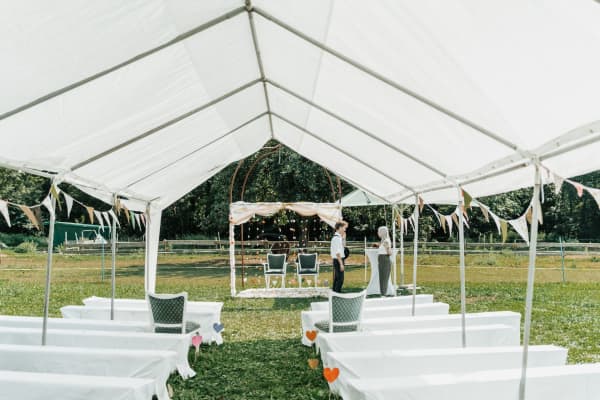
Because the sealing is limited to recommend-holders, many couples in Utah Valley now add a ring ceremony to the day, and it's worth knowing about. A ring ceremony is a short, symbolic ceremony — not a legal or religious rite, since the couple is already married by the sealing — held at the reception venue and open to all guests. It typically includes an exchange of rings, a few words or vows, and sometimes a walk down an aisle, giving every guest a ceremony-like moment to witness.
If the couple is holding one, it's usually noted on the invitation or the schedule. For guests who can't attend the sealing, a ring ceremony is a thoughtful way to be part of a ceremony after all, and it's become a common and lovely addition to the day.
Which Temples Serve Utah Valley
Utah County is home to six operating temples as of 2026, so the first thing to do is check your invitation for which one — and its address, since they're spread across the valley.
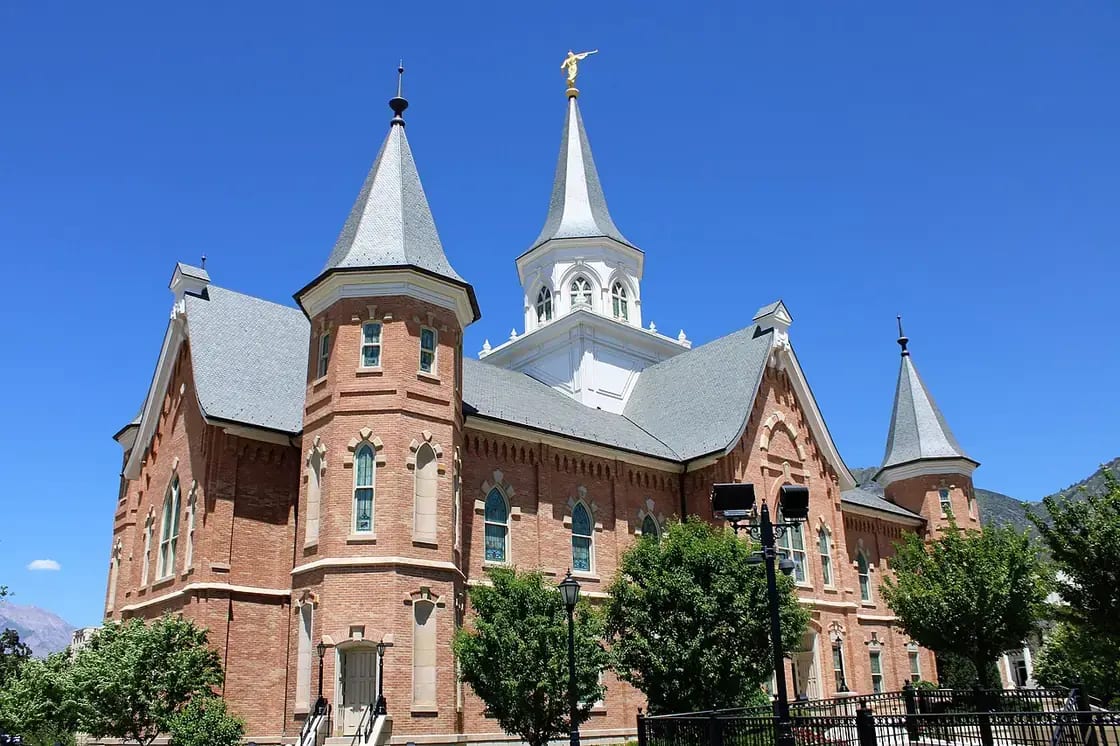
- Provo City Center Temple — downtown Provo, built within the shell of a historic tabernacle. Its central location makes it a popular choice, with several reception venues within walking distance.
- Mount Timpanogos Utah Temple — American Fork, at the north end of the valley, with the mountain it's named for as a backdrop.
- Payson Utah Temple — Payson, at the south end of the valley.
- Orem Utah Temple — Orem, near the center of the valley, dedicated in 2024.
- Saratoga Springs Utah Temple — Saratoga Springs, on the valley's fast-growing west side.
- Lindon Utah Temple — Lindon, the valley's newest temple, dedicated in May 2026.
One important note to save you a wrong turn: the original Provo Utah Temple has been renamed the Provo Utah Rock Canyon Temple and is currently closed for a full reconstruction. It is not hosting weddings, so if your invitation says "Provo City Center Temple," make sure your navigation takes you downtown and not to the older temple site near the mouth of the canyon.
Practical Logistics for the Day
A little preparation makes the day smooth. Here's what out-of-town guests most often want to know.
Timing and punctuality. Sealings are scheduled in specific time slots, and the day tends to run on a tight schedule around them. If you're gathering for the temple exit, arrive a bit early — the couple can emerge sooner than expected, and you don't want to miss it. Build in extra time for parking and for finding the right entrance.
Where you'll wait. You'll spend the ceremony on the temple grounds, which are outdoors. Most temples have benches, shaded areas, and open lawn, but there isn't always a large indoor waiting space for guests, so plan for the weather — sun in summer, cold in winter.
Dress. For the grounds and most receptions, Sunday best or semi-formal attire works well: what you'd wear to a nice church service or a dressy event, leaning modest. You won't be entering the temple, so there's no special requirement beyond respectful, tasteful clothing. If a reception has a dress code, the invitation will say so.
Parking. Temples have visitor parking lots, but they can fill on a busy Saturday when several weddings overlap. Downtown temples like the Provo City Center Temple also have nearby street and public parking. Give yourself a cushion.
Where to stay for the wedding week. Out-of-town guests usually base themselves in downtown Provo (walkable to the City Center Temple and the restaurant blocks) or along Orem's University Parkway for the other temples. Our where to stay in Provo guide breaks down every hotel zone — and note that graduation weekends, football Saturdays, and mid-August can sell out the valley, so book as soon as the date is set.
Photos on the grounds. Photography outside on the grounds is welcome, and you're free to take pictures at the temple exit and around the gardens. Keep it respectful and unobtrusive — the grounds are a sacred space, and on a busy day other wedding parties will be there for the same reason, so share the space graciously.
Gifts and RSVPs. Norms here are like weddings anywhere: many couples register, and gifts are often brought to the reception or shipped ahead. Follow whatever the invitation indicates for RSVPs. When in doubt, a note to the couple or a family member clears things up quickly.
What to bring. For the grounds, think about the weather more than anything: sunglasses and water in summer, a warm layer in winter, and comfortable shoes since you'll be standing and walking on lawn and pathways. A small umbrella is smart insurance in spring. Beyond that, you don't need anything special — no ceremony program to follow, no participation expected. Just bring yourself, dressed for a nice occasion and ready to celebrate.
A Typical Day, Start to Finish
Every family does things a little differently, but a common Utah Valley wedding day looks roughly like this. Use it as a mental map, and rely on the couple's own schedule for the exact times.
Morning or midday — the sealing. The couple and their recommend-holding guests gather at the temple for the ceremony inside. If you're not attending the sealing, this is your window on the grounds — or, if the reception is later, a chance to rest, explore, or grab a meal before the evening.
Just after the sealing — the temple exit and photos. Guests gather near the temple doors to greet the couple as they emerge. After the exit, the couple stays on the grounds for formal photos, often with family joining in for group shots. If you're asked to be in photos, this is when; otherwise, it's a relaxed, social stretch.
Early afternoon — the luncheon, for a smaller group. Between the photos and the reception, most Utah Valley families hold a wedding luncheon for the people who attended the sealing — parents, grandparents, siblings, and a few others. It is a separate, much smaller event from the evening reception, and if you have been invited to it you will usually have been told directly. Our guide to wedding luncheon venues in Utah Valley explains how it works and who is typically included.
Afternoon — a gap, sometimes. Depending on the schedule, there's often a few hours between the temple portion and the reception. Out-of-town guests frequently use this window to check into a hotel, see a bit of the valley, or gather with other travelers for a late lunch.
Evening — the reception. The main celebration, open to everyone. Whether it's a come-and-go open house or a seated dinner, this is where you'll spend real time with the couple and the family, and where the day's energy lands.
Because that midday-to-evening gap is common, it's worth confirming the reception time before you make afternoon plans — and it's a big reason we suggest building a little sightseeing into the trip.
Common Situations Guests Ask About
A few questions come up often enough to be worth answering directly.
"I'm the parent of the couple, but I'm not a member — will I miss the ceremony?" If you don't hold a current temple recommend, you won't be inside for the sealing, even as a parent. This is one of the more emotionally tender parts of a temple wedding, and couples are very aware of it — which is exactly why the temple exit, family photos on the grounds, and often a ring ceremony at the reception exist: to give parents and close family a full, meaningful role in the day. If it helps, let the couple know ahead of time that you'd love to be included in the grounds gathering and photos; they'll almost certainly have planned for it already.
"Can children come?" Children are welcome on the grounds and at the reception, but they don't attend the sealing itself. Many families arrange for a relative or sitter to watch little ones during the ceremony, then bring them for the exit and reception. If you're traveling with kids, ask the couple what they've planned.
"What if I arrive late or can't find the group?" Temple grounds are open and easy to walk, and wedding parties are usually easy to spot near the entrance. If you're running behind, head for the main temple doors — that's where guests gather for the exit. Having a family member's phone number handy is the simplest insurance.
"Do I need to do anything special or say anything particular?" Not at all. Be warm, be punctual, dress nicely, and enjoy the day. No special knowledge or participation is expected of you as a guest.
"Is it okay to ask questions about what's happening?" Yes — respectful curiosity is welcome. The couple and their family are usually glad to explain the parts of the day you're wondering about. A simple "I want to make sure I'm in the right place at the right time" is always a good opener.
Making a Weekend of It
Since you're traveling in, it's worth building a little time to enjoy the valley around the wedding. Utah Valley sits at the base of the Wasatch Range with plenty to see and do, and the reception venues themselves are often near the valley's best restaurants and scenery.
For a meal before or after the events, our Provo restaurants guide and Center Street dining guide are good starting points, and if you're gathering a group, our date-night restaurants guide points to spots that handle an occasion. If the couple has asked for help with any catering, our Provo and Orem catering guide covers local options.
To understand the setting a little more, our Faith & Community guide offers helpful context on Provo's culture for newcomers and visitors — including a full newcomer's guide to the valley's faith communities — and if you're curious about the beautiful backdrops you'll see in the wedding photos, our photo locations guide maps the mountains, canyons, and downtown spots couples love. Planning to attend the reception at a specific venue? Our Utah Valley wedding venues guide covers many of them.
A temple wedding may be a new experience if you're visiting from out of town, but the essentials are the same as any wedding: you're there because the couple wants you to celebrate with them. Come dressed nicely, show up a little early, enjoy the grounds and the temple exit, and settle in for the reception — that's where the celebration, and your time with the couple, really opens up. Safe travels, and congratulations to the happy couple.
Related Guides
Frequently Asked Questions
Can non-members attend a temple wedding?
What do guests do during a temple sealing if they can't go inside?
How is an LDS wedding day usually structured?
What should out-of-town guests wear to a temple wedding?
Which temple will the wedding be at in Utah Valley?