
Utah Valley is one of the busiest engagement-photography markets in the country, and the reason is simple demographics meeting dramatic geography. This is a young-marrying place, Census figures put Utah's median age at first marriage at or near the youngest in the nation, so an enormous number of couples need photos every year. Fortunately, they're surrounded by mountains, canyons, a lake, and a walkable historic downtown, which means the backdrops are spectacular and only a short drive apart. Whether you're a couple scouting your engagement session or a photographer building a shot list, these are the locations worth knowing, organized by the kind of look you're after.
A quick word on how to use this: the valley's best light is the golden hour just after sunrise and before sunset, and the most popular spots get crowded during that window on weekends, especially in fall. Weekday sessions and early mornings give you the same locations without competing for space. Many couples pair two nearby locations, say, a canyon and downtown, for variety in a single session.
Mountain & Canyon Backdrops
The Wasatch Range is the valley's signature backdrop, and these are the spots that put it to best use. For choosing and booking the photographer, see engagement photographers in Utah Valley.
Kyhv Peak Overlook
Best light: Sunrise, golden hour · Best season: Year-round
This is the single best panoramic view of Utah Valley, the whole floor spread out below with the Wasatch framing the scene, Utah Lake glinting in the distance. It's reached by car on Kyhv Peak Road, which turns off US-189 about two miles up Provo Canyon. A note on the name: this overlook and the peak above it were officially renamed Kyhv Peak in 2022 (from the former name that used a slur; Kyhv, pronounced roughly like "hive" with a K, is a Northern Ute word for "mountain"). You'll still see the old name in older directions and on some maps, but the current, respectful name is Kyhv Peak. Sunrise here, valley in shadow, peaks catching first light, is extraordinary, and fall adds color to the canyon below.
Y Mountain & the "Y"
Best light: Golden hour · Best season: Spring through fall
The Y offers two distinct shots: the iconic block "Y" on the mountainside (shoot from the valley looking up, or hike to it) and the valley panorama from the trail itself. The hike to the Y takes about 30 to 45 minutes and rewards you with sweeping views of Provo below, a favorite for couples who want a little adventure in their session. The illuminated "Y" at night is another classic, best captured from campus or the Provo bench.
Bridal Veil Falls
Best light: Canyon shade midday, golden hour · Best season: Spring for peak flow, winter for ice
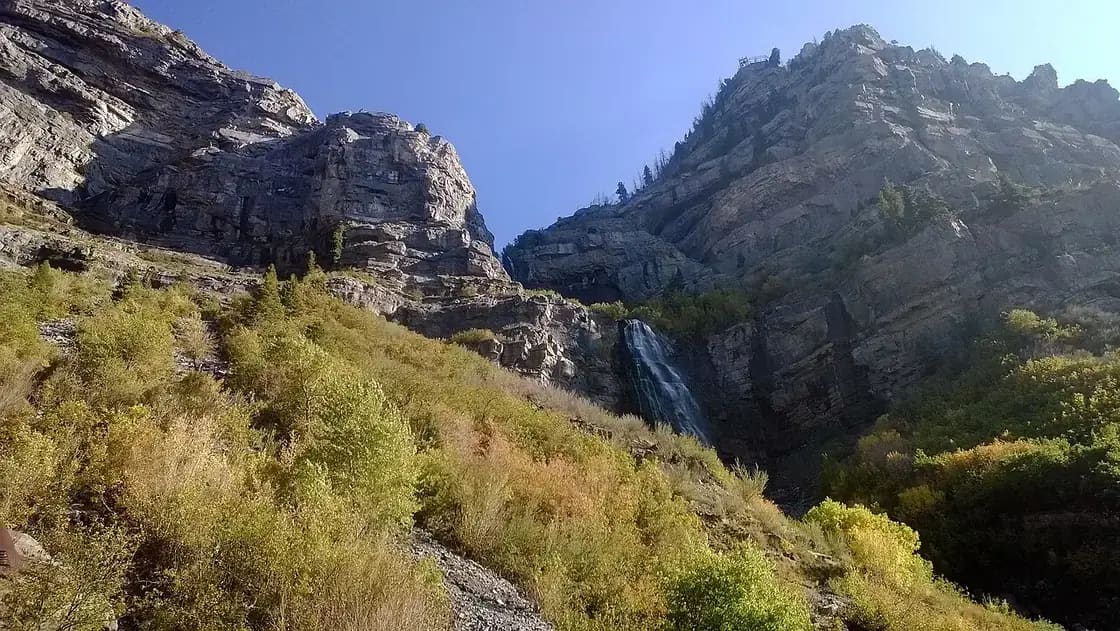
A 607-foot double waterfall in Provo Canyon that is photogenic in every season, and, with a name like that, almost too on-the-nose for a wedding shoot. Spring runoff brings the most dramatic water volume; winter turns the falls into a crystalline ice sculpture. The paved path makes access easy even in formalwear, and the canyon walls create soft, even light through much of the day. Our Bridal Veil Falls guide has the full details on access and parking.
Rock Canyon & Provo Canyon
Best light: Morning · Best season: Fall for foliage, spring for wildflowers
The mouth of Rock Canyon frames dramatic limestone walls against the sky, and in fall the maples turn deep red against the pale rock, one of the most striking autumn backdrops in the valley. Provo Canyon more broadly gives you river-and-canyon-wall compositions along the Provo River Parkway, with pullouts that work well for quick, scenic setups.
The Alpine Loop & Sundance
Best light: Golden hour · Best season: Late September to mid-October
For fall foliage, nothing in the valley beats the Alpine Loop, the scenic drive between the mountains above the valley. Peak color usually lands late September through mid-October, and the aspens and maples create a wall of gold and red that needs no editing. Sundance, up Provo Canyon, adds a mountain-lodge aesthetic, timbered buildings, ski runs, and forest, that photographs beautifully and pairs naturally with a wedding held at the resort. Our Provo photography spots guide covers the seasonal timing in more depth.
Lake & Water
Water gives you reflections, open sky, and the valley's best sunsets.
Utah Lake at Sunset
Best light: Sunset · Best season: Summer and fall
Utah Lake produces some of the most vivid sunsets in the region. The wide western horizon over the water turns pink, orange, and purple, and the open shoreline gives you expansive, uncluttered compositions, ideal for silhouettes and wide romantic frames. Shoot from Utah Lake State Park (there's an entrance fee) or the Provo River delta area. Summer thunderhead clouds add drama to the sky.
The Provo River
Best light: Morning golden hour · Best season: Fall
The river winds through the canyon and the city, offering moving water, reflections, and riparian greenery along its banks. Fall foliage reflected in the water is a local staple, and the Provo River Parkway gives you easy access along much of its length, a good option for a relaxed, natural-feeling session close to town.
Garden & Estate Grounds
Some of the valley's best photo locations are the wedding venues themselves, whose grounds are designed with photos in mind. If you book one of these for your celebration, your photo location is built in.
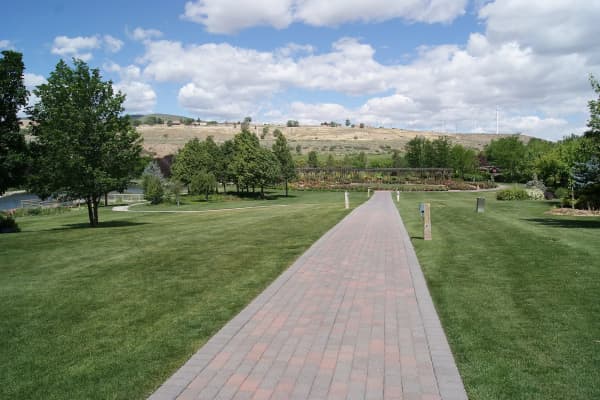
The gardens and grounds at estate venues like Wadley Farms in Lindon, with a stone castle, vineyards, and orchards at the base of Mount Timpanogos, offer a range of manicured backdrops in one place. Sleepy Ridge in Orem pairs an ivy wall, a willow tree, and a golf course with Utah Lake views. Farther north, the expansive formal gardens at Thanksgiving Point in Lehi are a longtime favorite for both engagement and bridal sessions. Because these are private properties, access for a session usually means either booking the venue or arranging a photo fee, check each venue's policy. For the full rundown of estate and garden venues, see our Utah Valley wedding venues guide.
Temple Grounds
For many Utah Valley couples, the temple is the heart of the wedding day, and the grounds are a natural and meaningful place for photos.
Provo City Center Temple
Best light: Blue hour (just after sunset) · Best season: Year-round, especially holiday lighting
The downtown temple's architectural detail, reflecting elements, and landscaping create elegant, formal compositions, particularly at blue hour, when the building glows against a deep sky. The holiday season adds warm lights to the grounds. A note on etiquette: photography outside on the grounds is welcome, but keep it respectful and unobtrusive. This is an active, sacred site, and on a Saturday there will be several other wedding parties there for the same reason, so share the space graciously and keep sessions efficient. The valley's other temples, in American Fork, Orem, Lindon, Payson, and Saratoga Springs, offer similarly beautiful grounds; our temple wedding guide for out-of-town guests covers each of them.
Downtown & Urban
For couples who want texture, color, and a break from the mountains, downtown Provo delivers.
Center Street Murals & Historic Downtown
Best light: Overcast for even light, or golden hour · Best season: Year-round
Downtown Provo has a growing collection of large-scale murals along Center Street and the surrounding blocks, plus historic brick facades and storefronts. These make excellent, characterful portrait backgrounds and add an urban-creative dimension to a gallery otherwise full of mountains. Walk the area to find murals on building sides and in alleys, and since it's year-round and weather-independent, downtown makes a reliable backup when the canyons are socked in. Our Center Street dining guide is handy if you're making an evening of it.
BYU Campus
Best light: Varies · Best season: Fall for foliage, spring for blossoms
The campus mixes architecture, mature trees, and a mountain backdrop into strong compositions. The Jesse Knight Building columns, tree-lined walkways, and open quads are perennial favorites for engagement and graduation photography, and the "Y" on the mountainside behind campus makes for a quintessentially Provo frame, especially for Cougar couples.
Season by season
Timing your session to the season is the biggest lever on how the photos look. The light and the crowds change too.
| Season | What's at its best | Where to go | Watch for |
|---|---|---|---|
| Spring (April to May) | Waterfalls at full flow, green foothills, blossoms on campus | Bridal Veil Falls, Rock Canyon, BYU campus, Ashton Gardens | Mud on trails; late snow up high; the Alpine Loop stays closed until it's plowed |
| Summer (June to August) | Lake sunsets, long evenings, green canyons | Utah Lake, the Provo River, Cascade Springs, the Alpine Loop | Midday heat and harsh light; shoot early or at golden hour |
| Fall (September to October) | Peak color in the canyons, warm low light | The Alpine Loop, Kyhv Peak Overlook, Rock Canyon, American Fork Canyon | The busiest weeks for sessions; weekend crowds at overlooks |
| Winter (November to March) | Snow on the peaks, frozen waterfalls, holiday lights | Bridal Veil Falls, downtown Provo, the temple grounds, snowy foothill trails | The Alpine Loop closes for the winter; icy trails; inversion haze |
The Alpine Loop matters most here. It's the valley's top fall backdrop, and it closes each winter; our Alpine Loop guide has the dates and the closure gates.
The permit rules, location by location
Permission to be somewhere and permission to photograph there aren't always the same thing. Here's what the landowners publish. Rules quoted here were read on November 1, 2026.
| Location | Who owns it | What's required for a photo session, as published |
|---|---|---|
| Ashton Gardens and Hidden Falls, Thanksgiving Point (Lehi) | Thanksgiving Point | A paid Photo Pass and advance reservation for all photo sessions, including engagements; Ashton Gardens $100 (non-members) or $90 (members) for up to 2 hours; Hidden Falls $50 or $40; bridal sessions booked through its Events team |
| BYU campus (Provo) | Brigham Young University | Personal photography allowed if unobtrusive and not interrupting classes or events; no photography for promotional use by people or businesses |
| National forest land: the Alpine Loop, American Fork Canyon, Provo Canyon trails | U.S. Forest Service | No permit for groups of five or fewer using hand-carried gear in areas open to the public without exclusive use of a site; six to eight need a no-fee authorization; nine or more need a special use permit with fees |
| Utah State Parks | Utah Division of State Parks | Day-use entry fees; some parks sell a photographer pass (Antelope Island's is $40 a day for hired photographers) or require a special use permit for commercial shoots |
| Wedding venues' grounds | The venue | Book with the venue; many don't allow sessions without a booking |
Thanksgiving Point
Thanksgiving Point is the strictest in the valley, and it catches people out. Its photography policy says all photography sessions, including those for personal use, require a paid Photo Pass and advance reservation, and it lists engagements as an example. Walk-ups aren't accepted, the Photo Pass is separate from admission, membership doesn't include session privileges, and commercial use is prohibited. It also bans drones, climbing on rocks and water features, outfit changes during sessions and pets other than trained service animals. Casual phone snapshots without posing, props or equipment don't need a pass. Our Ashton Gardens guide covers the rest of a visit.
BYU campus
BYU's filming and photography policy lets visitors photograph for personal use as long as it's unobtrusive, in keeping with other campus policies, and doesn't interrupt classes, programs or activities. It also says the university doesn't allow people or businesses to photograph on campus and use the images for promotional purposes, and that BYU keeps the right to decide how campus property is used for photography. A photographer who plans to post your session in their portfolio or ads may fall under that line, so ask. The policy lists University Communications as its contact.
The canyons and the Alpine Loop
Most of the high country above Utah Valley is Uinta-Wasatch-Cache National Forest. Under the Forest Service's current rules, set after the EXPLORE Act, the question is group size and impact, not whether the shoot is paid:
- Five or fewer people, no permit, if the session is in an area open to the public, uses only hand-carried equipment, doesn't need exclusive use of a site, doesn't harm resources or bother other visitors, and won't add costs for the agency.
- Six to eight people need a no-fee de minimis use authorization, if the same conditions are met.
- Nine or more, including the photographer, or any shoot that could affect forest resources, needs a special use permit, with a land use fee and a cost recovery fee.
A couple, a photographer and an assistant fit easily under five. A bridal session with a full family does not. Developed sites along the loop may also charge a recreation fee for stopping; our Alpine Loop guide explains which. Drones on forest land have to meet FAA rules.
State parks
Utah State Parks charge day-use entry, and some set their own photographer rules. Antelope Island, north of Salt Lake City, sells a $40 day pass for hired photographers shooting portraits, weddings or engagements, and requires a separate special use permit for commercial shoots such as ads. Rules vary by park, so check the specific park's page before you go. Utah Lake State Park, the closest to Provo, charges day-use entry; ask the park office about sessions with a hired photographer.
Temple grounds and wedding venues
The grounds of the Provo City Center Temple are a favorite backdrop, especially at blue hour. It's an active temple with other families celebrating, so keep sessions short and out of the way, and ask temple staff if you're unsure about a spot. Wedding venues' grounds belong to the venue; most allow sessions only with a booking.
Logistics & Etiquette
A few practical notes make any session go smoother. Fees and permits vary by location, public overlooks and trails are generally free for a small session, but state parks charge entry, some city parks and gardens require a reservation or photo fee for formal shoots, and private venues set their own rules. Golden hour is shared, the light everyone wants is the same hour everyone else wants it, so arrive early, have a backup plan, and be gracious about sharing popular spots. Respect private property and sacred spaces, venue grounds and temple grounds are not open public parks; book, ask, or keep sessions unobtrusive. And dress for the terrain: canyon trails, riverbanks, and lake shorelines are beautiful but uneven, so plan footwear and timing accordingly, especially for a bridal session in a full gown.
A Few More Local Favorites
Beyond the headline spots, a handful of locations reward couples willing to drive a little farther or arrive a little earlier.
Cascade Springs, off the Alpine Loop, is a series of clear terraced pools and boardwalks tucked into the mountains, a lush, water-and-greenery setting that feels a world away from the valley floor and shines in late spring and fall. The Provo River Delta, on the west side where the river meets Utah Lake, pairs open water, big sky, and restored wetland for wide, airy sunset frames. Nunn's Park and the pullouts along Provo Canyon give you quick river-and-canyon-wall setups close to town when time is short. And for couples who want something quintessentially Utah Valley in autumn, the orchards and farm stands around the south end of the valley put rows of trees and mountain views in the same frame.
Planning Your Session Like a Pro
A little planning turns a good location into great photos. A few things the best sessions have in common:
Book the light, not just the date. Ask your photographer to schedule around golden hour for your chosen location, and remember that canyons and the east side of the valley lose direct sun earlier than the open west side, so the usable window shifts depending on where you are. Blue hour, the 20 or so minutes after sunset, is the magic slot for the temple grounds and downtown.
Scout for a backup. The valley's weather turns quickly, an afternoon thunderstorm in summer, an inversion in winter, wind on an exposed overlook. Have a weather-independent second option in mind, which is exactly where downtown Center Street earns its place on the list.
Pair two nearby spots. Because the valley's locations sit so close together, many couples book a single session that hits two complementary backdrops, a canyon and downtown, or the lake and a garden, for a gallery with real range. Talk through the route with your photographer so you're not burning your best light driving.
Dress and pack for the terrain. Overlooks, riverbanks, and lake shorelines are uneven and often muddy or dusty. Plan footwear, bring a change for the walk in, and if you're in a full gown, build in extra time. A small kit, water, safety pins, a comb, flat shoes, saves more sessions than couples expect.
Give yourself margin. Sessions run long when the light is good and you're enjoying it. Padding the schedule by 20 or 30 minutes keeps the whole day relaxed rather than rushed.
Book your photographer early. Because this is one of the densest wedding markets in the country, the best local photographers book out months ahead, and fall weekends, the most in-demand window, go first. If you have a specific photographer in mind, reach out well before you lock a date, and if your date is fixed, start the search as early as you can. The same crowding logic that applies to venues applies to the people who shoot them.
Plan the Rest of the Day
Photos are one piece of the wedding, and the valley has the local know-how for the rest. Once you've picked your venue, which often doubles as a photo location, our Utah Valley wedding venues guide walks through the standouts by area and style. For the food, our Provo and Orem catering guide covers everything from casual trays to full-service caterers, and for the rehearsal dinner or a night out with the wedding party, our date ideas in Provo and date-night restaurants guide both point to spots that fit an occasion. If you're helping guests navigate a temple wedding, our guide for out-of-town guests explains how the day is structured.
The best part of shooting a wedding in Utah Valley is that you rarely have to choose just one look. Mountains, a lake, canyon waterfalls, formal gardens, and a historic downtown all sit within a short drive of one another, so with a little planning around light and season, you can build a gallery that looks like nowhere else.
Two Permissions, Not One
Choosing a location settles one question and quietly raises a second, and the two get conflated constantly. Being allowed to stand somewhere and being allowed to use the resulting pictures are separate permissions, granted by different people, under different rules.
Permission one is the landowner's, and it governs the shoot itself. Utah Valley is a patchwork here: some of the most photographed backdrops in the valley sit on private property with their own booking rules, some sit on university land with policies about commercial use, and some are ordinary public parks and trails where a small session needs nothing at all. That is a location-by-location question and we have mapped it in detail in our guide to photography spots in Provo and Utah Valley, which covers which places charge, which require booking in advance, and which are free. Read that before you fix a location, because the answer changes the plan more than the light does.
Permission two is copyright, and it follows the photographer home. Whoever presses the shutter is the author of the resulting image and owns it by default. That is true on a free public trail exactly as it is true at a paid venue, and it is unaffected by who booked the location or paid the access fee. Receiving the files does not change it, under the Copyright Act, owning a copy of a work and owning the work are separate things, and an actual transfer of ownership requires a written agreement signed by the photographer. What you normally get is a license.
The two permissions can point in different directions, which is where couples get caught. A landowner can permit you to be there while restricting what the images may be used for. A photographer can own the copyright in pictures taken somewhere they were not authorized to shoot commercially. Neither cures the other.
Where this bites in practice
Engagement photos have a second life that wedding-day photos do not. They go on save-the-dates, wedding websites, invitations, guest books, welcome signs, and reception displays, and every one of those is a reproduction of an image somebody else owns. For personal wedding stationery this is almost always inside an ordinary license, but it is worth confirming rather than assuming, especially if a stationer, a printer, or a sign-maker is producing the item. Some vendors will ask for written confirmation that you are permitted to reproduce the image, and a photographer who supplies a print release routinely provides exactly that.
Two more situations come up often enough locally to name. If a friend with a good camera takes your engagement photos as a favor, they still own the copyright, informality does not change the default, and it is worth a friendly sentence in writing about what you may do with the pictures. And if you are using the images for anything promotional, including a small business account or anything monetised, both permissions need checking again, because that is precisely the use most landowner policies and most photographer licenses treat differently from personal use.
None of this should make an engagement session feel legal. It is one question asked twice, who says I can be here and who says I can use this, and asking it takes a minute at booking rather than a scramble when the invitations are at the printer. This is general information rather than legal advice; confirm the specifics with the landowner and read your photographer's agreement.
Related Guides
- How to Choose a Wedding Photographer in Utah Valley (2026)
- Graduation photo spots in Utah Valley: the same locations from the graduation side
Frequently Asked Questions
Where are the best engagement photo locations in Utah Valley?
When is the best time of year for wedding photos in Utah Valley?
Do you need a permit for engagement or wedding photos in Utah Valley?
Can you take wedding photos at the Provo City Center Temple?
Where do BYU couples take engagement photos?
Do I need permission to use my engagement photos on save-the-dates and invitations?
If a friend takes our engagement photos, who owns them?
Is permission to shoot at a location the same as permission to use the photos?
Sources
The facts in this guide were checked against these sources. Hours, fees and rules change, so confirm anything time-sensitive with the source before you go. How we make Provo.com.
- Hope Campground, USDA Forest Service, Uinta-Wasatch-Cache National Forest. Checked October 12, 2026.
- Thinking About Geographic Names in Utah, Utah Historical Society. Checked October 12, 2026.
- ACS 1-Year Estimates 2024, Table B12007: Median Age at First Marriage, U.S. Census Bureau (via USAFacts Government Data Connector). Checked October 12, 2026.
- Filming and photography permits, USDA Forest Service. Checked November 1, 2026.
- Photography Pass Terms and Conditions (Antelope Island), Utah State Parks. Checked November 1, 2026.
- The Legend and History of Bridal Veil Falls, Intermountain Histories (Charles Redd Center for Western Studies, BYU). Checked October 12, 2026.
- Filming and photography on campus policy, Brigham Young University. Checked November 1, 2026.
- Photography policy, Thanksgiving Point. Checked November 1, 2026.