
Utah Valley is an unusually busy engagement ring market, and almost nothing written for buyers here acknowledges it.
The demographics are not subtle. This is a young metro area, with two large universities in the middle of it and a culture that treats marriage in the early twenties as ordinary rather than remarkable. Walk across BYU campus in April and you are looking at a substantial fraction of a year's ring purchases.
That produces a market with specific features: a lot of buyers, most of them young, most of them buying their first significant piece of jewelry, most of them on a budget competing with graduate school or a down payment, and many of them working to a fixed date they have not told the jeweler about yet.
This guide is written for that buyer. Not a roster of shops — the good ones change, and a page that lists them goes stale — but the things that determine whether you get a good outcome regardless of where you walk in.
What the local market does to prices
Two competing forces operate here and it is worth understanding both.
Volume pushes prices down. A high concentration of buyers supports more jewelers competing for them, and Utah Valley has more jewelry retail per capita than a metro of this size normally would. Competition on the entry-level and mid-range engagement ring is genuine.
Timing pushes prices and lead times up. Engagements here cluster hard — around the winter holidays, around the end of winter semester, around mission returns and graduations. A market with pronounced seasonal surges is one where the busy weeks have worse availability, longer custom turnaround and less negotiating room. Our wedding timeline guide maps how the rest of the calendar stacks up behind those surges.
The practical translation: shopping in the trough rather than the peak is worth real money and real time, and if you are proposing in December, you should be shopping in October.
The 4Cs, and which ones move the price
Every jeweler will walk you through carat, color, clarity and cut. Fewer will tell you which ones you can trade away without anyone noticing.
Cut is the one to protect. It governs how a stone handles light, and it is the single largest driver of whether a diamond looks alive across a room. A well-cut smaller stone outperforms a poorly cut larger one visibly, at any budget. Do not economize here.
Carat is weight, not size, and it is priced non-linearly. Prices step up sharply at the round numbers — one carat, two carats — because that is where demand concentrates. Buying just under a threshold rather than just over it is the oldest and most reliable saving in the business, and the visual difference is essentially undetectable.
Color is graded on a scale from colorless downward, and where a stone sits becomes much harder to perceive once it is set. Yellow gold in particular masks warmth in a stone, so a setting decision can buy you a color grade or two.
Clarity describes inclusions. The relevant question is not the grade but whether the inclusions are visible without magnification. A stone that is eye-clean at arm's length is eye-clean, whatever the certificate says, and paying for flawlessness nobody will ever see is the most common overspend in this category.
The general principle: prioritize cut, then buy the lowest color and clarity that still looks clean to your eye in person, and buy just under a carat threshold. That sequence produces the best-looking ring for a given amount of money, every time.
Lab-grown versus mined, without the sales pitch
This is now the biggest single decision in the category and both sides are usually argued badly.
What lab-grown diamonds are: actual diamonds. Same crystal structure, same hardness, same optical properties, graded on the same scales by the same laboratories. They are not simulants — moissanite and cubic zirconia are different materials and a different conversation.
The case for them: dramatically more stone for the money. A budget that buys a modest mined stone buys a considerably larger or cleaner lab-grown one. For a young buyer optimizing for how the ring looks, that is a powerful argument.
The case against, stated honestly: lab-grown prices have fallen substantially as production capacity scaled, and there is no reason to expect that to reverse. A lab-grown stone should be understood as something you buy to wear, not as an asset. Mined diamonds have their own poor resale story — retail markup means almost nobody recovers what they paid — but the two behave differently, and the heirloom-and-tradition argument attaches to one and not the other.
The honest summary: if the priority is size and appearance per dollar, buy lab-grown and do not feel bad about it. If the priority is tradition, an heirloom intent, or a family expectation you care about, buy mined. Anyone who tells you one choice is objectively correct is selling something.
Ask, and get it in writing, whether a stone is lab-grown or mined. Laboratory reports state it, and the FTC's Jewelry Guides treat it as deceptive to describe a laboratory-created diamond without a clear disclosure such as "laboratory-grown" that it is not a mined stone.
The paperwork that matters
Three documents, and people routinely confuse the first two.
The grading report. An independent laboratory's description of the stone — carat, color, clarity, cut, measurements, treatments. For any significant center stone, insist on one from a recognized independent lab. Read it rather than filing it.
One caution: laboratories are not perfectly interchangeable and grading can differ between them. Comparing two stones graded by different labs is not a like-for-like comparison, and the difference tends to run in the direction that makes the cheaper stone look better on paper.
The appraisal. A valuation for insurance purposes, assigning a replacement cost. This is a different document with a different job. Note the structural issue: an appraisal written by the shop selling you the ring is produced by a party with an interest in the number. That is not necessarily fraud, and it is a reason to consider an independent appraiser, particularly for a significant purchase.
The receipt and the policies. Return window, resizing policy, warranty terms, what voids the warranty, and whether servicing must be done in-house. Read the warranty specifically for how often you are required to bring the ring in for inspection to keep it valid — many require it, most buyers never do it, and the coverage lapses silently.
Insurance, which almost nobody sets up correctly
Here is the part that costs people the most and gets discussed the least.
Your renters or homeowners policy almost certainly does not cover this ring properly. Standard policies carry a low sub-limit for jewelry — often a figure that a center stone alone will exceed. Many people are carrying a fraction of the coverage they believe they have.
The two fixes are a scheduled personal property rider added to an existing policy, itemizing the ring at appraised value, or a standalone jewelry policy from a specialist insurer. Both require an appraisal.
The question to ask, in these words: does this cover loss, or only theft? The most common way an engagement ring disappears is not burglary. It is coming off in a lake, going down a drain, or falling out of a setting on a hike. Policies differ sharply on whether that is covered, and it is the difference that matters most in a place where people spend as much time outdoors as they do here.
Do this in the first month. It is the single highest-value administrative task attached to the purchase and it is the one everyone postpones.
Where to buy, and the trade-offs of each route
Independent local jewelers. The argument for them is not primarily price — it is the relationship. Over the life of a ring you will need sizing, prong checks, cleaning, a wedding band that matches, and eventually a repair. A jeweler who knows the piece and expects to see you again handles all of that differently from a counter that will not remember you. In a valley where a large share of couples buy a band within a year of the ring, that continuity is worth something concrete.
Chain stores in the malls. University Place in Orem and Provo Towne Centre both carry jewelry retail, and our shopping guide covers the wider retail map. Chains offer standardized warranty and protection programs and predictable inventory. Read those protection plans closely, particularly the inspection requirements.
Online. The widest inventory and the lowest prices, with the ability to filter by exact specification and compare grading reports side by side. What you give up is seeing the stone, and a local person to go back to.
The hybrid, which is what a lot of informed buyers do: buy the stone online where the price competition is fiercest, and have a local jeweler set it. Ask first. Not every jeweler will set a customer-supplied stone, some charge more for it, and some will not warranty the setting if they did not supply the stone. Get the answer before you buy the stone, not after.
For a genuine local alternative, remember that estate and secondhand pieces exist — our thrift and vintage guide and pawn shops guide cover that side of the market, which offers real value for buyers willing to look and to get an independent appraisal before committing.
The sizing trap
Resizing is where surprise proposals go wrong, and the failure is entirely preventable.
Get a real measurement if you possibly can. Borrowing a ring she already wears on the correct finger and taking it to a jeweler is by far the most reliable approach. Guessing from a photograph is the least.
Expect to resize anyway. Fingers change with temperature, time of day, altitude and season, and Utah's climate swings all of those.
Ask which settings resize and which do not, before you choose one. This is the step people skip. An eternity band with stones all the way around cannot be resized in the normal way. Certain tension and channel settings are difficult or impossible. A solitaire on a plain band is trivial. If you are guessing at the size, choose a setting that forgives a guess.
Ask what the free resizing window is. Many jewelers include one within a set period. Find out what it is and use it.
Settings and metals, briefly
The stone gets all the attention and the setting determines most of what daily life with the ring is like.
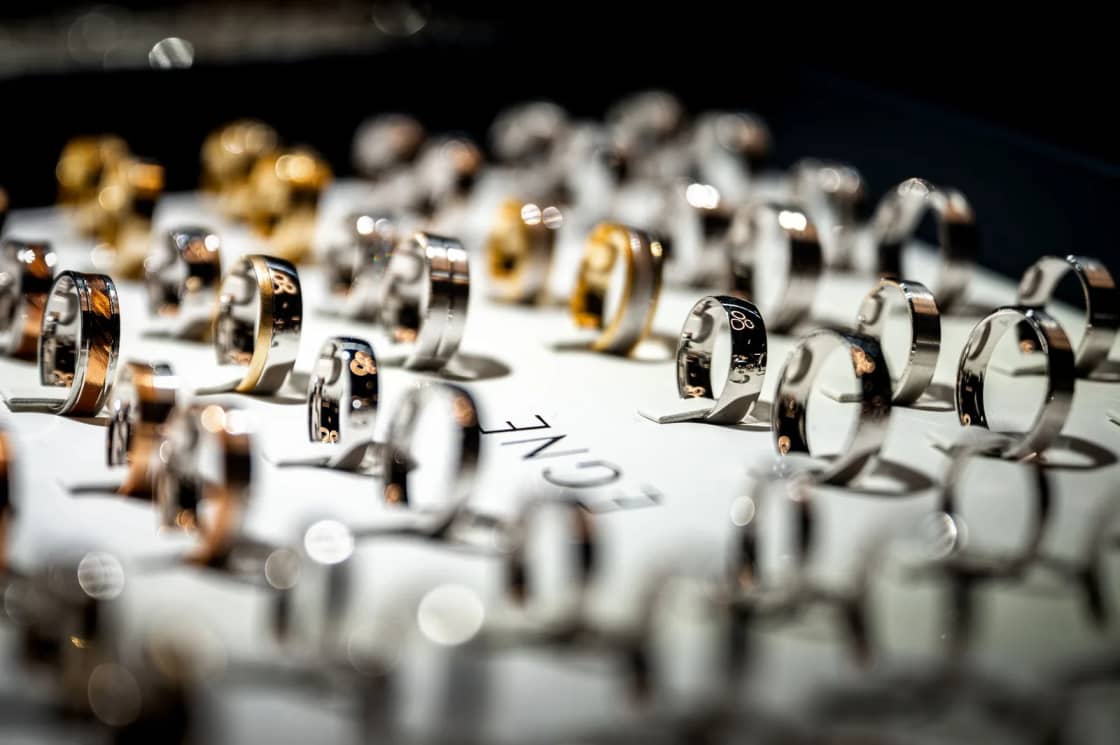
Solitaire. One stone, plain band. Easiest to resize, easiest to clean, hardest to hide a mediocre stone in. The default for a reason.
Halo. A ring of small stones around the center stone, which makes the center look larger and adds sparkle for relatively little money. More places for grit to collect, more small stones that can loosen.
Pavé and channel bands. Small stones set into the band. Beautiful, and the reason resizing gets complicated.
Eternity band. Stones all the way around. Effectively cannot be resized in the conventional way. Do not buy one on a guessed size.
Bezel. Metal rim surrounding the stone rather than prongs. Much more secure, lower profile, catches on nothing — the practical choice for someone who works with their hands, climbs, or is outdoors constantly, which describes a lot of people here.
On metals, the trade-off worth knowing is that platinum is denser, more durable and does not need replating, while white gold is lighter and cheaper but is plated with rhodium that wears off and needs redoing every few years. Nobody warns first-time buyers about the replating, and then the ring goes faintly yellow at year three and they think something is wrong with it. Nothing is. It is maintenance.
Yellow and rose gold need no replating and, as noted above, mask warmth in a lower-color stone, which is a genuine budget lever.
If a diamond is not the point
Worth saying plainly, because in a young market a lot of buyers assume there is only one acceptable answer.
Moissanite is a different material, not a diamond, and it is priced accordingly — dramatically less. It is very hard, very durable, and noticeably more fiery than diamond, which some people love and some find obviously not-diamond in bright light. It is the honest budget choice and a lot of couples here make it.
Colored gemstones — sapphire above all, which is second only to diamond in hardness among common gems — are a legitimate center stone and always have been historically. Emerald and opal are considerably softer and are poor choices for a ring worn every day.
Heirloom stones. Resetting a family stone is often the best-value and most meaningful option available, and it is more common here than the retail conversation suggests. Take it to an independent jeweler for assessment first: old stones are frequently cut to different standards than modern ones, which affects how they perform in a modern setting, and old settings can hide damage.
The only wrong answer is a stone bought to satisfy someone who is not going to wear it.
Fitting the ring into the whole budget
The ring is one line item, and in this valley it frequently competes with things that matter more than the jeweler will mention.
Our wedding budget guide covers what a Utah Valley wedding costs across every category, and the honest observation is that couples marrying at twenty-two are usually making a genuine trade — ring against reception, ring against honeymoon, ring against the deposit on a first apartment or the down payment on a first house.
There is no rule about how to make that trade. There is a rule about how to make it badly, which is to decide the ring number first, in a shop, without having written down the others. Decide the total, allocate across the categories, then shop.
A related note specific to here: the wedding band and any groom's band are usually a separate purchase, and buying them from the same jeweler as the engagement ring makes matching the metal and finish substantially easier. Budget for the set rather than for the ring.
The short version
Utah Valley is a busy engagement-ring market, which means real competition on price and real congestion in the seasonal peaks around the holidays and the end of the academic year — shop in the trough. Protect cut above all the other Cs, buy just under a carat threshold, and buy the lowest color and clarity that still looks clean to your eye in person. Lab-grown diamonds are real diamonds and are the right answer if you are optimizing appearance per dollar, and the wrong one if resale or heirloom intent matters to you. Get an independent grading report, consider an independent appraisal rather than the seller's, and insure the ring within the first month with a policy that explicitly covers loss rather than only theft. Ask about resizing before you pick a setting, not after. And decide the whole wedding budget before you walk into a shop, because the ring is the easiest line item to decide first and the worst one to.
Related Guides
- Getting Married in Utah Valley on a Budget
- How to Plan a Utah Valley Wedding: A Month-by-Month Timeline
- Wedding Dress Shopping in Utah Valley
- Getting a Marriage License in Utah County
- Utah Valley Bridal Expos
- Wedding & Engagement Photo Locations in Utah Valley
- Shopping in Provo & Utah Valley
- Dating in Provo: An Honest Guide
- Buying and Selling Used Wedding Dresses, Décor and Rings
Frequently Asked Questions
How much should I spend on an engagement ring in Utah Valley?
Are lab-grown diamonds worth it?
Do I need an appraisal for an engagement ring?
What is a diamond grading report and do I need one?
Where should I buy an engagement ring in Utah Valley?
How long does it take to get a custom ring made?
Should I get the ring insured?
What ring size should I get if it is a surprise?
Sources
The facts in this guide were checked against these sources. Hours, fees and rules change, so confirm anything time-sensitive with the source before you go. How we make Provo.com.
- eCFR (FTC Jewelry Guides). Checked October 12, 2026.