
Twice a year, on the first weekends of April and October, Utah Valley runs on a different clock. General Conference — the semiannual worldwide gathering of The Church of Jesus Christ of Latter-day Saints — broadcasts from Salt Lake City, regular Sunday services pause, and hundreds of thousands of valley residents spend the weekend watching from their living rooms, driving north to attend in person, or navigating a town whose rhythm has visibly shifted. This guide explains the weekend for everyone: members planning to attend, newcomers wondering why the grocery store felt different on Saturday morning, and visitors who happen to be in town.
Missed a session? Our General Conference recaps cover every talk, session by session.
As with everything in our Faith & Community coverage, this is a practical local guide, not a religious commentary — and the schedule details below were verified against the Church's own published 2026 calendar.
What General Conference Is
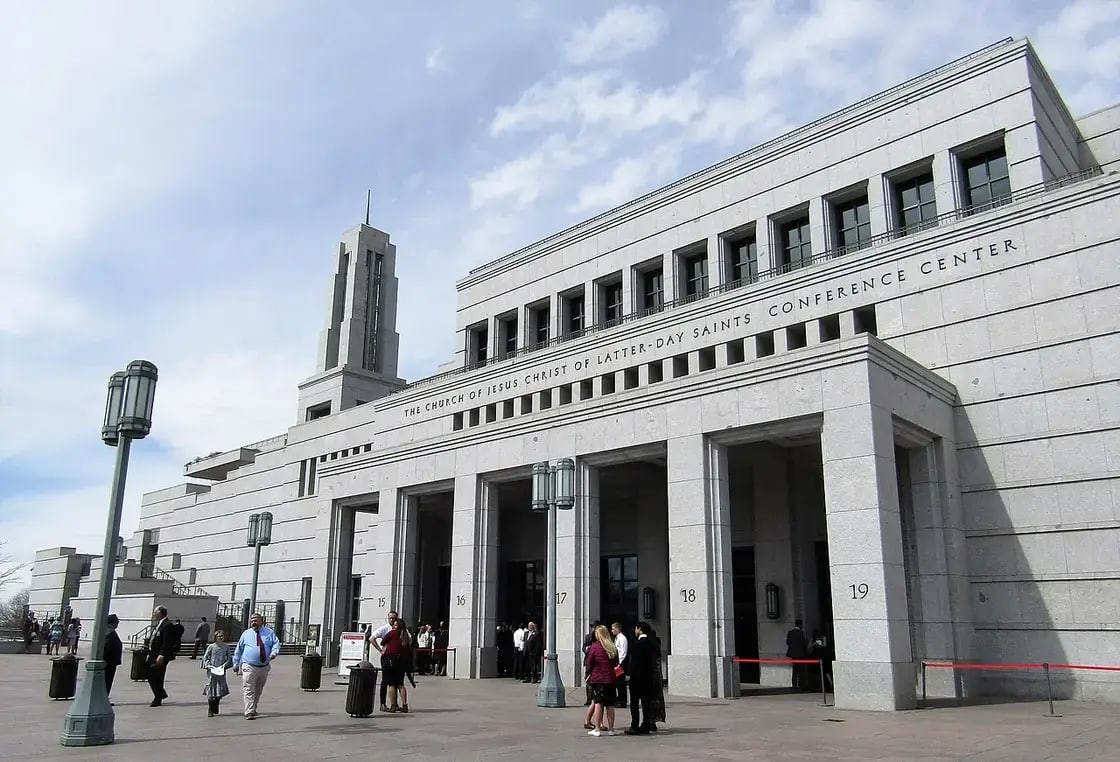
General Conference is the Church's worldwide semiannual meeting: two days of sermons ("talks") from the faith's senior leaders, broadcast live from the Conference Center on Temple Square in Salt Lake City and streamed globally in dozens of languages. Everyone is welcome to watch, member or not, and on Conference weekends regular Sunday services at local meetinghouses are not held — the conference is church that week.
The next one is Saturday, October 3 and Sunday, October 4, 2026. Per the Church's published broadcast calendar, live sessions run 10:00 a.m. to noon and 2:00 p.m. to 4:00 p.m. Mountain Daylight Time on both days — four sessions, not five — with every session available on demand afterward. That count is now settled rather than provisional. On 19 November 2025 the First Presidency announced that beginning with the April 2026 conference, General Conference would no longer include a Saturday evening session, in order to concentrate attention on the four daytime sessions. October 2026 is the second conference held under the new format and the first October one.
⚠ If you find a sixth session listed anywhere, check the date on the page. The Saturday evening slot has moved repeatedly — a men's priesthood session for decades, alternating annually with a women's session after 2017, dropped in June 2021, reinstated a month later as a general session, and now discontinued outright. That churn has left stale schedules scattered across the web, including on the Church's own local unit-calendar pages, some of which still show a 6:00 p.m. Saturday session for October 2026. The Church's newsroom event listing for the conference is the surface that carries the current schedule.
What the Weekend Looks Like in Utah Valley
If you're new here, the local texture of Conference weekend is worth understanding, because it's one of the most distinctive rhythms of valley life.
Saturday mornings go quiet — then surge. From 10 a.m. to noon, much of the valley is home in front of a screen. Then, from roughly noon to 2 p.m., the between-session window becomes one of the busiest restaurant rushes of the year — families pile out for brunch or a quick lunch before the afternoon session. If you're dining out on a Conference Saturday, either beat the noon wave or ride it knowingly.
Sunday is Sunday, but more so. With no local services, families gather at home, and the traditions come out. Every household has its own — the big Conference breakfast is close to universal, and homemade cinnamon rolls between sessions are a genuine regional institution that local bakeries lean into twice a year. If you're a newcomer invited to a neighbor's Conference breakfast: go. It's one of the best welcome mats the valley offers.
Businesses feel it. Restaurants that open Sundays still do — our restaurants open on Sunday guide applies as usual — but expect the session-break waves both days and quieter mid-session lulls. Grocery stores see their rush Friday and Saturday morning.
Attending in Person: The Utah Valley Playbook
Watching from home is how most of the valley experiences Conference, but attending a session at the Conference Center is something many families try to do at least occasionally, and from Utah Valley it's an easy day trip.
Tickets are free, but you need one. They're distributed electronically through local congregations; in the U.S. and Canada, ask your ward or branch leaders. No ticket? There's a standby line outside the Tabernacle before each session — no guarantee, but standby seating regularly happens.
Your ticket is also your bus and train fare. Here's the detail that makes the Utah Valley trip work: a Conference ticket doubles as a UTA pass for travel to and from the session. On Saturday, that makes the train the smart route from Provo — FrontRunner north from Provo Central Station to Salt Lake Central, then TRAX to Temple Square — skipping downtown Salt Lake's Conference-weekend parking entirely. Allow a generous cushion; trains and Temple Square crowds both swell on Conference weekends.
Sunday is a drive, and this catches people out every single Conference. FrontRunner does not run on Sundays — not even for General Conference. Neither does UVX. UTA concentrates its track maintenance into Sundays because most of the FrontRunner corridor is single-tracked, and the agency has said as much directly during Conference weekends when asked. TRAX does run on Sunday, so the workable Sunday plan is to drive to a TRAX park-and-ride in Salt Lake County and take the light rail in from there — not to drive to Provo Central Station expecting a train.
On the ground at Temple Square. Arrive early, travel light (Temple Square events have security screening and item guidelines — check the Church's event guidelines before you go), and plan for the plaza scene outside: crowds, choirs of the impromptu kind, and, yes, the occasional demonstrator at the perimeter, all part of the semiannual streetscape.
For Visitors Who Land on Conference Weekend
If you're visiting Provo on the first weekend of April or October without realizing what weekend it is: welcome, and here's your orientation. Hotels in the valley and especially in Salt Lake fill earlier than usual — our where to stay in Provo guide covers the zones. Outdoor attractions, canyons, and trails run normally and are noticeably less crowded during session hours, which savvy visitors treat as a feature: a Conference-Saturday morning is one of the quietest times of the year to have Provo's outdoors to yourself. And if you're curious about the event itself, tune in — every session streams free, and watching twenty minutes of it will explain more about your host city than any guide can.
Watching From Home (or Anywhere)
For most of the valley, Conference is a living-room event, and the streaming options are broad and free. Every session streams live on the broadcasts page of ChurchofJesusChrist.org and on the General Conference YouTube channel, with additional live options in the Gospel Stream and Gospel Library apps — the Church broadcasts live in roughly 80 languages, with messages available on demand in text, audio, and video afterward. Local television and radio in Utah also carry the sessions, so there is no version of Conference weekend in Utah Valley where you can't find it.
Two local habits worth adopting: families with kids often print the Church's conference activity packets to keep young listeners engaged through two-hour sessions, and nearly everyone treats the on-demand archive as the safety net — if the Saturday afternoon session loses out to a canyon hike, it'll be waiting Sunday night. After the weekend, expect the talks to become the curriculum: local congregations study recent Conference messages in their Sunday classes for the following six months, which is why "did you hear the talk about…" works as small talk here in a way it might not where you're from.
The Rest of the Story
Conference weekend is also a family-logistics event across the valley: students at BYU and UVU stream home or host parents, missionaries' families listen for announcements that might affect their missionary, and the Monday after runs on discussions of what was said — including, occasionally, news that lands squarely in Provo, like temple announcements affecting Utah County. (It was a General Conference announcement, after all, that set in motion the reconstruction of the temple now called the Provo Utah Rock Canyon Temple.)
Twice a year, for one weekend, the valley's usual rhythm gives way to something older and slower — and whether you spend it in the Conference Center, on a couch with cinnamon rolls, or on a gloriously empty trail, it helps to know the schedule. Mark October 3–4, and check the Church's site for the final session times as the weekend gets close.
Something we should add for newcomers or visitors? Write us at contact@provo.com.
April and October Are Not the Same Weekend
The schedule is symmetrical — first weekend of April, first weekend of October — but the two weekends feel nothing alike in Utah Valley, and planning around them differs accordingly.
October is the crowded one. The first weekend of October lands inside the narrow window when the canyons are at their best. US-189 through Provo Canyon and the Alpine Loop draw leaf-peeping traffic from across the Wasatch Front on exactly the days that Conference brings visiting family into the valley, and the two crowds are not the same people competing for the same roads at the same hours — the Conference crowd is indoors during sessions and out during the breaks, which produces sharp pulses rather than steady congestion. Add the football calendar: BYU plays home games through the autumn, and if one lands on Conference Saturday the hotel and restaurant picture tightens considerably. Check the schedule before assuming a room will be available at short notice.
April is the volatile one. Early April in Utah Valley can deliver anything from shirtsleeve weather to genuine snow, sometimes inside the same weekend. Canyon roads may still be gated for the season, so the outdoor half of a visitor's itinerary is far less dependable than it is in October. What April offers instead is a quieter valley — no football, no foliage traffic, and a much better chance of booking late.
Both weekends share the same underlying rhythm, which is the part worth internalizing: two days built around four two-hour blocks, with everything social, commercial and logistical happening in the gaps between them. Since April 2026 that shape is also simpler than it used to be — with the Saturday evening session discontinued, Saturday night is now an ordinary evening on Conference weekend rather than a third commitment, which is a genuine change to how the weekend is planned locally.
Eating Out on Conference Weekend, by the Clock
The single most useful thing a newcomer can know about Conference weekend is that restaurant demand does not rise and fall gradually. It moves in a square wave, and the wave is the same on both days.
Before 10:00 a.m. is quiet. Breakfast out on a Conference Saturday is one of the easier restaurant experiences of the year, because the households that would normally be out are at home hosting their own breakfast.
10:00 a.m. to noon is the emptiest window of the weekend in dining rooms and the fullest at home. If you want a table anywhere with no wait, this is it.
Noon to 2:00 p.m. is the crush. Families come out of the morning session together, and they all want to be seated and finished before the afternoon session starts. That is a two-hour window carrying what would normally be a four-hour lunch service, with a hard deadline attached — which is why service can feel rushed even at places that are usually relaxed. Arrive at 12:00 rather than 12:30, or wait until 1:15 when the first wave is paying.
2:00 to 4:00 p.m. empties out again.
After 4:00 p.m. the evening builds normally, though Saturday runs later than a typical Saturday because the afternoon session pushed everyone's schedule back.
Sunday follows the same shape with a smaller amplitude, because far fewer places are open to absorb it. The practical rule for the whole weekend: eat during a session, not during a break.
If You Are Not a Member of the Church
A substantial share of Utah Valley's residents are not Latter-day Saints, and Conference weekend is one of the times that difference is most visible. A few honest notes.
Nothing is expected of you. There is no local convention that non-members observe the weekend in any particular way, and nobody will ask what you did with it. Businesses that stay open stay open; the valley does not shut down.
You will notice the quiet, and it is not aimed at anyone. Streets, parks and trails are unusually empty during session hours. Regular users of the canyons have long since worked out that Conference Saturday morning is one of the best times of the year to have a trailhead largely to yourself, and treating it as an opportunity rather than an oddity is the local move.
An invitation to a Conference breakfast is a social invitation, not a religious one. It is the closest thing the valley has to a twice-yearly open house, and neighbors extend it to people they know are not members. Accepting does not commit you to anything, and declining is unremarkable.
Expect it in conversation afterward. Local congregations study the weekend's talks for the following six months, which means the messages surface in ordinary small talk well into the next season. Knowing that the weekend happened, and roughly what it is, is enough context to follow along — and the sessions stream free to anyone who wants more than that.
If You Are Hosting Family for the Weekend
Conference weekend is one of the two reliable family-gathering weekends of the year in Utah Valley, and hosting it has a rhythm worth knowing before you find yourself in the middle of it.
The house is occupied in blocks, not continuously. Four two-hour sessions means four stretches where everyone is seated in one room facing the same direction, separated by breaks where the house empties toward the kitchen. Planning around that shape — food ready before a session rather than during it, errands run in the gaps — is the entire trick.
Feed people in the breaks and nowhere else. The between-session window is short and everybody is hungry at the same moment, which is why the local institution of something baked and ready on the counter exists. It is not hospitality theater; it is the only way to feed eight people in ninety minutes without anyone missing the start of the next session.
Sunday has no service to build the day around. For households used to a fixed Sunday meeting time, the absence of one removes the structure that normally organizes the day. Guests notice the drift more than hosts do, so naming a plan out loud helps.
Sleeping arrangements are the real constraint, not seating. Valley hotel rooms tighten on Conference weekends, and relatives who assume they can book late sometimes cannot. If you are hosting people who need a room rather than a couch, say so early enough that they book in time.
Outdoor time is the pressure valve. With sessions occupying the middle of both days, a short walk or a canyon drive in a gap does more for a full house than any amount of indoor rearranging.
Why a gathering this size is not a "mass gathering," legally speaking
A weekend that moves hundreds of thousands of people through a downtown, with crowds on plazas and buses running at capacity, sounds like the definition of a regulated mass gathering. Under Utah rule it is largely the opposite, and the reason is worth understanding — it is the same reason a concert hall is treated differently from a field, and it explains what you will and will not find on the ground.
The rule is Utah Admin. Code R392-400, Temporary Mass Gathering Sanitation, issued under the state's public-health statutes.
The exclusion that does the work
R392-400-2(2) provides that a temporary mass gathering does not include an assembly of people at a location with permanent facilities designed for that specific assembly, unless the designed occupancy levels are exceeded.
A purpose-built auditorium holding an audience is doing precisely what it was designed and built to do. Its restrooms, water, circulation and emergency provision were engineered for that occupancy and are subject to building and fire code rather than to a temporary-event sanitation rule. So the rule steps aside — with the stated exception, which is that exceeding designed occupancy brings it back.
This is the mirror image of the case covered in our Rooftop Concert Series guide, where an open plaza hosting a concert is being used for a purpose different from its designed use and therefore sits squarely inside the rule. Same regulation, opposite result, and the difference is architectural rather than numerical.
R392-400-3(14)'s definition makes the point from the other direction: the threshold is 1,000 or more people for two or more hours a day at a site used for a purpose different from the designed use and usual type of occupancy. Crowd size alone never triggers the rule.
Jurisdiction, which matters for a weekend split across two counties
R392-400-3(5) and (6) define the local health department by reference to Utah Code § 26A-1-102(5) and the local health officer as the health officer of the department having jurisdiction, or a designated representative.
That is not a technicality for a Conference weekend spent partly in Utah County and partly in Salt Lake County. The two counties are served by different local health departments, and any temporary event on either side is regulated by the department for that jurisdiction. A valley-side gathering that does cross the threshold — an overflow viewing event in a park, say — answers to the Utah County health department, not to whoever regulates the downtown venue to the north.
The powers that would apply to an outdoor overflow event
Where the rule does reach a gathering, the enforcement architecture is real. R392-400-7(1) permits inspection before, during and after the event. R392-400-7(2) requires the operator to give the health officer access to each area the officer deems necessary, with the number of access credentials requested. R392-400-8(1) allows a notice of violation to the owner or operator; R392-400-8(3) allows a posted notice of closure of the gathering or an affected part on a determination of a serious or imminent health hazard; and R392-400-8(4)(a) bars reuse of a closed area until conditions are abated and written approval is given.
R392-400-8(6) provides the appeal route: the operator may appeal a notice or closure under the procedures established by the local board of health, or under Utah Code Title 63G, Chapter 4, the Administrative Procedures Act, whichever applies.
What this means for your weekend
Three practical consequences.
Inside a purpose-built venue, expect venue rules rather than event rules. Bag policies, security screening and seating are set by the operator of the building and its own published guidance, not by a temporary-event sanitation rule. Check the venue's current guidance before you travel.
Outdoors, the picture can change year to year. A plaza scene, an overflow viewing area or an organized outdoor event is a different legal object from the building beside it, and whether it crosses the threshold is a question of anticipated attendance and duration.
The county line is a regulatory line. For anything organized on the Utah Valley side of the weekend, the county health department is the relevant office, and its requirements are the ones that apply.
Session times, transit schedules and venue guidance all change between Conferences — verify each against the official published calendar and the transit agency rather than from any guide.
Related Guides
- FrontRunner from Provo: What to Know Before You Ride
- Visiting Utah Valley's Temples: A Guide for Everyone
- Easter Weekend in Utah Valley
- October 2026 General Conference: The Saturday Morning Session, Talk by Talk
- October 2026 General Conference: The Saturday Afternoon Session, Talk by Talk
- October 2026 General Conference: The Sunday Morning Session, Talk by Talk
- October 2026 General Conference: The Whole Weekend in One Read
- October 2026 General Conference: The Sunday Afternoon Session, Talk by Talk
Frequently Asked Questions
When is the next General Conference?
Can anyone watch or attend General Conference?
How do I get tickets to attend General Conference in person?
Is anything open in Provo on Conference weekend?
How long are General Conference sessions?
When is General Conference in 2026?
What is the best time to eat out on Conference weekend?
Do I need to do anything for Conference weekend if I am not a Latter-day Saint?
Sources
The facts in this guide were checked against these sources. Hours, fees and rules change, so confirm anything time-sensitive with the source before you go. How we make Provo.com.
- DAR File No. 40662: R392-400 Temporary Mass Gatherings Sanitation (2016 amendment), Utah Office of Administrative Rules (Utah State Bulletin). Checked October 12, 2026.
- To Increase Focus, Four Daytime Sessions for General Conference, Newsroom of The Church of Jesus Christ of Latter-day Saints. Checked October 12, 2026.
- October 2026 General Conference, The Church of Jesus Christ of Latter-day Saints. Checked October 12, 2026.
- October 2026 general conference: Announcements, talk summaries, photos, Church News. Checked October 12, 2026.