
Every week, families from across the country — and around the world — make the drive to a campus just north of BYU for one of the most emotional errands in Latter-day Saint life: dropping a son or daughter off at the Provo Missionary Training Center. If your family's turn is coming up, this guide is for you. It covers how drop-off day works, how to plan the trip around it, how to stay connected once your missionary is inside, and a few things about the MTC that surprise even lifelong locals.
A note on our approach: everything below about MTC procedures was verified against the Provo MTC's own official pages, because the rules are specific and they matter on a day when emotions are running high. Policies can change, so treat the MTC's site — and the instructions in your missionary's travel packet — as the final word.
One trap before you start searching. The MTC's website used to live at a byu.edu address, and a great many older blog posts, printed handouts and church-bulletin inserts still send people there. The current home is provo.mtc.missionary.org. The old address redirects for now, but if you are working from a handout someone gave you two years ago, check the destination rather than the label.
What the MTC Is
The Provo Missionary Training Center is the largest of the missionary training centers operated by The Church of Jesus Christ of Latter-day Saints, sitting at 2005 North 900 East in Provo, directly north of the BYU campus. New missionaries spend a few weeks here — longer for those learning a language — studying, practicing teaching, and adjusting to missionary life before departing for assignments all over the world.
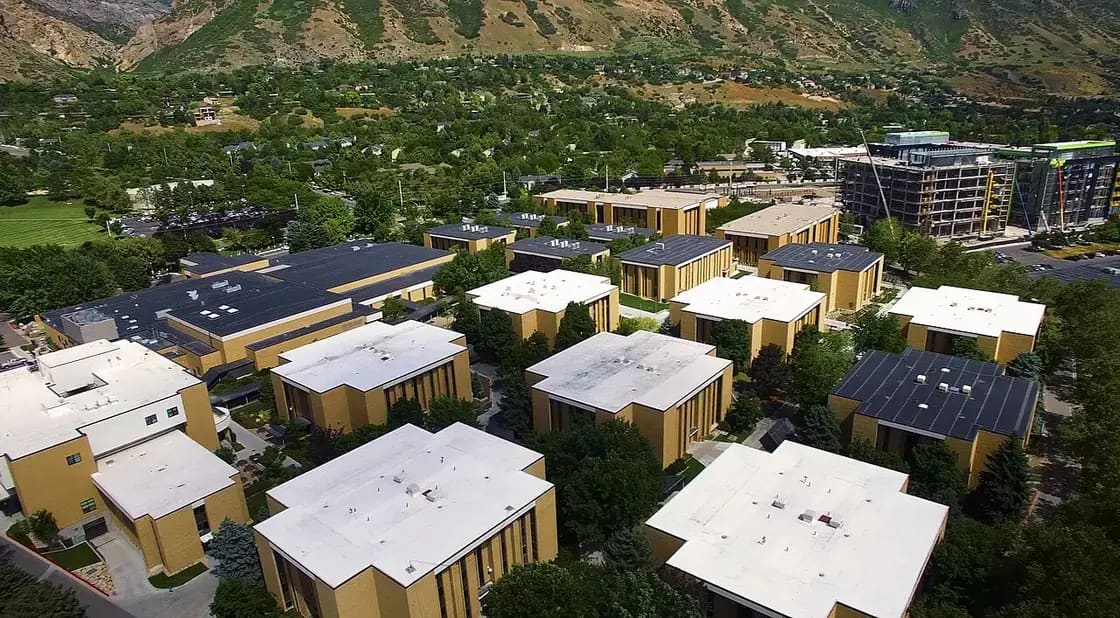
The scale is easy to underestimate from the road. The campus runs to 39 acres and 16 buildings: residence halls, classroom buildings, administration, a store, a gymnasium with basketball, volleyball and pickleball courts, an indoor jogging track, and outdoors a playing field, a jogging circuit and volleyball courts. The Church states the campus can train up to 3,700 missionaries at a time and teaches more than 50 languages — more than any other MTC. It draws missionaries from all over the world, which is why a Provo neighborhood ends up hosting goodbyes from Ghana, Chile, Japan and Idaho in the same afternoon.
Training now starts at home. Most missionaries begin the MTC experience with online training from wherever they live, meeting teachers and fellow missionaries virtually before traveling to Provo to finish on-site. A few complete the whole thing on-site because of their specific assignment. So by the time drop-off day arrives, your missionary has usually already been "in the MTC" for a while — the drive to Provo is the second beginning, not the first. Length still tracks language: roughly three weeks for missionaries serving in a language they already speak, and up to around nine weeks for those learning a new one.
And the campus is mid-rebuild. In 2025 the Church announced that the MTC's cafeteria and administration buildings — both in service since 1978 — will be removed and replaced by two new buildings, a multiyear project. The Church has said the MTC will stay fully operational throughout, and nothing in the arrival instructions has changed because of it. Still, if you are picturing the campus from a visit fifteen years ago, parts of it will not look the way you remember.
Drop-Off Day: How It Actually Works
This is the part families most want to get right, so here it is plainly, per the MTC's official arrival instructions.
The farewell is at the curb. Since June 2009, families do not go inside. One vehicle per missionary family may enter the MTC grounds, and it should carry the missionary, their luggage, and a few members of the immediate family. Other relatives and friends will not be able to drive in or walk onto the campus — so if grandparents, cousins, and best friends want to say goodbye, plan that gathering somewhere else, earlier in the day or the night before.
Timing is scheduled. Each missionary is given a specific arrival slot ahead of time, through the missionary's own portal rather than to parents. The MTC asks that you come at the assigned time — hundreds of missionaries arrive in a compressed window, and the system works because everyone keeps to it. If you're running late, call the information desk at 385-384-2900.
The goodbye is short — by design. When you pull in, you'll be directed to a drop-off spot. You'll have a few minutes to unload, take a photo, hug, and say goodbye before a pair of host missionaries — themselves only a few weeks in — meet your missionary and walk them up into their new life. The MTC's own advice is to keep farewells brief and to have your real farewell activities before you arrive. Take your photos beforehand, too; the curb moves fast.
A few practical details that catch people out. Plan on one ordinary vehicle per family for the drop-off line. Missionaries who must fly in early to make their arrival time may come the day before. Missionaries assigned a Tuesday arrival are told to be there no later than Tuesday evening. And anyone arriving by airport shuttle should come straight from the flight rather than killing time until the scheduled slot.
Why the curb, and why it isn't really about swine flu
Almost everyone who explains this gets the causation slightly wrong, so it is worth setting down.
Before June 2009, families walked in with their missionary. Everyone gathered in the Wilford Woodruff Administration Building for a short welcome session — a hymn, a prayer, a brief message from MTC leaders — and then, in the detail every parent of that era remembers, missionaries were directed out one side of the room and families out the other. That was the goodbye.
The change to curbside drop-off landed abruptly in early June 2009. Because it arrived in the middle of the H1N1 outbreak, the story has been retold ever since as "they stopped letting families in because of swine flu." The more careful contemporary reporting put it differently: the Church was already planning the change, and the outbreak accelerated a decision that had been coming. Seventeen years later, the curb is simply how it is done — the flu is long gone and the policy never went back.
Families who have done it almost all say the same thing: the abruptness is the hardest part and also, somehow, the mercy of it. The long goodbye happens at home. The curb is just the door.
Planning the Trip Around Drop-Off
If you're traveling any real distance, build a day around the fifteen minutes.
Come in the night before. An unhurried morning beats a white-knuckle drive to a 1:15 p.m. slot. Our where to stay in Provo guide breaks down the hotel zones, and our hotels near BYU guide names the specific properties minutes from the MTC curb. Book earlier than feels necessary for late-April, June and August weeks, and be aware that BYU Education Week in August and graduation weekends put pressure on exactly the hotels you want.
Eat somewhere that can seat a large group quickly. Drop-off day parties are often eight or ten people who have driven a long way and are not in the mood to wait ninety minutes. Our guide to Provo restaurants that can seat a group is built for this problem, and our best restaurants in Provo list covers the celebration version.
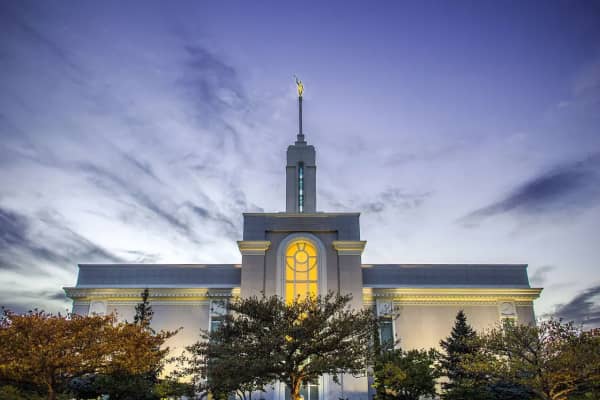
Leave time for a quiet stop. Many families like to walk temple grounds together before drop-off. One heads-up so you don't drive to the wrong place: the temple directly adjacent to the MTC — dedicated in 1972 and renamed the Provo Utah Rock Canyon Temple in February 2024 — closed for demolition and reconstruction on 24 February 2024 and has been a construction site since. The Provo City Center Temple downtown has beautiful, open grounds; the Lindon Utah Temple, dedicated in May 2026, is the valley's newest and about fifteen minutes north. (Our guide to visiting Utah Valley's temples covers all six currently operating temples in the county, and our temple guide for out-of-town guests handles the wedding-day version.)
Plan something for after. The drive away from the curb is famously the hardest mile of the day. Families who fare best usually have somewhere to be — dinner reservations, the Y hike your missionary just told you to do, or a slow loop through the valley. If you're staying the weekend, our 48 hours in Provo itinerary gives the whole visit a shape.
Staying Connected: Letters, Calls, and P-Day
Once your missionary walks up the hill, communication settles into the missionary rhythm.
Preparation day is the connection day. Missionaries may read letters and messages during the week as time allows, but they reply — by letter, email, online messaging, or audio/video chat — on their weekly preparation day, which ends at 6:00 p.m. Special occasions and emergencies are handled per missionary guidelines. Expect a weekly cadence and treasure it.
Getting the mailing address. Missionaries receive their full MTC mailing address by email a few days before traveling to Provo, and it is not the same as the MTC's street address. Your missionary has to give it to you — MTC staff are not authorized to release missionary addresses, and emails sent to the information desk won't be forwarded. This is the single most common preventable mistake: a package addressed to 2005 North 900 East is a package taking the scenic route.
Sending Packages (Read This Before You Ship Cookies)
The MTC's mail rules are specific, and well-meaning families run into them constantly:
What works: US Mail and commercial carriers — UPS, FedEx, and Amazon — delivered to the missionary's mailing address. One quirk worth knowing: carrier delivery-confirmation texts aren't always accurate about when a package reaches the MTC mail room. Once it does, staff put a notice in the missionary's mailbox and they pick it up at the service window.
What doesn't: no perishable food of any kind — no fast food, nothing requiring refrigeration — because there's no way to keep it safe by the time it's picked up. And no freelance deliveries: DoorDash, Grubhub, and Uber Eats orders are turned away at the security booth, as is anything handed over the fence, dropped at the booth, or passed to a missionary during temple visits or gym time.
The approved local route: the MTC publishes a list of approved same-day delivery services, and it doubles as a very Provo answer to "how do I spoil my missionary from 2,000 miles away." The list covers package services, local bakeries and treat shops, and pharmacies for medicine deliveries. Order from the current approved list on the MTC's site, since vendors can change.
The Visiting Rules (They're Strict, and They're Real)
This is the section that saves families heartache: you cannot visit a missionary at the MTC. The MTC asks that family and friends not attempt to visit missionaries at the training center, during their temple attendance, or anywhere near the MTC — and not to meet them at the bus, the train station, or the airport as they depart for their missions. However tempting it is to "just happen to be" at the right terminal, the missionary is the one put in an impossible spot. The goodbye at the curb is the goodbye.
It is worth saying why, because the rule reads as harsh until you see it from inside. A missionary who is quietly settling into an unfamiliar routine, surrounded by others doing the same, is not helped by a surprise reminder of home in the middle of it — and the companion standing next to them, whose own family lives eight time zones away, is helped even less.
Yes, the Public Can Tour the MTC
Here's the part that surprises people, including plenty of locals: the MTC offers tours to the general public — not just to church youth groups, but to families and anyone curious about what happens behind the fence.
The onsite tour is a guided walk through campus that includes the cafeteria, the gym, a residence hall, and classrooms, and it ends with a couple of currently serving missionaries sharing what their MTC experience has been like. There's also a live virtual tour guided by recently returned missionaries, and a video tour on the Church's Newsroom YouTube channel for anyone who can't schedule either. Sign-ups are on the Provo MTC's tours pages.
Two honest caveats: tours are scheduled, not drop-in — and a tour is not a workaround for visiting your own missionary. But for a younger sibling preparing for their own future mission, or grandparents who've sent off generations of missionaries without ever seeing the inside, it's a meaningful hour. It is also, for a non-member neighbor who has watched the buses come and go for years, one of the few straightforward ways to find out what happens in there.
Quick Reference
Provo MTC — 2005 North 900 East, Provo, UT 84602-1793 (physical address; mailing address differs). Information desk: 385-384-2900, staffed 24 hours. Email: MTCInfodesk@ChurchofJesusChrist.org (not forwarded to missionaries). Current website: provo.mtc.missionary.org. Arrival slot assigned ahead of time. One vehicle per family.
Sending a missionary is one of Utah Valley's defining family rituals, and Provo has been the backdrop for it for generations. If your drop-off day is coming: plan the morning, keep the curb short, and know that the whole town has stood where you're standing. If we've missed something families should know, tell us at contact@provo.com.
Why Some Missionaries Are There Three Weeks and Others Nine
The question families ask most often — and the one the paperwork answers least clearly — is how long their missionary will be at the MTC. The answer is set almost entirely by one variable: whether they are learning a language.
An English-speaking assignment is the short stay. A missionary called to an English-language mission goes through teaching preparation, doctrinal study, and practical training, and that program is measured in a couple of weeks rather than months. Families planning around it consistently over-estimate, book flights on the wrong assumption, and then discover their missionary has already moved on.
A language assignment is the long stay, and the length varies by language. The training model is immersive and structured around teaching rather than grammar: missionaries begin speaking the target language in practice teaching appointments within days, long before they can hold an ordinary conversation in it. Languages that are closer to English on the training scale take less time; languages with different scripts, tonal systems, or grammatical structures with no English counterpart take longer. This is why two missionaries who entered on the same day can leave weeks apart, and why comparing timelines between families produces so much unnecessary worry.
The consequence for you is that the departure date is the one to confirm, not infer. Do not build travel, a family gathering, or anything else around a length of stay someone else reported. The assignment letter and subsequent communication from the MTC are the sources; anything derived from a cousin's experience three years ago is a guess about a system that has changed repeatedly.
It is worth understanding what the training is for, because it reframes what your missionary is doing all day. The MTC is not a language school in the ordinary sense and it is not a seminary. It is closer to an intensive teaching apprenticeship in which language, doctrine, and the practical mechanics of talking to strangers are taught simultaneously rather than in sequence. Days are long and highly scheduled. The fatigue people report in early letters is real and is mostly a function of that density rather than of anything being wrong.
Two things follow that are worth saying to a nervous family. First, the first week is statistically the hardest week, by a wide margin, and letters written in it are not a reliable guide to how the next eighteen months to two years will go. Second, the language does not arrive on a schedule you can watch. Progress in an immersive model is famously lumpy — weeks of apparent stall followed by a sudden jump — and a missionary reporting that they still cannot speak the language after a month is describing the normal shape of the curve, not a failure. Responding to that letter with reassurance rather than problem-solving is almost always the right call.
Related Guides
- New to a Provo YSA Ward? The Practical Guide (2026)
- Missionary Farewells and Homecomings in Provo: What the Signs at the Airport Mean, and Why the Farewell Officially Ended in 2002
Frequently Asked Questions
Can families go inside the Provo MTC on drop-off day?
Can I visit a missionary while they're at the MTC?
Can the public tour the Provo MTC?
How do I send a package to a missionary at the Provo MTC?
What time is drop-off at the Provo MTC?
How long do missionaries stay at the Provo MTC?
How big is the Provo MTC, and how many missionaries are there?
Is the Provo MTC under construction?
Sources
The facts in this guide were checked against these sources. Hours, fees and rules change, so confirm anything time-sensitive with the source before you go. How we make Provo.com.
- Provo Missionary Training Center, The Church of Jesus Christ of Latter-day Saints. Checked October 12, 2026.
- Provo MTC (official site), Provo Missionary Training Center. Checked October 12, 2026.
- Church Announces Significant Update to Provo Missionary Training Center, Newsroom, The Church of Jesus Christ of Latter-day Saints. Checked October 12, 2026.
- The Provo Temple Will Reopen as the Provo Utah Rock Canyon Temple, Newsroom, The Church of Jesus Christ of Latter-day Saints. Checked October 12, 2026.
- President Eyring Dedicates the Lindon Utah Temple, Newsroom, The Church of Jesus Christ of Latter-day Saints. Checked October 12, 2026.