
More on Spanish Fork: every guide we have published there, in one place.
Spanish Fork offers something increasingly rare in Utah Valley: an affordable, family-centered city that still feels like a real town. With a historic Main Street, deep agricultural roots, and a calendar packed with community traditions — including a Pioneer Day rodeo and a festival celebrating its unique Icelandic heritage — it delivers small-town living with genuine character, at a price point that's drawing families south.
If you're thinking about moving here, you're looking at one of the best value-and-community plays in the valley. This guide covers what it's actually like to live in Spanish Fork — the housing, the schools, the famous festivals, the commute, and the small-town feel — from people who know the area well.
The short version
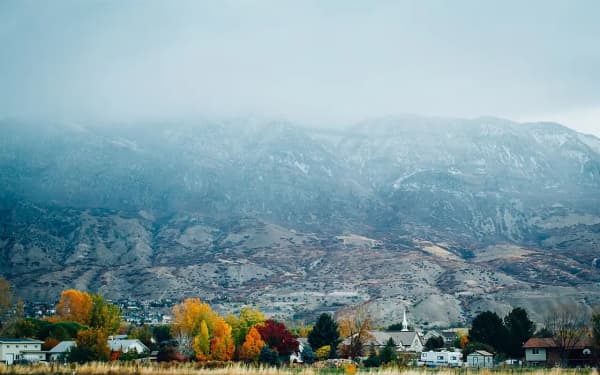
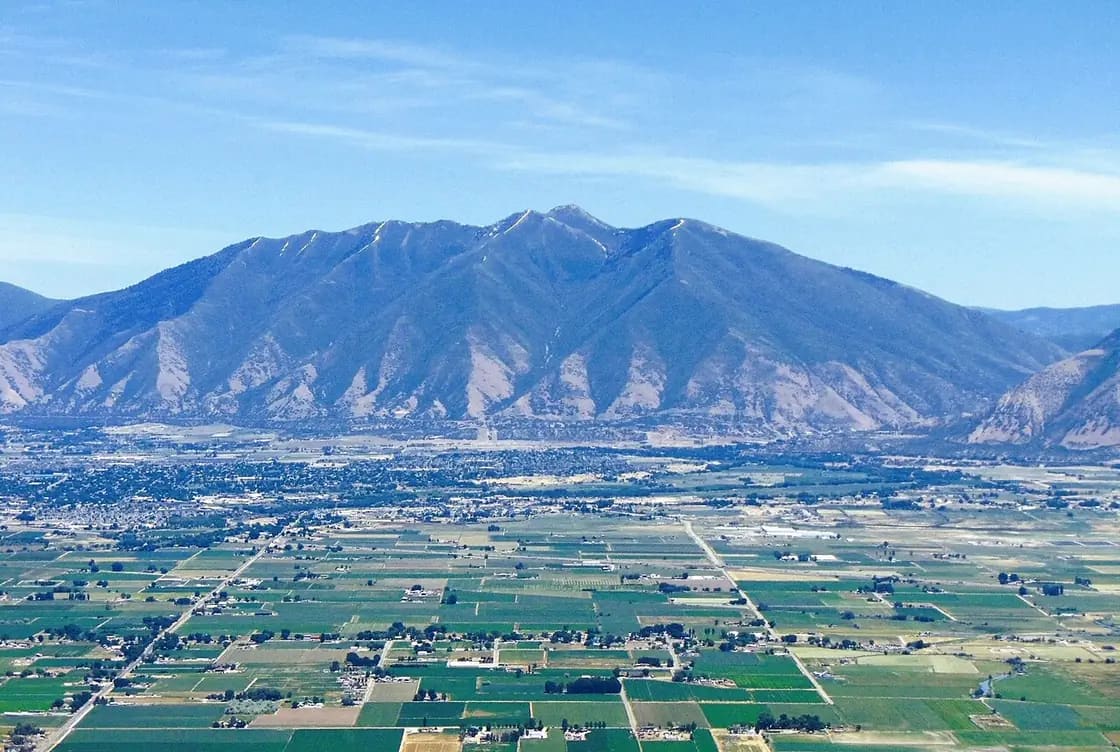
Spanish Fork sits in southern Utah County, southeast of Provo, with the Wasatch Range to the east and Utah Lake to the northwest. It's one of the larger cities in the south valley — its population grew from about 42,759 in 2020 to past 50,000 — and it's grown by adding new neighborhoods while holding onto its historic core and agricultural character.
What draws people:
- Affordability — meaningfully lower housing costs than northern Utah County, a major reason families head south.
- Strong schools — the well-regarded Nebo School District, with two main high schools in the city.
- Community and tradition — Fiesta Days, Icelandic Days, the Festival of Colors, and a tight-knit, family-oriented culture.
- Small-town character with canyon access — historic Main Street, the Spanish Fork River Trail, and Spanish Fork Canyon recreation.
What to weigh:
- The commute to northern job centers (Silicon Slopes, Salt Lake) is longer than from central or northern cities.
- The retail and dining scene is still developing, though it's growing along Main Street and US-6.
- It's steadily growing, so some areas are under active development.
A pioneer town with an Icelandic twist
Spanish Fork was settled in 1851 and built its first schoolhouse in 1862, growing up as an agricultural community in the fertile southern end of Utah Valley — though the name is seventy-five years older than the town, as a short history of Spanish Fork explains. That farming heritage still shapes the city's identity — you'll find historic homes, established neighborhoods, and a Main Street that anchors the community.
The most distinctive thread in Spanish Fork's history is its Icelandic connection: it was the first permanent Icelandic settlement in the United States, founded by Icelandic converts to the Church of Jesus Christ of Latter-day Saints in the 1850s. The city celebrates that legacy every June with Icelandic Days, marking Icelandic Independence Day — a genuinely unusual piece of cultural heritage for a Utah town, and a point of real local pride. It's part of what gives Spanish Fork a stronger sense of identity than many fast-growing suburbs.
Housing in Spanish Fork
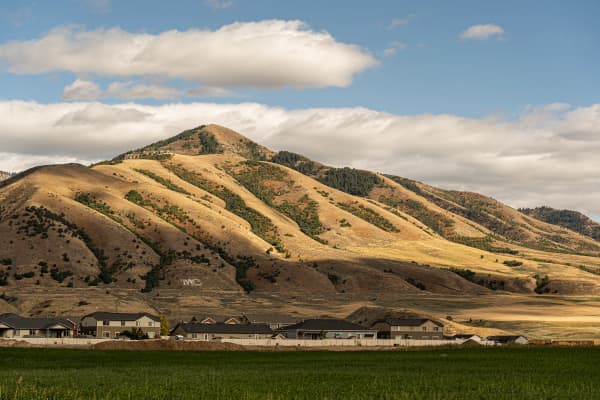
Affordability is Spanish Fork's headline. Housing costs here run meaningfully below the northern Utah County cities, which is the single biggest reason families and first-time buyers move south. The market offers real variety: historic homes near Main Street, newer subdivisions climbing the east bench with mountain views, and larger ranch-style lots that preserve some of the city's rural character.
For buyers, Spanish Fork has consistently delivered more home for the money than cities closer to Silicon Slopes — a meaningful trade-off if you're willing to commute a bit farther for a lower price and a bigger lot. The city continues to add new residential development, especially on the east side, so newer inventory keeps coming online. Buyers who find even Spanish Fork above budget tend to keep driving south: Santaquin is one of the more affordable markets in Utah Valley, and that affordability is the primary reason its population is climbing.
Because the stock spans a century, matching the due diligence to the house matters more here than in a one-generation city. Near Main Street, the checklist is the old-house one — roof, furnace, sewer lateral, unpermitted additions, and how a lot drawn before modern subdivision standards actually sits. On the east bench, it flips to the new-construction questions: which phase you're entering, what the covenants say, and how the surrounding parcels are entitled to build out, because the east side is where the city's growth is actively landing. The ranch-style properties in between carry their own homework — animal rights and outbuilding rules vary by parcel, so confirm zoning on the specific lot rather than assuming the rural look guarantees rural rules. One Spanish Fork particular worth knowing: the city runs its own municipal utilities — power, water, sewer, garbage, and even its own internet, TV and phone service, the Spanish Fork Community Network (SFCN) — so a new resident sets up nearly everything on one city bill, a point of long-standing local pride and a genuine practical difference from most of the valley.
Schools, meanwhile, are the stable column in the spreadsheet. The Alpine School District split — three new districts arriving in the north county in 2027 — does not touch Spanish Fork. The city is in Nebo School District with Springville, Mapleton, Salem, Payson and Santaquin, and Nebo continues as it is, growing steadily with the south valley rather than reorganizing.
If you're weighing Spanish Fork against neighboring cities, it helps to see current prices side by side. You can browse what's on the market across Utah Valley — homes for sale, rentals, and student housing — in our real estate marketplace, and if you're moving from outside the area, our moving to Provo guide covers the practical side of relocating to the valley.
Getting around: the south-valley commute
Spanish Fork sits in southern Utah County with direct access to I-15 and US-6 (the highway toward Price and eastern Utah). For commuters, that means roughly 20 minutes to Provo, about 30 minutes to the Silicon Slopes job centers in Lehi, and 40 to 50 minutes to Salt Lake City.
The commute distance is the honest trade-off for Spanish Fork's affordability: if you work in Provo or the south valley, it's very manageable; if you work in Lehi or Salt Lake, you're looking at a longer daily drive, and I-15 can be busy at peak times. The city is car-oriented, with Main Street and US-6 as the main commercial corridors. That freeway position also makes Spanish Fork a gateway for a set-back neighbor: Salem, which sits off I-15 entirely, routes its freeway access through Spanish Fork or Payson. For families who work locally or value the lower cost of living, the drive is usually a price worth paying.
Schools
Spanish Fork is served by the Nebo School District, which covers southern Utah County and is consistently well regarded — one of the main reasons families choose the city. Unlike the northern Utah County cities, Spanish Fork is not affected by the Alpine School District split; it has always been part of Nebo, which adds a bit of stability for families planning ahead.
The city's two main high schools are Spanish Fork High School (home of the Dons) and Maple Mountain High School — which also serves students from neighboring Mapleton — both with strong academic and athletic programs and a spirited local sports rivalry. Mountainland Technical College also has a Spanish Fork campus, and BYU is about 10 miles away in Provo. As always, confirm current school boundaries with the district when choosing a home, since lines can shift as the city grows.
Things to do
Spanish Fork's community calendar is one of the fullest in the valley. The marquee event is Fiesta Days each July — a Pioneer Day celebration with a PRCA rodeo, parade, craft fair, duck race, and fireworks that draws thousands. Icelandic Days in June celebrates the city's heritage, and the year also brings the Harvest Moon Hurrah, the Festival of Lights, and the colorful, Holi-inspired Festival of Colors held at the Krishna temple just outside town. For the full picture — Fiesta Days, the canyon, the River Trail, and the rest — see our guide to things to do in Spanish Fork.
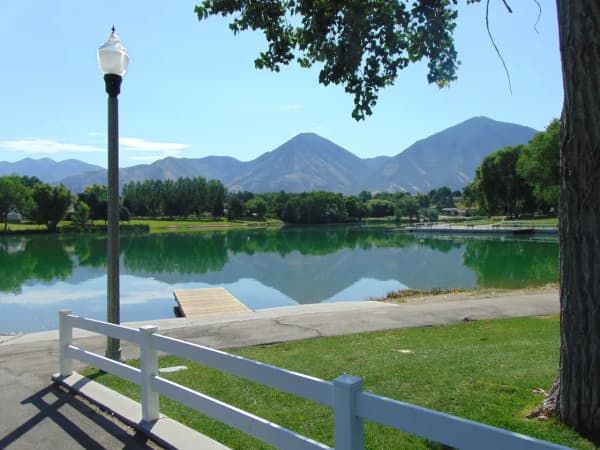
Outdoors, residents have the Spanish Fork River Trail for walking and biking, numerous parks, and quick access to Spanish Fork Canyon for fishing, camping, and hiking. The distinctive Spanish Fork Wind Project — nine turbines visible at the canyon mouth — is a local landmark. And the full slate of Utah Valley dining, recreation, and events is a short drive north. When you're ready to eat in town, our roundup of the best restaurants in Spanish Fork covers everything from the legendary Glade's Drive Inn to homemade tamales and authentic Indian. For ideas beyond the city, browse our guides to things to do in Utah Valley and keep an eye on the Provo.com events calendar for concerts, markets, and festivals happening nearby.
Who actually provides your utilities
Spanish Fork owns more of its own infrastructure than almost any city in Utah Valley, and for a resident that is the most distinctive practical fact about living here.
Electricity is a city utility. Spanish Fork is one of six member cities of the Utah Municipal Power Agency, the joint agency established in 1980 that also serves Provo, Salem, Nephi, Manti and Levan. UMPA is based in Spanish Fork and governed by a board of the mayor or a council member from each member city. It handles the wholesale end — generation ownership, power contracts, load forecasting, transmission scheduling — while each member city operates its own distribution system and bills its own customers. Spanish Fork's power division also participates in South Utah Valley Power Systems, the group that operates and maintains the transmission and substation network across the south end of the county alongside Springville, Salem, Payson and SESD.
The city publishes a comparison of average monthly residential power bills across nearby providers, and Spanish Fork consistently presents itself at the low end of it. Treat published averages carefully: they depend on assumed usage, they are not always dated, and rates move. Use the comparison as a reason to ask the question, then confirm current residential rates with the city before you rely on a number.
There is a second electricity provider inside the city. SESD, the South Utah Valley Electric Service District, serves mutually within Spanish Fork as it does in Payson, Salem, Mapleton and Santaquin — so some addresses inside the city limits are SESD customers. Check the address rather than assuming the city.
Spanish Fork also runs SFCN, the Spanish Fork Community Network, its municipal communications utility. Between power and SFCN, several services that are private markets elsewhere in the valley are here operated by an entity answerable to the city council.
Water follows the valley pattern of two systems — treated culinary indoors, untreated secondary water for irrigation where a property is connected — with the state's 2030 metering deadline changing the economics. See secondary water and water shares. Natural gas is Enbridge Gas Utah.
Who responds when you call 911
Spanish Fork runs its own police department and its own fire department, and it is large enough to be a genuine service center for the south end of the valley rather than a city that leans on its neighbors.
The Spanish Fork Police Department and the city's fire and ambulance service are municipal agencies, and the city appears in county rosters with its own ambulance service alongside the fire department. That combination — city power, city communications, city police, city fire, city ambulance — is why Spanish Fork's municipal budget covers considerably more ground than that of a similarly sized city on the north bench.
As with every city in the county, specialist capability sits at county level. Major crimes investigation, forensics, SWAT, accident reconstruction and search and rescue are maintained by the Utah County Sheriff's Office for the whole county and called in as needed. Fire and medical response runs on mutual aid across city lines, which is why the nearest appropriate unit answers rather than the nearest unit wearing the right badge.
Two location-specific points. Spanish Fork Canyon is a major transportation corridor and a demanding response environment, and SESD serves power infrastructure well up into it — including canyon areas, Covered Bridge and beyond. And SESD supplies the electricity to city water tanks, wells and pumps for several south-county cities, which is a quiet dependency most residents never think about until a regional outage makes it visible.
For how a city with this many utilities makes its decisions, and in which meeting, see who decides what in Utah Valley.
Who Spanish Fork is right for
Spanish Fork tends to be a strong fit if you want affordability and space, you value strong schools and a real community feel, and you're happy to trade a longer commute to the northern job centers for a lower price and a quieter, tradition-rich town. Families, first-time buyers, and people who work in Provo or the south valley do especially well here.
It's less of a fit if you need to be minutes from Silicon Slopes or Salt Lake, or if you want a dense, urban environment with lots of nightlife and shopping — Spanish Fork is more small-town than city, by design. If you're comparing south-valley neighbors, the guides to living in Springville (closer to Provo, with its "Art City" character) and living in Payson (even more affordable, at the south end of the county) are worth a look alongside this one.
If you're a BYU or UVU student, Spanish Fork is farther from campus than Provo or Orem, so it's more of a family-and-homeowner community than a student hub — but BYU is only about 10 miles away for those who don't mind the drive. Browse current student housing options to compare what's available closer to campus.
The bottom line
Spanish Fork is south Utah Valley's value-and-community standout — affordable housing, strong Nebo schools, canyon recreation, and a calendar of traditions (from a Pioneer Day rodeo to a one-of-a-kind Icelandic festival) that give it real character. It rewards families who want more home, good schools, and a genuine small-town feel, and who don't mind a slightly longer drive to the northern job centers. If that's you, it's one of the best-value addresses in the valley.
When you're ready to take the next step, start with current listings in our real estate marketplace, and if you're relocating from out of state, our complete moving guide walks through everything from utilities to neighborhoods across Provo, Orem, and the surrounding cities.
The city's drive-through light display at Canyon View Park is the longest-established in the county and the strictest about advance tickets. See it in context on our Christmas lights map.
Related Guides
- Spanish Fork Neighborhoods Guide: Where to Live — area by area, and what the names actually mean
- The Krishna Temple in Spanish Fork: Llamas, Holi and a Rajasthani Palace in Utah County
- Utah County's Small Towns: Elk Ridge, Woodland Hills, Genola & Goshen
- Which School District Am I In? Utah County Before and After the Alpine Split
- Who Decides What in Utah Valley — Spanish Fork's boards, including the airport it shares
- Spanish Fork High vs Maple Mountain High — the city's two high schools
- Every Rec Center in Utah Valley, Compared: Provo, Orem, Lehi, American Fork, Pleasant Grove, Springville and Spanish Fork
- Spanish Fork vs. Springville — the two south-valley cities compared, city by city
Frequently Asked Questions
Is Spanish Fork, Utah a good place to live?
How big is Spanish Fork and how fast is it growing?
What school district is Spanish Fork in?
What is Spanish Fork known for?
Is Spanish Fork affordable compared to the rest of Utah Valley?
What is the commute like from Spanish Fork?
Does Spanish Fork have its own power company?
What is SFCN?