
More on The South Valley: every guide we have published there, in one place.
Drive south on I-15 and Utah Valley ends at Santaquin.
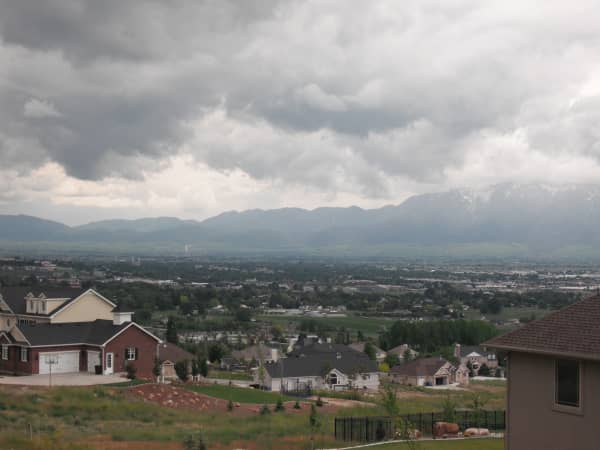
Past it, the valley narrows, Mount Nebo rises on the left, and the Wasatch Front gives way to central Utah. Santaquin is the last stop — the southern gateway — and it has an identity that none of the valley's other cities share: this is orchard country.
It's also a very young city. The median age is about 28, and roughly 38% of residents are under 18. That's not a retirement town. That's a town full of young families who came for the housing math.
Here's the full picture.
The short version
Santaquin had 13,725 residents at the 2020 census, with a 2025 Census Bureau estimate of about 19,000 — one of the valley's faster-growing cities in percentage terms. It sits southeast of Utah Lake at the southern end of Utah County, bordered by Genola to the northwest and unincorporated Spring Lake to the north.
What draws people:
- Affordability relative to the rest of the valley.
- Direct I-15 access at the valley's south end.
- An agricultural identity and real open space.
- Nebo School District and a very young, family-heavy community.
What to weigh:
- Long commute to Provo and a very long one to Silicon Slopes.
- Modest commercial base — Payson and Spanish Fork handle most needs.
- Rapid growth that is changing the town.
- The two-county quirk — part of the city is in Juab County.
The two-county town
Santaquin has an administrative oddity worth knowing before you buy: most of the city lies in Utah County, but a portion extends south into Juab County.
For everyday life this rarely matters — Santaquin functions as a Utah County city, sits in the Provo–Orem metropolitan area, and is served by Utah County institutions. But county lines affect taxes, some services, and records, so confirm which county a specific property sits in during the buying process rather than assuming.
It's the kind of detail that surprises people at closing if nobody mentioned it.
The same caution applies to postal geography down here. Genola, the farm town immediately next door, shares Santaquin's ZIP code outright, and published sources disagree about which code covers the bench city of Elk Ridge — so confirm it directly for anything where the ZIP matters.
Orchards, and the tension underneath them
Santaquin's benchland has grown fruit for generations — cherries, peaches, and apples most notably — and orchards remain a defining visual feature of the city and a working part of the local economy.
That heritage is celebrated in the city's annual community celebration, built around the harvest, which draws people from across the valley. Farm stands and agritourism operations do brisk business in late summer, and a run south for fruit is a long-standing Utah Valley ritual. Rowley's Red Barn is the best-known of these destinations, drawing visitors year-round for produce, ice cream, and seasonal activities.
There's a real tension here, and it's worth naming honestly. Growth is converting orchard land to housing. That's the mechanism making Santaquin affordable and the mechanism eroding what makes Santaquin distinctive. How much of the agricultural character survives the next decade is an open local question, and it's a live topic in city politics. Buyers drawn by the rural feel should understand they're arriving during that transition, not after it.
Our fall in Provo guide covers the harvest season across the valley, including the orchard runs south.
Housing in Santaquin
Santaquin is one of the more affordable markets in Utah Valley, and that is the primary reason its population is climbing.
The stock mixes older homes near the original town center with substantial newer subdivision construction on the edges. Lot sizes are generally generous compared with north-valley cities, and some properties retain semi-rural character with room for animals or outbuildings.
The 2020 census counted 3,678 housing units with a low vacancy rate — a tight market even then, and it has grown considerably since.
The demographic profile is striking: a median age around 28, with about 38% of residents under 18. Compare that to a national median near 39. Santaquin is overwhelmingly a young-family town, which shapes everything from school enrollment pressure to the kinds of businesses that open.
It's also more ethnically diverse than most south-valley cities, with a Hispanic or Latino population around 14% as of the 2020 census — notably higher than neighboring Salem.
Buying in a fast-growing edge city carries its own homework, and it's different from buying in a built-out one. Much of what's for sale here is new or near-new construction, so the questions run to which phase of a subdivision you're entering, what the HOA will and won't allow, and what the surrounding parcels are entitled to become — the field behind a new Santaquin street is likelier to be a future street than a permanent view. The older stock near the original town center flips the checklist to the usual old-house items: roof, furnace, sewer lateral, permits. And the orchard heritage that gives Santaquin its identity — this is fruit country, and Rowley's Red Barn is the landmark to prove it — means some properties still carry agricultural character and water arrangements worth understanding before closing.
The one variable Santaquin families don't have to model is the school district. The Alpine School District split — three new districts arriving in 2027 — stops well north of here. Santaquin is in Nebo School District with Payson, Salem, Spanish Fork, Mapleton and Springville, and Nebo continues as it is, even as it grows with the south county it serves.
For current listings, see our real estate marketplace, and the buying a home guide for the process.
Schools
Santaquin is served by the Nebo School District, alongside Payson, Salem, Spanish Fork, Springville, and Mapleton.
To clear up a common question: the Alpine School District split has no effect here. That transition — creating Aspen Peaks, Lake Mountain, and Timpanogos districts for the 2027-28 school year — applies only to northern Utah County. Nebo continues unchanged.
What does affect Santaquin families is growth. A city where nearly two in five residents are children, growing quickly, puts sustained pressure on school capacity. Boundaries and building assignments shift more often in fast-growing areas than in stable ones, so verify the assignment for a specific address — and ask about planned schools in the area, which can change the picture within a few years.
Our best schools guide covers broader valley context.
Mount Nebo and the outdoors
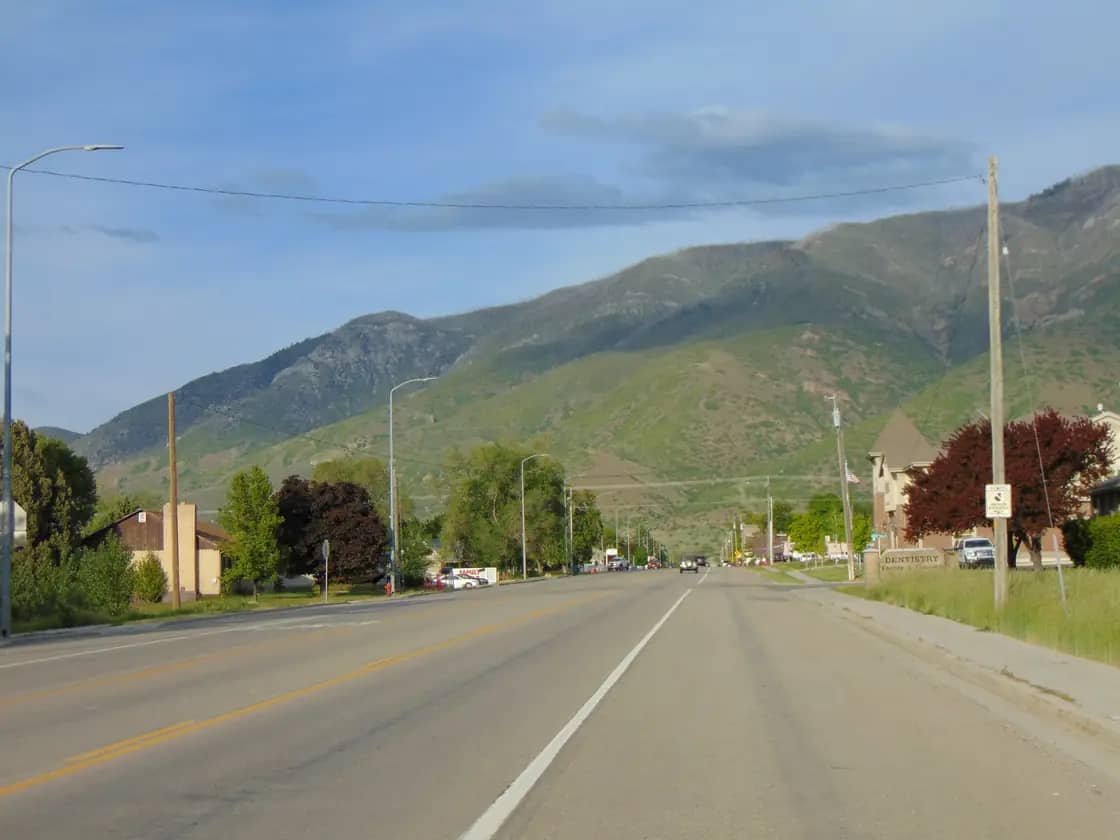
Santaquin sits at the foot of the Mount Nebo massif — the highest peak in the Wasatch Range, taller even than Mount Timpanogos to the north.
The Nebo Loop Scenic Byway runs from Payson Canyon through the mountains and is one of Utah's spectacular drives, particularly during fall color. It's a short trip from Santaquin, and it's the sort of amenity that makes the southern location worth something. Our day trips from Provo guide covers it.
Santaquin Canyon and Summit Creek offer closer-in recreation, and Utah Lake is a short drive northwest for boating and fishing.
Golfers have Gladstan in Payson minutes away and The Oaks at Spanish Fork a bit further — see the Utah Valley golf guide.
South county also puts you closer to central and southern Utah generally. Santaquin residents have a genuine head start on trips to Capitol Reef, Moab, and the national parks — an hour saved on every southbound drive. Closer to home, our guide to things to do in Mapleton, Salem and Santaquin covers Santaquin Canyon, Tinney Flat and the bench orchards together.
Getting around and the honest commute math
Santaquin sits directly on I-15, which is a real advantage over set-back towns like Salem. But the distances remain what they are.
Approximate drive times:
- Payson: about 10 minutes
- Spanish Fork: 15–20 minutes
- Provo: 30–40 minutes
- Springville: 25–30 minutes
- Salt Lake City: typically well over an hour
- Silicon Slopes / Lehi: roughly an hour, traffic depending
This is the central trade-off of living in Santaquin, and it deserves to be faced squarely. The housing is more affordable because the commute is longer. For anyone working in south Utah County, working remotely, or with a flexible schedule, that trade can be excellent. For someone driving to Lehi five days a week, it's two-plus hours a day in a car, and that adds up in ways that cancel a lot of the housing savings.
Run the numbers honestly — including fuel, vehicle wear, and time — before deciding. Our cost of living guide helps frame the broader math.
Shopping, dining, and daily life
Santaquin's commercial base covers essentials. For a fuller shop, residents head to Payson or Spanish Fork, the south valley's main retail center, both close.
Our best restaurants in Spanish Fork guide covers the nearest dining concentration. Provo and Orem, with the valley's full retail and restaurant scene, are 30–40 minutes north.
What Santaquin offers instead is small-town rhythm: city celebrations that the whole town attends, youth sports, orchards on the edge of the neighborhood, and Mount Nebo out the window. For a lot of families, that's the point.
A note on the southern-gateway position
Santaquin's location has one advantage that rarely makes it into listings: it is the last easy stop before the rest of Utah.
For households that spend weekends outdoors, that's worth real money in time. Trips to central and southern Utah — the national parks, Moab, Capitol Reef, the San Rafael Swell — start an hour ahead of where they'd start from Lehi. Over a year of travel, that compounds.
The same position works in reverse for anything north. Airport runs, Salt Lake appointments, and concerts at the big venues all become genuine expeditions rather than errands.
Prospective buyers should map their actual weekly and monthly travel against that geography before deciding. For some households the math is excellent. For others it's the thing that makes them move within three years.
Who provides your utilities
Santaquin sits at the point where Utah Valley's utility map stops being organized by city and starts being organized by parcel.
The South Utah Valley Electric Service District — SESD — serves mutually inside Santaquin, meaning some addresses within the city limits are SESD customers while others are served by Rocky Mountain Power. SESD is a not-for-profit public entity the Utah Legislature created in 1985, and its territory covers more than 120 square miles of south Utah County: Elk Ridge and Woodland Hills exclusively, and shared service inside Santaquin, Mapleton, Spanish Fork, Payson and Salem. It reaches into the canyons and carries a large share of the county's farms and orchards, which in Santaquin's case is a lot of ground.
For a buyer this is not trivia. Check the address before you close. SESD publishes a lookup map on its own site, and which side of the line a parcel falls on determines the rate you pay, the bill you get, and the number you call at eleven at night when the power is out. A neighbor's answer is not evidence about your parcel.
Water divides the same way, and in a former orchard town it divides sharply. Many Santaquin properties are plumbed for both treated culinary water and untreated secondary water for irrigation — the legacy of the ditches that watered the fruit. Whether a specific address has that second connection is a parcel fact, and it changes the cost of keeping a lawn or a few trees alive through a Santaquin summer considerably. Utah's statewide metering law is now reshaping what secondary water costs everywhere in the valley; our guide to secondary water and water shares covers the shares, the buyer's checklist and the deadline.
Natural gas is Enbridge Gas Utah, formerly Questar and then Dominion Energy Utah. Santaquin is not on the UTOPIA Fiber network — Payson, immediately north, is — so internet is a private-provider market and service varies between the older grid and the newer subdivisions.
Who responds when you call 911
Santaquin runs its own police department and its own fire department, both based on Main Street, and both are city agencies rather than contracts.
That is a real commitment for a city of Santaquin's size and position. Several Utah County communities of comparable or larger population do not do it: Eagle Mountain and Vineyard both contract law enforcement to the Utah County Sheriff's Office, and Woodland Hills and Elk Ridge, just up the hill, are Sheriff contract cities too. Santaquin funds both departments locally.
The practical picture is the one small departments everywhere share. The city provides patrol, first response and the familiarity that comes from a small force covering a small area. The specialist capability — major crimes investigation, forensics, SWAT, search and rescue, accident reconstruction — sits at county level and is called in as needed. That is how public safety in Utah County is designed to work rather than a gap in Santaquin's coverage, and the Sheriff's Office maintains those teams for the whole county.
Three things worth knowing before you move here. First, Santaquin's southern-gateway position means the city sits on the edge of the county's response network rather than in the middle of it, and for addresses out toward the county line that is a fair question to ask specifically. Second, if your power comes from SESD rather than a city utility, outage reporting goes to SESD. Third, the city posts its budget hearings publicly, including property tax proposals — Santaquin has run tentative-budget and proposed-tax-increase hearings in recent cycles, and a growing city funding two of its own emergency departments is exactly where that pressure shows up.
For how these decisions get made and which body makes them, see who decides what in Utah Valley.
Library access, which works differently than you would expect
Santaquin has its own city library, and — like the rest of south Utah County — it belongs to neither of the county's two reciprocal borrowing groups.
Utah County runs no county-wide library system. Provo and Orem have an arrangement with each other; a northern cooperative links Highland, Lehi, American Fork, Pleasant Grove and Eagle Mountain. Santaquin sits outside both, as do Salem, Payson, Spanish Fork, Springville, Saratoga Springs and Vineyard. Your Santaquin card is free because Santaquin property tax funds it, and a card elsewhere generally carries a nonresident fee approximating what that city's own households pay. The Utah County Bookmobile serves county residents as a further option. See libraries in Utah County.
Who Santaquin is right for
A strong fit if: affordability is your main constraint, you work in south county or remotely, you want space and a rural edge, and you have young kids.
Look elsewhere if: you commute daily to Lehi or Salt Lake, you want urban amenities, or you need a mature, built-out community rather than one actively growing.
Compare against: Payson for a similar price point with more services, Salem for a quieter small town, Spanish Fork for the south valley's main hub, Mapleton for a premium large-lot market.
Santaquin is the end of the valley and the start of the rest of Utah — an orchard town growing fast, full of young families who ran the numbers and drove south.
For the full comparison, see our Utah Valley city guides, and the moving to Provo guide for relocation logistics.
Related Guides
- Santaquin Neighborhoods Guide — where to live, area by area
- Payson Neighborhoods Guide — where Santaquin's teenagers go to school
- Salem Neighborhoods Guide — the quiet pond town north and east
- Utah County's Small Towns — Genola, Goshen and Elberta
Frequently Asked Questions
Is Santaquin, Utah a good place to live?
How big is Santaquin, Utah?
Is Santaquin in Utah County or Juab County?
What school district serves Santaquin?
What is the commute like from Santaquin?
Why is Santaquin known for orchards?
Who supplies electricity in Santaquin?
Does Santaquin have its own police and fire departments?
Sources
The facts in this guide were checked against these sources. Hours, fees and rules change, so confirm anything time-sensitive with the source before you go. How we make Provo.com.
- About SESD / SESD History / Service Areas, South Utah Valley Electric Service District. Checked October 12, 2026.
- Decennial Census 2020 PL 94-171, Santaquin (67770), U.S. Census Bureau. Checked October 12, 2026.
- ACS 5-year 2024 Subject Table S0101, Santaquin, U.S. Census Bureau. Checked October 12, 2026.
- City and Town Population Totals (SUB-EST2025), U.S. Census Bureau. Checked October 12, 2026.