
More on The South Valley: every guide we have published there, in one place.
Mapleton is the quiet, leafy exception in fast-growing south Utah Valley. Tucked against the foothills of Maple Mountain between Springville and Spanish Fork, it has deliberately chosen a different path than its neighbors — fewer strip malls, bigger lots, custom homes, and an established horse culture. It's the valley's premier estate-and-equestrian suburb, and for the right buyer, there's nothing else quite like it nearby.
If you're thinking about moving here, you're looking at space, views, and quiet at a premium. This guide covers what it's actually like to live in Mapleton — the housing, the schools, the equestrian character, the commute, and the trade-offs — from people who know the area well.
The short version
Mapleton sits at the foot of Maple Mountain in south Utah Valley, wedged between Springville to the north and Spanish Fork to the south, set back from I-15 against the Wasatch foothills. It's a small city — its population grew from about 11,365 in 2020 into the 13,000–16,000 range — and it has held onto a semi-rural, large-lot character even as it adds new planned communities.
What draws people:
- Space and large lots — bigger parcels, custom executive homes, and room to breathe.
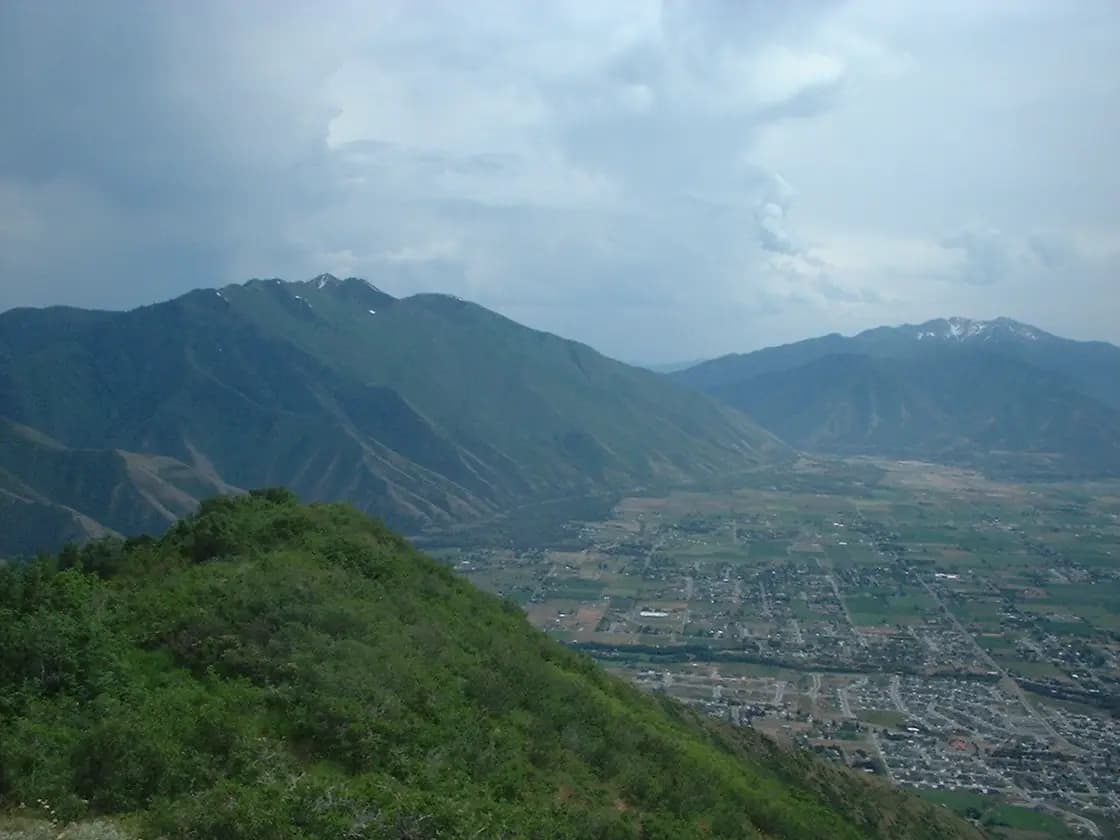
- Real Maple Mountain views and canyon access — direct foothill recreation and some of the best mountain backdrops in the valley.
- An established equestrian culture — zoning that supports horses across much of the city.
- Strong schools and a quiet, family feel — well-regarded Nebo schools and a settled, low-key community.
What to weigh:
- Limited in-city retail and dining — Mapleton is residential by design; you'll shop in Springville or Spanish Fork.
- Longer commute to northern job centers and a set-back location away from I-15.
- A premium market — homes cost more and can take longer to sell than in neighboring cities.
A bench town that chose its own path
Mapleton was first settled around 1850 as an agricultural extension of Springville, known for a time as Union Bench. After disputes over water rights, it charted its own course, incorporating as a town in 1901 and becoming a city in 1948. That independent streak still defines it: while much of south Utah Valley has filled in with master-planned subdivisions and commercial corridors, Mapleton has deliberately preserved a quieter, larger-lot, semi-rural character against the mountains.
The result is a city that reads differently than its neighbors. Where Spanish Fork is the larger, more affordable growth city and Payson is the value end of the south-valley market, Mapleton is the premium estate suburb — known for custom homes, equestrian properties, and a deliberately low-key, residential feel. Its planned communities, like Harmony Ridge, Mapleton Village, and Sunrise Ranch, have continued that character rather than replacing it.
Housing in Mapleton
Mapleton's housing is its defining feature. The market skews toward larger lots and custom executive homes, much of it newer construction (predominantly 2000 and later), set against the Maple Mountain foothills with genuine mountain views. Established planned communities — Harmony Ridge (the largest by listing volume), Mapleton Village, Sunrise Ranch (with equestrian and large-lot character), Mapleton Heights, and Bella Vita among them — supply ongoing buildout while keeping the city's premium, spacious feel.
This is a higher-priced market than its neighbors, reflected in Mapleton's high median household income and very low poverty rate. The trade-off buyers should know: because these are larger, more expensive, more distinctive homes, the market can move more slowly, with longer days-on-market than the faster-turning inventory in Spanish Fork or Springville. For the right buyer, the space, views, and lifestyle are well worth it.
Because so much of the stock sits against the foothills, due diligence in Mapleton has a bench-town flavor: how a sloped lot drains, what irrigation and landscaping a large parcel actually costs to keep, and — in the equestrian and large-lot pockets — what the animal and outbuilding rules are on that specific property. HOA presence varies by community rather than citywide: the planned developments carry covenants, while older large-lot streets often don't, and which one you're buying into changes what you can do with the land more than any citywide rule does.
One thing Mapleton buyers do not have to think about: the school-district upheaval consuming the north county. The Alpine School District split — three new districts arriving in 2027 — is a northern-valley story. Mapleton is in Nebo School District with Springville, Spanish Fork, Salem, Payson and Santaquin, and Nebo simply continues as it is. In a county where "which district will my kid be in" has become a genuine due-diligence question, the south valley's answer is the same one it's always been.
If you're weighing Mapleton against neighboring cities, it helps to see current prices side by side. You can browse what's on the market across Utah Valley — homes for sale, rentals, and student housing — in our real estate marketplace, and if you're moving from outside the area, our moving to Provo guide covers the practical side of relocating to the valley.
The equestrian character
One of the things that most sets Mapleton apart is its horse culture. The city's zoning supports keeping horses on residential lots across significant parts of town — particularly the larger-lot bench and rural-edge parcels — giving it one of the most established equestrian communities in Utah Valley. For buyers who want land for animals, riding access, and a genuinely rural-feeling lifestyle within minutes of Provo, that's a rare and valuable combination this close to a major metro.
That equestrian, large-lot identity is a big part of why Mapleton commands a premium and why it attracts a particular kind of buyer — one prioritizing space, privacy, and a connection to the outdoors over walkable retail and short commutes.
Getting around: the set-back trade-off
Mapleton's location against the foothills is central to its appeal and its main practical drawback. Because it sits a bit removed from I-15, commuters typically route through neighboring Springville or Spanish Fork to reach the freeway. From there it's a short drive to Provo, roughly 30 to 40 minutes to the Silicon Slopes job centers, and about 45 to 50 minutes to Salt Lake City.
The quiet, set-back feel is exactly what many Mapleton residents are after — but it does mean a longer trip to the northern job centers and very limited shopping and dining within the city itself. If a short commute or walkable amenities top your list, Mapleton may not fit; if space, views, and quiet matter more, the extra drive is part of the deal.
Schools
Mapleton is served by the Nebo School District, the same district that covers Spanish Fork, Springville, and the rest of south Utah County. Most Mapleton high schoolers attend Maple Mountain High School in adjacent Spanish Fork (opened around 2009), along with Mapleton Junior High and several elementary schools within the city.
Schools here are well regarded, with strong test scores and graduation rates — a meaningful draw for the families who make up much of the city. One practical note: because boundary lines between Maple Mountain and Spanish Fork High School have shifted as both cities have grown, families should verify the exact school assignment for a specific address before buying. As always, confirm current boundaries directly with the district.
Things to do
Mapleton's recreation is all about the mountains. The city offers direct access to Maple Mountain trails and the broader south Utah Valley foothill recreation — hiking, biking, and riding right at the edge of town. Within the city, residents have Mapleton City Park, Eagle Rock Park, Ira Allen Park, and others, plus a community swimming pool and the Pioneer Heritage Museum.
For shopping, dining, and bigger events, neighboring Springville and Spanish Fork are minutes away — Spanish Fork's Fiesta Days and Springville's arts scene are both close — and the full slate of Utah Valley recreation, from canyon adventures to lakeside activities, is within easy reach. For ideas across the area, browse our guides to things to do in Utah Valley and keep an eye on the Provo.com events calendar for concerts, markets, and festivals happening nearby.
Who actually provides your utilities
Mapleton is one of the south-valley cities where the answer to who sells me electricity depends on your address rather than your city, and it catches buyers out regularly.
The South Utah Valley Electric Service District — SESD, a not-for-profit public power entity created by the Utah Legislature in 1985 — serves mutually inside Mapleton. That means it powers some addresses within city limits while other parts of town sit with Rocky Mountain Power. SESD's territory covers more than 120 square miles of south Utah County: it serves Elk Ridge and Woodland Hills exclusively, reaches into Mapleton, Spanish Fork, Payson, Salem and Santaquin alongside those cities' own arrangements, and carries the farms, orchards and canyon properties a city utility never reached. It is the only electric service district in the state.
The practical consequence is easy to state and easy to get wrong: do not infer your provider from a neighbor two streets over. SESD publishes an address lookup on its own site. Run it before you close, because rates, billing systems and outage reporting all differ depending on which side of that line your parcel falls.
Water is the other place a Mapleton house can carry two bills instead of one. Like most of Utah Valley, much of the city is plumbed for both treated culinary water and untreated secondary water for outdoor irrigation — the second pipe that used to water the orchards. Whether a specific property has it is a parcel-level fact, and the difference in the cost of keeping a lawn green on a large Mapleton lot is not small. Our guide to secondary water and water shares covers the shares, the buyer's checklist and the state metering law that is changing what everyone pays.
Natural gas is Enbridge Gas Utah — the same company that was Questar and then Dominion Energy Utah, renamed after Enbridge completed the acquisition in 2024. Any relocation packet older than about two years will still say Dominion.
Internet is the one utility where Mapleton has fewer structural advantages than some neighbors. It is not one of Utah's municipal-fiber cities, so you are choosing among private providers rather than an open-access network, and availability varies by subdivision — the newer planned communities are generally better served than the older large-lot streets.
Who responds when you call 911
For a city its size, Mapleton is unusually self-sufficient on public safety, and that is a deliberate choice rather than an accident.
The city runs its own police department, based at the public safety building on 400 North, and its own fire department, which operates as an all-risk department covering fire and medical response rather than fire alone. Several Utah Valley cities in Mapleton's population range do neither — Vineyard and Eagle Mountain both contract policing to the Utah County Sheriff's Office, and Cedar Hills buys its police services from American Fork. Mapleton pays for its own.
What that buys is a short chain of command and officers who know the city, which residents generally rate highly. What it costs shows up in the municipal budget, and it is one of the reasons a small city with a large-lot tax base still has to watch its numbers carefully. Fire and medical calls in the foothills and up toward Maple Canyon also draw on mutual aid from neighboring departments, which is standard practice across the county — the nearest appropriate unit responds regardless of which city badge it wears.
Two things worth knowing as a new resident. First, the properties at the rural and canyon edges of the city can sit outside the fastest response envelope, and that is a fair question to ask about a specific address rather than about Mapleton generally. Second, if you are on a parcel served by SESD rather than the city, your power outage call goes to SESD, not to Mapleton — a distinction people discover in the dark, which is the wrong time to learn it.
For how a small Utah city actually makes these decisions, including which body controls what, see who decides what in Utah Valley.
Library access, and the county service headquartered here
Mapleton does not run a large city library, but it holds a piece of county infrastructure most residents never notice: the Utah County Bookmobile service is headquartered in Mapleton, on 400 North.
That matters because Utah County has no county-wide library system. Library access is funded city by city out of local property tax, which is why cards are free at home and carry a fee elsewhere. The bookmobile is the service that fills the gap for communities without a building of their own, and it is open to Utah County residents generally — it runs a published route schedule, issues its own cards on proof of residency, and connects to the same digital lending consortium as the county's library buildings. Cities as far north as Alpine rely on it.
For a household weighing a nonresident fee at a neighboring city's library against the bookmobile schedule, the honest advice is to check the route before paying anything. Our guide to libraries in Utah County explains the fee logic and what each card actually gets you.
Who Mapleton is right for
Mapleton tends to be a strong fit if you want space, privacy, and mountain views, you value an equestrian or large-lot lifestyle, and you have the budget for a premium, custom home. Families wanting room to grow, horse owners, and buyers who prize a quiet, bench-town feel over walkable convenience do especially well here.
It's less of a fit if you need in-town shopping and dining, a short commute to Silicon Slopes or Salt Lake, or a fast, easy resale — Mapleton is deliberately the quieter, more exclusive, more residential end of south Utah Valley.
If you're a BYU or UVU student, Mapleton isn't a student town — it's a family-and-estate community, and you'll find far better fits closer to campus in Provo or Orem. Browse current student housing options to compare what's available near the universities.
The bottom line
Mapleton is south Utah Valley's premium estate-and-equestrian suburb — large lots, custom homes, real Maple Mountain views, strong Nebo schools, and a deliberately quiet, set-back character you won't find in its faster-growing neighbors. It rewards buyers who want space, privacy, and a connection to the outdoors, and who'll trade walkable convenience and a short commute to get it. If that's you, there's no better-fitting address in the south valley.
When you're ready to take the next step, start with current listings in our real estate marketplace, and if you're relocating from out of state, our complete moving guide walks through everything from utilities to neighborhoods across Provo, Orem, and the surrounding cities.
Mapleton lights its city park for the season, one of a dozen free displays on our Utah Valley Christmas lights map.
Related Guides
- Living in Santaquin, Utah (2026): The Complete Guide
- Living in Eagle Mountain, Utah (2026): The Complete Guide
- Living in Lehi, Utah (2026): The Complete Guide
- Living in Salem, Utah (2026): The Complete Guide
- Living in Saratoga Springs, Utah (2026): The Complete Guide
- Living in Highland, Utah (2026): The Complete Guide
- Living in Alpine, Utah (2026): The Complete Guide
- Who Decides What in Utah Valley — a small city's eight bodies, water association included
- Things to Do in Mapleton, Salem and Santaquin
- Mapleton neighborhoods
- Spanish Fork High vs Maple Mountain High — where Mapleton's teenagers go
- Mapleton Pioneer Days
Frequently Asked Questions
Is Mapleton, Utah a good place to live?
How big is Mapleton and how fast is it growing?
What school district is Mapleton in?
Can you keep horses in Mapleton?
Why is Mapleton more expensive than nearby cities?
What is the commute like from Mapleton?
Who provides electricity in Mapleton?
Does Mapleton have its own police and fire departments?