
Most people arrive in Provo for one of three reasons: a university, a job in the tech corridor to the north, or family already here. What surprises them is how much city is left over once that reason is subtracted.
This is a guide to living here rather than visiting — the neighborhoods, the housing texture, the school situation, the commute, and the cultural specifics that nobody quite tells you before you sign a lease. If you are further along and need the logistics of the move itself, our moving to Provo guide handles utilities, timing and the checklist.
The short version
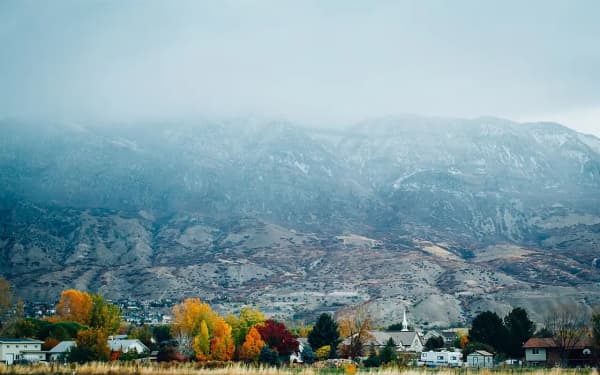
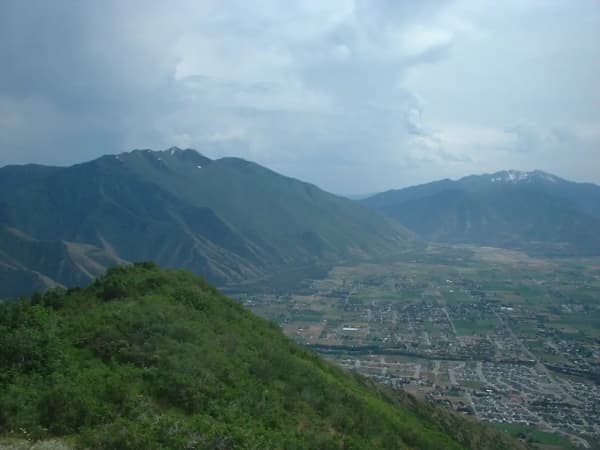
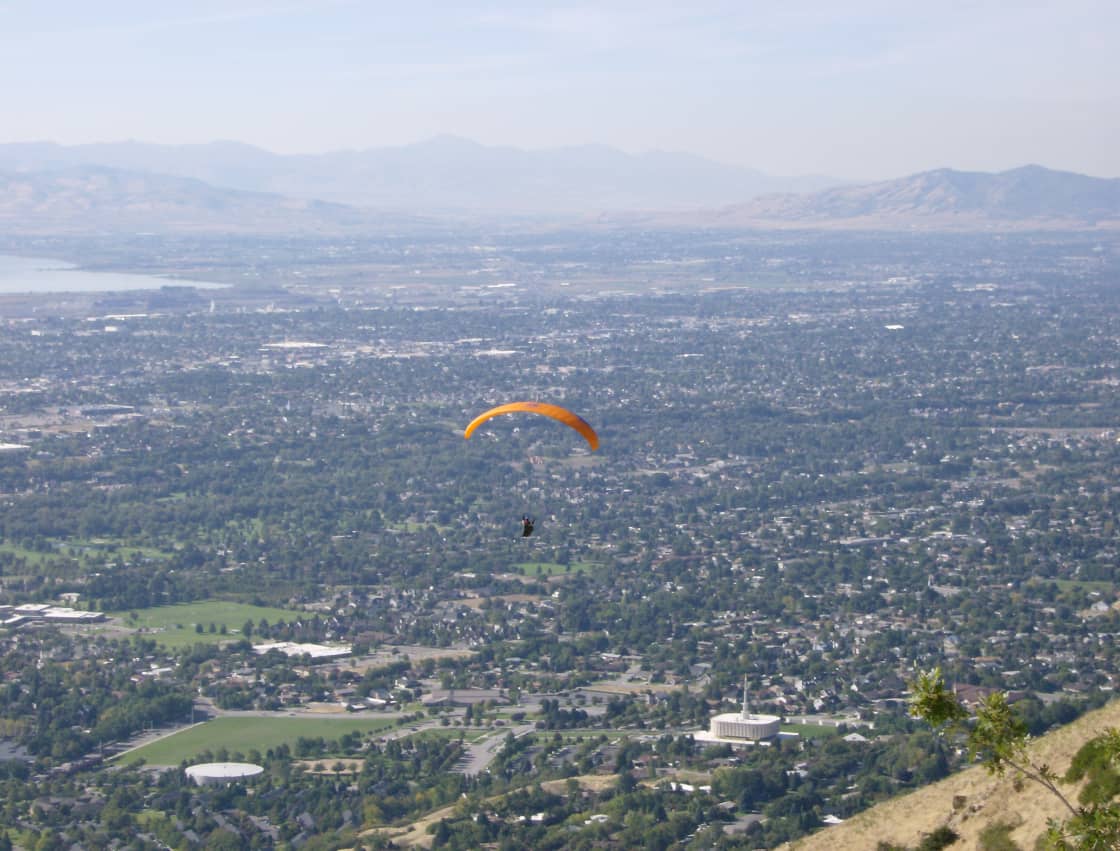
Provo is the largest city in Utah County and the anchor of Utah Valley. It sits directly against the Wasatch Range with Utah Lake to the west, which means the city is essentially a long strip between a mountain and a lake — you are never more than about fifteen minutes from a trailhead.
It is dominated, more than any comparable American city, by a single institution. Brigham Young University sets the rhythm of the year, supplies a large share of the population, and shapes everything from rental cycles to restaurant hours to what is open on a Sunday — to the point that it distorts almost every statistic published about the city. Twenty-five minutes north sits the Silicon Slopes corridor through Lehi and Draper, which is where a great many Provo residents work.
The geography, and why it decides everything
Provo runs roughly north to south along the mountain front, and elevation is the organizing fact of local life.
The east bench climbs toward the mountains. This is where the older established neighborhoods sit, where the views are, where the trailheads are, and where families with school-age children concentrate. It is the most expensive part of the city and the least likely to turn over.
The center holds downtown and the university, which are close but distinct. Downtown Provo has come a long way in a decade — a restaurant and live-music district on and around Center Street, a restored library, the City Center Temple in the shell of the old tabernacle.
South and west Provo hold most of the city's older housing stock and its more affordable options, and they run toward Utah Lake and the Provo Airport. This is also where much of the city's industrial and light-commercial footprint sits.
Our Provo neighborhoods guide breaks this down street by street, with dedicated write-ups on downtown and the BYU area.
Housing in Provo
Provo's housing market is unusual in a specific way: a very large share of the city's rental stock exists to serve students, and it operates on a completely different logic from the rest.
The student market runs on an academic-year lease cycle, with contracts commonly sold by the bed rather than by the unit, and it turns over almost entirely in late summer. BYU also maintains its own contracted housing system for single undergraduates — worth understanding properly if it applies to you, because the old "approved housing" terminology is out of date and the requirement is now framed around a student's first two consecutive semesters rather than around age. If you are house-hunting in the blocks nearest campus, you are shopping in that market whether or not you are a student, and availability and pricing behave accordingly. Our BYU-area apartment guide covers it.
Outside that ring, Provo is a normal city with a housing shortage. The stock skews older than the newer valley cities — bungalows and mid-century homes on the bench and in the south, rather than the subdivisions going up in Vineyard, Saratoga Springs or Eagle Mountain. That is either charm or maintenance, depending on temperament.
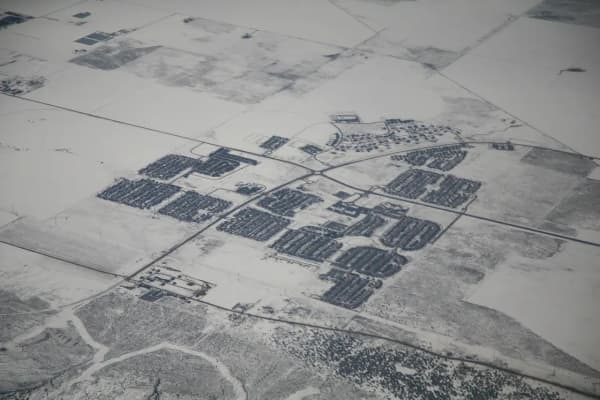
Two structural things worth knowing. First, a lot of single-family homes in Provo have been converted to rentals, particularly near campus, and the city regulates this — occupancy limits and zoning by area are real and enforced, so verify what a property is licensed for before you buy something as an investment. Second, new supply is arriving mostly as density downtown rather than as sprawl, because Provo is hemmed in by the mountain on one side and the lake on the other and has very little room to grow outward.
If you are weighing the decision itself, rent vs. buy in Provo and buying a home in Provo go deeper. Prices in Utah County have moved sharply enough in recent years that we deliberately do not print figures here — Utah is a non-disclosure state, published medians for the same city and year routinely disagree by six figures, and anything we quoted would be wrong within a season.
Schools
Provo is served by Provo City School District, and this is the single most misunderstood thing about education in Utah Valley right now.
Alpine School District — long the largest in the state — is splitting into new districts effective July 1, 2027, with Orem, Lindon, Pleasant Grove and Vineyard becoming the new Timpanogos School District. That story has dominated local conversation for two years, and a lot of people moving to the area assume it affects them.
It does not affect Provo. Provo has always run its own district, independent of Alpine, and nothing about the split changes anything within the city limits. If school-district stability is a factor in where you land in Utah Valley, that is a genuine point in Provo's favor at the moment. Our guide to the district split explains what is changing and for whom.
For how individual schools compare across both districts, schools in Provo and Orem is the deeper treatment. Childcare is its own problem here as everywhere — childcare in Provo covers the landscape.
Working here, and commuting
A useful mental model: Provo is where a lot of people live, and Lehi is where a lot of them work.
The Silicon Slopes corridor running north through Lehi and up toward Draper is the region's economic engine, and the reverse commute from Provo is normal and manageable outside peak hours. In Provo itself, the university is the largest employer by a wide margin, alongside the hospital system and Nu Skin, which was founded in Provo in 1984 and keeps its headquarters downtown. The biggest employers in Utah Valley maps the rest.
For getting around: I-15 runs the length of the valley and is the default. FrontRunner commuter rail connects Provo to Salt Lake City and points between, and it is the good option for anyone commuting north regularly — our FrontRunner guide covers timing and stations.
The UVX bus rapid transit line runs the Provo–Orem spine, connecting downtown Provo, BYU, UVU and Orem's University Place. One correction that matters, because a great deal of older writing about it is now wrong: UVX has not been free to the general public since August 2024. Free rides are for BYU and UVU students, staff and employees showing a student or staff ID. Everyone else pays a fare.
Realistically, most households here own a car. Car ownership in Utah Valley covers the running costs, and winter tires and canyon driving covers the part that catches transplants out in their first January.
The weather, and the thing nobody warns transplants about
Provo gets four genuine seasons, and three of them are excellent.
Summer is hot and very dry — high desert at altitude, which means brutal afternoons and pleasant evenings, and a sun that is stronger than the temperature suggests. Autumn is the local favorite and it is short; the canyons turn over from late September and the weather holds beautifully into October. Spring is unreliable, wet, and the season when the mountains are still full of snow while the valley floor has moved on.
Winter is where the caveat lives. Snowfall on the valley floor is moderate and the mountains get far more, which is the whole point of living twenty-five minutes from a ski resort. But Utah Valley sits in a bowl, and in mid-winter it is subject to temperature inversions — a lid of warm air traps cold air and pollutants against the valley floor, sometimes for a week or more at a stretch. Air quality during a bad inversion is poor, the valley sits under gray haze, and it is startling the first time you experience it, particularly because the mountains above are in brilliant sunshine the whole time.
Nobody mentions this to people considering a move, and it is the single most common complaint from transplants in their first year. It is worth knowing that it exists, that it is seasonal and episodic rather than constant, and that driving twenty minutes up a canyon puts you above it. People with asthma or respiratory sensitivity should weigh it seriously; everyone else adjusts.
The practical corollary is winter driving, especially if your commute involves a canyon or you plan to ski.
What it costs
Provo has historically been one of the more affordable places to live on the Wasatch Front, and it is less so than it was.
The mechanism is straightforward: Utah County has been one of the fastest-growing regions in the country, Provo has almost no room to expand outward, and the university guarantees permanent demand for a large share of the housing stock. Those three facts point the same direction.
We deliberately do not print rent or home-price figures. Utah is a non-disclosure state, which means individual sale prices are not public record — and the practical result is that published medians for the same city in the same year routinely disagree by well over a hundred thousand dollars depending on the source. Any number in an article like this one would be somewhere between stale and simply wrong. The housing data source guide explains which numbers do hold up, and how far behind each one runs.
What is durable and useful: housing is the line item that will dominate your budget and the one that varies most by neighborhood; utilities are moderate and Provo's city-owned power utility is a genuine local advantage; and the absence of a serious commute cost is real if you work in the valley and significant if you don't. Cost of living in Provo goes through the categories, and Provo vs. Salt Lake City is the comparison most people making this move are running.
The cultural texture
This is the part worth being direct about, because it is the thing people most often get wrong in both directions.
Provo is a heavily LDS city, and that shapes daily life in concrete ways rather than abstract ones. Sundays are quiet — a large share of businesses close (our shopping guide maps which centers stay open), and it takes a few months to stop being caught out by it. Alcohol is available but sold under Utah's particular rules, and the bar scene is small for a city this size. The social calendar in many neighborhoods runs through congregations, which means an enormously supportive community structure if you are part of it and a thinner one if you are not.
None of that makes Provo unwelcoming. It is one of the friendlier places you will live, and the volunteer and neighbor culture is real. But it is different from a secular city of the same size, and people who move here expecting otherwise tend to be the ones who leave.
The counterweight is that Provo is not culturally monolithic in the way outsiders assume. Downtown has a live music and evening scene with a national track record, an independent restaurant culture, and a young professional population that is not all students. It is more varied than its reputation and less varied than a similarly sized college town elsewhere.
On safety: Provo reports low violent crime for its size, and the practical concerns are property crimes concentrated in the dense student areas. Is Provo safe goes through the actual numbers and where they cluster.
Daily life
The infrastructure of ordinary living is in good shape. Healthcare is well covered for a city this size — healthcare in Provo covers the hospital systems and how to find a primary-care provider without a six-month wait. Grocery stores, gyms and the Recreation Center, internet options and utilities setup each have their own guides, and Provo's city-owned power utility is a small quirk worth knowing about.
The parks system is better than most cities this size manage — Provo's parks — and if you have a dog, dog parks and pet life covers where to go.
And the recreation is the reason a lot of people stay. Trailheads inside city limits, a canyon fifteen minutes east, a ski resort at twenty-five, and a large lake to the west. Our things to do in Provo guide covers the whole picture.
Who provides your utilities
Provo owns its electricity, which is easy to miss and worth knowing. Provo City Power is a municipal utility and Provo is one of six member cities of the Utah Municipal Power Agency, the wholesale agency it shares with Spanish Fork, Salem, Nephi, Manti and Levan, governed by a board of mayors and council members from those cities. Orem next door is on Rocky Mountain Power, so the valley's two largest cities sit on opposite sides of that divide — a point Provo vs. Orem takes up.
Provo's fiber history took its own path too: the municipal iProvo build eventually became Google Fiber, so Provo never joined UTOPIA as a member city the way Orem, Lindon, Pleasant Grove, Cedar Hills and Payson did, and the UTOPIA network does not reach Provo addresses. See internet providers in Provo and setting up utilities in Provo for the practical detail.
Who Provo is right for
It suits you if: you want mountains out the door without a resort-town cost of entry; you have or want school-age children and value a stable district; you work in the Silicon Slopes corridor and would rather live somewhere with a downtown than in a subdivision; you are part of the LDS community, or comfortable living somewhere shaped by it.
Look elsewhere in the valley if: you want a lot of nightlife or a large secular social scene; you want a new-build house with a big lot, in which case Vineyard, Saratoga Springs and Eagle Mountain are what you want; you want to be closer to Salt Lake City, in which case Lehi or American Fork shortens the commute meaningfully.
Worth reading alongside this: Provo vs. Orem is the comparison most people are making, and Provo vs. Salt Lake City is the other one. For families specifically, Provo for families is the more detailed treatment. If you are arriving at the other end of life rather than the middle of it, retiring in Utah Valley covers the tax picture, the county property-tax relief, and the two climate factors that matter more at seventy than at thirty.
The bottom line
Provo is a small city that punches above its size on geography and below it on nightlife, and almost everyone's satisfaction here comes down to how they weigh those two facts. The mountains are extraordinary and permanently available. The culture is specific and not for everyone. The housing market is tight and split in two by the university. The schools are stable, and — unusually for Utah Valley in 2026 — not about to be reorganized.
If the trade reads well to you, it tends to read well for a long time. Provo's retention among people who chose it deliberately is one of the more telling things about the place.
For this month's asking prices, rent index and building permits, see the Provo housing market data page.
Frequently Asked Questions
Is Provo, Utah a good place to live?
What are the best neighborhoods in Provo?
Is Provo a good place to live if you're not LDS?
What is the cost of living in Provo compared to Salt Lake City?
What school district is Provo in?
Is Provo safe?
Does Provo own its own power company?
What internet options does Provo have?
Sources
The facts in this guide were checked against these sources. Hours, fees and rules change, so confirm anything time-sensitive with the source before you go. How we make Provo.com.
- SkyWest Leader and Nu Skin Enterprises to be Awarded at Economic Summit, Utah Governor's Office of Economic Opportunity. Checked October 12, 2026.
- 2020 Decennial Census P1, U.S. Census Bureau. Checked October 12, 2026.
- Utah Valley Express (UVX) Fares, Utah Transit Authority. Checked October 12, 2026.
- Utah County school district officially named Timpanogos, ABC4. Checked October 12, 2026.