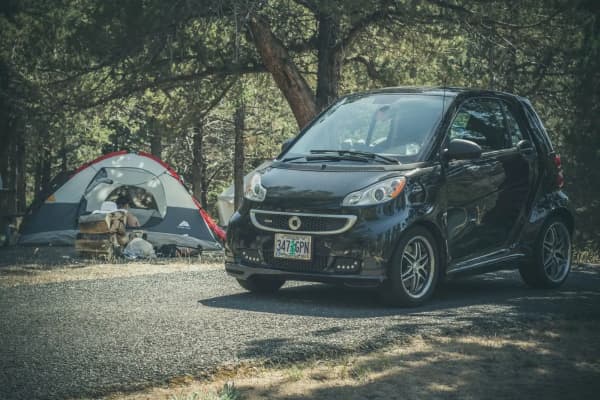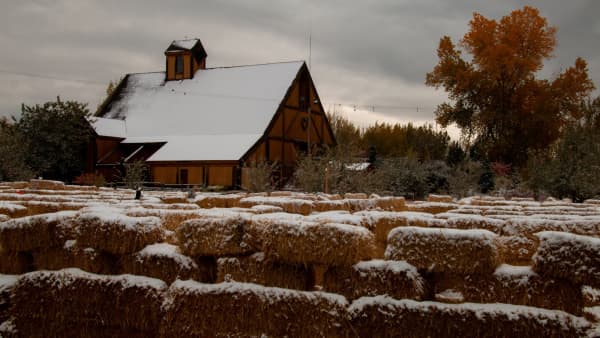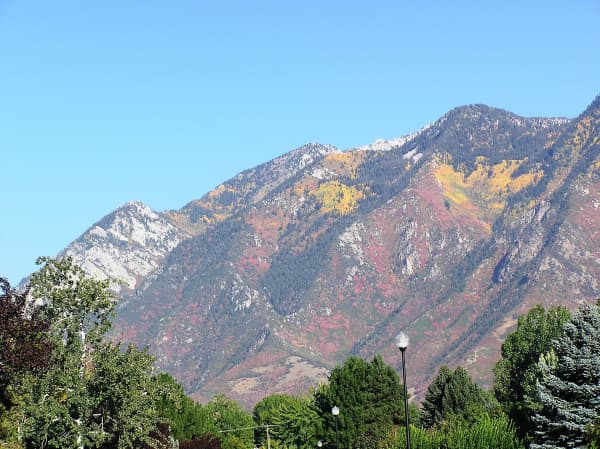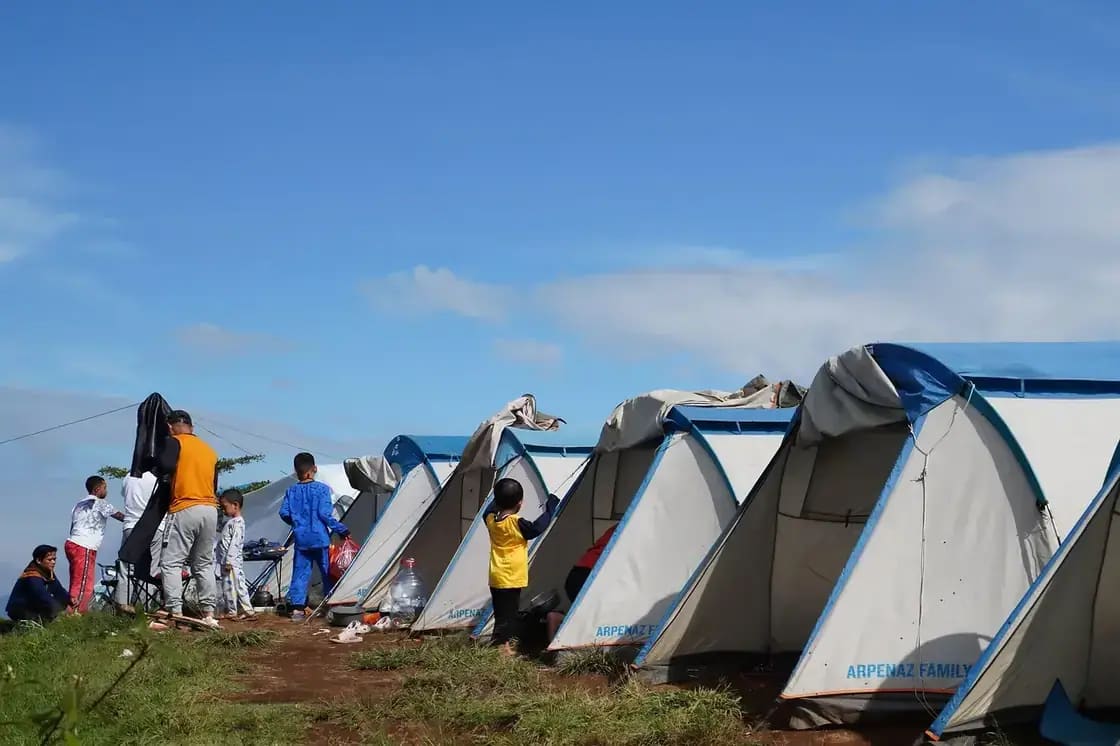

One of Provo's biggest advantages is how quickly you can get from your apartment to a campsite. Within 30 minutes you're in Provo Canyon with established campgrounds under towering trees. Within an hour you're in the Uinta Mountains with alpine lakes and genuine wilderness. Even on a Friday afternoon, you can leave work, grab your gear, and be setting up camp before sunset.
This guide covers the best camping options near Provo, from developed campgrounds with amenities to dispersed backcountry sites for those who want solitude.
Provo Canyon Campgrounds
The closest camping to the city. Provo Canyon campgrounds are managed by the U.S. Forest Service. Some sit along the Provo River; Rock Canyon and Hope are up Kyhv Peak Road, high above it.
Rock Canyon Campground
Location: about 9.5 miles up Kyhv Peak Road (formerly Squaw Peak Road) from Provo Canyon, the last 4.5 miles gravel · Sites: 4 group sites · Amenities: Vault toilets, no water · Reservations: recreation.gov, at least 5 days ahead
Closed for the 2026 season; expected to reopen around May 21, 2027. Despite the name, this campground is not at the mouth of Rock Canyon in town. It sits far above Utah Valley at about 6,500 feet, at the top of the canyon, where the Rock Canyon Trail begins. It has only four group sites, reservation-only, and no water, so bring all you need. No hookups, no showers; this is basic Forest Service camping.
Nunns Park / Canyon Glen
Distance: ~20 minutes · Sites: Varies · Amenities: Restrooms, pavilions, river access · Day use and overnight
Multiple park and campground areas along the Provo River in the canyon proper. Canyon Glen is a popular spot with family-friendly facilities and direct river access for fishing and wading. These sites fill early on summer weekends — reserve in advance.
Hope Campground
Location: about 5 miles up Kyhv Peak Road above Provo Canyon · Sites: 23 · Amenities: Vault toilets, no water · Reservations: recreation.gov
Closed for the 2026 season; expected to reopen around May 21, 2027. Hope sits about 5 miles up Kyhv Peak Road at roughly 6,500 feet, shaded by maple, oak and fir. It is not on the river. There is no water on site, so bring your own. The sites are spaced well enough that you don't feel like you're camping in a parking lot.
Uinta Mountains
The Uintas are Utah's premiere alpine camping destination — with peaks above 13,000 feet, alpine lakes, and genuine wilderness. An hour to 90 minutes from Provo puts you in a completely different world.
Mirror Lake Highway Campgrounds
Distance: ~75 minutes · Multiple campgrounds · Season: June–September (weather dependent)
Mirror Lake Highway (SR-150) runs through the Uinta Mountains from Kamas to Evanston, with many campgrounds scattered along the route. These range from basic Forest Service sites to more developed campgrounds with amenities. The lakes along the highway — Mirror Lake, Trial Lake, Washington Lake — offer fishing, kayaking, and stunning alpine scenery.
Reservation tip: The most popular campgrounds (Mirror Lake, Trial Lake, Butterfly Lake) book out weeks in advance for summer weekends. Reserve early on recreation.gov. Less popular campgrounds (Cobblerest, Shingle Creek) are easier to snag and often just as beautiful.
Timpooneke & Granite Flat (American Fork Canyon)
Distance: ~40 minutes · Amenities: Varies · Reservations: recreation.gov
Campgrounds on the north side of Mount Timpanogos, accessed through American Fork Canyon. Timpooneke is the trailhead for the Timpanogos summit hike, so it's popular with climbers who want an early start. On Saturdays, Sundays and holidays from July through October, parking at Timpooneke also needs a Recreation.gov timed-entry ticket for arrivals between midnight and noon, on top of the recreation pass. Granite Flat is a family-friendly campground near a stream. Both offer the Timp experience without the Provo Canyon crowds.
Hobble Creek & Diamond Fork Canyons
Diamond Fork / Fifth Water Area
Distance: ~35 minutes · Sites: Limited · Season: Spring–Fall
The Diamond Fork area (south of Provo via Spanish Fork Canyon) offers camping near the Fifth Water Hot Springs trailhead. Dispersed camping is available along the canyon road, and there are a few designated sites; Diamond Campground is closed for the rest of 2026 and expected to reopen around April 9, 2027. The combination of camping and hot springs access makes this area special. See our Hot Springs Guide for details on the springs.
Hobble Creek Canyon
Distance: ~25 minutes · Sites: Varies · Amenities: Basic
A quieter, less-trafficked canyon southeast of Provo, covered in full in our Hobble Creek Canyon guide. Hobble Creek offers a handful of small campgrounds and dispersed camping opportunities. The canyon is less dramatic than Provo Canyon but sees significantly fewer visitors, which is its main appeal. Good fishing in the creek, good solitude, easy access.
Dispersed Camping — the free option, in brief
If you want to camp without a reservation, a numbered site or neighbors, dispersed camping is permitted on much of the National Forest land around Utah Valley, and it is free. The nearest options are close enough to be a weeknight decision: informal pull-outs along Kyhv Peak Road (formerly Squaw Peak Road) above Provo Canyon, sites along the road into Diamond Fork before the Fifth Water trailhead, and dispersed country in the Payson Canyon and Nebo area to the south.
It also runs on a different rulebook — different stay limits, no facilities at all, and a legal map that decides where you may park. That is a full guide of its own:
→ Dispersed Camping Near Provo: the rules, the roads and what most guides get wrong
The short version, if you only read one line: dispersed camping buys you a longer legal stay than a developed campground on the districts above Utah Valley — see the stay-limit table below.
The stay limit is shorter than you think
Almost nobody checks this, and the number that circulates online is wrong for the campgrounds nearest Provo.
Under Uinta-Wasatch-Cache Forest Order 04-19-22-533 — signed August 2022, in effect through August 2032:
| Where | Maximum stay |
|---|---|
| Developed campground, Pleasant Grove & Spanish Fork districts (and Salt Lake, Heber/Kamas, Logan, Ogden) | 7 consecutive days in one location, in any 30-day period |
| Dispersed / general undeveloped area, forest-wide | 14 days in any 30-day period |
So the fourteen-day figure that gets repeated for this forest applies to dispersed land, not to the developed campgrounds on the districts that serve Utah County. If you were planning a two-week base camp at a Provo Canyon or American Fork Canyon site, the plan needs a move built into it.
Two consequences worth knowing: equipment must leave with you at the end of the stay — gear left behind can be impounded — and the order carries real penalties under 36 CFR 261.58(a), up to $5,000 for an individual and $10,000 for an organization.
Booking: the window is months, not weeks
This is the correction most worth making, because getting it wrong is the difference between a campsite and a drive home.
Recreation.gov booking windows for Forest Service campgrounds open several months ahead, not two to four weeks. Windows vary by facility, and the individual campground's page on recreation.gov is the only reliable place to read its specific window. The practical consequence for a Provo-area summer weekend: by the time a site is three weeks out, the popular Mirror Lake Highway and American Fork Canyon campgrounds have been gone for a long time.
What that means in practice:
- Plan summer weekends in late winter or early spring, not in June.
- Set a reminder for the day a window opens rather than browsing casually — desirable sites at Mirror Lake, Trial Lake and Timpooneke go within the day.
- Learn the second tier. Cobblerest and Shingle Creek are consistently easier to get and are not meaningfully worse places to sleep.
- Watch for cancellations. Inventory reappears constantly in the fortnight before a weekend as plans fall apart. Checking daily is unglamorous and it works.
- Midweek is a different world. A Tuesday night in the Uintas in late August is close to unbookable-out only in theory; in practice there is space.
Fees, passes and where "free" stops
Camping fees and access fees are separate things, and Utah Valley has both.
Developed campgrounds charge a nightly site fee, collected through recreation.gov or on site. Separately, parts of this forest are designated recreation fee areas, where any parked vehicle needs a valid pass regardless of what you are doing. The American Fork Canyon corridor is the one Utah County residents hit most often — at Silver Lake Flat, the posted day-use rate is $10 per vehicle for three days, $20 for seven days, or $60 for the season.
The Forest sells three-day, seven-day and annual passes through recreation.gov, alongside the national Interagency "America the Beautiful" pass. Two traps: a Uinta-Wasatch-Cache annual pass cannot be upgraded to an Interagency pass afterwards, and Interagency passes are not accepted in Mill Creek Canyon and have limited acceptance at concessionaire-run sites. Buy in the right order for your year.
Fire restrictions: read the system, not the rumor
The Forest publishes two different things and almost everyone conflates them.
Fire danger ratings — Low through Extreme — are assigned to broad areas such as "Wasatch Mountains" or "Uinta Mountains." They describe conditions and prohibit nothing.
Fire restrictions — Stage 1 and Stage 2 — are legal orders, and they are issued for named management areas rather than the whole forest. One district can be under Stage 1 while its neighbor is unrestricted. So "is there a fire ban in Utah right now?" has no useful answer; the question is about the specific area you are driving into, in the week you are going.
Check the Forest's alerts page the week you travel. When restrictions are on, a bottled-gas or liquid-fuel stove is usually still permitted where an open fire is not — which is why a stove lives permanently in most local campers' vehicles. Individual sites also carry their own standing rules: no fires within a quarter mile of Silver Lake Flat Reservoir, for instance, and no trailers on the road up to it.
Practical Tips
Cold, and how much of it. Nights at elevation are cold even in July. Uinta campgrounds sit high, and dropping below 40°F overnight in midsummer is normal rather than unlucky. A summer-weight bag that is fine in the valley is not fine at Trial Lake. Bring layers, a hat, and rain gear; afternoon thunderstorms are a feature of Uinta summers, not an anomaly.
Altitude. If you are visiting from near sea level, expect headaches, breathlessness on easy ground and broken sleep the first night. Hydrate more than feels necessary, skip the ambitious first-day hike, and give yourself the evening.
Wildlife and food storage. Black bears are present in the Uintas and the Wasatch. Food, rubbish and anything scented goes in a hard-sided vehicle or a proper container overnight — not in the tent, and not in a cooler on the picnic table.
Water. Developed campgrounds vary: some have potable water, some have none, and the ones with it often shut it off outside peak season. Check the facility's own page rather than assuming, and carry a reserve either way.
Gear rentals. BYU Outdoors Unlimited and local outfitters rent tents, bags, stoves and packs at reasonable prices, which makes a first trip cheap to try before committing to gear.
Seasonal gates. Canyon roads and their campgrounds open when the district decides they are dry enough, not on a calendar date. In a heavy snow year that can run into late May, and traveling a wet road before it opens does damage that often cannot be repaired. Confirm the road before you commit to the site.
Camping With Small Children, and What Actually Matters
The developed campgrounds within an hour of Provo vary enormously in how workable they are with young children, and the variable is rarely the one people check.
Water access is the deciding factor, and not in the way you would guess. A campground on a creek is wonderful with a seven-year-old and exhausting with a two-year-old, because moving water at a toddler's eye level is a full-time supervision job for the whole weekend. The reservoir sites are generally easier — the water is where you go rather than where you sleep.
Vault versus flush toilets changes the trip more than the scenery does. Most Forest Service campgrounds in these canyons run vault toilets, which is entirely fine and also a meaningful negotiation with a newly potty-trained child at two in the morning. Sites with flush facilities and running water are worth choosing for the first few family trips even at the cost of a prettier location.
Elevation is a real consideration. The Uinta campgrounds sit high enough that nights are cold well into summer and the altitude affects some children noticeably. The lower canyon sites make a gentler introduction.
Drive time compounds. An hour on a map is ninety minutes with a stop, and the last stretch into several of these canyons is winding. For a first family trip, the Provo Canyon and Hobble Creek sites are close enough that an early exit is not a disaster.
Weekday Camping Is a Different Activity
The single most useful thing to know about camping near Provo is that midweek and weekend are barely the same experience.
Weekend reservations at the popular campgrounds go months ahead, the sites fill completely, and the canyons carry heavy day-use traffic on top of the campers. Midweek, the same campgrounds frequently have availability inside a week, the neighboring sites are empty, and the trailheads are quiet.
If your schedule has any flexibility — remote work, a compressed week, students between terms — the Tuesday-to-Thursday window is the best-value camping in the region by a wide margin, and it costs the same. This is also the reliable strategy for the shoulder seasons, when weekend demand concentrates into fewer open campgrounds and midweek stays easy.
The exception is holiday weeks. The stretch around the Freedom Festival in early July and the Pioneer Day period later that month fill the canyons on every day, not just weekends.
A fourth option most lists leave out
Beyond developed campgrounds and Forest Service dispersed sites, Utah has a third category of ground that permits camping: state trust lands, administered by the Utah Trust Lands Administration. These are not public lands in the legal sense — they are held in trust to generate revenue for public schools and other beneficiaries, and access is a privilege the agency extends rather than a right you hold. They also run on their own stay limits and their own rules on fire, firewood and unattended gear. Because trust land is scattered in a checkerboard through federal ground, you can be standing on it without knowing. Our dispersed camping guide covers the rulebook in detail.
Related Guides
-
Advertisement
-
Bear Lake from Provo: Turquoise Water, Raspberry Shakes, Real Distance
-
Axe Throwing in Provo: What It's Actually Like, and Where to Go in Utah Valley
-
Capitol Reef from Provo: The Closest National Park Nobody Plans For
-
Canyon & commute conditions — which forest roads are gated, by whom, and in what order
-
Vivian Park and Nunn's Park — day-use when a night is too much
-
Spanish Fork Canyon: Diamond Fork, Sheep Creek and the Thistle Site
-
Dutch-Oven Cooking in Utah Last updated: August 2026. Stay limits verified against Uinta-Wasatch-Cache Forest Order 04-19-22-533; fees and pass rules against the Forest's own passes page. Campground availability, fees and fire restrictions change through the season — check recreation.gov and the Forest's alerts page before you travel.
Frequently Asked Questions
Where is the best camping near Provo?
Can I camp for free near Provo?
When should I reserve campgrounds near Provo?
How long can you stay at a campground near Provo?
Do I need a pass to camp in American Fork Canyon?
Are campfires allowed at campgrounds near Provo?
What is the closest campground to Provo?
Do campgrounds near Provo have drinking water?
Sources
The facts in this guide were checked against these sources. Hours, fees and rules change, so confirm anything time-sensitive with the source before you go. How we make Provo.com.
- Rock Canyon (campground), Recreation.gov (Uinta-Wasatch-Cache National Forest). Checked October 12, 2026.
- Hope (campground), Recreation.gov (Uinta-Wasatch-Cache National Forest). Checked October 12, 2026.
- Camping Stay Limits (Forest Order 04-19-22-533), USDA Forest Service, Uinta-Wasatch-Cache National Forest. Checked October 12, 2026.
- Diamond Campground, Recreation.gov (Uinta-Wasatch-Cache National Forest). Checked October 12, 2026.