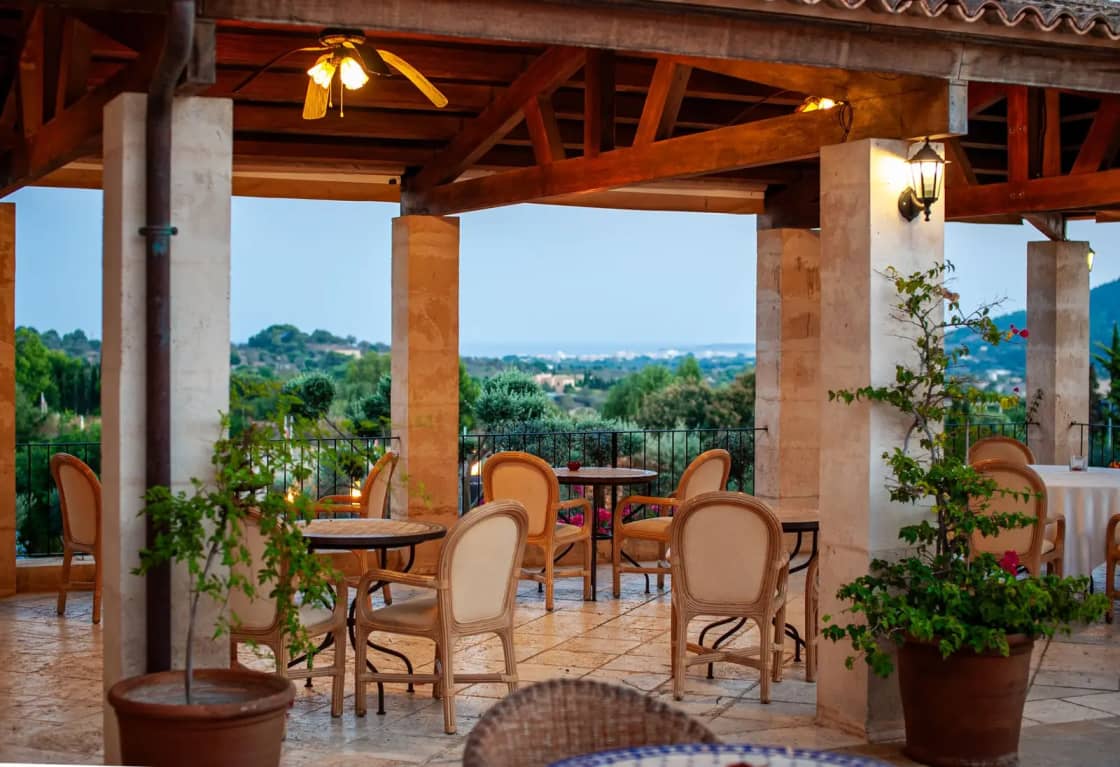

Utah Valley sits in one of the most dramatic settings in the country — Mount Timpanogos to the east, Utah Lake to the west, and canyons cutting up into the Wasatch. The good news for diners: a growing number of restaurants make the most of it, whether that's a rooftop patio, a table overlooking a botanical garden, a lakeside clubhouse, or a dining room tucked into the mountains up Provo Canyon.
A view is worth something, but not everything — our ranking of the best restaurants in Provo weighs the food first.
This is the valley-wide guide to eating with a view, organized by the kind of scenery you're after — mountains, rooftops, gardens, and the lake. A quick note: many patios here are seasonal (roughly late spring through early fall), so call ahead in the shoulder months.
Mountain views: up the canyon
This guide is what decides Best View in our Best of Utah Valley index — the award is simply this list's own first entry, so if the ranking here changes, the award changes with it.
1. The Tree Room at Sundance
Mountain Fine Dining · $$$$ · Sundance (Provo Canyon)
The valley's signature scenic restaurant. Founded by Robert Redford at his Sundance Mountain Resort — about 18 miles up Provo Canyon — the Tree Room serves seasonal mountain cuisine in an intimate, art-filled room built quite literally around a living tree, surrounded by Redford's Native American art and film history. The drive up the canyon, especially in fall, is part of the experience. Dinner only, and reservations are essential.
Why the view wins: A dramatic Wasatch setting plus one of the most storied dining rooms in Utah.
2. Foundry Grill at Sundance
Mountain American · $$$ · Sundance (Provo Canyon)
The Tree Room's more casual sibling, serving breakfast, lunch, and dinner six days a week with an outstanding Sunday brunch buffet. Same spectacular mountain setting, with a summer patio and a menu of fresh, cooked-to-order American fare. The Brussels sprouts and the burger have a cult following.
Why the view wins: The full Sundance mountain backdrop at a more relaxed (and affordable) pace.
Rooftops & patios
3. The Slate
Mediterranean / Rooftop · $$$ · Provo
Correction, August 2026: this guide previously ranked The Slate here on the strength of a rooftop patio with mountain views. We can no longer verify that patio exists. Slate's own website, Marriott's dining listing and current reviews all describe an indoor restaurant and bar inside the Provo Marriott Hotel & Conference Center at 101 W 100 N, and none mention outdoor seating. It remains a good downtown dinner with a full bar and one of the latest kitchens in the city — but we are not going to send you there for a view we cannot confirm.
Why the view wins: A genuine rooftop with mountain views, rare in downtown Provo.
4. Slackwater (Riverwoods)
Gastropub / Patio · $$$ · Provo (Riverwoods)
The valley's favorite patio. Slackwater's Riverwoods location pairs creative pizzas and shareable plates with a string-lit, walkable outdoor setting that's perfect on a summer evening. Not a panoramic view so much as a great atmosphere — and the best people-watching patio in the valley.
Why the view wins: The summer-evening patio scene is unmatched in Utah County.
5. Strap Tank Brewery
Brewpub / Patio · $$–$$$ · Lehi
A design-forward brewpub near the outlets with a fun, industrial-cool space and seasonal outdoor seating. The vibe is the draw — a great spot to sit outside with house craft beer on a warm night.
Why the view wins: Patio seating and a lively, design-led atmosphere on the north end.
Garden views
6. Harvest Restaurant
Farm-to-Table / Fine Dining · $$$$ · Lehi (Thanksgiving Point)
The best garden-view dinner in the valley. Harvest sits inside Thanksgiving Point with views over Ashton Gardens, sourcing from local farms with a seasonal menu. Pair dinner with a sunset stroll through the gardens — especially during the spring Tulip Festival — for one of the loveliest evenings in Utah County.
Why the view wins: 50 acres of botanical gardens right outside the window.
7. Trellis Café
Café / Lunch · $$ · Lehi (Thanksgiving Point)
The casual, daytime counterpart to Harvest — an airy lunch spot with a patio overlooking the same Ashton Gardens. The move is a light lunch here before or after wandering the grounds.
Why the view wins: Garden-view patio dining at a lunch-friendly price.
Lake views: the west side
8. Talons Cove Clubhouse
Golf Clubhouse Dining · $$ · Saratoga Springs
Talons Cove is one of the better-regarded public courses in the valley, laid out along Utah Lake with the Wasatch as a backdrop — and its clubhouse has on-site dining with those same views. You don't have to golf to enjoy a meal looking out over the water and mountains.
Why the view wins: Open-water and mountain views from the west shore of Utah Lake.
9. Umami Japanese Barbeque
Japanese BBQ · $$$ · Vineyard (Geneva)
Vineyard's standout sits in the Geneva district minutes from the Utah Lake shoreline. The draw here is the interactive grill-your-own experience rather than a panoramic window, but pair it with a lakeshore walk at golden hour and you've got a scenic Vineyard evening.
Why the view wins: Minutes from the lakeshore, in the valley's newest lakeside city.
More scenic tables
10. Communal
Farm-to-Table · $$$ · Provo (102 N University Ave)
Not a view restaurant in the panoramic sense, but Communal's warm, intimate room and historic downtown setting make it a scenic experience — pair dinner with an evening walk along Provo's historic, string-lit main street.
Why it makes the list: The historic downtown setting is its own kind of scenery.
11. Black Sheep Café
Contemporary Southwestern · $$$ · Provo (19 N University Ave)
Another downtown gem a block up University Avenue, serving inventive Native American–influenced Southwestern fare in an upscale-casual room. A great anchor for a downtown-Provo evening with a stroll built in.
Why it makes the list: Distinctive food in the heart of walkable downtown Provo.
12. Cascade Springs & a canyon picnic
Scenic Picnic · Free · American Fork Canyon
For the most scenic "meal with a view" of all, pack a picnic and head up American Fork Canyon to the Roadhouse Picnic Area along the creek, or to the boardwalks at Cascade Springs. It's not a restaurant — but on a summer day, with Timpanogos overhead, it might be the best-positioned table in the valley.
Why the view wins: A creekside or spring-fed picnic in one of Utah's prettiest canyons.
Planning tips
- Mind the seasons. Many patios (Slackwater, Strap Tank, Foundry Grill) run roughly late spring to early fall. Sundance and the indoor rooms are year-round, and fall colors up Provo Canyon and the Alpine Loop are spectacular.
- Time it for golden hour. Lake-view tables in Saratoga Springs and Vineyard, and any patio facing Timpanogos, are best about an hour before sunset.
- Reserve the splurges. The Tree Room and Harvest fill up on weekends and in summer — book ahead.
Explore by city
For the full picture of each city's dining — not just the views — see our city-by-city guides:
- Best restaurants in Provo
- Best restaurants in Orem
- Best restaurants in Lehi
- Best restaurants in American Fork
- Best restaurants in Saratoga Springs
- Best restaurants in Spanish Fork
- Best restaurants in Vineyard
Planning a whole outing? Pair a scenic table with our guides to the best date-night restaurants in Utah Valley, the best brunch in Utah Valley, the best group & family restaurants in Utah Valley, the best Mexican in Utah Valley, the best pizza & Italian in Utah Valley, the best Asian & sushi in Utah Valley, and the best burgers in Provo, Orem & Utah Valley, browse things to do in Utah Valley — including our American Fork Canyon guide — and keep the Provo.com events calendar handy.
Timing the light, which is the whole point
A view restaurant is the one category where the reservation time matters as much as the restaurant, and Utah Valley's geography makes the timing unusually specific.
The mountains are east and the lake is west, and that decides your hour. A table facing the Wasatch gets its best light at the end of the day, when the range catches the last sun and turns warm while the valley floor is already in shade — the local name for it is alpenglow, and it happens after sunset rather than at it. A table facing Utah Lake gets the sunset itself. Booking a mountain-view table for the moment the sun goes down means watching the light leave; booking a lake-view table for an hour after sunset means watching the dark.
Aim to be seated before the light rather than during it. The good window is short — considerably shorter than a dinner service — and a reservation timed to start when the light is best usually means being seated, ordering and looking up to find it over. Being at the table thirty to forty-five minutes ahead is the version that works.
Sunset moves a lot here. Utah Valley's sunset time shifts by more than three hours across the year, so a reservation slot that was perfect in July is an hour of full darkness in November. Check the actual time for the date rather than reusing a time that worked before.
Winter is underrated for this category. Early sunsets mean the light happens during normal dinner hours rather than late in the evening, snow on the Wasatch makes the mountain views dramatically better, and demand is lower. The canyon restaurants in particular are a stronger proposition in winter than the summer bias of most recommendations suggests.
Weather, seasons and the outdoor-table question
Several entries on this list depend on a patio, and a patio in Utah Valley is a seasonal asset with a shorter useful life than visitors expect.
The evening temperature drop is the recurring surprise. At roughly 4,500 feet in dry air, a warm afternoon gives way to a cool evening quickly, and canyon locations run cooler than the valley floor by a noticeable margin. A patio table that was pleasant at seven can be uncomfortable by nine. Layers are the difference between staying for dessert and asking to move inside.
Canyon access is seasonal in a way valley restaurants are not. Some canyon roads close or become weather-dependent outside the warm months, so a canyon dinner in shoulder season needs a check on road conditions as well as on the restaurant's hours.
Ask whether the view seating is indoor or outdoor when you book. For several of these places the good tables are a subset rather than the whole room, and a reservation does not automatically come with one. Requesting a view table at the time of booking — and confirming when you arrive — is normal and frequently the only way to get one.
Wind is the underrated variable. Canyon locations and lakeside patios both catch wind that the valley floor does not, and it changes an outdoor table more than temperature does.
Booking, cost and the honest expectation
These tables are the first to go. View seating is a small share of the seats at most of these restaurants, which means weekend evenings sell out further ahead than the restaurant's general availability suggests. If the view is the reason for the visit, book well ahead and say so when you book.
A view carries a premium, and it is worth naming. Restaurants in this category generally price above the valley average, and part of what you are paying for is the location rather than the plate. That is a reasonable trade for an occasion and a poor one for an ordinary Tuesday — the category rewards being used deliberately.
Lunch is the value play. Several of these rooms serve the same view at midday for less, and the mountain views in particular hold up well in daylight. For anyone who wants the setting without the occasion pricing, that is the move.
Have a weather fallback. Booking an outdoor view table without a plan for rain, wind or an unexpected cold snap is how a planned evening becomes a disappointing one. Knowing whether the restaurant can move you inside, and whether you would still want to be there if it did, is worth thirty seconds at the booking stage.
Photographing the view without spending dinner behind a phone
Every table on this list produces the same impulse, and a few small habits get a better result in less time.
Shoot early, then put it away. The best light arrives before you expect it and leaves quickly. Taking the photographs in the first ten minutes at the table, rather than reaching for the phone repeatedly across two hours, produces better images and a better evening.
Expose for the sky, not the table. Phone cameras average the whole frame, which turns a dramatic mountain sunset into a flat gray one while perfectly lighting your water glass. Tapping the bright part of the sky and pulling the exposure down is the single adjustment that matters.
Interiors fight you after dark. Once the room is brighter than the window, glass becomes a mirror and the view disappears from the photograph even though you can see it perfectly. If an indoor shot of the view matters, take it before the light goes rather than after.
Ask before photographing staff or other diners. Standard courtesy, and worth saying because view tables encourage wide shots that catch a lot of the room.
The best photograph is usually from outside. Several of these locations have a terrace, a car park or a short path with an unobstructed version of the same view and no window between you and it. Stepping out for two minutes beats twenty minutes of trying to shoot through glass.
The rule that says a view is not a privilege
There is a provision of federal accessibility law that reads as though it were written specifically about the restaurants on this page, and almost nobody outside the design world knows it is there.
The 2010 ADA Standards for Accessible Design govern how restaurants are built and altered. § 206.2.5 requires that in restaurants and cafeterias, an accessible route be provided to all dining areas, including raised or sunken dining areas, and outdoor dining areas. The exceptions are narrow. Exception 1 excuses a mezzanine dining area in a building not otherwise required to provide an accessible route between stories, but only where the mezzanine holds less than 25 percent of the total combined seating and dining area and the same decor and services are provided in the accessible area. Exception 2 applies in alterations, again only where the same services and decor are available in an accessible space usable by the public and not restricted to people with disabilities.
Then comes the sentence that matters here. The official Advisory to 206.2.5 gives examples of what "same decor" means, and the first one on the list is "seating at or near windows and railings with views."
That is not an accident of drafting. A raised dining tier along a window, a mezzanine over the main room, a terrace on the canyon side — these are exactly the configurations restaurants build to sell a view, and the Standards treat the view itself as part of the decor that has to be equally available. A restaurant cannot put the accessible tables in the interior and the view tables up three steps and call the arrangement compliant on the grounds that the food is the same. The food being the same is the point at which the analysis starts, not where it ends.
The seating math
§ 226.1 requires that where dining surfaces are provided, at least 5 percent of the seating spaces and standing spaces at those surfaces comply with § 902. That section sets the technical requirements: knee and toe clearance underneath, and a dining surface 28 to 34 inches above the floor. The 2010 revision deliberately moved the calculation from number of tables to seating and standing spaces, so that a room of large tables and a room of two-tops are scoped the same way.
§ 226.2 then requires those surfaces to be dispersed throughout the space or facility containing dining surfaces. Dispersion is the whole engine of this for a view restaurant. Five percent clustered at the back of the room is not five percent dispersed, and a facility with a bar level, a main level and a patio has to think about each.
There is one more provision people notice without knowing its number. Where food or drink is served at a counter exceeding 34 inches in height, a portion of the main counter at least 60 inches long must be provided at an accessible height. That is the reason a lowered section appears in an otherwise tall bar, and in a view restaurant the bar is very often where the window is.
What this means when you are booking
The practical translation is a question worth asking when you reserve, and it is more specific than "are you accessible."
Ask whether the view seating specifically is on an accessible route, because the answer is frequently different from the answer about the building. Many buildings in this valley predate the 2010 Standards and were altered rather than built new, which is the situation Exception 2 covers — and Exception 2 turns on whether an accessible space offers the same decor, meaning the same view. A restaurant with a mezzanine and no lift is required to have thought about that. Some have; a booking is the moment to find out.
Ask about the patio separately from the dining room. Under § 206.2.5, outdoor dining is on the list of areas requiring an accessible route, and in this valley the patio is very often where the view is. It is also the area most likely to have been added later.
Ask about table height if you are bringing a wheelchair user, because the 28-to-34-inch range covers standard dining tables and does not cover the bar-height and communal tables that view restaurants love. A restaurant that has 5 percent of its seating spaces compliant will have standard-height tables among them; the question is whether any of them face the window.
None of this is about compliance for its own sake. It is about the thing the Advisory identifies plainly: in a restaurant chosen for its view, the view is the product. A dining room where some guests get Mount Timpanogos and others get the service station is not offering the same meal, and the Standards say so in as many words. If you are choosing among the restaurants on this page for a group that includes someone with mobility needs, that sentence is a better tool than a star rating — it gives you something concrete and answerable to ask about, and the answer tells you a great deal about the room before you arrive.
Related Guides
Frequently Asked Questions
What are the best restaurants with a view in Utah Valley?
Where can I find rooftop or patio dining in Utah Valley?
What's the most scenic restaurant near Provo?
Where can I eat with a lake view in Utah Valley?
Are there scenic restaurants for a special occasion in Utah Valley?
What time should I book a table for the best view?
Is winter a bad time for view restaurants in Utah Valley?
Will I automatically get a view table if I book?