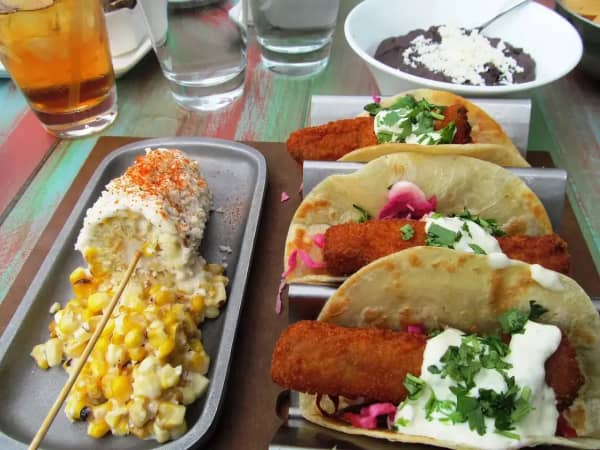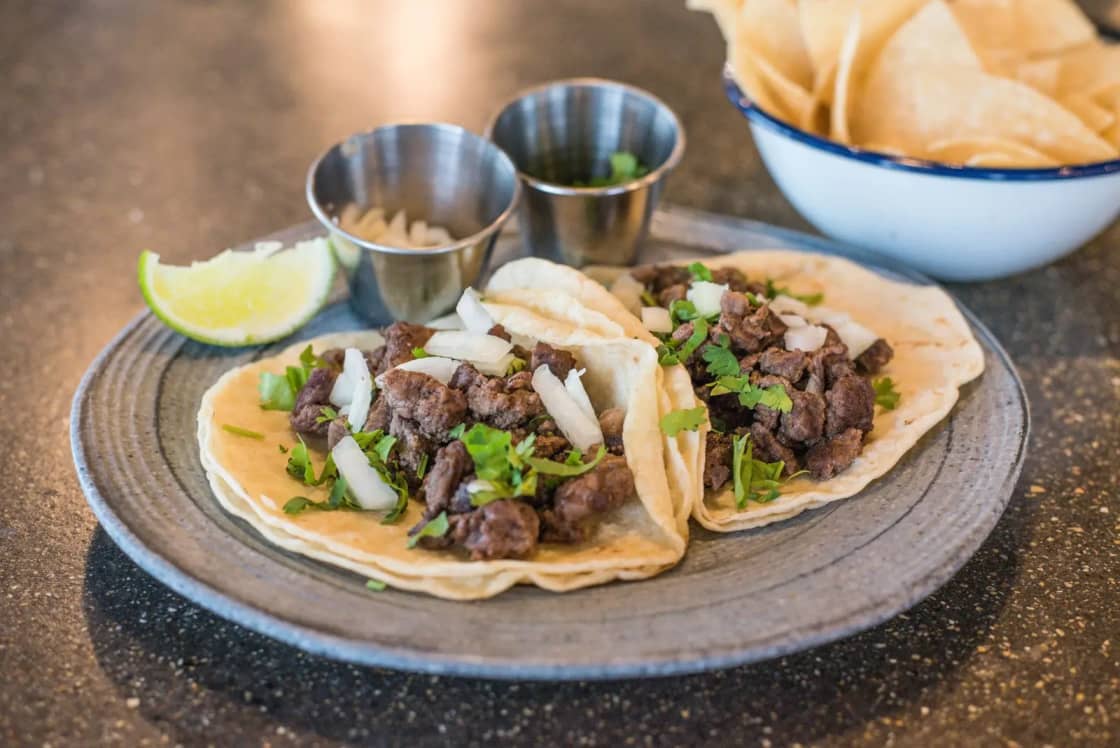

For a long time, the knock on Utah Mexican food was that you had to drive to Salt Lake City for the real thing. That hasn't been true in Utah Valley for years. The valley's large and growing Latino community supports a deep bench of authentic, family-run taquerías, and a newer wave of upscale, modern Mexican restaurants — led by Sol Agave — has given the area genuine destination spots of its own.
Several of the rooms below also appear on our wider list of the best restaurants in Provo, which is the place to start if you are not set on Mexican.
This is the valley-wide guide, organized by what you're in the mood for: the upscale-modern places for a night out, the authentic family taquerías for the real deal, and the fast-casual local favorites for an everyday fix. (For Provo specifically, we also have a dedicated best Mexican food in Provo guide.)
Upscale & modern Mexican
For a date night, a celebration, or when you want Mexican that goes beyond the combo plate.
1. Sol Agave
Modern Mexican · $$$ · American Fork
The valley's standout. Sol Agave is an upscale, Mexican-inspired culinary experience — polished plating, creative dishes well beyond the standard menu, strong cocktails — with roots in Southern California. It has one Utah Valley address, 749 W 100 N in American Fork — there is no Lehi or Saratoga Springs branch, whatever the round-ups say. Equally good for a date or a group celebration, and the reason a lot of locals no longer drive to Salt Lake for "nice" Mexican.
Best for: Date nights and special occasions — but check the address before you drive.
2. Oteo
Modern Mexican · $$$ · Pleasant Grove
A special-occasion sleeper, and one that has moved before, so confirm its current address before you go. Oteo does a thoughtful, contemporary take on Mexican cuisine that regulars rave about — the kind of place locals are quietly proud of. A great alternative to Sol Agave on the north end.
Best for: A quieter, grown-up Mexican dinner.
3. Ocotillo Prime
Mexican-Influenced Steakhouse · $$$ · American Fork
Ocotillo Prime brings a Mexican-influenced steakhouse concept to American Fork. A newer, ambitious entry that rounds out the valley's upscale-Mexican tier.
Best for: A steak-forward night with Mexican flavors.
Authentic family taquerías
The real deal — fresh, made-to-order, family-run, and priced right.
4. Los 2 Potrillos
Authentic Mexican · $$ · Spanish Fork
A south-valley institution. Authentic, generous Mexican in Spanish Fork — chilaquiles, enchiladas, carne asada nachos, mole — with a colorful room and a back room for big family groups. People drive from Lehi for it.
Best for: A full sit-down authentic meal with the family.
5. Holy Taco
Taquería / Al Pastor · $$ · Orem
Orem's al pastor specialist, hand-slicing and marinating their pastor the traditional way. The tacos con queso are the move. A standout on a State Street corridor full of good Mexican.
Best for: The valley's best tacos al pastor.
6. El Sabroso Mexican Food
Authentic Mexican · $ · Orem
A beloved hole-in-the-wall that regulars call the best authentic Mexican in Orem — rice and beans done right, big portions, and prices that punch way below the quality. The kind of family spot that earns lifelong loyalty.
Best for: Authentic everyday Mexican on a budget.
7. El Molcajete & Maria Bonita
Authentic Mexican · $$ · Orem
Two more anchors of Orem's State Street Mexican scene — both family-run, both serving authentic, regional cooking (molcajetes, fresh salsas, handmade touches) in welcoming rooms. Dependable, real, and local.
Best for: Sit-down authentic Mexican with classic dishes.
8. Villa Del Sol
Authentic Mexican · $$ · Orem
A genuine neighborhood secret in Orem — around seven years in, recently refreshed with bright murals and new seating. The pozole and shrimp dishes have a devoted following, and the horchata is essential.
Best for: Pozole, birria, and a warm neighborhood feel.
9. El Gallo Giro
Authentic Mexican · $$ · Provo & Orem
A valley staple with locations in Provo and Orem — authentic, satisfying Mexican that's been a go-to for years. A reliable, no-surprises pick for the real thing close to BYU and along State Street.
Best for: Dependable authentic Mexican in Provo and Orem.
10. Joe Vera's
Sit-Down Mexican · $$ · Provo
A longtime Provo sit-down favorite — a classic, comfortable Mexican restaurant that's been feeding the area for decades. Familiar, friendly, and consistent.
Best for: A relaxed, old-school sit-down Mexican dinner.
11. El Mexiquense Grill
Authentic Mexican · $$ · American Fork
Authentic, made-to-order Mexican in American Fork — al pastor, carnitas, fish tacos, a full salsa bar, and the big Aztec chicken quesadilla. Not Americanized; the real, fresh thing, with generous portions and fair prices.
Best for: Authentic north-valley Mexican with a salsa bar.
12. Totonacos
Mexican Grill · $$ · Spanish Fork
A Spanish Fork favorite with outdoor seating, serving solid, authentic Mexican on the south end. A good pairing with a Spanish Fork day out.
Best for: South-valley tacos and patio dining.
Mexican-Salvadoran & street spots
13. El Mexsal
Mexican-Salvadoran · $$ · Provo
One of the valley's Mexican-Salvadoran crossover spots — pupusas alongside the tacos and burritos. A different, delicious angle on the area's Latin cooking.
Best for: Pupusas and Salvadoran-Mexican comfort food.
14. El Salvador Restaurant
Salvadoran / Mexican · $ · Provo
A longtime hidden treasure on Center Street, popular with students — Salvadoran home cooking and Mexican classics at student-friendly prices.
Best for: Authentic Salvadoran-Mexican near downtown Provo.
15. Street Tacos Don Joaquin
Street Tacos · $ · Provo
Provo's go-to for genuine street tacos — small, simple, authentic, and the cheapest real meal in the valley. The taco move near BYU.
Best for: Quick, authentic street tacos.
16. Costa Vida / Café Rio (local fast-casual)
Fast-Casual Mexican · $ · Valley-wide
The two Utah-born fast-casual giants are everywhere in the valley for a reason: fresh, fast, customizable, and consistent. Not authentic in the taquería sense, but the reliable everyday pick — and Costa Vida often runs a student discount.
Best for: A fast, fresh, customizable everyday Mexican meal.
Tips for eating Mexican in Utah Valley
- Orem's State Street is the corridor. The single densest stretch of authentic Mexican in the valley runs along State Street in Orem — when in doubt, head there.
- Look for al pastor done by hand. The best taquerías slice and marinate their pastor in-house; it's the tell of a serious spot.
- Many of the best are tiny. Some of the most authentic places seat only a dozen or so — takeout is your friend on a busy weekend.
- Upscale means reserve. Sol Agave and Oteo fill up on weekends; book ahead.
Explore by city
For each city's full dining picture, see our city-by-city guides:
- Best restaurants in Provo
- Best restaurants in Orem
- Best restaurants in Lehi
- Best restaurants in American Fork
- Best restaurants in Saratoga Springs
- Best restaurants in Spanish Fork
- Best restaurants in Vineyard
Planning more? Browse our guides to the best date-night restaurants in Utah Valley, the best brunch in Utah Valley, the best restaurants with a view in Utah Valley, the best group & family restaurants in Utah Valley, the best pizza & Italian in Utah Valley, the best Asian & sushi in Utah Valley, and the best burgers in Provo, Orem & Utah Valley, explore things to do in Utah Valley, and keep the Provo.com events calendar handy.
Reading the menu: what the regional labels tell you
Utah Valley's Mexican restaurants are not a single cuisine, and the list above spans several genuinely different traditions. A few distinctions make the menus easier to navigate.
Taquería and restaurant are different formats, not different quality tiers. A taquería is built around a short menu executed at volume — tacos, tortas, a handful of plates — while a full-service restaurant carries a broader menu and table service. The taquería format is where the valley's strongest value sits, and treating it as the lesser option is the most common mistake newcomers make.
Fillings are the vocabulary worth learning. Asada is grilled beef, al pastor is marinated pork, carnitas is slow-cooked pork, pollo is chicken, and lengua, tripa and cabeza are the cuts that separate a kitchen cooking for its own community from one cooking for a general audience. Ordering a mixed plate is the efficient way to find out which a kitchen does best.
Salsa tells you more than the menu does. A place that brings several distinct salsas — rather than one generic red — is signaling a kitchen that makes them. Heat level is not a proxy for quality, and asking which is hottest is a normal question rather than a test.
Mexican and Salvadoran are neighbors, not synonyms. Two entries above are Salvadoran or Mexican-Salvadoran, and pupusas, curtido and plantains belong to a distinct tradition that happens to share shelf space on the same street. Going in expecting tacos and ordering accordingly sells the visit short.
Fast-casual is a separate category and the guide says so. The two chains listed at the end are Utah-founded and popular here, but comparing them to the family taquerías above is a category error in both directions.
When to go, and the Sunday question
Timing changes the experience at this end of the market more than it does at most.
Weekend evenings are the peak, and at the family taquerías that peak is a feature rather than a problem — a full dining room on a Friday night is the version of these places worth seeing. If you want a quiet table instead, weekday afternoons are reliably calm across the category.
Lunch is where the value concentrates. Lunch pricing and lunch portions are the strongest argument for the sit-down entries on this list, and the midday trade is faster than the evening one.
Sunday closures are common and unevenly distributed. A significant share of locally owned restaurants in Utah Valley close on Sunday, and this category is no exception — but the pattern does not follow any obvious logic, so checking a specific restaurant's current hours before driving out is the only reliable approach. Our guide to restaurants open on Sunday covers what serves.
Hours in this category move. Family-run businesses adjust hours around holidays, staffing and seasons more than chains do, and a listing that was accurate last month may not be accurate this week. Confirm at the source.
Eating with a group or with children
Order family style at the taquerías. The economics and the format both favor it: several plates and a stack of tacos shared across a table costs less and covers more ground than one entrée per person, and it is how the food is designed to be eaten.
Heat is adjustable almost everywhere. Kitchens in this category are used to serving a mixed audience, and asking for a dish mild is unremarkable. The salsas are where the heat lives in most cases, which means the table controls the spice level rather than the kitchen.
Children are broadly welcome, and the taquerías are often easier with kids than the upscale rooms — food arrives fast, the noise floor is forgiving, and quesadillas and plain rice and beans are on effectively every menu without needing a separate children's list.
Larger parties should call ahead. Several of the best places on this list are small, and a table for eight on a Friday night is a genuine ask rather than a formality. Fifteen minutes of notice makes the difference.
Takeout, delivery and how these dishes travel
Not everything on these menus survives a twenty-minute drive, and knowing what does makes takeout from this category far more satisfying.
Tacos travel badly assembled and well disassembled. A taco packed hot sits in its own steam and the tortilla goes soft. Kitchens that pack the filling, tortillas and salsas separately are doing you a favor, and asking for it that way is a normal request.
Burritos, tortas and anything wrapped hold up best. They are constructed to be portable and they arrive essentially as intended.
Fried items are the ones to eat in the dining room. Chips, taquitos, chiles rellenos and anything battered lose most of what makes them good within fifteen minutes in a closed container.
Soups and stews travel well and reheat better than almost anything else — often better the next day.
Salsas and garnishes should always be separate. Lime, onion, cilantro and salsa added at the restaurant arrive tired. Added at home thirty seconds before eating, they arrive right.
Order takeout at off-peak hours. These kitchens prioritize the dining room during a rush, and a takeout order placed at the height of a Friday evening waits behind every seated table. The same order at three in the afternoon is ready quickly and travels in better condition.
What a restaurant is allowed to call authentic
"Authentic" is the most-used word in this category and the least regulated. But some claims a Mexican restaurant makes are governed by law, and the line between the two is more interesting than the marketing argument.
Utah has a Truth in Advertising Act, at Utah Code Title 13, Chapter 11a. Its list of deceptive trade practices is where the enforceable claims live. Among them: passing off goods or services as those of another; causing likelihood of confusion as to source, sponsorship, approval or certification; and causing likelihood of confusion as to geographic origin. That last one is the operative clause for food. Saying a dish is made the way it is made in Puebla is opinion. Saying the cheese is from Oaxaca when it is made in Idaho is a claim about geographic origin.
The federal counterpart is older and blunter. 21 U.S.C. § 343(b) deems a food misbranded if it is offered for sale under the name of another food. That is a naming rule rather than a quality rule, and it is the basis on which the standards of identity work.
Standards of identity, and why the cheese matters
The FDA maintains standards of identity — regulations that define what a food must be in order to be called by a particular name. Cheeses live in 21 C.F.R. Part 133, which sets out the composition, moisture and milkfat requirements for each named cheese. If a product does not meet the standard for the name, it must be called something else, typically with a qualifier such as cheese product or cheese food.
Two consequences show up on a Utah Valley menu.
Queso fresco, cotija, Oaxaca and asadero are largely outside the standardized list, which means they are governed by the general misbranding rule rather than by a specific compositional standard. That gives more latitude on formulation and less on naming: a cheese sold as queso fresco has to be recognizable as queso fresco, and the enforcement route is § 343(b) and the state consumer statutes rather than Part 133.
"American cheese" and processed cheese are standardized, at 21 C.F.R. §§ 133.169 through 133.180, which is why the yellow cheese on a plate is described the way it is. The nacho cheese sauce on a chip basket is very often a pasteurized process cheese product, and calling it that is compliance rather than apology.
There is a third piece worth knowing because it comes up constantly in this cuisine. Fresh Mexican-style soft cheeses made from unpasteurized milk are a recognized Listeria vehicle, and the pasteurization requirement is why the queso fresco you buy at a market here is not the one someone's family makes at home. Utah runs on the 2022 FDA Food Code through Utah Admin. Code R392-100-4, and Food Code § 3-201.11 requires food to be obtained from sources that comply with law. Homemade cheese does not qualify, however good it is.
The claims that are opinion, and are allowed to be
Almost everything else in the authenticity argument is unregulated, and it is worth being clear about which side of the line each claim sits on.
Unregulated: authentic, traditional, family recipe, homemade as a style descriptor, street tacos, made fresh daily, from scratch, abuela's recipe. None of these has a legal definition in food law. They are puffery, and a restaurant may use them freely.
Regulated: where a named ingredient comes from; the name of a standardized food; whether a specific certification exists; whether the business is affiliated with another business; and — under the Food Code — whether the food came from an approved source at all.
That mapping is more useful than it sounds, because it tells you which questions have answers. Asking whether a place is authentic produces an argument. Asking where the tortillas come from, or whether the carnitas are made here or brought in, produces a fact — and in this valley, where a genuine tortilleria and bakery infrastructure exists, the answer is often more interesting than the question. Our guide to Latino markets and panaderias covers that supply side directly.
One more thing worth checking on any menu here. Raw and undercooked animal foods trigger the two-part consumer advisory at Food Code § 3-603.11 — a disclosure naming the items and a reminder about the increased risk. On a Mexican menu that reaches ceviche, aguachile and anything served rare. A ceviche listed without an asterisk on a menu that has asterisks elsewhere is worth a question, because the acid in a ceviche marinade denatures protein and does not reliably destroy parasites; that job belongs to the freeze required by § 3-402.11, covered in our seafood guide.
Related Guides
- Dumpling Bao: The Chinese Kitchen Hidden Inside an Orem Grocery Store
- The Provo & Orem restaurant directory — the Provo and Orem half of this list, with addresses, in one filterable table
- Festival Latinoamericano: Provo's Biggest Free Festival
Frequently Asked Questions
What is the best Mexican restaurant in Utah Valley?
Where is the best authentic Mexican food in Utah Valley?
Where can I find the best tacos in Utah Valley?
Are there upscale Mexican restaurants in Utah Valley?
What Mexican food is Utah Valley known for?
What is the difference between a taquería and a Mexican restaurant here?
Are Mexican restaurants in Utah Valley open on Sunday?
Is the food too spicy for children?
Sources
The facts in this guide were checked against these sources. Hours, fees and rules change, so confirm anything time-sensitive with the source before you go. How we make Provo.com.
- Sol Agave (home page, locations), Sol Agave. Checked October 12, 2026.
- Oteo (home page), Oteo. Checked October 12, 2026.